How to Sell Turkish Citizenship Property After 3 Years: Legal Process & Capital Gains Tax (2026 Guide)
Learn how to sell Turkish citizenship property after 3 years, remove the title deed restriction, complete the legal process, and calculate capital gains tax.
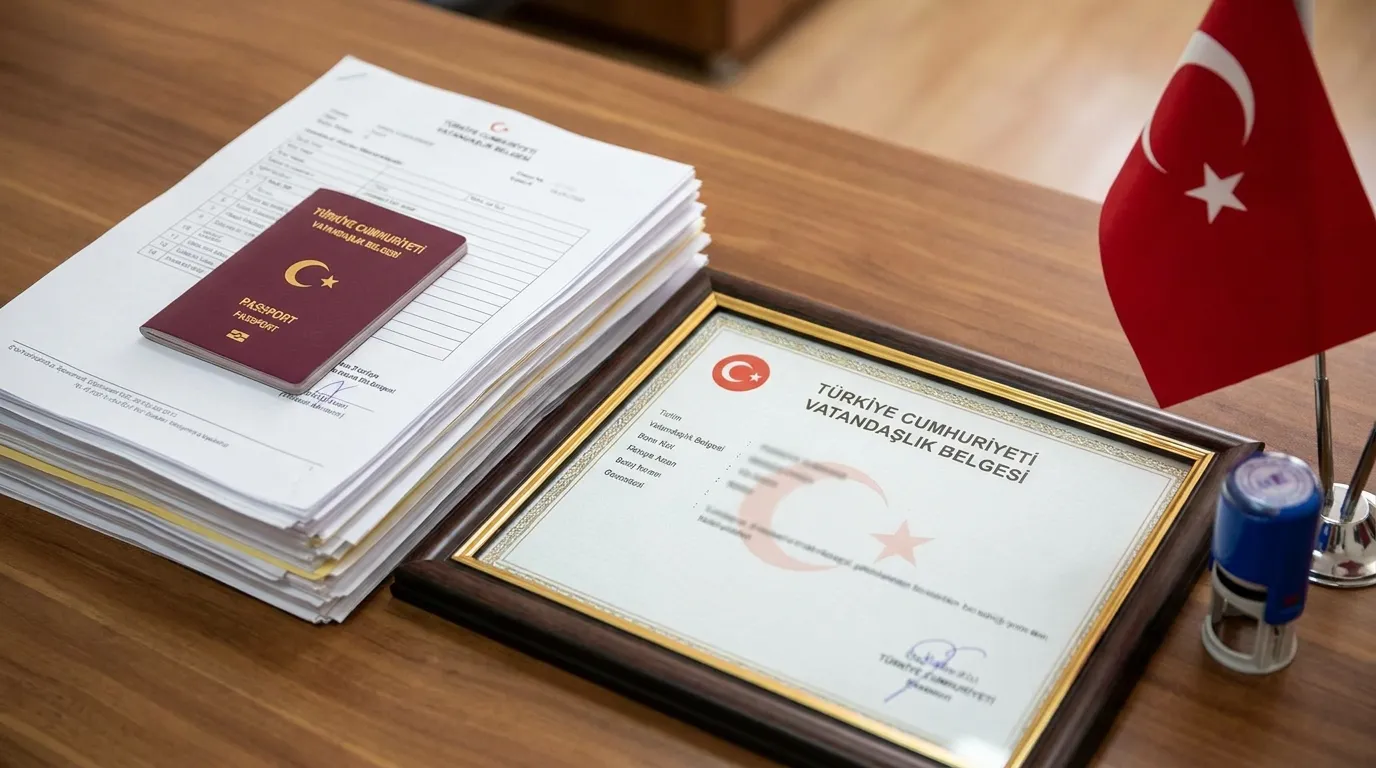
How to Resell Turkish Citizenship Property After 3 Years: Legal Steps & Capital Gains Tax (2026 Guide)
Turkey's Citizenship by Investment (CBI) program has remained one of the world's most attractive residency and citizenship investment schemes, allowing eligible foreign investors to obtain Turkish citizenship through qualifying real estate purchases. Under the current rules, investors who purchase property worth at least USD 400,000 must agree not to sell the property for three years. This restriction is recorded directly on the property's title deed (Tapu) as an official annotation.
Once the mandatory three-year holding period expires, many investors begin asking the same question: How can the property be sold legally, and what taxes will apply?
The answer involves much more than simply finding a buyer. Sellers must first remove the legal restriction from the title deed, obtain a new government-approved valuation report, comply with foreign exchange regulations where applicable, complete the official transfer process, and determine whether Capital Gains Tax (CGT) will be payable.
This comprehensive 2026 guide explains each legal requirement, provides updated tax information, and highlights practical considerations that every foreign investor should understand before selling.
Understanding the 3-Year Lock-In Period
The Turkish Citizenship by Investment program requires investors to retain ownership of the qualifying property for at least three years. This condition exists to ensure that investments contribute genuine and sustained value to the Turkish economy rather than serving as short-term transactions solely for obtaining citizenship.
When citizenship is granted, the Land Registry records a legal annotation—commonly known as the "not to be sold for three years" restriction—on the property's title deed. During this period, the owner cannot legally transfer ownership without violating the investment conditions attached to the citizenship application.
After the three-year period expires, the restriction does not disappear automatically. The owner must submit an application to remove the annotation before any sale can proceed.
Why Turkey Requires This Holding Period
The three-year rule protects the integrity of the citizenship program by discouraging speculative purchases and ensuring that foreign investment remains in the Turkish real estate market for a meaningful period. It also aligns Turkey's program with international standards followed by several other investment migration jurisdictions.
For investors, the restriction should be viewed as a temporary legal obligation rather than a permanent limitation. Once removed, the property can generally be sold like any other Turkish real estate, subject to standard legal and tax requirements.
The 2026 Turkish Real Estate Market in USD vs TRY
The Turkish secondary property market continues to attract both domestic and international buyers, although pricing dynamics differ depending on whether values are measured in Turkish Lira (TRY) or U.S. Dollars (USD).
Many premium properties in Istanbul, Antalya, Bodrum, and Ankara continue to be marketed in USD or Euro-equivalent values due to international demand. At the same time, official transactions are recorded in Turkish Lira using exchange rates applicable on the transaction date.
Because of ongoing currency fluctuations and inflation, investors should evaluate returns using both currencies. A property that appears to have appreciated significantly in Turkish Lira may produce a much smaller gain—or even a loss—when measured in U.S. Dollars. Understanding this distinction is particularly important when calculating investment performance and potential tax exposure.
Step-by-Step Legal Process to Resell a Citizenship Property
Selling a property purchased under Turkey's Citizenship by Investment (CBI) program involves several legal procedures that go beyond a standard real estate transaction. Although the three-year holding period has expired, the property cannot simply be listed for sale and transferred immediately. Turkish authorities require the seller to complete several administrative steps before the ownership can legally change hands.
Following these procedures carefully helps avoid unnecessary delays, protects both buyer and seller, and ensures that the transfer complies with Turkish property law. Working with a qualified real estate lawyer and a licensed real estate agent familiar with citizenship properties is highly recommended, particularly for foreign investors who are not resident in Turkey.
Step 1: Removing the Citizenship Annotation (Şerh Kaldırma)
The first and most important step is removing the "Not to be sold for three years" annotation from the title deed (Tapu). This restriction was placed on the property when it was used to support the citizenship application. Even after the three-year period has expired, the annotation remains on the title deed until the owner formally requests its removal.
The application is submitted to the General Directorate of Land Registry and Cadastre (Tapu ve Kadastro Genel Müdürlüğü) or the relevant local Land Registry Office where the property is registered. Officials verify that the mandatory holding period has been completed and that the property fulfilled the citizenship investment requirements.
In most provinces, the removal process is relatively straightforward and generally takes between two and five business days, although processing times can vary depending on the workload of the local office. Once approved, a revised title deed is issued without the restriction, allowing the owner to proceed with the sale.
Because the annotation is a legal encumbrance on the property, no buyer should sign a final purchase agreement before confirming that it has been officially removed. Obtaining an updated title deed also reassures prospective purchasers that the property is free from citizenship-related transfer restrictions.
Step 2: Obtaining the Mandatory Valuation Report (Ekspertiz Raporu)
Turkey requires a licensed valuation report (Ekspertiz Raporu) for many real estate transactions involving foreign buyers. Even when selling a former citizenship property, obtaining an updated appraisal is considered a best practice and, in transactions involving foreign nationals, is generally mandatory.
The valuation must be prepared by a company licensed by the Capital Markets Board of Türkiye (Sermaye Piyasası Kurulu – SPK/CMB). Independent valuation experts inspect the property and assess numerous factors, including:
- Location and neighborhood demand
- Building condition and age
- Floor level and view
- Gross and net living area
- Comparable market sales
- Construction quality
- Legal registration status
The resulting report establishes the property's official market value. This figure is important because Turkish authorities compare the declared sale price against the valuation to reduce the risk of undervaluation and tax avoidance. Declaring an unrealistically low purchase price can trigger additional scrutiny, tax reassessments, or administrative penalties.
A valuation report is generally valid for three months from the date of issue. If the transaction is delayed beyond that period, a new appraisal may be required before the Land Registry will complete the transfer.
For sellers, an accurate valuation also provides a realistic benchmark for pricing the property in today's market. In a market influenced by inflation and exchange-rate movements, relying solely on the original purchase price could lead to unrealistic expectations.
Step 3: Finding a Buyer and Foreign Currency Purchase Certificate (DAB)
Once the legal restriction has been removed and the valuation report obtained, the seller may proceed with marketing the property and negotiating with potential buyers.
The process differs depending on whether the buyer is a Turkish citizen or a foreign national.
If the purchaser is a Turkish citizen, the transaction generally follows ordinary domestic real estate procedures. Payment is typically made through Turkish bank transfers in Turkish Lira (TRY), although the parties may privately negotiate the commercial value using another reference currency.
If the purchaser is a foreign buyer, additional foreign exchange regulations apply. Under current Turkish rules, foreign purchasers are generally required to obtain a Foreign Currency Purchase Certificate (Döviz Alım Belgesi – DAB) before the title deed transfer can be completed.
The DAB process involves the buyer transferring foreign currency to a Turkish bank. The bank converts the funds into Turkish Lira through the Central Bank system and issues the certificate confirming compliance with foreign exchange regulations. The certificate is then presented to the Land Registry during the title deed transfer.
This requirement helps Turkey monitor foreign investment flows while ensuring compliance with the country's foreign exchange framework. Because banking procedures can vary slightly among financial institutions, buyers are advised to contact their chosen Turkish bank in advance to confirm documentation requirements and expected processing times.
From a seller's perspective, understanding whether the buyer is domestic or foreign helps anticipate the timeline for closing, as transactions involving a DAB may require additional coordination between banks, lawyers, and the Land Registry.
Step 4: Title Deed Transfer (Tapu Devri)
The final stage is the official transfer of ownership at the Land Registry Office (Tapu Müdürlüğü). This is the legal event that completes the sale and transfers ownership from seller to buyer.
On the scheduled appointment date, both parties—or their authorized representatives acting under a properly notarized power of attorney—appear before the Land Registry officer. Officials review the documentation, verify identities, confirm payment of taxes and fees, and ensure that all legal requirements have been satisfied.
One of the principal costs associated with the transaction is the Title Deed Transfer Fee (Tapu Harcı). As of 2026, this fee is 4% of the officially declared transfer value. Although Turkish law often contemplates an equal division of the fee (2% paid by the seller and 2% paid by the buyer), parties are free to negotiate a different allocation in their sale agreement, provided the statutory amount is paid.
Other potential costs may include:
| Expense | Typical Responsibility |
|---|---|
| Title Deed Transfer Fee (4%) | Usually split between buyer and seller |
| Valuation Report | Commonly paid by buyer (negotiable) |
| Translator Fees | Foreign party if required |
| Notary Fees (Power of Attorney) | Party using POA |
| Real Estate Agency Commission | According to agency agreement |
| Legal Fees | Each party separately |
After signatures are completed and the Land Registry finalizes the transaction, the new title deed is issued in the buyer's name. At that point, ownership officially changes, and the seller receives the agreed purchase proceeds according to the sale contract.
Required Documents Checklist
Preparing all documents before scheduling the Land Registry appointment significantly reduces delays. While additional documents may occasionally be requested depending on the circumstances, sellers should generally have the following available:
Essential Documents for the Seller
- ✅ Original Title Deed (Tapu) or certified copy
- ✅ Valid passport (translated and notarized if required) or Turkish Identity Card
- ✅ Turkish Tax Identification Number (Vergi Numarası)
- ✅ Mandatory Valuation Report (Ekspertiz Raporu)
- ✅ Property Tax Clearance / Rayiç Bedel Belgesi obtained from the municipality
- ✅ Valid Compulsory Earthquake Insurance (DASK) policy
- ✅ Recent biometric photographs (typically one for the seller)
Additional Documents Depending on the Buyer
Depending on the purchaser and transaction structure, additional documentation may include:
- Foreign Currency Purchase Certificate (DAB) for eligible foreign buyers
- Certified Turkish translations of foreign-language documents
- Notarized Power of Attorney where a representative signs on behalf of either party
- Marriage certificates or spousal consent where legally required
- Bank payment confirmations and proof of funds
- Residence permit (if applicable)
Because documentation requirements may change over time or differ slightly between Land Registry offices, investors should verify the current requirements with their legal adviser or the relevant Tapu office before the scheduled transfer date.
Capital Gains Tax (Değer Artış Kazancı Vergisi) in Turkey (2026)
One of the most important financial considerations when selling a Turkish Citizenship by Investment property is Capital Gains Tax (CGT), known in Turkish as Değer Artış Kazancı Vergisi. While the three-year holding period allows the property to be sold without violating the citizenship rules, it does not automatically exempt the seller from income tax on any profit.
Turkey distinguishes between the citizenship holding period (3 years) and the tax exemption period (5 years). This difference often surprises investors. A seller may legally dispose of the property after three years, yet still be liable for capital gains tax because the property has not been owned for five years.
Understanding how the tax is calculated—and how inflation adjustments work—is essential for estimating the net proceeds from a sale.
The 5-Year Capital Gains Tax Rule
Under Turkish Income Tax Law, individuals selling residential or commercial real estate are generally subject to Capital Gains Tax if the property is sold within five years of acquisition.
The rules can be summarized as follows:
| Holding Period | Capital Gains Tax |
|---|---|
| Less than 5 years | Taxable (subject to exemptions and deductions) |
| More than 5 years | Generally exempt for individuals* |
*This exemption generally applies to individuals selling privately owned real estate. Different rules may apply to companies, developers, or individuals engaged in frequent real estate trading, where profits may instead be treated as business income.
For investors who purchased property under the Turkish Citizenship by Investment program, this means:
- After Year 3: The property may legally be sold because the citizenship restriction has expired, but any taxable gain may still be subject to CGT.
- After Year 5: The gain is generally exempt from capital gains tax, making this an attractive milestone for many long-term investors.
For this reason, investors should compare the expected appreciation in property value against the tax savings that could result from waiting until the five-year mark.
How Inflation Adjustment (Yİ-ÜFE) Works
Turkey has experienced periods of significant inflation in recent years. To avoid taxing gains that are merely the result of inflation, Turkish tax law permits an adjustment of the property's acquisition cost using the Producer Price Index (Yurt İçi Üretici Fiyat Endeksi – Yİ-ÜFE), provided the legal conditions for indexation are met.
The adjusted purchase price is calculated as follows:
Adjusted Purchase Price=Original Purchase Price×(YI˙-U¨FE at Month of SaleYI˙-U¨FE at Month of Purchase)\textbf{Adjusted Purchase Price} = \text{Original Purchase Price} \times \left( \frac{\text{Yİ-ÜFE at Month of Sale}} {\text{Yİ-ÜFE at Month of Purchase}} \right)Adjusted Purchase Price=Original Purchase Price×(YI˙-U¨FE at Month of PurchaseYI˙-U¨FE at Month of Sale)
This indexed acquisition cost better reflects the property's value in today's economic conditions. Rather than taxing the full nominal increase in price, Turkey taxes only the real gain after accounting for inflation (subject to the applicable indexation rules).
Once the adjusted purchase price has been determined, the taxable gain is calculated using:
Taxable Profit=Selling Price−Adjusted Purchase Price−Deductible Expenses\textbf{Taxable Profit} = \text{Selling Price} - \text{Adjusted Purchase Price} - \text{Deductible Expenses}Taxable Profit=Selling Price−Adjusted Purchase Price−Deductible Expenses
Deductible expenses may include:
- Title deed transfer fees paid by the seller
- Certain notary expenses
- Brokerage commissions
- Legal fees directly connected with the sale
- Other deductible costs permitted under Turkish tax legislation
Maintaining proper documentation for these expenses is essential, as the Turkish Revenue Administration may request evidence if the tax return is reviewed.
2026 Tax Rates and Progressive Tax Brackets
Turkey applies progressive income tax rates to taxable capital gains. After deducting eligible expenses and applying the annual exemption available under Turkish law, the remaining taxable gain is taxed in increasing bands.
Illustrative 2026 Structure
| Taxable Income Bracket (TRY) | Tax Rate |
|---|---|
| Up to the annual exemption limit (approximately 150,000 TRY*) | 0% (Exempt) |
| First taxable bracket above exemption | 15% |
| Second bracket | 20% |
| Third bracket | 27% |
| Highest bracket | 35% |
*The annual exemption amount and tax brackets are adjusted periodically by the Turkish government. Investors should verify the officially published figures applicable in the tax year of sale.
Unlike a flat-rate tax system, only the portion of income falling within each bracket is taxed at that bracket's rate. This means that exceeding one threshold does not cause the entire gain to be taxed at the higher percentage.
Because the tax calculation involves inflation indexing, deductible costs, exemptions, and progressive rates, many investors choose to work with a Turkish certified public accountant (SMMM) to prepare the required income tax return accurately.
Practical Capital Gains Tax Example
Consider the following simplified illustration.
| Item | Amount |
|---|---|
| Original Purchase Price | 400,000 USD equivalent |
| Sale Price (after 3 years) | 520,000 USD equivalent |
| Indexed Purchase Price (after Yİ-ÜFE adjustment) | 470,000 USD equivalent |
| Deductible Expenses | 10,000 USD equivalent |
| Taxable Gain | 40,000 USD equivalent |
In this example:
- The investor purchased a property that qualified for Turkish citizenship.
- Three years later, the property's market value increased.
- Instead of comparing 520,000 USD with the original 400,000 USD, the acquisition cost is first adjusted for inflation using the Yİ-ÜFE index.
- After deducting eligible selling expenses, the taxable gain is significantly lower than the nominal appreciation.
The resulting taxable gain would then be converted into Turkish Lira and taxed according to the applicable progressive income tax brackets in force for the relevant tax year.
This example demonstrates why inflation indexation can substantially reduce the tax burden, especially during periods of elevated inflation. Nevertheless, every transaction is unique, and exchange rates, acquisition dates, ownership structure, and deductible costs all influence the final calculation.
Summary & Strategic Advice for Investors
Selling a Turkish citizenship property is not solely a legal exercise—it is also a strategic financial decision. While the expiration of the three-year restriction gives investors the freedom to sell, the timing of the sale can have a meaningful impact on after-tax returns.
Selling After Year 3 vs. Holding Until Year 5
For many investors, the key question is whether to sell immediately after the mandatory holding period or wait until the five-year tax exemption threshold.
Selling After Year 3
Advantages:
- Ability to realize profits sooner
- Greater flexibility to reinvest in other markets
- Reduced exposure to future market fluctuations
- Access to liquidity if capital is needed elsewhere
Disadvantages:
- Potential liability for Capital Gains Tax
- Additional tax reporting obligations
- Lower net proceeds after taxes, depending on the gain
Holding Until Year 5
Advantages:
- Potential exemption from Capital Gains Tax for qualifying individual sellers
- Opportunity to benefit from further market appreciation
- Simplified tax position on disposal
Potential Risks:
- Property prices could decline
- Exchange-rate movements may reduce USD-denominated returns
- Holding costs such as maintenance, taxes, insurance, and management fees continue
The right decision depends on factors such as investment objectives, expected market performance, rental income, financing costs, and personal tax circumstances. Investors should evaluate both the potential tax savings and the opportunity cost of delaying the sale.
Can the Same Property Be Used Again for Turkish Citizenship?
An important point often overlooked is the re-utilization restriction.
As a general rule, a property that has already been used to obtain Turkish citizenship under the Citizenship by Investment program cannot typically be reused by a subsequent buyer as the qualifying investment for another citizenship application. The original citizenship-based investment has already fulfilled its purpose within the program.
This means that although the property remains fully marketable and can be sold like any other real estate after the restriction is lifted, prospective buyers seeking Turkish citizenship should not assume that purchasing the same property will automatically qualify them for the program.
Because citizenship regulations and administrative interpretations can evolve, buyers intending to use real estate for a future citizenship application should confirm the property's eligibility with a qualified Turkish immigration lawyer before completing the purchase.
Conclusion
Reselling a property acquired through Turkey's Citizenship by Investment program becomes considerably simpler once the mandatory three-year holding period has expired. However, investors must still complete several important legal and administrative steps, including removing the title deed restriction, obtaining an updated valuation report, complying with foreign currency regulations where applicable, and completing the official title transfer through the Land Registry.
From a financial perspective, the distinction between the three-year citizenship requirement and the five-year capital gains tax exemption is critical. While selling after three years is legally permitted, waiting until the five-year mark may significantly improve the overall investment outcome by eliminating capital gains tax for eligible individual sellers.
Given that Turkish property, tax, and citizenship regulations are subject to periodic updates, investors should seek advice from qualified Turkish legal and tax professionals before proceeding with a sale. Proper planning can help ensure compliance, optimize tax efficiency, and maximize the value of the investment.
Frequently Asked Questions (FAQs)
1. Can I sell my Turkish citizenship property exactly after three years?
Yes. Once the three-year holding period has expired and the citizenship annotation has been officially removed from the title deed, you may legally sell the property.
2. Is Capital Gains Tax automatically waived after three years?
No. The three-year rule relates only to the citizenship program. Capital Gains Tax generally depends on the five-year ownership rule, subject to applicable exemptions and Turkish tax law.
3. Is a new valuation report always required?
In transactions involving foreign buyers, a current valuation report prepared by an SPK/CMB-licensed appraisal company is generally required. Even where not mandatory, obtaining one is advisable for pricing and compliance purposes.
4. What happens if the buyer is another foreign investor?
The buyer will generally need to comply with Turkey's foreign exchange regulations, including obtaining a Foreign Currency Purchase Certificate (DAB) before the title transfer can be completed.
5. Can the new buyer use the same property to obtain Turkish citizenship?
Generally, no. A property that has already been used for a successful Turkish Citizenship by Investment application is typically not eligible to be reused for another citizenship application, subject to the applicable regulations and administrative practice at the time of purchase.













Have Question Or Suggestion ?
Please Share Your Thought, To Make It Real