Istanbul Property Market Report 2026: Prices, Investment Trends & Best Areas to Buy
Explore Istanbul's 2026 property market, price trends, investment hotspots, rental yields, citizenship opportunities, and top districts.
Istanbul Property Market 2026 Executive Summary: A New Era for Istanbul Real Estate Investment
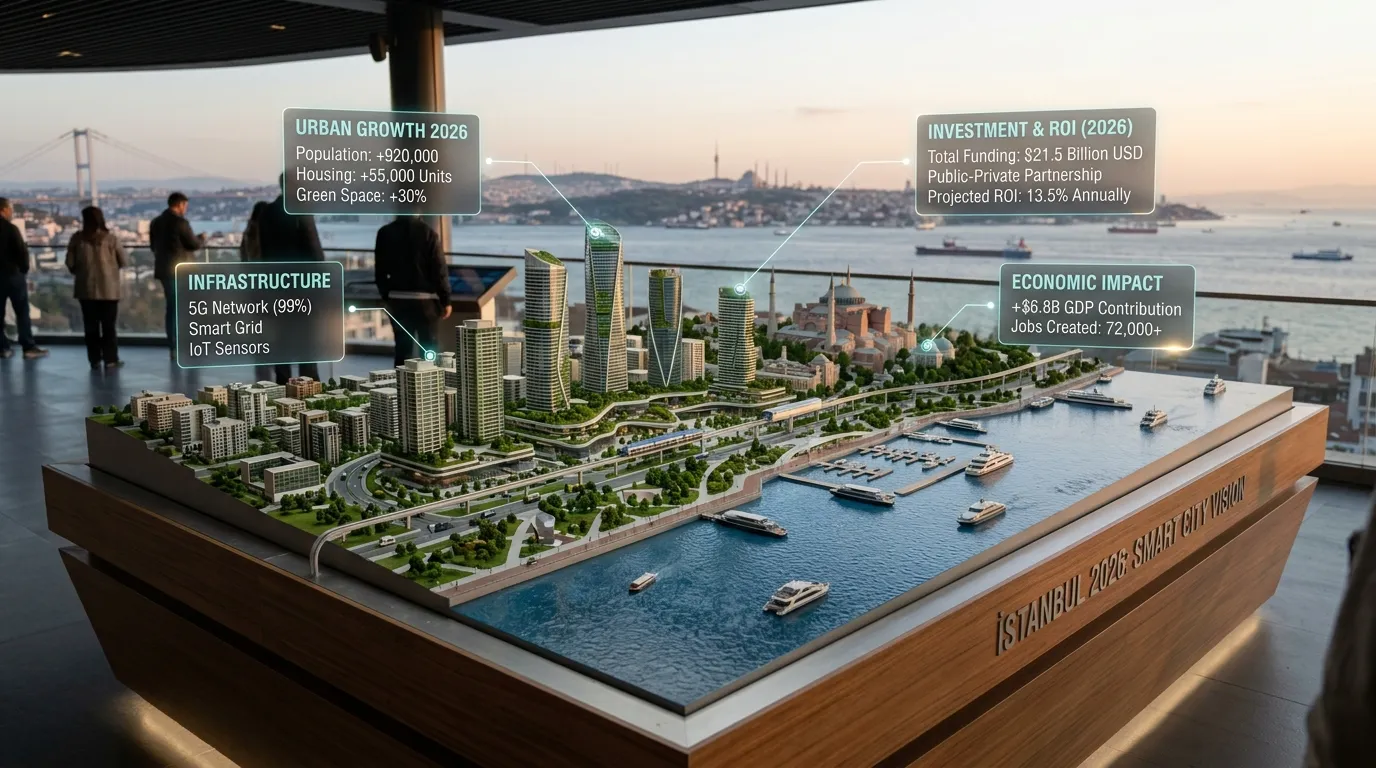
The Istanbul Property Market 2026 is entering one of its most important transitions in the last decade. Investors who became familiar with the explosive growth period between 2021 and 2024 are now witnessing a different type of market. Transaction volumes have normalized, speculative buying has slowed, and buyers are becoming significantly more selective. Yet despite these changes, Istanbul property prices continue to demonstrate resilience, especially in prime districts and modern developments.
This apparent contradiction has led some international investors to ask whether the Istanbul real estate market is cooling. The answer is more nuanced. The market is not shrinking; it is maturing. Demand remains strong, but it is increasingly concentrated in assets that meet modern investor expectations. Buyers are no longer simply searching for any property in Istanbul. They are searching for earthquake-compliant buildings, metro-connected locations, professionally managed developments, and neighborhoods with sustainable rental demand.
The city's unique position between Europe and Asia continues to attract domestic and foreign capital. Istanbul remains Turkey's financial, commercial, educational, and cultural center. Its population growth, ongoing urban transformation projects, and infrastructure investments provide long-term support for the housing market. These factors continue to make Istanbul property investment one of the most closely watched opportunities in the region.
The most important theme of 2026 is the emergence of what many analysts call the Quality Era. During previous years, rising prices often lifted almost every segment of the market. Today, quality matters more than ever. Building safety, transportation access, and neighborhood fundamentals increasingly determine which properties outperform.
For investors seeking to buy property in Istanbul, the opportunities remain significant. The difference is that success now depends less on broad market exposure and more on choosing the right building in the right location. The Istanbul property market is no longer rewarding speculation alone; it is rewarding informed decision-making.
Investors looking to compare active opportunities can browse the latest apartments for sale in Istanbul across luxury districts, business hubs, and emerging growth corridors.
Why the Istanbul Real Estate Market Is Changing
The transformation of the Istanbul real estate market is being driven by a combination of economic stabilization, regulatory improvements, and changing buyer priorities. During the inflation-driven years, real estate served as a primary wealth-preservation tool for many Turkish households. Investors purchased properties rapidly, often focusing more on protecting capital than evaluating long-term asset quality.
In 2026, buyers are approaching the market differently. Economic conditions have become more predictable, allowing investors to evaluate opportunities with a longer-term perspective. Instead of purchasing property simply to hedge against inflation, buyers are examining rental yields, neighborhood growth prospects, construction quality, and transportation access.
Foreign buyers are contributing to this trend as well. Many international investors entering the Istanbul property market 2026 are experienced real estate investors who compare Istanbul with other global cities. They evaluate rental returns, legal frameworks, and long-term appreciation potential before committing capital.
This evolution is creating a more sophisticated marketplace. Developers are responding by emphasizing quality construction, smart-home features, sustainability, and compliance with modern earthquake regulations. Properties that meet these standards continue attracting strong demand, while lower-quality stock faces increasing competition.
The result is a healthier market environment. Rather than being driven primarily by short-term momentum, the Istanbul housing market is becoming increasingly influenced by fundamental factors that support long-term value creation.
Investors seeking a broader understanding of current market conditions can also review the latest Turkey Real Estate Statistics 2026: Prices, Sales & Investment Trends to compare Istanbul's performance against national real estate indicators.
The Shift from Speculation to Quality Assets
One of the defining characteristics of the Istanbul Property Market Report 2026 is the shift from speculation toward quality-focused investing. This trend is visible across nearly every segment of the market, from affordable apartments to ultra-luxury waterfront residences.
Investors are increasingly asking detailed questions before making purchases. Is the building compliant with modern seismic regulations? How close is it to a metro station? What is the expected rental yield? Is there future infrastructure planned nearby? These considerations now play a major role in determining market value.
This shift has created a widening performance gap between premium and secondary assets. A modern apartment near a major transportation hub may continue appreciating steadily, while an older building without modern safety standards can struggle to attract buyers. The difference between these asset classes is becoming increasingly pronounced.
The trend is particularly important for foreign investors seeking property for sale in Istanbul. International buyers are often focused on wealth preservation, rental income, and long-term appreciation. As a result, they tend to favor newer developments with strong management, modern amenities, and clear legal documentation.
Quality assets also tend to perform better during periods of economic uncertainty. Their stronger tenant demand, higher liquidity, and superior construction standards provide additional resilience. This is one reason why many professional investors continue viewing Istanbul property investment as attractive despite the market's transition away from speculative growth.
Istanbul Property Prices 2026: Market Data, Growth Rates & Pricing Trends
The most common question among investors researching the Istanbul Property Market 2026 is straightforward: Are property prices in Istanbul still rising? The answer is yes, but the nature of growth has changed significantly compared with previous years. The market is no longer experiencing broad-based appreciation where nearly every property benefits equally. Instead, growth is becoming increasingly selective, favoring assets with strong fundamentals.
Current market data indicates that average Istanbul property prices are generally ranging between 57,000 TRY and 60,000 TRY per square meter citywide, although actual values vary dramatically by district, building age, and property type. At prevailing exchange rates, this places average pricing between approximately $1,325 and $1,755 per square meter, making Istanbul competitive compared with many major global cities.
The most active transaction segment currently falls between 3.5 million TRY and 14 million TRY, representing a broad range of residential opportunities for domestic buyers and international investors. This segment includes modern apartments, family residences, and investment properties located throughout the city’s emerging growth corridors and established urban districts.
Premium districts operate under entirely different market dynamics. Luxury properties in areas such as Bebek, Etiler, and Sarıyer frequently exceed $7,000 to $15,000+ per square meter, reflecting severe land scarcity and sustained demand from affluent buyers. These properties are often viewed as wealth-preservation assets rather than purely income-generating investments.
A major feature of the current market is increased pricing discipline. Buyers are conducting more due diligence, negotiating more actively, and focusing on long-term value rather than short-term appreciation. This behavior is helping create a healthier and more transparent pricing environment across Istanbul.
The overall picture is one of stabilization rather than stagnation. While annual growth rates may not match the extraordinary figures seen during inflation-driven years, the market remains fundamentally supported by strong demographics, urban development, infrastructure expansion, and international investor interest.
According to recent market research and Apartment Prices in Istanbul 2026: Smart Investor Guide, pricing growth is becoming increasingly selective, with modern and strategically located properties outperforming the broader market.
Istanbul Property Prices vs Inflation
Understanding the difference between nominal and real price growth is essential when analyzing the Istanbul property market. Headline appreciation figures often attract attention, but investors who ignore inflation may misinterpret actual market performance.
Nominal property price growth across Istanbul has generally been estimated in the range of 28% to 33% annually in Turkish Lira terms during the early part of 2026. At first glance, these figures appear exceptionally strong. However, inflation-adjusted analysis provides a more accurate picture of wealth creation.
Real growth reflects the increase in property values after accounting for inflation. In a high-inflation environment, a significant portion of nominal appreciation may simply represent currency adjustment rather than genuine value creation. Professional investors therefore focus on real returns rather than headline figures alone.
The encouraging development in 2026 is that the market appears to be moving into a more sustainable growth corridor. Rather than relying solely on inflation-driven appreciation, values are increasingly supported by location quality, transportation infrastructure, rental demand, and construction standards.
For international investors, exchange-rate considerations add another layer of complexity. Many foreign buyers evaluate opportunities in dollars, euros, or Gulf currencies rather than Turkish Lira. This means currency movements can significantly influence overall investment performance.
The strongest-performing properties tend to combine multiple advantages. They offer appreciation potential, rental income, and strong long-term demand drivers. This combination provides a more balanced investment profile than relying solely on price growth.
As the market matures, investors are increasingly focusing on these fundamentals. The result is a healthier environment where asset quality plays a larger role in determining returns than broad inflationary trends.
Average Apartment Prices in Istanbul by Segment
The Istanbul real estate market contains several distinct pricing tiers, each appealing to different types of investors. Understanding these segments is critical when evaluating opportunities and comparing districts.
| Market Segment | Representative Districts | Average Price Range (USD/sqm) | Investor Goal |
|---|---|---|---|
| Premium Waterfront | Bebek, Etiler, Sarıyer, Zeytinburnu | $4,000 – $15,000+ | Wealth Preservation |
| Central Business District | Maslak, Levent, Şişli, Kağıthane | $3,500 – $8,000 | Rental Income & Appreciation |
| Growth Corridors | Esenyurt, Pendik, Kartal | $1,200 – $2,500 | Entry-Level Investment & Growth |
The luxury segment is dominated by waterfront and Bosphorus-facing properties. These assets benefit from scarcity, prestige, and exceptionally strong long-term demand. Their investment profile is often centered on wealth preservation rather than maximizing rental yield.
The central business district segment offers a different proposition. Areas such as Şişli, Maslak, and Kağıthane attract professionals, expatriates, and corporate tenants. Investors often target these districts for a combination of rental income and steady appreciation.
Growth corridors represent the most accessible entry point for many buyers. Districts such as Pendik, Kartal, and Esenyurt offer lower acquisition costs while benefiting from transportation improvements and population growth. These areas appeal to investors seeking long-term upside linked to urban expansion.
The diversity of pricing within Istanbul highlights why citywide averages can be misleading. Successful investors evaluate opportunities based on district-specific and neighborhood-specific dynamics rather than relying solely on broad market statistics.
Understanding the Asking Price Gap
A notable feature of the Istanbul Property Market 2026 is the growing difference between advertised listing prices and completed transaction prices. This phenomenon reflects the market’s transition toward greater maturity and negotiation discipline.
Industry professionals estimate that asking prices on major property portals are frequently around 7% higher than final transaction values. Sellers often include a negotiation buffer in their initial pricing, anticipating that serious buyers will seek discounts during discussions.
This behavior differs from the intense market conditions of previous years, when strong demand sometimes resulted in properties selling at or above asking price. Today's buyers are more analytical, more patient, and more focused on obtaining fair value.
The asking-price gap varies significantly by segment. Premium waterfront properties often experience smaller discounts because demand remains exceptionally strong. In contrast, areas with larger development pipelines may see more aggressive negotiations as buyers have greater choice.
For investors researching property for sale in Istanbul, this distinction is important. Relying exclusively on online listings can create an inaccurate picture of actual market values. Comparable transaction data provides a much more reliable benchmark.
Experienced local agents and valuation professionals often possess insights into recent sales that are not publicly available. These insights can help investors negotiate more effectively and avoid overpaying for assets.
The presence of a negotiation buffer should not be viewed as a sign of weakness. Instead, it reflects a more balanced market where buyers and sellers engage in informed discussions based on property-specific characteristics and market realities.
What Is Driving the Istanbul Property Market in 2026?
Three major forces are shaping the future of the Istanbul real estate market in 2026:
- Earthquake-compliant construction
- Transportation infrastructure expansion
- Turkish Citizenship by Investment demand
These factors are influencing investment decisions across every major district and are becoming increasingly important valuation drivers.
Buildings constructed according to modern earthquake standards are attracting stronger demand and commanding higher premiums. Metro expansions are reshaping accessibility and creating new growth corridors. At the same time, the Turkish Citizenship by Investment program continues attracting foreign buyers seeking both investment opportunities and residency benefits.
Together, these trends are creating a market environment where quality and functionality matter more than ever. Investors who understand how these forces interact are better positioned to identify opportunities capable of delivering strong long-term performance.
What Is Driving the Istanbul Property Market in 2026?
The Istanbul Property Market 2026 is being shaped by a set of structural forces that extend far beyond short-term economic cycles. While interest rates, inflation, and currency movements continue to influence buyer sentiment, the strongest drivers of long-term value are increasingly linked to quality, infrastructure, and regulatory certainty.
Investors who are successfully navigating the Istanbul real estate market are paying close attention to three themes. First, earthquake-resistant construction has become one of the most important valuation factors in the city. Second, metro and transportation expansions are creating entirely new investment corridors. Third, the Turkish Citizenship by Investment program continues attracting international capital, particularly from buyers seeking long-term security and global mobility.
What makes these catalysts so powerful is that they reinforce each other. A newly constructed apartment near a metro station that also qualifies for citizenship investment criteria will typically attract a broader pool of buyers and tenants than an older property lacking these advantages. This dynamic is creating a widening gap between premium assets and secondary stock.
For investors looking to buy property in Istanbul, understanding these drivers is no longer optional. They are increasingly determining which properties appreciate, which properties generate strong rental demand, and which assets remain liquid during changing market conditions.
The transition from a speculative market to a quality-focused market means that fundamentals matter more than ever. The following sections explore the key forces reshaping the city's property landscape.
Earthquake-Compliant Buildings and Property Values
Few factors have become as influential in the Istanbul housing market as earthquake resilience. In previous years, many buyers considered construction quality important, but often secondary to location and pricing. In 2026, that hierarchy has changed dramatically.
Following increased awareness of seismic risks and stricter enforcement of modern building standards, buyers are placing unprecedented emphasis on structural integrity. Buildings developed under post-2018 regulations are generally viewed more favorably because they benefit from stricter engineering requirements and updated safety standards.
The market impact is significant. Newer, compliant properties frequently command substantial premiums compared with older buildings in the same neighborhood. Buyers recognize that earthquake-resistant assets offer not only greater safety but also stronger long-term liquidity and investment appeal.
Urban transformation projects across Istanbul are accelerating this trend. Many older residential buildings are being replaced with modern developments designed according to contemporary engineering standards. These projects often introduce upgraded amenities, energy efficiency features, and improved living environments alongside enhanced safety.
International investors are particularly sensitive to these considerations. Many foreign buyers entering the Istanbul property investment market conduct extensive due diligence regarding construction quality before making acquisitions. Properties with strong engineering credentials and clear compliance documentation often attract stronger demand and achieve higher valuations.
Building quality has become a major investment criterion, leading many buyers to prioritize earthquake-resistant apartments in Istanbul that comply with the latest construction standards and seismic regulations.
Banks, valuation firms, and institutional investors are increasingly incorporating structural quality into their assessment frameworks as well. This reinforces the market premium attached to compliant assets and contributes to long-term value preservation.
For anyone seeking property for sale in Istanbul, construction quality should be considered just as important as location. In the city's emerging quality era, safety and resilience have become fundamental components of property value.
Istanbul Metro Property Investment Opportunities
Transportation infrastructure has always influenced real estate values, but the scale of Istanbul's metro expansion is creating some of the most compelling investment opportunities in the market today. As new lines become operational and existing networks expand, accessibility is improving across large parts of the city.
This process is generating what many analysts call the transit premium. Properties located near metro stations often experience stronger demand, higher rental occupancy rates, and superior appreciation potential compared with similar properties located farther away.
The reason is simple. Modern urban residents value convenience. Professionals want shorter commutes. Students want easy access to universities. Families want efficient transportation options. Metro connectivity addresses all of these needs, making nearby properties more attractive to both buyers and tenants.
Several districts are benefiting directly from transportation improvements. Kağıthane has become one of the most notable examples, transforming from an industrial area into a vibrant residential and commercial hub. Pendik and Kartal on the Asian side are also gaining attention due to enhanced connectivity and infrastructure investment.
For investors focused on Istanbul metro property investment, timing can be particularly important. Properties purchased before major transportation projects become fully operational often benefit from appreciation as accessibility improves and demand increases.
Rental performance is another major advantage. Metro-connected apartments tend to attract a broader tenant base and often experience lower vacancy rates. This can contribute to stronger cash flow and more stable investment returns over time.
Infrastructure projects do more than improve transportation. They reshape entire neighborhoods, influence business activity, and alter residential demand patterns. Investors who understand these dynamics can identify opportunities before they become widely recognized by the broader market.
One of the strongest investment themes in the Istanbul Property Market 2026 is the growing premium attached to metro-connected real estate. As transportation infrastructure continues expanding across both the European and Asian sides of the city, investors are increasingly targeting neighborhoods positioned along new transit corridors. Buyers looking to identify the most promising locations can explore the best areas to invest near metro lines in Istanbul in 2026, where major infrastructure projects are creating new opportunities for capital appreciation and rental growth.
Turkish Citizenship by Investment and Foreign Demand
The Turkish Citizenship by Investment program remains one of the most important factors supporting foreign participation in the Istanbul real estate market. While the program has evolved over time, it continues attracting buyers from the Middle East, Asia, Europe, and other regions seeking both investment opportunities and citizenship benefits.
The current framework requires a minimum real estate investment of $400,000, with ownership maintained for a specified holding period. This threshold has shifted the profile of participants toward more established investors with greater emphasis on quality and long-term value.
One of the most significant developments has been the strengthening of regulatory oversight. Independent valuation reports, stricter documentation requirements, and enhanced transaction verification procedures have improved transparency and reduced uncertainty. While these measures add complexity to the process, they also increase investor confidence.
Foreign buyers continue viewing Istanbul as an attractive destination due to its strategic location, relatively competitive pricing, and strong long-term growth prospects. Compared with many major global cities, Istanbul property prices remain accessible while offering exposure to one of the world's largest metropolitan economies.
Citizenship-related demand tends to concentrate in modern developments with strong infrastructure, clear legal documentation, and pricing aligned with program requirements. These projects often attract buyers seeking a combination of residency benefits, wealth preservation, and rental income.
The influence of the citizenship program extends beyond direct applicants. The framework's regulatory improvements contribute to the broader professionalization of the market, benefiting all investors regardless of nationality.
For many international buyers researching buy property in Istanbul opportunities, the citizenship pathway remains an additional advantage that differentiates Turkey from competing investment destinations.
Many international investors continue to combine real estate acquisition with the Turkish Citizenship by Investment program, which remains one of the most attractive residency and citizenship pathways available through property ownership.
Best Areas to Buy Property in Istanbul
Choosing the best areas to buy property in Istanbul depends entirely on investment objectives. A buyer focused on luxury lifestyle and wealth preservation will likely target different districts than an investor seeking rental income or long-term appreciation.
The city's vast size means that Istanbul functions as multiple property markets operating simultaneously. Some districts are driven by scarcity and prestige. Others are fueled by rental demand, infrastructure growth, or affordability. Understanding these distinctions is essential for making informed investment decisions.
Broadly speaking, Istanbul's most important investment locations can be divided into three categories:
- Luxury and prestige districts
- High-yield urban districts
- Transit-led growth corridors
Each category offers unique advantages and risks. The key is matching district characteristics with investment goals.
In the following sections, we examine some of the strongest-performing areas attracting attention in the Istanbul Property Market 2026.
Best Areas to Buy Property in Istanbul
When discussing the best areas to buy property in Istanbul, it is important to recognize that there is no single “best” district for every investor. Istanbul is a city of more than 15 million people spread across 39 districts, each with its own economic profile, demographic trends, infrastructure advantages, and property market characteristics.
Some investors prioritize prestige and capital preservation. Others focus on rental income, affordability, or future appreciation linked to infrastructure development. The strongest investment strategy begins with understanding your objective and selecting a district that aligns with it.
In the Istanbul Property Market 2026, three major categories continue to dominate investor attention:
| Investment Strategy | Key Districts | Primary Objective |
|---|---|---|
| Luxury & Wealth Preservation | Bebek, Etiler, Sarıyer, Ataköy | Long-term capital preservation |
| Rental Yield & Urban Demand | Şişli, Kağıthane, Basın Ekspres | Strong rental income |
| Growth & Appreciation | Esenyurt, Pendik, Kartal | Future capital growth |
The growing sophistication of the Istanbul real estate market means investors must think beyond broad district averages. The most successful acquisitions often occur at the neighborhood and street level, where transportation access, building quality, and local amenities significantly influence performance.
Buyers evaluating residential lifestyle options may also benefit from reviewing the best areas to live in Istanbul, which compares neighborhoods based on quality of life, transportation, education, and investment potential.
Istanbul Luxury Real Estate Districts
The luxury segment remains one of the most resilient parts of the Istanbul property market. These districts are characterized by limited supply, prestigious addresses, premium amenities, and strong long-term demand from affluent domestic and international buyers.
Unlike many investment markets where luxury demand can fluctuate significantly, Istanbul's top-tier districts benefit from genuine scarcity. The Bosphorus waterfront cannot be replicated, and strict planning regulations limit future development opportunities in many premium neighborhoods.
Investors in the Istanbul luxury real estate sector are typically focused on wealth preservation rather than maximizing rental yields. They seek assets capable of retaining value across economic cycles while providing exceptional lifestyle benefits.
Many luxury buyers are business owners, executives, family offices, and high-net-worth individuals who view premium real estate as part of a broader asset allocation strategy. For these investors, exclusivity and location are often as important as financial returns.
The luxury segment also attracts foreign investors seeking long-term exposure to one of the world's most strategically located cities. The combination of lifestyle appeal, scarcity, and international demand continues supporting values in these districts.
Bebek, Etiler, Sarıyer and Waterfront Property
Bebek, Etiler, and Sarıyer represent some of the most desirable addresses in the entire Turkish property market. These neighborhoods consistently rank among the best areas to buy property in Istanbul for buyers seeking prestige, exclusivity, and long-term value retention.
Bebek is perhaps the most iconic waterfront district in Istanbul. Positioned directly along the Bosphorus, it combines stunning water views with luxury dining, marina access, and a vibrant social atmosphere. Properties here often command some of the highest prices in Turkey due to their extreme scarcity.
Etiler offers a slightly different luxury profile. While not entirely waterfront, it provides excellent access to elite schools, premium shopping destinations, business centers, and upscale residential communities. Many affluent families choose Etiler because it balances convenience with prestige.
Sarıyer encompasses a broader geographic area and includes several highly sought-after residential enclaves. The district benefits from forest views, Bosphorus access, spacious villa developments, and a strong reputation among high-income buyers.
Luxury waterfront developments in areas such as Ataköy and Zeytinburnu have also emerged as significant investment destinations. These projects provide modern amenities while maintaining proximity to central business districts and transportation infrastructure.
Average prices in these areas frequently range from $4,000 to over $15,000 per square meter, depending on view quality, building specifications, and exact location. Exceptional Bosphorus-facing properties can exceed these levels substantially.
For investors focused on Istanbul luxury real estate, scarcity remains the primary investment driver. There will always be limited waterfront inventory, which helps support long-term value appreciation and market resilience.
Top Areas for Istanbul Rental Yield
Not every investor enters the market seeking luxury residences. Many are focused on generating consistent rental income, and several districts stand out for their ability to deliver attractive Istanbul rental yield performance.
Rental demand in Istanbul remains supported by a large and diverse tenant base. Students, corporate professionals, expatriates, healthcare workers, and young families all contribute to a robust rental market. This diversity helps create stable occupancy rates across key urban districts.
Properties located near business centers, universities, transportation hubs, and commercial districts generally experience stronger tenant demand. Investors targeting rental income therefore tend to prioritize convenience, accessibility, and modern amenities.
Gross rental yields in selected urban districts can often range between 5% and 8%, making them attractive relative to many established European property markets.
The strongest opportunities typically combine healthy rental returns with long-term appreciation potential. This dual benefit helps investors generate both income and capital growth over time.
Kağıthane, Şişli and Basın Ekspres
Among the most attractive districts for Istanbul rental yield, Kağıthane, Şişli, and Basın Ekspres continue attracting significant investor interest.
Kağıthane has undergone one of Istanbul's most remarkable urban transformations. Once primarily industrial, it has evolved into a modern mixed-use district featuring residential towers, office developments, retail projects, and enhanced transportation infrastructure. Its proximity to major business hubs supports strong tenant demand.
Şişli remains one of the city's most established urban districts. The area benefits from excellent transportation links, corporate offices, healthcare facilities, educational institutions, and retail destinations. This broad economic base contributes to stable rental demand throughout market cycles.
Basın Ekspres has emerged as a strategic development corridor connecting major transportation routes and commercial centers. New residential and mixed-use projects continue attracting professionals seeking modern living environments with convenient access to employment hubs.
These districts appeal to a diverse tenant population, reducing reliance on any single demographic group. This diversity can help investors maintain occupancy even during changing economic conditions.
For buyers seeking Istanbul property investment opportunities focused on cash flow, these locations offer some of the strongest combinations of rental demand, infrastructure quality, and future growth potential.
Affordable Property Investment in Istanbul
Investors seeking lower entry costs often focus on Istanbul's growth corridors, where transportation improvements and population expansion continue creating opportunities for appreciation.
These districts typically attract first-time buyers, middle-income families, and investors seeking affordability without sacrificing long-term growth potential. Infrastructure development plays a particularly important role in shaping demand within these markets.
The investment thesis is straightforward: as central districts become increasingly expensive, buyers and renters expand their search into more affordable locations. Improved transportation networks make this migration possible by reducing commuting times and enhancing accessibility.
Many of Istanbul's most dynamic growth opportunities are found within these emerging districts.
Esenyurt, Pendik and Kartal
Esenyurt remains one of the most active residential markets in Istanbul and is often described as the city's volume engine. The district offers relatively affordable pricing, a large inventory of residential developments, and strong demand from both domestic and international buyers.
However, Esenyurt requires careful property selection. Supply levels vary considerably across neighborhoods, making street-level analysis essential for identifying quality opportunities.
Pendik, located on the Asian side, has become increasingly attractive due to its proximity to Sabiha Gökçen International Airport, expanding transportation networks, and growing commercial activity. The district appeals to professionals and families seeking affordability combined with modern infrastructure.
Kartal has undergone significant transformation through waterfront redevelopment projects, transportation investments, and urban regeneration initiatives. Its improved connectivity has strengthened demand and increased investor interest.
Property prices within these districts generally range between $1,200 and $2,500 per square meter, making them among the most accessible segments of the Istanbul property market 2026.
Investors seeking lower entry points can explore opportunities highlighted in Cheap Flats for Sale in Istanbul 2026: Top 5 Affordable Districts, where emerging districts continue attracting budget-conscious buyers.
Buying Property in Istanbul: Costs, Taxes & Legal Requirements
Understanding the purchase process is just as important as identifying the best areas to buy property in Istanbul. Many first-time investors focus exclusively on property prices and overlook the additional expenses associated with acquiring real estate. These costs can influence total returns and should be incorporated into investment planning from the beginning.
The good news is that Turkey's property acquisition process has become increasingly transparent over the past decade. Regulatory reforms, digitalization initiatives, and stricter compliance requirements have improved investor protection and increased market confidence. International buyers now benefit from clearer procedures and stronger legal frameworks than ever before.
One of the most significant transaction costs is the Tapu (Title Deed) Transfer Fee, which is generally calculated at 4% of the declared property value. Although the law technically allows this fee to be shared between buyer and seller, market practice often results in the buyer covering the full amount. Investors should clarify this issue during negotiations to avoid surprises.
Another important requirement is the mandatory independent valuation report, particularly for foreign buyers. This report verifies market value and helps ensure compliance with regulatory requirements. While relatively inexpensive compared with the overall investment, it remains a mandatory component of many transactions.
Additional costs may include:
| Cost Item | Typical Consideration |
|---|---|
| Tapu Transfer Fee | Approximately 4% |
| Valuation Report | Mandatory for many foreign transactions |
| Legal Fees | Varies by complexity |
| Agency Commission | Negotiable depending on transaction |
| Translation & Notary Fees | Required for some buyers |
| Property Insurance | Ongoing ownership cost |
Investors pursuing Turkish Citizenship by Investment should pay particular attention to documentation and compliance requirements. Professional legal representation is strongly recommended to ensure the transaction meets all eligibility criteria and regulatory standards.
Successful investing in the Istanbul real estate market requires more than identifying a promising property. It requires understanding the complete acquisition process, budgeting accurately, and conducting proper due diligence at every stage.
Istanbul Property Forecast 2027
Looking ahead, the outlook for the Istanbul Property Market 2026 and beyond remains generally positive. While the market is unlikely to replicate the extraordinary transaction volumes seen during previous inflation-driven periods, the underlying drivers of demand remain firmly in place.
Several structural factors continue supporting the market:
- Population growth
- Urban regeneration projects
- Infrastructure expansion
- International investment demand
- Housing supply constraints in premium districts
- Ongoing economic significance of Istanbul
The most likely scenario for 2027 is continued market segmentation. Premium properties, earthquake-compliant developments, and metro-connected assets are expected to outperform the broader market. Investors who prioritize quality and location are likely to experience stronger long-term results than those pursuing purely speculative opportunities.
Luxury districts such as Bebek, Etiler, and Sarıyer should remain resilient due to severe land scarcity and strong demand from affluent buyers. These neighborhoods have historically demonstrated strong value retention even during periods of market uncertainty.
Yield-oriented districts including Kağıthane, Şişli, and Basın Ekspres are expected to continue benefiting from robust tenant demand. Their combination of employment access, transportation infrastructure, and urban amenities supports both rental income and capital appreciation.
Growth corridors such as Pendik and Kartal may offer some of the strongest upside potential if transportation investments continue progressing as planned. Improved accessibility often serves as a catalyst for both residential demand and price growth.
Foreign investment is also expected to remain an important component of the market. The combination of competitive pricing, strategic geography, and the Turkish Citizenship by Investment framework continues attracting international interest.
Risks remain, of course. Changes in monetary policy, global economic conditions, financing costs, and geopolitical developments can influence investor sentiment. However, the long-term fundamentals supporting the Istanbul housing market appear significantly stronger than short-term cyclical challenges.
The market's future is likely to belong to assets that combine structural quality, transportation access, strong rental demand, and regulatory compliance.
The Importance of Street-Level Due Diligence
One of the most valuable lessons investors can learn about the Istanbul property market is that citywide analysis is only the starting point. Understanding broad market trends can help identify attractive districts, but successful investments are often determined at the street and building level.
A common phrase among experienced real estate professionals captures this reality:
"Macro analysis takes you to the right city. Street-level analysis takes you to the right building."
This principle is especially relevant in Istanbul because market conditions can vary dramatically within a single district. Two buildings located a few hundred meters apart may have entirely different investment profiles due to construction quality, transportation access, management standards, or neighborhood characteristics.
Investors should evaluate:
- Building age and structural quality
- Earthquake compliance documentation
- Distance to metro stations
- Local rental demand
- Future infrastructure projects
- Building management quality
- Planned developments nearby
Street-level due diligence becomes even more important in emerging growth corridors. While districts such as Esenyurt, Pendik, and Kartal offer attractive opportunities, performance can vary significantly between neighborhoods.
Professional advisors—including lawyers, engineers, valuation specialists, and experienced real estate consultants—often provide insights that are not visible through online research alone. Their expertise can help investors identify hidden risks and uncover opportunities that broader market statistics may not reveal.
In Istanbul's new quality-driven era, attention to detail is becoming one of the most important competitive advantages an investor can possess.
Conclusion
The Istanbul Property Market Report 2026 reveals a city transitioning into a more mature and sophisticated real estate cycle. The era of broad, speculation-driven appreciation is gradually giving way to a market defined by quality, infrastructure, and strategic investment decisions.
Transaction volumes may have normalized following several extraordinary years, but this should not be mistaken for weakness. Demand remains strong for properties that meet modern investor expectations. Earthquake-compliant buildings, metro-connected developments, and well-located assets continue attracting significant interest from both domestic and international buyers.
The strongest opportunities vary according to investment objectives. Luxury districts such as Bebek, Etiler, and Sarıyer offer scarcity-driven value and wealth preservation. Urban hubs including Şişli, Kağıthane, and Basın Ekspres provide attractive Istanbul rental yield potential. Growth corridors such as Pendik, Kartal, and Esenyurt create opportunities linked to transportation improvements and demographic expansion.
For investors seeking to buy property in Istanbul, the key lesson is clear: success increasingly depends on asset selection rather than market timing alone. The city's future growth is likely to reward those who focus on quality construction, transportation access, legal compliance, and long-term usability.
The market has not entered a period of decline. It has entered a period of refinement. Those who adapt to this new reality are likely to find some of the most compelling Istanbul property investment opportunities of the coming decade.
Whether your goal is capital appreciation, rental income, Turkish citizenship, or long-term wealth preservation, reviewing current Istanbul apartment prices, analyzing Turkey real estate statistics, and exploring available apartments for sale in Istanbul can help you make a more informed investment decision.
FAQs
Absolutely. Kadıköy, Şişli, and Beyoğlu have top-tier internet, cafes, and co-working hubs.
Yes. Regulations remain foreigner-friendly, especially in zoned areas.
Yes. In 2026, Istanbul offers balanced opportunities with moderate price growth, strong rental demand, and continued infrastructure development. Buyers who focus on the right district and project—rather than just price—are best positioned to benefit.
Prices typically range between $3,500 and $4,000 per m², depending on location, project quality, and whether the property is new or resale.
Top-performing districts include Beşiktaş, Kadıköy, Bakırköy, Ataköy, Üsküdar, and emerging zones like Fikirtepe and Arnavutköy, where early entry can offer higher appreciation.
In most cases, yes, especially in high-demand districts.
Yes, when working with trusted professionals.
Choose based on your goal: modern family compounds, central business access, or mid-budget areas with wide rental demand—while prioritizing transport and services.





Have Question Or Suggestion ?
Please Share Your Thought, To Make It Real