Preferred Areas Among Pakistani Investors in Turkey
Explore the top Turkish cities and districts favored by Pakistani real estate investors, with insights on returns, pricing, and risk reduction.
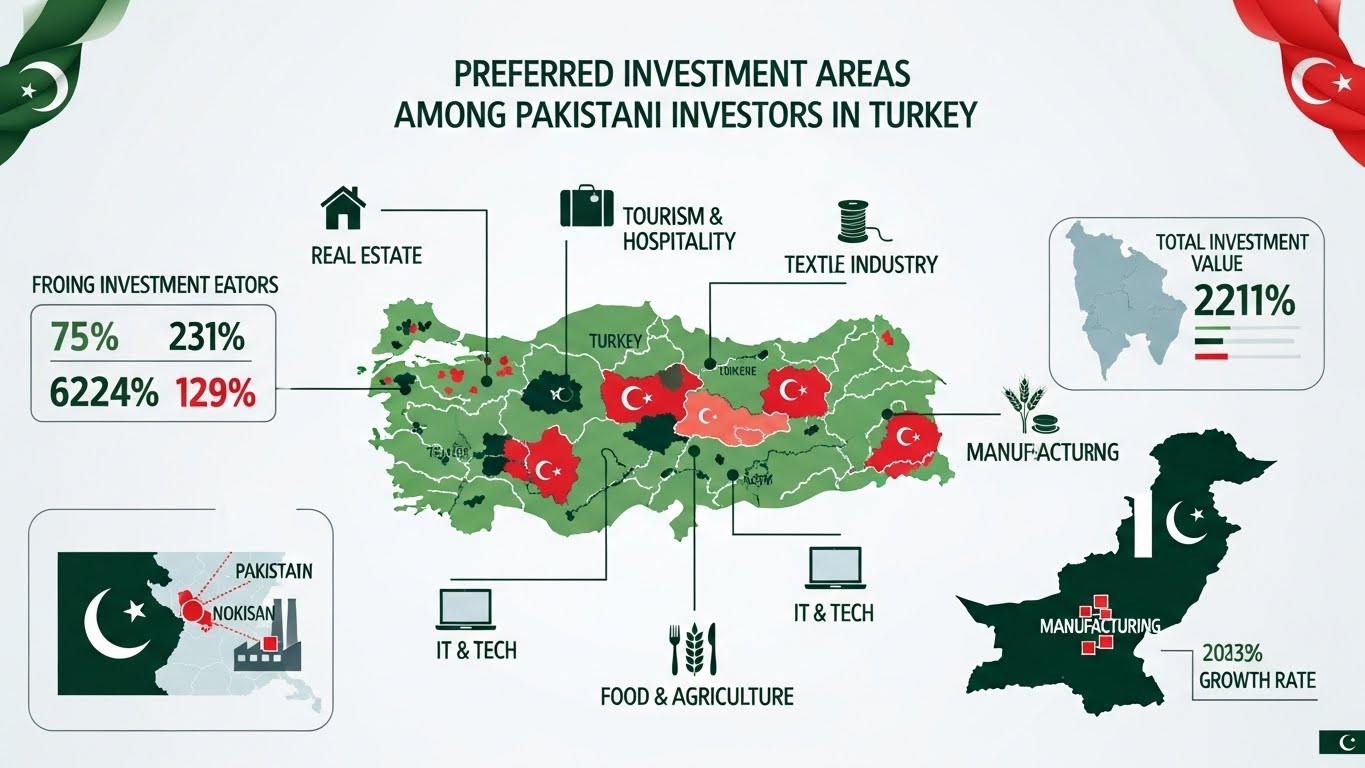
Investors from Pakistan are increasingly turning their attention to the Turkish real estate market as a practical option that combines accessibility, variety of inventory, and mid- to long-term growth potential. With choices expanding across Istanbul, coastal hubs, and inland cities, the key question is no longer “Is it worthwhile?” but rather “Which areas offer the best balance of price, return, and investment security?” This guide explains the most preferred locations among Pakistani investors in Turkey, the reasons behind each preference, and how to choose the right area based on your investment objective.
Why Do Pakistani Investors Prefer Certain Areas in Turkey?
Location choice is not driven by popularity alone, but by a pragmatic equation tied to budget, purchase purpose, ease of resale, and rental performance. Many Pakistani investors lean toward areas with modern developments, integrated services, and a family-friendly residential environment. The presence of foreign communities can also facilitate faster adaptation. Factors such as proximity to public transport, the availability of schools and universities, and tourism potential play a major role in narrowing down destinations—especially for buyers who aim to combine living and investing.
The Most Common Motivations Behind Location Selection
Area preferences typically align with three core goals: securing stable rental income, purchasing an asset likely to appreciate over time, or combining family living with investment benefits. Pakistani investors often seek locations that are easy to market to tenants, supported by modern infrastructure, and offer a stronger sense of safety and daily convenience. Neighborhoods with upcoming infrastructure, business clusters, or university expansion are also attractive, since they often signal future demand growth.
Criteria for Choosing the Right Area for Pakistani Investors
Before discussing districts and cities, it is essential to understand the “selection logic” that explains why one area outperforms another. A strong location is not necessarily the most expensive; it is the one that aligns clearly with your needs, budget, and exit potential when selling. You should also evaluate the type of inventory: apartments in new residential compounds, units in older central buildings, or villas in quieter zones. Each category carries different return dynamics and risk considerations.
- Proximity to metro lines and major transport routes, as this increases rental demand and improves liquidity upon resale
- Availability of key services such as schools, hospitals, and shopping centers—especially for family-oriented buyers
- The volume of new developments in the area, since it signals infrastructure growth and rising demand
- The likely tenant profile (students, professionals, families) to estimate rent type and occupancy speed
- A fair balance between price and real value to avoid overpaying in inflated micro-markets
Istanbul: The Primary Destination for Pakistani Investors
Istanbul remains the most prominent choice among Pakistani investors due to its scale, market depth, and multiple investment strategies. The city offers long-term rentals, selected opportunities for short-stay demand, and appreciation prospects in districts influenced by major transport projects and urban expansion. Its population density and active economy generally make Istanbul properties easier to liquidate than those in smaller cities, which is a critical factor for investors who may plan to sell later.
Basaksehir: Modern Compounds and a Strong Family Option
Basaksehir is widely favored by investors who prefer an organized lifestyle in modern residential compounds. It features a growing pipeline of new projects and a relatively calm urban layout, making it attractive for families seeking nearby services and green spaces. Rental demand tends to be stable due to a tenant base that includes employees and families looking for secure, serviced communities. While pricing may be higher than some outer districts of Istanbul, the value often reflects the quality of the housing product and ease of leasing.
Esenyurt and Beylikdüzü: Lower Entry Prices and Broad Rental Demand
Esenyurt and Beylikdüzü appeal to Pakistani investors with mid-range or limited budgets who still want a newer apartment within a compound setting. These areas offer large inventory and abundant projects, creating strong room for comparison and negotiation. Their strength lies in a wide tenant base, but success depends on careful project selection—construction quality, compound management, and transport accessibility—because value and rental performance can vary significantly from one development to another.
Sisli and Beyoglu: High Centrality and Strong Returns—With Conditions
Some investors prefer central districts such as Sisli and Beyoglu for their proximity to business areas, services, hospitals, and commercial centers. These locations can deliver solid rental returns due to consistent demand, but they require more careful asset screening. Older buildings are common, and maintenance needs may be higher than in newer compounds. In addition, the exact street and micro-location can strongly affect leasing quality and resale potential. These areas are therefore better suited for investors with greater experience or those who rely on independent professional assessment before buying.
Antalya: A Preferred Choice for Lifestyle-Plus-Investment Buyers
Antalya attracts Pakistani investors who want a coastal lifestyle alongside strong seasonal rental potential in certain neighborhoods. Buyers planning to spend part of the year in Turkey, or seeking a “second home,” often find Antalya appealing for its balance of price and quality of life. The city also has demand from foreign residents, which supports long-term rentals in several areas. However, investors should understand seasonality and how it shapes returns, as success may depend on selecting the right rental strategy.
Konyaalti and Lara: High-Demand Neighborhoods with Stable Value
Konyaalti and Lara are among the most in-demand areas due to their proximity to the sea, modern services, and strong infrastructure. Prices are typically higher than in other parts of Antalya, but this is often offset by steadier demand and easier leasing. Investors favor these districts when the goal is a high-quality home for personal use, with the ability to generate rental income when not in residence. Choosing the right development, effective unit size, and good compound management remains essential, as returns are closely linked to the overall residential experience.
Bursa and Yalova: Steady Growth and Strategic Proximity to Istanbul
Bursa and Yalova attract investors looking for prices below Istanbul while still benefiting from their relative closeness to the country’s largest business center. Bursa offers a diversified market, with family-oriented housing as well as options near universities and industrial employment zones, creating multiple rental pathways. Yalova appeals to buyers who prefer a quieter, more residential character and some recreational demand. These cities may suit long-term investors who prioritize gradual appreciation rather than rapid gains.
Family-Friendly Areas vs. Student-Driven Demand
In Bursa, a clear strategy can be built by choosing neighborhoods near universities to improve occupancy probability, or selecting family districts with integrated services for stronger rental stability. Each approach affects tenant type, rent level, and turnover. In Yalova, proximity to services and waterfront zones can matter, but relying exclusively on seasonal demand may be risky. More secure performance often comes from long-term leasing or selecting an asset that can be resold easily when needed.
Trabzon and Sakarya: Preferences Linked to Nature and Budget
Trabzon and Sakarya are preferred by some Pakistani investors who favor greener environments, calmer living, and generally lower entry costs than Istanbul. In Trabzon, demand is tied to the city’s natural appeal and tourism character, but investment success depends on selecting locations close to services and main roads rather than remote areas with weaker liquidity. Sakarya benefits from its relative proximity to Istanbul and a more residential atmosphere, making it suitable for buyers seeking higher tranquility. In both cases, rental demand should be assessed realistically before purchasing.
How to Manage Resale Liquidity in Smaller Cities
In cities smaller than Istanbul and Antalya, resale liquidity becomes more sensitive. For that reason, the property should sit in a clearly marketable location and offer broadly attractive features for families or professionals. Selecting a well-known development or an area with completed services can improve resale prospects without heavy discounting. Effective investing in these cities is a balance between a good purchase price and an easy exit, because profitability is not only about buying well, but also about selling at the right time and at a fair valuation.
Practical Tips Before Buying in Preferred Areas
The most important step is turning “area preference” into a calculated purchase by comparing projects within the same district rather than relying on the neighborhood name alone. You should verify the property’s legal status, title deed type, and any hidden obligations or fees, and understand monthly maintenance costs within residential compounds. It is also useful to model at least two scenarios: long-term renting and resale after a holding period. Some areas perform excellently for rent but appreciate more slowly, while others do the opposite.
Common Mistakes New Investors Make
A frequent mistake is relying on general impressions or marketing claims without proper on-site review, or choosing a property far from transport links solely because the price looks attractive. Some investors also overestimate rental income without accounting for vacancy periods, furnishing costs, and maintenance. In addition, selecting a unit size that does not match local demand can reduce leasing speed, such as buying large apartments in areas where mid-size units dominate tenant preferences. Successful investing starts with clarity of purpose, followed by selecting the right area, then selecting the right unit within that area.
Frequently Asked Questions
Istanbul is commonly the first choice due to market diversity and generally easier leasing and resale compared to other cities.
Not necessarily. Returns depend on project quality, real demand, and transport access—not price alone.
Istanbul is typically stronger for long-term rentals and liquidity, while Antalya suits buyers combining residence with a coastal lifestyle and selective seasonal demand.
Choose based on your goal: modern family compounds, central business access, or mid-budget areas with wide rental demand—while prioritizing transport and services.
Complete legal verification of the property and document matching, along with comparing multiple projects in the same area before making a final decision.
Conclusion
Preferred locations among Pakistani investors in Turkey span major hubs like Istanbul, coastal destinations like Antalya, and value-plus-calm cities such as Bursa, Yalova, Trabzon, and Sakarya. The decisive factor is not the city name alone, but how well the area matches your investment objective and your ability to rent or resell efficiently. When you define your purpose clearly, focus on transport and service-supported locations, and select the right property within the area based on real quality rather than advertising, your chances of building a successful real estate investment in Turkey increase substantially.
Have Question Or Suggestion ?
Please Share Your Thought, To Make It Real