Before You Buy in Istanbul: The Critical Truth About Title Deeds & Occupancy Permits
Buying property in Istanbul? Learn the difference between Kat Mülkiyeti, Kat İrtifakı, and İskan before you invest—or risk costly mistakes.
Before You Buy in Istanbul: Your Complete Guide to Housing Permits and Title Deeds in Turkey
Thinking about investing in Istanbul Real Estate 2026? You’re not alone. Every year, thousands of foreign investors look at Istanbul and think, “This is it. This is where I want to buy.” The skyline is modern, the prices are competitive compared to Europe, and the rental demand is strong. On the surface, it feels like an obvious decision.
But let me ask you something important: Do you really understand what you’re buying?
Buying property in Turkey isn’t just about choosing a beautiful apartment with a Bosphorus view. It’s about understanding the legal foundation behind that apartment. Two concepts can make or break your investment: title deed types and the occupancy permit (İskan).
Many buyers jump into contracts without knowing the difference between Kat Mülkiyeti (full ownership) and Kat İrtifakı (construction servitude). They hear words like “occupancy permit pending” and assume it’s just paperwork. Sometimes it is. Sometimes it’s not.
Here’s the truth: The type of title deed you receive determines how secure your ownership is. The occupancy permit determines whether the building is legally approved for residential use. Ignore these details, and you might face complications when selling, refinancing, or even registering utilities.
Think of this guide as your legal compass. Instead of getting lost in confusing real estate jargon, you’ll understand exactly what each term means and how it affects you as a buyer.
If you’re planning on buying an apartment in Turkey, especially in Istanbul, this is information you simply can’t afford to ignore.
Why Istanbul Real Estate 2026 Is Attracting Global Investors
There’s a reason the phrase Istanbul Real Estate 2026 is trending among investors. Istanbul isn’t just another city—it’s a financial hub, a tourism magnet, and a cultural bridge between Europe and Asia. And when a city has all three, real estate demand rarely slows down.
So why 2026 specifically?
Several factors are shaping the market:
- Massive urban transformation projects.
- Expansion of metro and transportation networks.
- Continued foreign investment incentives.
- High rental demand from locals and expatriates.
- Strong short-term rental potential.
Urban renewal is one of the biggest drivers. Entire neighborhoods are being rebuilt to meet modern earthquake standards. This means new construction projects are everywhere. And with new projects comes a key issue: many properties are sold before construction is fully completed.
That’s where understanding Kat İrtifakı vs. Kat Mülkiyeti becomes crucial.
Developers often sell units during construction at discounted prices. Investors love this because they can buy lower and sell higher once the project is completed. But here’s the catch: during construction, the title deed is usually classified as construction servitude (Kat İrtifakı).
If everything goes according to plan, the building receives its occupancy permit and the deed converts to full ownership. But if there are legal or structural issues, delays can happen.
The Istanbul market offers strong upside potential. However, rising demand also means more projects, more developers, and more variation in quality. The smart investor doesn’t just look at price per square meter—they look at the legal structure behind the property.
In a competitive market like Istanbul, knowledge isn’t optional. It’s leverage.
Buying an Apartment in Turkey: Opportunity or Risk?
Let’s be honest—buying an apartment in Turkey can be one of the smartest financial decisions you make. Property prices remain attractive compared to many European countries. Rental yields in Istanbul can be solid. And for some investors, property ownership even opens doors to residency or citizenship options.
But opportunity and risk always go hand in hand.
Many foreign buyers assume that once their name is on the title deed, everything is secure. Technically, yes—you are the legal owner. But what type of title deed do you hold? That’s the real question.
Imagine buying what you believe is a fully completed apartment. You move in, decorate it, maybe even rent it out. Later, when you decide to sell, the buyer’s lawyer checks the records and says, “This property doesn’t have an occupancy permit.” Suddenly, negotiations stall.
Does this mean the property is illegal? Not necessarily. But it does mean there are unresolved legal steps.
Common concerns foreign buyers face include:
- Purchasing property without understanding title deed types.
- Confusion about whether the building has an occupancy permit (İskan).
- Delays in converting construction servitude to full ownership.
- Overreliance on verbal promises from developers.
Turkey’s real estate market is accessible to foreigners. The government has made the process relatively straightforward. However, the system operates differently from many Middle Eastern and European countries.
Think of it like driving in a new country. The roads may look similar, but the traffic rules are slightly different. If you don’t learn them, you risk making expensive mistakes.
The good news? Once you understand the legal structure—especially title deed categories and occupancy permits—you remove most of the uncertainty.
Title Deed in Turkey for Foreigners: What You Must Know
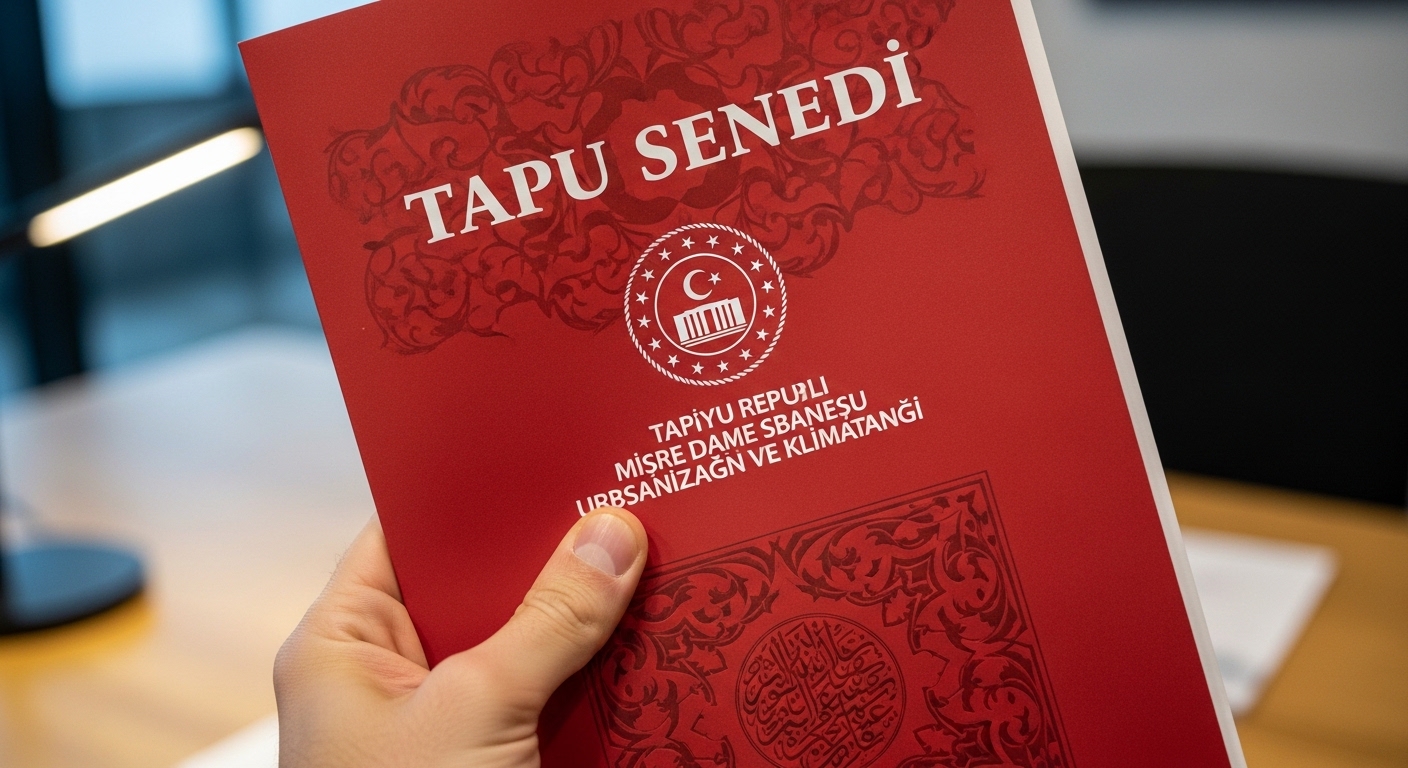
The title deed in Turkey for foreigners is called a “Tapu.” It’s the official government document proving property ownership. When you purchase real estate in Turkey, your name is registered at the Land Registry Office, and you receive this document.
Sounds simple, right? On the surface, yes.
But here’s where things get interesting: not all Tapu documents represent the same level of legal completion.
A Turkish title deed includes:
- Owner’s name
- Property type (apartment, land, commercial unit)
- Plot and parcel number
- Share of land
- Title type (Kat İrtifakı or Kat Mülkiyeti)
Foreigners have nearly the same ownership rights as Turkish citizens in most areas, except restricted military zones. That means you can buy, sell, inherit, and lease your property freely.
However, many international buyers focus only on whether they “have a Tapu.” They don’t check what type of Tapu it is.
This is like owning a car but not knowing whether it has full registration approval. The document exists—but what does it actually certify?
If the title type says Kat Mülkiyeti, you’re looking at full ownership status. If it says Kat İrtifakı, it indicates construction servitude, typically issued before the building receives its occupancy permit.
Both are legal. But they are not equal in terms of final legal status.
Understanding this difference early protects you from confusion later—especially when selling, refinancing, or transferring ownership.
And remember, when it comes to real estate, small legal details often carry big financial consequences.
Types of Title Deeds in Turkey Explained
When people talk about buying property in Turkey, they often assume there’s just one kind of title deed. In reality, understanding the types of title deeds in Turkey is one of the most important steps before signing any contract.
For residential apartments in Istanbul, there are two main categories you need to focus on:
- Kat İrtifakı (Construction Servitude Title)
- Kat Mülkiyeti (Full Ownership Title)
At first glance, both documents look official. Both are issued by the Land Registry Office. Both can be transferred legally. But the legal status behind them is different.
Think of Kat İrtifakı as a blueprint-based ownership. It represents your share in a project that is either under construction or has not yet received final municipal approval. The building physically exists—or is being built—but the municipality has not issued the final occupancy permit.
Kat Mülkiyeti, on the other hand, is the final stage. It confirms that the building complies with approved plans and has officially received its occupancy permit.
Why does this matter? Because the type of deed affects:
- Buyer confidence
- Bank financing options
- Resale speed
- Legal clarity
In hot markets like Istanbul Real Estate 2026, new developments are everywhere. Many units are sold during construction, which means buyers often receive Kat İrtifakı first. That’s normal. But what’s critical is whether the developer successfully transitions the project to Kat Mülkiyeti later.
If you’re serious about buying an apartment in Turkey, always request a copy of the title deed before making a commitment. Don’t just ask, “Is there a Tapu?” Ask, “What type of Tapu is it?”
That one extra question can save you years of complications.
Kat Mülkiyeti (Full Ownership Title Deed): The Gold Standard
If there’s one phrase you want to see on your title deed, it’s Kat Mülkiyeti.
This is full ownership status. It means the building is completed, inspected, and approved by the municipality. It also means the building has received its occupancy permit (İskan).
In simple terms: everything is legally finalized.
With Kat Mülkiyeti:
- The property is officially recognized as a completed residential unit.
- Utilities can be registered normally.
- Banks are more willing to provide financing.
- Future buyers feel more secure.
- Resale is generally easier and faster.
Imagine you’re buying two identical apartments in the same neighborhood. One has Kat İrtifakı. The other has Kat Mülkiyeti. Even if the price difference is small, most buyers will choose the one with full ownership. Why? Because it removes uncertainty.
This title type is especially important for long-term investors. If you’re planning to rent the property, apply for residency, or eventually resell, having Kat Mülkiyeti gives you flexibility.
In a competitive environment like Istanbul Real Estate 2026, liquidity matters. Properties with full ownership status typically move faster in the market.
It’s not just about legal formality—it’s about peace of mind.
When everything is officially approved, you don’t have to explain the property’s legal status to every potential buyer. The documentation speaks for itself.
Kat İrtifakı (Construction Servitude Title): What It Really Means
Now let’s talk about Kat İrtifakı, the title type that causes the most confusion among foreign buyers.
Kat İrtifakı is issued before a building receives its occupancy permit. It represents ownership rights based on the approved architectural project—not necessarily the completed building.
This title type is extremely common in newly developed projects. In fact, if you buy property during construction, you will almost always receive Kat İrtifakı first.
Is that a red flag? Not automatically.
In reputable projects, Kat İrtifakı is simply a transitional stage. Once construction is complete and the municipality approves the building, the title is converted into Kat Mülkiyeti.
However, problems can arise if:
- The building does not comply with approved plans.
- The developer makes unauthorized changes.
- Required municipal fees remain unpaid.
- The occupancy permit is delayed indefinitely.
- In these situations, the title remains in construction servitude status longer than expected.
This doesn’t mean you don’t own the property. You do. But it does mean the building hasn’t received final legal confirmation for residential use.
For investors targeting lower entry prices in off-plan projects, Kat İrtifakı can present opportunity. Early buyers often secure better pricing before market appreciation.
But here’s the key: always investigate the developer’s track record. Have they successfully delivered past projects? Did those projects obtain occupancy permits on time?
Kat İrtifakı isn’t dangerous by itself. The risk lies in uncertainty.
If the path to full ownership is clear, it can be a smart investment move.
The Difference Between Construction Servitude and Full Ownership
Let’s break down the difference between construction servitude and full ownership in a way that’s impossible to misunderstand.
| Feature | Kat İrtifakı (Construction Servitude) | Kat Mülkiyeti (Full Ownership) |
|---|---|---|
| Building Status | Under construction or not yet approved | Fully completed and approved |
| Occupancy Permit | Not issued yet | Issued |
| Legal Completion | Transitional | Final |
| Resale Confidence | Moderate | High |
| Bank Financing | Sometimes limited | Easier |
The biggest difference? The occupancy permit.
Without an occupancy permit, the building is technically incomplete from a municipal perspective—even if people are living inside.
Think of construction servitude like buying a house that’s 95% complete. Everything looks finished, but final inspection hasn’t happened yet. Full ownership is what happens after that inspection is passed.
For many investors in Istanbul Real Estate 2026, the choice depends on strategy:
- Want lower entry price and willing to wait? Construction servitude might work.
- Want stability and easier resale? Full ownership is safer.
- Neither is inherently wrong. But they are not interchangeable.
- Clarity equals control. And in real estate, control protects your capital.
What Is an Occupancy Permit in Turkey? (İskan)
Now we reach the heart of the matter: What is an occupancy permit in Turkey (İskan)?
The occupancy permit is an official document issued by the municipality confirming that:
- The building was constructed according to approved architectural plans.
- Safety regulations were followed.
- Infrastructure requirements were met.
- The building is legally suitable for residential use.
Without an occupancy permit, the building is not considered fully completed in the eyes of the municipality—even if people are already living there.
That surprises many foreign buyers.
You might see lights on, balconies decorated, families moved in—and still, the building might not have İskan.
Why is this important?
Because the occupancy permit is what allows the title deed to convert from Kat İrtifakı to Kat Mülkiyeti.
It also affects:
- Utility registration types
- Long-term resale value
- Bank loan eligibility
- Legal certainty
If a building lacks an occupancy permit due to minor technical issues, it may simply be delayed paperwork. But if there are serious structural violations, obtaining it could become complicated.
Before finalizing any purchase, ask directly:
- Does the building have an occupancy permit?
- If not, when is it expected?
- Who is responsible for obtaining it?
This one document carries enormous legal weight. Overlooking it is one of the most common mistakes foreign buyers make.
Can You Sell an Apartment Without an Occupancy Permit in Turkey?
Yes, you can sell an apartment without an occupancy permit in Turkey. The law does not prohibit transferring ownership of a property that lacks İskan.
But here’s the real question: Should you?
- When selling a property without an occupancy permit:
- Buyers may negotiate a lower price.
- Banks may hesitate to provide financing.
- Lawyers may raise additional questions.
- The sales process can take longer.
In competitive areas of Istanbul Real Estate 2026, properties with full ownership status typically attract more buyers and close faster.
If you’re buying a property without İskan, you’re not necessarily stepping into danger. However, you must understand that future buyers will evaluate the same risk you’re taking today.
It’s like buying a product that hasn’t received final certification. It may function perfectly—but the missing certificate affects perception and resale.
Transparency is key. If you’re the seller, be upfront. If you’re the buyer, conduct due diligence.
Real estate is not just about ownership—it’s about marketability.
Conclusion: How to Buy Safely in Istanbul Real Estate 2026
The Istanbul property market offers serious opportunity. Growth potential, rental demand, and international interest continue to shape Istanbul Real Estate 2026 into a dynamic investment environment.
- But success doesn’t come from excitement alone. It comes from understanding.
- If you remember only three things from this guide, let them be these:
- Always check the type of title deed.
- Confirm whether the building has an occupancy permit (İskan).
- Verify the developer’s track record if buying off-plan.
The difference between Kat İrtifakı and Kat Mülkiyeti is not just technical language—it’s the difference between transitional and finalized ownership.
Smart investors don’t rush. They verify.
And in a market as active as Istanbul, informed decisions separate profitable investments from complicated ones.
FAQs
1. Is Kat İrtifakı risky?
Not necessarily. It is common in new projects. The risk depends on whether the developer can obtain the occupancy permit and convert it to full ownership.
2. How long does it take to obtain an occupancy permit in Istanbul?
It varies by project size and compliance. It can take several months after construction is completed.
3. Can foreigners obtain full ownership title deeds?
Yes. Foreign buyers can receive Kat Mülkiyeti just like Turkish citizens, provided the building has an occupancy permit.
4. Why do some buildings remain without an occupancy permit for years?
Usually due to non-compliance with approved plans, unpaid municipal fees, or unresolved technical issues.
5. What is the safest option when buying property in Turkey?
Purchasing a property with Kat Mülkiyeti and a confirmed occupancy permit provides the highest level of legal security.
Have Question Or Suggestion ?
Please Share Your Thought, To Make It Real