Beyoglu vs Sisli: The Ultimate Property Investment Showdown in Istanbul (Don’t Invest Before Reading!)
Beyoglu or Sisli? Discover the shocking truth about prices, ROI, and rental income before you invest in Istanbul real estate.
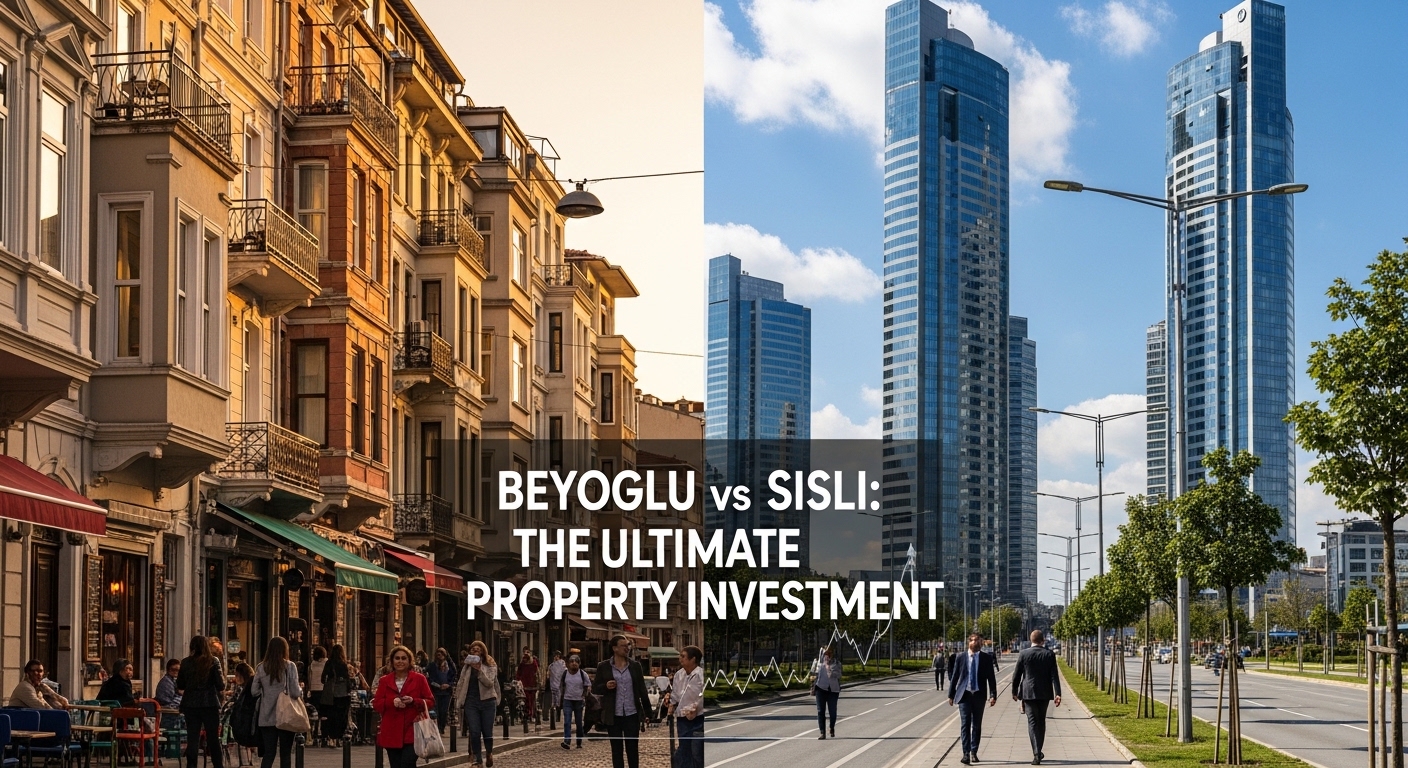
Beyoglu vs Sisli for Property Investment in Istanbul: Prices, ROI, and Best Areas to Buy
Understanding Istanbul Real Estate Market for Foreign and Local Investors
Istanbul isn’t just another global city—it’s a living, breathing marketplace where continents collide and real estate tells a story of constant evolution. If you’re considering property investment in Istanbul, you’re stepping into one of the most dynamic markets in the world. The appeal? A unique mix of affordability (compared to other major cities), high rental demand, and long-term capital appreciation. But here’s the catch: not every district performs the same way, and this is exactly where many investors either win big or miss out entirely.
The Istanbul real estate market has been shaped by a combination of local demand, foreign investor interest, urban regeneration projects, and infrastructure expansion. Central districts like Beyoglu and Sisli stand out because they’re not just residential zones—they’re economic and cultural engines. These areas consistently attract tenants, tourists, and professionals, which makes them particularly appealing for investors looking for stable returns.
Another important layer to consider is government policy. Turkey has actively encouraged foreign property ownership, even linking real estate purchases to citizenship programs under certain conditions. This has fueled demand in prime areas, especially those close to business centers and tourist attractions. Beyoglu and Sisli both benefit from this trend, but in very different ways.
So, what’s the real question here? It’s not just “where should you buy?” but rather “what kind of investor are you?” Are you chasing high rental yield in Istanbul, long-term appreciation, or a mix of both? Your answer will determine whether Beyoglu or Sisli fits your strategy better.
Why Location Matters in Istanbul Property Investment Opportunities
Let’s be honest—buying property without understanding location in Istanbul is like investing blindfolded. The city’s layout is complex, and two neighborhoods just a few kilometers apart can deliver completely different investment outcomes. That’s why location is the single most critical factor in Istanbul property investment.
Beyoglu and Sisli are both centrally located, but they serve different lifestyles and economic functions. Beyoglu is the cultural heartbeat of Istanbul, packed with historical buildings, art galleries, nightlife, and tourist attractions. Sisli, on the other hand, is more like the city’s financial brain—home to corporate offices, shopping malls, and modern residential towers.
Why does this matter for investors? Because tenant profiles differ dramatically. In Beyoglu, you’re more likely to attract short-term renters, tourists, and creatives. In Sisli, your tenants are often professionals, families, and long-term residents. This directly impacts your rental income strategy.
Accessibility is another major factor. Properties close to metro lines, business districts, and commercial hubs tend to perform better in terms of both property value appreciation in Istanbul and rental demand. Sisli excels in structured infrastructure, while Beyoglu benefits from its centrality and iconic status.
If you’re aiming for short-term rental income, proximity to attractions matters more. If you’re targeting stable, long-term tenants, proximity to workplaces and schools becomes crucial. This is where the Beyoglu vs Sisli debate really starts to take shape.
Key Factors Driving Property Demand in Central Istanbul Districts
What actually drives people to rent or buy in central Istanbul? It’s not just one thing—it’s a combination of lifestyle, convenience, and economic opportunity. Understanding these drivers can give you a serious edge when choosing between Beyoglu vs Sisli for property investment.
First, there’s urban lifestyle demand. More people—especially young professionals and expats—are choosing to live close to where they work and socialize. This trend heavily benefits both Beyoglu and Sisli, but in slightly different ways. Beyoglu attracts those who crave culture and nightlife, while Sisli appeals to those who prioritize convenience and modern living.
Second, there’s the rise of short-term rental platforms like Airbnb. Areas with high tourist traffic naturally generate higher short-term rental income. Beyoglu, being a tourist hotspot, has a clear advantage here. However, regulations and building conditions can sometimes limit this potential.
Third, infrastructure plays a massive role. Metro lines, bus routes, and proximity to major highways can significantly boost property value. Sisli has a more structured advantage in this area, making it attractive for long-term tenants who rely on daily commuting.
Finally, there’s investment security. Investors want areas with consistent demand and lower vacancy rates. Both districts offer this, but Sisli often provides more stability, while Beyoglu offers higher—but sometimes more volatile—returns.
Understanding these factors isn’t just helpful—it’s essential. It’s the difference between buying a property that sits empty and one that generates consistent income.
Overview of Beyoglu Real Estate Investment Opportunities
Historical Significance and Cultural Appeal of Beyoglu Istanbul
Beyoglu isn’t just a district—it’s an experience. Walking through its streets feels like flipping through pages of Istanbul’s history, where every building has a story and every corner offers something unexpected. This deep-rooted cultural identity plays a huge role in shaping Beyoglu real estate investment opportunities.
The district is home to famous landmarks like Istiklal Street, Galata Tower, and Taksim Square. These aren’t just tourist attractions—they’re magnets for economic activity. Restaurants, boutique hotels, art galleries, and entertainment venues all thrive here, creating a constant flow of people. For property investors, this translates into one thing: demand that rarely sleeps.
But here’s where it gets interesting. Beyoglu’s charm comes with a unique architectural landscape. Many properties are historical buildings, often requiring renovation. While this might seem like a drawback at first, it actually opens the door to high-value opportunities. Investors who are willing to restore and modernize these properties can achieve impressive returns, especially in the short-term rental market in Istanbul.
There’s also an emotional factor at play. People don’t just rent in Beyoglu—they choose it because they want to be part of its energy. This emotional connection can justify higher rental prices, especially for furnished or uniquely designed apartments.
However, it’s not all smooth sailing. The same characteristics that make Beyoglu attractive can also create challenges, such as building regulations and maintenance costs. Still, for investors who understand the landscape, Beyoglu offers a compelling mix of high ROI potential and cultural value.
Property Types and Property Prices in Beyoglu Istanbul
When it comes to property prices in Beyoglu Istanbul, variety is the name of the game. You’ll find everything from small studio apartments tucked into historic buildings to fully renovated luxury residences overlooking the Bosphorus. This diversity makes Beyoglu appealing to a wide range of investors—but it also requires careful decision-making.
Older buildings dominate the market here, and while they often come at a lower entry price, renovation costs can add up quickly. On the flip side, renovated or newly developed properties command significantly higher prices but are ready to generate income immediately. This creates two distinct investment paths: value-add projects or turnkey investments.
Price-wise, Beyoglu is generally more affordable than some of Istanbul’s ultra-luxury districts, but prime locations like Cihangir or areas near Galata can still be quite expensive. What drives these prices? Location within the district itself, proximity to tourist attractions, and the condition of the property.
Rental yields in Beyoglu can be particularly attractive, especially for short-term lets. Properties designed for Airbnb or serviced apartments often achieve higher monthly returns compared to traditional rentals. However, investors should always factor in occupancy rates and seasonal fluctuations.
One key insight many overlook is liquidity. Properties in Beyoglu—especially those in prime areas—tend to sell relatively quickly due to constant demand from both local and foreign buyers. This adds a layer of flexibility to your investment.
In short, Beyoglu offers a dynamic pricing landscape where the right property can outperform expectations—but only if you approach it with a clear strategy.
Property Price Comparison: Beyoglu vs Sisli Istanbul
| Criteria | Beyoglu | Sisli |
|---|---|---|
| Average Price per m² | $2,000 – $4,500 | $2,500 – $5,500 |
| 1+1 Apartment Price | $120,000 – $250,000 | $150,000 – $300,000 |
| 2+1 Apartment Price | $180,000 – $400,000 | $220,000 – $450,000 |
| Rental Yield | 6% – 10% (High – Short-term) | 4% – 7% (Stable) |
| Best Investment Type | Short-term / Airbnb | Long-term rental |
| Risk Level | Medium – High | Low – Medium |
Overview of Sisli Real Estate Investment Opportunities
Sisli Istanbul as a Business Hub and Modern Living Center
If Beyoglu is the soul of Istanbul, then Sisli is its engine—constantly moving, expanding, and adapting to the needs of a modern city. For investors looking into Sisli real estate investment opportunities, this district represents stability, structure, and long-term growth. It’s not driven by tourism hype or historical charm alone; instead, it thrives on everyday demand from professionals, families, and businesses.
Sisli is home to some of Istanbul’s most important commercial zones, including Levent and Maslak nearby, as well as major shopping centers like Cevahir Mall—one of the largest in Europe. This concentration of business activity creates a steady flow of people who need housing close to work. And that’s where the real opportunity lies. Unlike tourist-heavy districts, Sisli provides consistent rental demand year-round, which is exactly what many investors prioritize.
Another major advantage is the district’s modern infrastructure. Wide roads, organized neighborhoods, hospitals, international schools, and corporate offices all contribute to a lifestyle that feels predictable and convenient. For tenants, this means less chaos and more comfort. For investors, it translates into lower vacancy rates and stable rental income in Istanbul.
Sisli also attracts a more diverse tenant base. You’re not just renting to one group—you’re appealing to young professionals, expats, families, and even students. This diversity acts as a buffer against market fluctuations. Even if one segment slows down, others continue to drive demand.
There’s also a psychological factor at play. Many tenants see Sisli as a “safe choice.” It’s central, well-connected, and modern—qualities that make people more willing to commit to long-term leases. So while Sisli may not always deliver the explosive short-term gains of Beyoglu, it excels in something equally important: predictability and reliability in property investment.
Property Types and Property Prices in Sisli Istanbul
When exploring property prices in Sisli Istanbul, one thing becomes immediately clear: this district is built for modern living. Unlike Beyoglu’s historical buildings, Sisli is dominated by newer constructions—think high-rise apartments, residence complexes, and mixed-use developments with built-in amenities.
These properties often come with features that today’s tenants expect: security, parking, gyms, elevators, and sometimes even hotel-style services. This makes them especially appealing for long-term renters who prioritize comfort and convenience over character and history. From an investment perspective, this means fewer renovation headaches and faster time-to-market.
In terms of pricing, Sisli tends to sit in the mid-to-high range within Istanbul’s central districts. Areas like Nisantasi are considered premium, with luxury apartments commanding high prices due to their upscale reputation. Meanwhile, other parts of Sisli offer more affordable entry points, making it accessible to a broader range of investors.
What about returns? Rental yields in Sisli are typically more stable but slightly lower than high-performing short-term rental areas like Beyoglu. However, this stability is exactly what many investors are looking for. You’re less exposed to seasonal fluctuations, and your income stream is more predictable.
Another important factor is appreciation. Sisli continues to benefit from ongoing urban development and infrastructure improvements, which support long-term property value growth in Istanbul. Investors who take a patient approach often see steady capital gains over time.
In simple terms, Sisli offers a “plug-and-play” investment model. You buy, you rent, and you earn—with fewer surprises along the way.
Beyoglu vs Sisli Property Prices Comparison in Istanbul
Average Property Prices in Beyoglu vs Sisli and ROI Potential
Let’s get straight to what most investors really care about: numbers. Comparing Beyoglu vs Sisli property prices isn’t just about which one is cheaper—it’s about which one delivers better value for your investment strategy.
In general, Beyoglu offers a wider price range due to its mix of old and renovated properties. You might find relatively affordable units in need of refurbishment, or premium apartments in prime locations like Galata and Cihangir. This variability creates opportunities for higher ROI, especially if you’re willing to invest in renovation and repositioning.
Sisli, on the other hand, has a more standardized pricing structure. Newer developments and modern residences dominate the market, which means prices are often higher upfront but come with fewer hidden costs. You’re paying for convenience, infrastructure, and immediate usability.
Now, let’s talk about ROI (Return on Investment). Beyoglu has the potential for higher returns, particularly in the short-term rental market. A well-located and well-designed apartment can generate impressive monthly income, especially during peak tourist seasons. But—and this is important—returns can fluctuate depending on occupancy rates and regulations.
Sisli offers a different kind of ROI. It’s not about spikes—it’s about consistency. Long-term tenants provide steady income, and property values tend to appreciate gradually over time. For risk-averse investors, this can actually result in a more reliable overall return.
Here’s a simplified comparison:
| Factor | Beyoglu | Sisli |
|---|---|---|
| Entry Price | Medium to High (variable) | Medium to High (stable) |
| ROI Potential | High (short-term focused) | Moderate (long-term stable) |
| Risk Level | Medium to High | Low to Medium |
| Property Condition | Often older | Mostly modern |
Choosing between the two ultimately comes down to your investment style. Are you chasing higher returns with some volatility, or are you aiming for steady, predictable income?
Rental Yield in Istanbul: Short-Term vs Long-Term Investment Returns
Rental yield is where the Beyoglu vs Sisli debate really gets interesting. Both districts perform well, but they excel in different rental strategies within the Istanbul property investment market.
Beyoglu is a hotspot for short-term rental income in Istanbul. Tourists, digital nomads, and short-stay visitors are constantly looking for centrally located, culturally rich places to stay. This demand allows property owners to charge higher nightly rates, often resulting in higher monthly income compared to traditional rentals.
However, short-term rentals come with their own challenges. Occupancy rates can fluctuate, property management requires more effort, and regulations can change. It’s not a passive investment—you need to actively manage or outsource operations.
Sisli, in contrast, is built for long-term rental yield in Istanbul. Tenants sign annual contracts, pay consistently, and often renew leases. This creates a stable income stream with minimal management effort. While the monthly rent might be lower compared to peak short-term earnings, the consistency often balances things out.
Another factor to consider is tenant turnover. In Beyoglu, frequent turnover means more maintenance and marketing costs. In Sisli, longer stays reduce these expenses and simplify property management.
So, which is better? It depends on your approach. If you’re hands-on and willing to manage a dynamic property, Beyoglu can be highly rewarding. If you prefer a more passive, predictable investment, Sisli is the safer bet.
Lifestyle and Tenant Demand in Beyoglu vs Sisli Istanbul
Who Prefers Buying Property in Beyoglu Istanbul?
The people drawn to buying property in Beyoglu Istanbul usually are not looking for something ordinary. They are often chasing atmosphere, identity, and a sense of place that feels impossible to manufacture. Beyoglu attracts investors and end users who love historic streets, artistic energy, nightlife, boutique cafes, and that unmistakable “old Istanbul meets modern city life” feeling. For many buyers, this district is less about square meters and more about emotional value. That emotional pull matters a lot in real estate because it shapes demand in ways spreadsheets alone cannot capture.
Tenant demand in Beyoglu often comes from younger professionals, creatives, expats, students, and short-term visitors who want to live in a neighborhood with personality. These tenants are usually willing to pay a premium for charm, walkability, and centrality. A compact but beautifully renovated apartment in Cihangir or near Galata can outperform a larger but more generic unit elsewhere. That tells you something important: in Beyoglu, design and presentation can dramatically influence returns. A property here is not just a roof over someone’s head; it is part of the lifestyle they are buying into.
Foreign buyers also play a visible role in Beyoglu’s market. Some are investors targeting short-term rental opportunities in Istanbul, while others are lifestyle buyers who want a centrally located home in one of the city’s most iconic districts. This international appeal adds another layer of demand, especially for properties that blend heritage with modern comfort. Renovated buildings with original details, high ceilings, and tasteful interiors tend to perform especially well because they fit the exact image people have in mind when they picture living in Beyoglu.
Still, this demand comes with nuances. Beyoglu is not ideal for every tenant profile. Families looking for quiet streets, parking, and newer buildings may look elsewhere. That means investors in Beyoglu need to understand their audience clearly. The district rewards people who know how to market a property as an experience, not just as accommodation. If your investment strategy leans toward branding, design, furnished rentals, and culture-driven demand, Beyoglu speaks your language.
Who Prefers Buying Property in Sisli Istanbul?
People interested in buying property in Sisli Istanbul are usually driven by practicality, convenience, and long-term livability. They want centrality, but they also want order. They want access to business districts, hospitals, schools, malls, metro stations, and everyday essentials without the unpredictability that sometimes comes with older, tourist-heavy neighborhoods. In that sense, Sisli appeals to a broader and often more stable tenant and buyer base. It is the kind of district that fits naturally into daily routines, and that makes it incredibly attractive from an investment standpoint.
The tenant profile in Sisli is diverse in the best possible way. Young professionals working in nearby corporate centers choose Sisli because commuting is easier and the lifestyle is efficient. Families appreciate the presence of schools, healthcare facilities, and modern apartment buildings with practical amenities. Expats and business travelers often prefer serviced residences or modern flats in well-connected areas because they offer security and familiarity. This broad demand base acts like a safety net for investors. You are not relying on one narrow market segment to keep your property occupied.
Another strong point is that tenants in Sisli are often more likely to sign longer leases. That means better income visibility, lower turnover, and fewer periods of vacancy. For an investor, this can make a huge difference. Think of Beyoglu like a lively boutique hotel and Sisli like a well-run long-term residence building. One is exciting and potentially high-yield; the other is dependable and easier to forecast. Neither is inherently better, but Sisli clearly suits investors who value consistency.
Buyers are also attracted to Sisli because many of its properties are newer and easier to manage. Modern residences with parking, elevators, gyms, and security appeal to people who want plug-and-play real estate rather than a renovation project. That lowers friction for both landlords and tenants. In real life, convenience sells. A tenant who can move into a polished apartment near the metro and renew year after year is worth a lot.
So who chooses Sisli? Usually people who see property not as a romantic adventure, but as a calculated, income-producing asset. And honestly, there is a lot to admire in that approach.
Risks of Property Investment in Istanbul: Beyoglu vs Sisli
Risks and Disadvantages of Buying Property in Beyoglu
Every attractive market has its shadows, and buying property in Beyoglu is no exception. The district can be exciting and profitable, but it also demands more attention, more due diligence, and more tolerance for complexity. That is the price of investing in one of Istanbul’s most culturally valuable and historically layered areas. On paper, the upside can look fantastic. On the ground, though, investors need to navigate several practical challenges before expecting strong returns.
The first big issue is building condition. Many properties in Beyoglu are older, and while that gives them charm, it can also mean structural wear, higher maintenance needs, outdated infrastructure, and unexpected renovation costs. A beautiful facade can hide plumbing problems, electrical upgrades, or compliance issues. Investors who underestimate these costs often find their returns getting eaten away piece by piece. In Beyoglu, due diligence is not optional; it is survival.
Another challenge is legal and regulatory complexity. Historical buildings or protected zones may come with renovation restrictions or approval requirements. That can slow projects down and reduce flexibility. A property that looks like a fantastic fixer-upper may not be as easy to transform as it seems. Add in the possibility of changing rules around short-term rentals, and suddenly the high-yield dream can look more fragile than expected.
Beyoglu also carries some operational risk if your plan relies on tourist demand. Short-term rental income can be strong, but it is less predictable than long-term leasing. Seasonality, market shifts, neighborhood noise concerns, and management intensity all come into play. One month can be excellent; the next can be average. For some investors, that volatility is manageable. For others, it becomes exhausting.
Liquidity is generally decent in prime pockets, but buyer sentiment in older central districts can change faster depending on renovation costs and policy shifts. That means not every property is equally easy to exit. The wrong street, the wrong building, or the wrong unit type can narrow your resale audience fast.
So yes, Beyoglu can be rewarding, but it is not a passive investor’s playground. It suits people who are careful, informed, and comfortable with a little mess around the edges.
Risks and Disadvantages of Buying Property in Sisli
At first glance, buying property in Sisli can seem like the safer, smoother option, and in many ways it is. Still, safe does not mean risk-free. Sisli has its own disadvantages, especially for investors who enter the district expecting automatic returns just because it is modern, central, and well connected. The truth is more nuanced. Sisli can be an excellent market, but it rewards smart selection rather than blind optimism.
One of the main risks is the higher upfront cost in premium parts of the district. Areas like Nisantasi or modern branded residence zones can demand significant capital. That raises the bar for profitability. When you pay more on day one, your rental yield may feel tighter unless the unit is exceptionally well positioned. In other words, a prestigious address alone does not guarantee strong performance. Overpaying for convenience is still overpaying.
Another issue is competition. Sisli has many modern residential projects, and that abundance can work against landlords. If several similar apartments are available in the same building or neighborhood, tenants have options, and pricing power can weaken. This is especially true in developments where many units were bought by investors rather than owner-occupiers. A property can be good and still struggle to stand out if it looks identical to ten others on the market.
Sisli also tends to offer more moderate returns than districts driven by tourism or niche character. That stability is a strength, but it can feel limiting for investors seeking aggressive yield. Think of it like a dependable sedan instead of a sports car. It gets you where you want to go, but it is not built for thrill. Some investors love that; others find it underwhelming once they run the numbers.
There is also neighborhood variation within Sisli itself. Not every pocket carries the same prestige, accessibility, or tenant demand. Some areas are excellent, while others are just average. Investors who treat the district as a single uniform market may miss those differences and buy into weaker micro-locations.
So the real risk in Sisli is complacency. It looks easy, and that can lead investors to relax their analysis. But even in a strong district, property selection, pricing discipline, and tenant targeting still make all the difference.
Transport, Infrastructure, and Accessibility in Beyoglu vs Sisli
Public Transport and Connectivity in Beyoglu Istanbul
When evaluating public transport and connectivity in Beyoglu Istanbul, the district scores highly, but in a way that reflects its older urban fabric. Beyoglu is central, iconic, and closely linked to many of Istanbul’s most visited and economically active areas. That centrality alone creates enormous value. Residents can move relatively quickly toward Karakoy, Taksim, Besiktas, and even the historic peninsula depending on the exact location. In real estate terms, that is powerful because accessibility almost always feeds demand.
Taksim is one of the major anchors here. It connects to metro lines and serves as a transportation nerve center for buses and other city routes. The funicular connection to Kabatas also helps residents access tram and ferry networks. From an investor’s perspective, this matters because tenants care about friction. The easier daily life feels, the stronger the appeal of the property. Beyoglu does well on that front, especially for people who value being close to everything rather than living inside a perfectly organized grid.
That said, connectivity in Beyoglu comes with trade-offs. Streets can be narrow, hilly, crowded, and less convenient for private car use. Parking is often a headache. Some charming areas that are fantastic on foot can be frustrating when it comes to deliveries, traffic, or direct vehicle access. So while the district is highly accessible overall, its experience of accessibility depends heavily on whether your tenant is a walker, a commuter, a tourist, or a driver.
For short-term renters and younger urban tenants, these quirks are often part of the appeal. They are not expecting suburban ease; they are buying into central city energy. In fact, walkability itself becomes a kind of infrastructure asset in Beyoglu. Cafes, shops, nightlife, and cultural venues are woven into the daily experience. A tenant can step out and feel immediately connected to the city’s pulse.
So is Beyoglu well connected? Absolutely. But it is connected in a textured, slightly chaotic, deeply urban way. That works brilliantly for the right audience and less well for those who want smooth roads, spacious layouts, and effortless driving.
Public Transport and Connectivity in Sisli Istanbul
If Beyoglu’s transport story feels organic and a little wild, public transport and connectivity in Sisli Istanbul feel much more structured. Sisli is one of those districts where modern urban convenience is part of the selling point. For investors, that is a big deal because transport quality directly influences tenant retention, rent potential, and long-term desirability. A district that makes daily life easier tends to attract steady demand, and Sisli has built much of its identity around exactly that.
Sisli benefits from strong metro access and proximity to major business corridors. For professionals commuting to Levent, Maslak, Mecidiyekoy, or other commercial zones, this is gold. Time is money, and tenants who can get to work efficiently are often willing to pay a premium for that convenience. The district is also well served by buses, major roads, and links to other key parts of Istanbul. That makes it attractive not only for residents but also for business travelers and expats who prioritize practical movement across the city.
One of Sisli’s biggest strengths is predictability. Streets are generally more navigable, residential buildings are often designed with parking and access in mind, and the district feels easier to manage on an everyday basis. This sounds simple, but simple can be incredibly valuable. Tenants with families, office routines, or regular schedules tend to prefer neighborhoods where transport feels reliable rather than improvised.
The district’s infrastructure goes beyond transportation. Hospitals, schools, shopping centers, and office towers are deeply integrated into the urban environment. That means a tenant can live, work, shop, and handle daily errands without long, complicated travel. In investment terms, that creates stickiness. People do not just move into Sisli for a season; many build routines there and stay.
For landlords, that translates into a more stable rental environment. A well-located unit near metro access or commercial hubs in Sisli can remain attractive even during broader market shifts because it serves a practical need. It may not have Beyoglu’s cinematic charm, but it does something just as important: it makes life run smoothly. And in real estate, functionality often wins more loyalty than flair.
Best Area to Invest in Istanbul: Beyoglu or Sisli for Maximum ROI
Choosing the best area to invest in Istanbul between Beyoglu and Sisli is a bit like choosing between two smart business models. One is brand-driven, high-energy, and capable of bigger upside with the right execution. The other is system-driven, stable, and built for consistency. Neither district is universally “better.” The better choice depends on what kind of investor you are, how involved you want to be, and what type of return you value most.
If your goal is maximum ROI in Istanbul real estate, Beyoglu often looks more exciting. The district’s tourism appeal, cultural identity, and short-term rental potential can produce stronger yields in the right property. A renovated apartment in a prime Beyoglu location can attract premium nightly or monthly rents, especially if it is stylish and professionally managed. But that upside is tied to more variables: property condition, licensing considerations, renovation quality, and operational effort. In other words, Beyoglu can be the higher-reward option, but it usually asks more from the investor.
Sisli, by contrast, often wins for investors who prioritize dependable performance. It offers a wide tenant pool, strong transport links, modern housing stock, and more predictable long-term rental demand. The yields may be less dramatic, but the path to those returns is usually smoother. Sisli is especially attractive for buyers who want an asset that can be rented quickly, managed easily, and held for gradual appreciation over time. It is the kind of market where fewer surprises can actually become part of the return.
The real difference comes down to strategy. Choose Beyoglu if you want to lean into lifestyle branding, furnishing, guest experience, renovation opportunities, and tourism-driven demand. Choose Sisli if you want lower operational friction, longer leases, and a broader base of professional and family tenants. One feels like active investing. The other feels like disciplined portfolio building.
So who wins the Beyoglu vs Sisli for property investment debate? For aggressive investors chasing higher upside, Beyoglu often edges ahead. For conservative investors seeking balance, resilience, and easier management, Sisli usually takes the crown. The smartest move is not picking the district with the loudest reputation. It is picking the one that matches your risk appetite and investment style.
Conclusion
The debate around Beyoglu vs Sisli for property investment in Istanbul is not really about which district is universally superior. It is about alignment. Beyoglu shines when the investor understands how to turn culture, location, and design into premium demand. Sisli shines when the investor wants real estate that behaves more like a dependable machine: efficient, stable, and consistently useful. Both districts sit in central Istanbul. Both attract strong demand. Both can perform very well. The difference is in how they generate value.
Beyoglu is ideal for investors who see opportunity in atmosphere. It is a district where the right property can feel almost magnetic, pulling in tourists, creatives, expats, and tenants who are willing to pay for character. But character is not always easy to manage. Older buildings, regulatory considerations, and variable short-term demand mean the investor needs to stay sharp. The rewards can be excellent, but they rarely come effortlessly.
Sisli offers a more measured path. Modern developments, transport convenience, business proximity, and broad tenant appeal make it one of the strongest choices for steady rental income and long-term capital growth. It may not always deliver the same excitement as Beyoglu, but that is exactly why many investors prefer it. Predictability can be underrated until you own a property that keeps performing quietly year after year.
So the best district depends on your goals. Want stronger short-term yield potential and do not mind complexity? Beyoglu deserves serious attention. Want stable tenants, easier management, and a cleaner investment model? Sisli is hard to ignore. The smart investor does not ask, “Which area is best?” The smart investor asks, “Which area is best for my strategy?” That small shift in thinking changes everything.
FAQs
1. Is Beyoglu a good area for short-term rental property investment in Istanbul?
Yes, Beyoglu is often considered one of the strongest areas for short-term rental property investment in Istanbul because of its tourism appeal, nightlife, historical landmarks, and central location. Areas close to Galata, Cihangir, and Taksim tend to attract visitors who want an authentic city experience. The main advantage is the ability to charge higher nightly rates than standard long-term rentals. The challenge is that short-term rental success depends heavily on property condition, presentation, occupancy levels, and management quality. Investors also need to pay close attention to building suitability and any local operational requirements before committing.
2. Is Sisli better than Beyoglu for long-term rental income?
For many investors, yes. Sisli is often better suited for long-term rental income in Istanbul because it attracts professionals, families, expats, and business tenants who typically prefer stable annual leases. The district’s modern buildings, metro access, hospitals, schools, and commercial infrastructure support year-round demand. That usually leads to lower vacancy and less turnover. While the headline yield may look less dramatic than a successful short-term rental in Beyoglu, the income stream is often easier to predict and manage. That makes Sisli especially attractive for conservative investors.
3. Which district has lower investment risk: Beyoglu or Sisli?
Sisli generally carries lower investment risk for most buyers. The housing stock is newer on average, tenant demand is broad, and the rental model is usually more straightforward. Beyoglu can produce strong returns, but it often comes with higher complexity tied to older buildings, renovation needs, tourism exposure, and operational management. Risk does not mean a district is bad. It simply means the investor needs more experience and attention to detail. If stability matters most, Sisli usually feels safer. If upside matters more and you are comfortable with hands-on investing, Beyoglu can still be very attractive.
4. Are property prices in Beyoglu lower than Sisli?
Not always. Property prices in Beyoglu vs Sisli vary significantly depending on the exact neighborhood, building quality, and unit type. Beyoglu can offer lower entry prices in older or unrenovated buildings, but prime pockets with restored apartments can be expensive. Sisli tends to have more consistent pricing because of its modern residential stock, though premium areas such as Nisantasi can be very costly. So the real comparison is not district versus district in a simple way. It is micro-location versus micro-location, and investors should analyze each property individually rather than relying on district averages alone.
5. Which area is better for foreign investors in Istanbul?
Both districts are attractive to foreign investors, but they appeal to different priorities. Foreign buyers who want lifestyle value, iconic surroundings, and strong short-stay appeal often lean toward Beyoglu. Those who want modern buildings, easier management, and dependable tenant demand often prefer Sisli. The better option depends on whether the buyer is aiming for personal use, long-term leasing, or short-term rental income. For many first-time investors in Istanbul, Sisli can feel more straightforward. For experienced investors comfortable with active management and value-add opportunities, Beyoglu can be especially rewarding.










Have Question Or Suggestion ?
Please Share Your Thought, To Make It Real