Types of Title Deeds in Turkey: Hidden Risks Every Property Buyer Must Know
Discover the different types of title deeds in Turkey, avoid costly mistakes, and learn how to protect your real estate investment today.
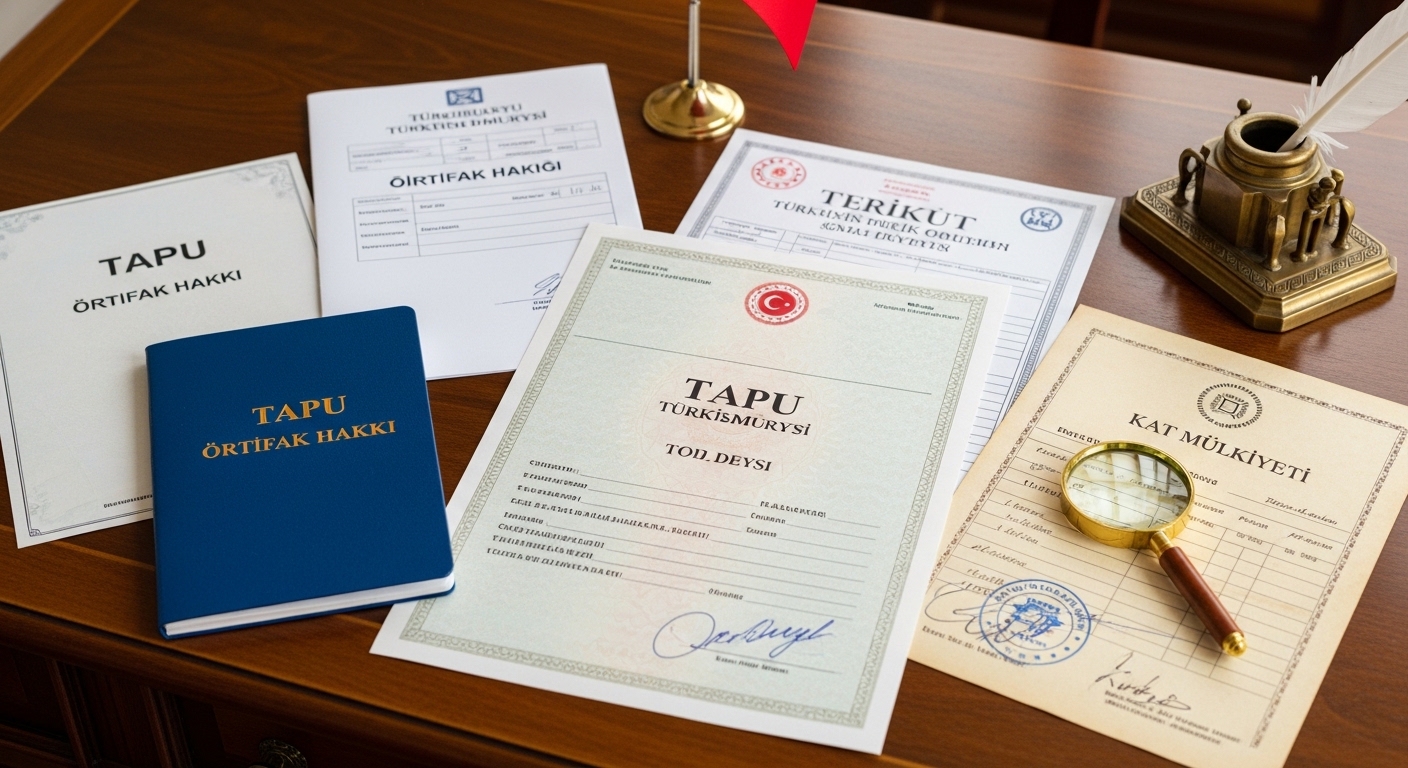
What Is a Title Deed in Turkey (Tapu)?
Definition of Tapu in Turkey
If you’re thinking about buying property in Turkey, you’ll hear one word over and over again: Tapu. But what exactly does it mean? Simply put, a title deed in Turkey (Tapu) is the official legal document that proves ownership of a property. It’s issued by the Turkish Land Registry Office and contains all the essential details about the property and its owner. Without this document, you don’t legally own anything—even if you’ve paid the full price.
Think of the Tapu as the “birth certificate” of your property. It records where the property is located, its size, type, and who owns it. Whether you’re buying an apartment in Istanbul, a villa in Antalya, or land in Bodrum, the Tapu is your ultimate proof of ownership. This makes it one of the most important documents in the entire Turkish real estate process.
Now, here’s something many buyers overlook: not all title deeds in Turkey are the same. There are different types of title deeds in Turkey, and each one tells a different story about the property. Some indicate full ownership, while others may signal that the building is still under construction or that the land has specific zoning restrictions.
Understanding these differences isn’t just helpful—it’s essential. Buying property without knowing what type of Tapu you’re getting is like buying a car without checking whether it actually runs. It might look great on the outside, but the details hidden inside the document can completely change the value and legality of your investment.
Why Title Deeds Are Important for Foreign Investors
For foreign investors, the title deed in Turkey carries even more weight. Why? Because it acts as your legal shield in a country where you may not fully understand the language, regulations, or property laws. When you hold a valid Tapu, your ownership rights are protected under Turkish law—just like any local citizen.
Turkey has become one of the hottest real estate markets for international buyers, thanks to its strategic location, strong tourism sector, and attractive property prices. According to recent real estate trends, thousands of foreign investors purchase property in Turkey every year, especially in cities like Istanbul, Antalya, and Izmir. But with opportunity comes risk, and this is where understanding types of Tapu in Turkey becomes crucial.
Imagine buying a property only to later discover that the title deed is for land, not the apartment built on it. Or worse, realizing that the building doesn’t have proper legal approval. These scenarios are more common than you might think, especially for buyers who skip due diligence.
A proper Tapu ensures:
- You are the legal owner of the property
- The property is registered correctly with the government
- There are no hidden debts or legal disputes attached
In short, the Tapu is your guarantee that what you’re buying actually belongs to you. For foreign investors, this isn’t just paperwork—it’s peace of mind.
Main Types of Title Deeds in Turkey
Red Title Deed (Residential Property Tapu)
When people talk about buying homes in Turkey, they are usually referring to the Red Title Deed (Kırmızı Tapu). This is the most common type of title deed in Turkey for residential properties such as apartments, villas, and offices. If your goal is to live in Turkey, rent out your property, or apply for Turkish citizenship through investment, this is the Tapu you’ll want.
The red Tapu indicates that the property is designated for residential or commercial use and is legally recognized as a built structure. In other words, you’re not just buying land—you’re buying a completed property that is approved for use. This is a big deal because it means the building complies with zoning and construction regulations set by Turkish authorities.
Let’s break it down in a simple way. Imagine you’re buying an apartment in Istanbul. If the property has a Red Title Deed, it confirms that:
- The apartment exists legally
- The building has been approved by the municipality
- You can legally live in or rent out the property
This type of Tapu is also essential if you plan to apply for residency or citizenship. Turkish authorities require a valid residential title deed as part of the application process. Without it, your application could be delayed—or even rejected.
Key Features of Red Tapu
The Red Title Deed in Turkey comes with several important features that make it the preferred choice for most buyers. First, it clearly specifies the type of property, such as an apartment, villa, or commercial unit. This eliminates confusion and ensures you know exactly what you’re purchasing.
Another key feature is that it includes detailed information about the property’s location, size, and ownership status. You’ll find data such as the block number, parcel number, and square meters, all of which are crucial for verifying the property’s authenticity.
Perhaps the most important feature is that a Red Tapu often reflects Kat Mülkiyeti (full ownership), which means the construction is complete and fully approved. This is the gold standard when buying property in Turkey because it minimizes legal risks.
However, not all red Tapus are equal. Some may indicate Kat İrtifakı (construction servitude), meaning the building is still under construction or not fully approved yet. This is why reading the details carefully—or working with a legal expert—is so important.
In essence, the Red Tapu is your gateway to safe and secure property ownership in Turkey. But as you’ll soon see, it’s not the only type of title deed you need to understand.
Main Types of Title Deeds in Turkey (Continued)
Blue Title Deed (Land Tapu in Turkey)
While the red Tapu gets most of the attention, the Blue Title Deed (Mavi Tapu) is equally important—especially if you’re thinking long-term or considering development opportunities. This type of title deed in Turkey is issued specifically for land ownership. So instead of owning a finished apartment or villa, you’re essentially buying a piece of land, with or without permission to build on it.
At first glance, buying land in Turkey might seem like a smart move. After all, land is often cheaper than developed property and can offer significant appreciation over time. But here’s where things get a bit tricky: not all land is created equal. The Blue Tapu doesn’t automatically guarantee that you can build whatever you want on it—or even build at all.
Imagine buying a beautiful plot overlooking the sea, only to find out later that it’s classified as agricultural land where construction is heavily restricted. That’s the kind of situation buyers run into when they don’t fully understand the types of Tapu in Turkey.
The Blue Title Deed typically applies to:
- Agricultural land
- Investment plots
- Undeveloped real estate
Some land may have zoning approval (called “imar” in Turkish), which allows construction under specific conditions. Others may not have any building rights at all. That’s why due diligence is absolutely critical when dealing with land Tapu in Turkey.
Key Features of Blue Tapu
The Blue Title Deed in Turkey comes with its own unique characteristics that set it apart from residential Tapu. First and foremost, it identifies the property strictly as land, not as a built structure. This means there’s no legal recognition of buildings on the property—even if something has been constructed informally.
Another important feature is zoning classification. The Tapu may include information about whether the land is zoned for residential, commercial, or agricultural use. This directly affects what you can and cannot do with the property.
Here are a few key things typically found in a Blue Tapu:
- Land size and boundaries
- Zoning status (if available)
- Ownership details
- Location and parcel information
One crucial thing to keep in mind is that financing options and citizenship eligibility can be more limited with land purchases. Many foreign buyers assume that any property investment qualifies them for Turkish citizenship, but that’s not always the case—especially with undeveloped land.
In short, the Blue Tapu is ideal for investors who understand the market and are willing to navigate zoning laws and development regulations. But for first-time buyers, it can be a bit of a minefield if not approached carefully.
Ownership Types in Turkish Title Deeds
Full Ownership (Freehold Title Deed Turkey)
When it comes to security and peace of mind, nothing beats full ownership, also known as a freehold title deed in Turkey. This is the most straightforward and desirable form of ownership, where a single individual (or entity) owns 100% of the property. No shared rights, no complicated agreements—just clear, undisputed ownership.
Think of it like owning your own house outright. You can live in it, rent it out, sell it, or pass it on to your heirs without needing permission from anyone else. That’s the level of control a freehold Tapu in Turkey provides.
For foreign investors, this type of ownership is particularly attractive. Turkish law allows foreigners to own property outright in most areas, and the process is relatively straightforward compared to many other countries. Once the Tapu is registered in your name, your ownership is fully protected by Turkish law.
One of the biggest advantages of full ownership is its simplicity. There are no shared responsibilities or potential disputes with other owners. This makes it easier to manage the property and reduces the risk of legal complications down the line.
Shared Ownership (Joint Title Deed Turkey)
On the flip side, there’s shared ownership, also known as a joint title deed in Turkey. In this arrangement, two or more people own a property together, with each person holding a specific share. This type of ownership is quite common, especially among families, business partners, or investors pooling their resources.
At first glance, shared ownership can seem like a great way to enter the Turkish property market with a lower budget. But it comes with its own set of challenges. For example, decisions about selling or renting the property often require agreement among all owners. If one party disagrees, things can get complicated quickly.
Here’s a simple analogy: owning a property jointly is like sharing a car with someone else. It works smoothly as long as everyone agrees on how to use it—but conflicts can arise if expectations differ.
The Tapu will clearly state each owner’s share, whether it’s 50/50, 25/75, or any other division. However, it doesn’t always specify which part of the property belongs to whom unless there’s a separate legal agreement.
Shared ownership can work well in certain situations, but it requires trust, clear communication, and often legal guidance to avoid disputes.
Property Status Types in Turkey
Construction Servitude (Kat İrtifakı)
One of the most misunderstood terms in the Turkish title deed system is Kat İrtifakı, or construction servitude. This type of status appears on a Tapu when a building is still under construction or has not yet received full approval from the municipality.
At this stage, the land has been divided into independent units (like apartments), but the construction is not fully completed or officially registered as finished. In simpler terms, you’re buying a promise of a property—not a fully legalized one.
This doesn’t necessarily mean the investment is risky, but it does require extra caution. Many new developments in Turkey are sold under Kat İrtifakı status, especially off-plan projects. Buyers are often attracted by lower prices and flexible payment plans, but they need to ensure that the developer will complete the project and obtain full approval.
Construction Amnesty (İmar Affı)
Another term you might encounter is İmar Affı, or construction amnesty. This refers to a government initiative that allows certain unauthorized buildings to be legalized under specific conditions. It was introduced to address widespread construction violations across Turkey.
While this might sound like a convenient solution, it’s not always a green light for buyers. Properties with an İmar Affı status may still face limitations, especially when it comes to future development or resale.
Full Ownership Status (Kat Mülkiyeti)
If there’s one term you should look for in a title deed in Turkey, it’s Kat Mülkiyeti. This indicates full ownership status and confirms that the construction is complete, approved, and legally recognized as a finished property.
This is the safest and most desirable status for buyers. It means the building complies with all regulations, has received its habitation certificate, and is ready for use. Whether you’re buying for personal use or investment, a Tapu with Kat Mülkiyeti offers the highest level of security.
Important Details Found in a Turkish Title Deed
Location and Property Information
When you first look at a title deed in Turkey (Tapu), it might feel a bit overwhelming. There are numbers, official stamps, Turkish terms, and a layout that isn’t immediately intuitive—especially if you’re a foreign buyer. But once you understand what each section represents, it becomes much easier to read and verify. Think of the Tapu as a detailed identity card for your property, packed with essential data that defines exactly what you own.
One of the most critical sections of the Turkish Tapu is the location and property information. This part includes details such as the province (il), district (ilçe), neighborhood (mahalle), and even the street or block where the property is located. These details are not just administrative—they are legally binding identifiers that distinguish your property from every other piece of real estate in Turkey.
You’ll also find specific numerical identifiers like:
- Parcel number (Parsel No)
- Block number (Ada No)
- Plot number
These numbers are incredibly important because they allow authorities—and you—to trace the exact location of the property within the national land registry system. It’s like a GPS coordinate, but for legal purposes.
Another key element is the property type and size. The Tapu will clearly state whether the property is an apartment, villa, commercial unit, or land. It will also include the total area in square meters. This helps ensure that what you’re buying matches what was advertised.
Here’s something many buyers don’t realize: the Tapu does not always include detailed interior descriptions like the number of rooms or finishes. Instead, it focuses on legal and structural data. That’s why it’s important to cross-check the Tapu with the actual property and sales contract.
In essence, this section of the title deed in Turkey answers one fundamental question: Where is the property, and what exactly is it? If there’s any mismatch between these details and what you’ve been told, that’s a red flag you should never ignore.
Ownership and Legal Notes
Beyond location details, the Tapu in Turkey also includes crucial information about ownership and legal status. This is where things get serious, because this section determines whether the property is truly safe to buy—or whether hidden risks are lurking beneath the surface.
First, you’ll see the owner’s name (or names, in the case of shared ownership). This confirms who legally owns the property. If you’re in the process of buying, this name must match the seller exactly. Even a small discrepancy should be investigated immediately.
Next comes the ownership type—whether it’s full ownership (freehold) or shared ownership (joint Tapu). If the property is jointly owned, the Tapu will specify each owner’s share. This is critical because it affects your rights and obligations as a buyer.
But perhaps the most important part of this section is the annotations and encumbrances. These are legal notes that can include:
- Mortgages
- Debts or liens
- Court orders
- Usage restrictions
Imagine buying a property only to discover later that it has an unpaid loan attached to it. Without checking this section, that risk is very real. The Tapu will clearly indicate whether there are any such issues, but you need to know how to read it—or have a professional do it for you.
Another important detail is the status of the property, such as whether it has Kat Mülkiyeti or Kat İrtifakı. As discussed earlier, this directly impacts the legal standing of the building.
In short, this part of the Turkish title deed answers a critical question: Who owns the property, and are there any legal complications? Skipping this step is like signing a contract without reading the fine print—and that’s a risk no serious investor should take.
How to Verify a Title Deed in Turkey
Verifying a title deed in Turkey is not just a recommended step—it’s an absolute necessity. Whether you’re a first-time buyer or a seasoned investor, skipping verification is one of the fastest ways to run into legal trouble. The good news? Turkey has a relatively transparent property registration system, which makes verification possible if you know what to look for.
The first and most reliable method is to check the Tapu directly through the Turkish Land Registry Office (Tapu ve Kadastro Genel Müdürlüğü). This government authority maintains all official property records in the country. Any legitimate title deed must be registered here. If it’s not, that’s an immediate red flag.
In recent years, Turkey has also introduced digital systems that allow for online verification. This means you—or your lawyer—can access property records and confirm details without relying solely on paper documents. It’s a huge step forward in reducing fraud and increasing transparency in the real estate market.
Another key step is to work with a licensed real estate lawyer. While it might be tempting to save money by skipping legal assistance, this is one area where cutting corners can cost you far more in the long run. A lawyer can:
- Verify the authenticity of the Tapu
- Check for debts or legal disputes
- Ensure the property complies with zoning laws
You should also confirm that the property matches its official records. Visit the property, compare it with the Tapu details, and make sure everything aligns. If the Tapu says “land” but you’re being sold an apartment, something is clearly wrong.
Bank involvement can also add a layer of security. If you’re using financing, the bank will typically conduct its own valuation and legal checks before approving the loan. This can serve as an additional safeguard.
Ultimately, verifying a Tapu in Turkey is about protecting yourself. It’s not complicated, but it does require attention to detail and a willingness to double-check everything. Because when it comes to property investment, trust is good—but verification is better.
Common Mistakes to Avoid When Buying Property in Turkey
Buying property in Turkey can be an exciting and rewarding experience—but it’s not without its pitfalls. Many of the common mistakes buyers make are not due to bad intentions, but rather a lack of understanding about the types of title deeds in Turkey and how the system works. The key is to recognize these mistakes before they happen.
One of the biggest errors is not understanding the type of Tapu. As you’ve seen, there’s a big difference between a Red Tapu, Blue Tapu, Kat İrtifakı, and Kat Mülkiyeti. Buying the wrong type can lead to serious limitations, especially if you’re planning to live in the property or apply for citizenship.
Another common mistake is skipping legal checks. Some buyers rely entirely on real estate agents without consulting an independent lawyer. While many agents are trustworthy, their primary goal is to close the sale—not necessarily to protect your legal interests.
Overlooking debts and encumbrances is another major issue. A property might look perfect on the surface, but hidden financial obligations can turn it into a liability. Always check the legal notes on the Tapu before proceeding.
Some buyers also make the mistake of focusing only on price. A cheaper property might seem like a great deal, but if it lacks proper documentation or legal status, it could end up costing more in the long run.
Lastly, rushing the process is a mistake you can’t afford to make. Property investment is not something you should do on impulse. Take your time, do your research, and make sure every detail checks out.
Avoiding these mistakes isn’t about being overly cautious—it’s about being smart. Because in real estate, the smallest oversight can have the biggest consequences.
Conclusion
Understanding the types of title deed in Turkey is not just a technical detail—it’s the foundation of a safe and successful property investment. From the widely used Red Tapu for residential properties to the more complex Blue Tapu for land, each type carries its own implications, opportunities, and risks. Add to that the different ownership structures and property status classifications, and it becomes clear why knowledge is your most valuable asset in this process.
The Turkish real estate market offers incredible opportunities, especially for foreign investors. But like any investment, it requires careful planning and informed decision-making. The Tapu is more than just a piece of paper—it’s your legal proof, your protection, and your gateway to ownership.
By taking the time to understand how the system works, verifying every detail, and avoiding common mistakes, you can navigate the market with confidence. Whether you’re buying a holiday home, an investment property, or land for future development, the right knowledge ensures that your investment is not only profitable but also secure.
FAQs About Title Deeds in Turkey
The title deed usually does not clearly specify net usable area; it defines ownership share and independent unit details. The most important and safest type is the Kat Mülkiyeti (full ownership Tapu), as it confirms that the property is fully completed and legally approved. The Red Tapu is for residential or commercial properties, while the Blue Tapu is for land and may come with building restrictions. It can be safe if the developer is reliable, but it carries more risk than Kat Mülkiyeti, as the construction is not fully approved yet. You can verify it through the Turkish Land Registry Office or by hiring a qualified real estate lawyer to conduct due diligence.
Verify Before You Buy — Secure Your Property in Turkey
Get expert guidance on title deeds, ownership types, and legal checks to ensure your investment in Turkey is safe, verified, and risk-free.
Have Question Or Suggestion ?
Please Share Your Thought, To Make It Real