DASK Earthquake Insurance in Turkey: What Homeowners MUST Know Before It’s Too Late
Is your property really protected against earthquakes in Turkey? Discover what DASK covers, hidden limits, real payouts, and costly mistakes to avoid.
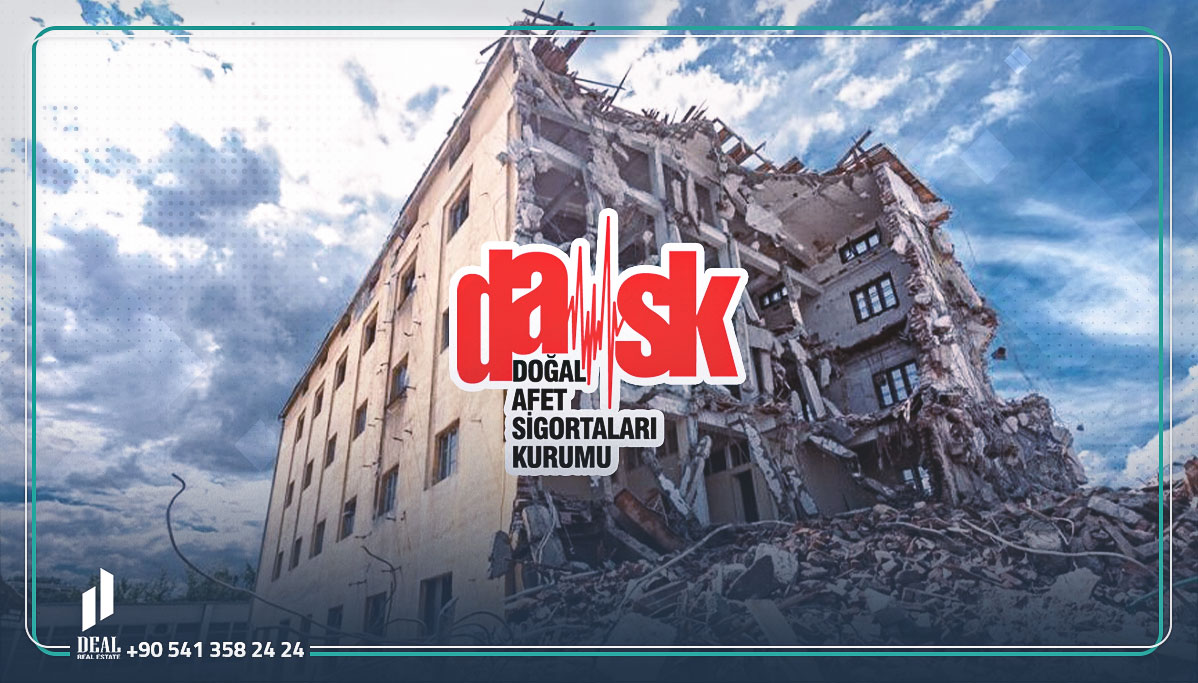
Earthquake Insurance Policy in Turkey (DASK): A Complete 2026 Guide
If you own property in Turkey—or even if you’re planning to buy one—there’s one thing you simply can’t ignore: earthquakes. Turkey sits on active fault lines, and history has shown that seismic activity is not a matter of “if,” but “when.” That’s where DASK comes in.
But what exactly is DASK? Is it enough to protect your home? How much does it cost? And what happens after a real earthquake?
In this detailed guide, we’ll walk through everything you need to know about Turkey’s Compulsory Earthquake Insurance system, officially known as DASK (Doğal Afet Sigortaları Kurumu). Whether you're a Turkish homeowner, an expat, or a foreign investor, this article will break it down in plain English.
What Is DASK and Why Was It Created?
DASK stands for “Doğal Afet Sigortaları Kurumu,” which translates to the Natural Catastrophe Insurance Institution. It was established in 2000 following one of the darkest chapters in Turkey’s recent history: the 1999 Marmara Earthquake.
That earthquake changed everything.
More than 17,000 people lost their lives. Hundreds of thousands of homes were destroyed or severely damaged. The government faced enormous financial pressure trying to rebuild entire cities. It became painfully clear that relying solely on state aid wasn’t sustainable.
So Turkey introduced a compulsory earthquake insurance system. The idea was simple: instead of the government carrying all the risk, homeowners would contribute small annual premiums into a national insurance pool. When disaster strikes, that pool pays out claims quickly.
DASK was born from necessity, but today it serves as a financial safety net for millions of property owners across Turkey.
Is Earthquake Insurance Mandatory in Turkey?
Yes. DASK is legally mandatory for all residential properties within municipal boundaries.
If you own an apartment or house in Turkey, you are required by law to have an active DASK policy. Without it, you may face limitations such as:
- Inability to register electricity or water utilities
- Problems during property sale transactions
- Difficulty obtaining bank loans or mortgages
- Banks will absolutely require DASK if you apply for a housing loan. No DASK, no mortgage—it’s that simple.
However, commercial properties and buildings located in villages (outside municipal limits) are generally not covered under the compulsory scheme. They may require private insurance instead.
What Does DASK Cover?
Let’s get into the heart of the matter: what exactly are you paying for?
DASK covers structural damage caused directly by earthquakes and earthquake-related events like fires, explosions, landslides, and tsunamis triggered by seismic activity.
Here’s what is typically covered:
- Foundations
- Main walls
- Independent sections (your apartment unit)
- Ceilings and floors
- Staircases
- Elevators
- Corridors and shared spaces
- Roof
- Chimneys
In short, DASK covers the building itself—not what’s inside it.
If the structure cracks, collapses, or suffers serious damage due to an earthquake, DASK pays compensation up to the policy limit.
Think of it this way: DASK protects the skeleton of your home. The bones. Not the furniture, not the decoration—but the physical building structure.
What Does DASK NOT Cover?
This is where many homeowners get surprised.
DASK does NOT cover:
- Furniture
- Electronics
- Personal belongings
- Rental income loss
- Temporary accommodation costs
- Debris removal expenses beyond policy limits
- Non-structural cosmetic damages
- If your TV falls and breaks during an earthquake? That’s not covered.
- If you need to stay in a hotel for two months? Also not covered under basic DASK.
For these risks, you would need additional private home insurance (konut sigortası). Many people combine DASK with a private policy for full protection.
How DASK Premiums Are Calculated
You might be wondering: how much does DASK cost?
The good news? It’s relatively affordable.
Premiums are calculated based on:
- The city and earthquake risk zone
- Construction type (reinforced concrete, masonry, etc.)
- Gross square meters of the property
- Year of construction
Turkey is divided into earthquake risk zones. Naturally, homes in high-risk areas like Istanbul, Izmir, or Eastern Anatolia may pay slightly higher premiums than those in lower-risk regions.
On average, annual DASK premiums range between 300–1500 Turkish Lira depending on size and location.
For the protection it offers, that’s a small price to pay.
How Much Does DASK Pay? Coverage Limits Explained
- DASK doesn’t provide unlimited compensation.
- Each year, the maximum coverage amount is updated. The payout is calculated based on:
- The official construction cost per square meter
- The insured home’s size
- However, there is a maximum compensation cap, regardless of how large your home is.
For example (illustrative structure):
| Factor | Determines Payout |
|---|---|
| Square meters | Size of property |
| Official unit cost | Annual update by DASK |
| Maximum coverage limit | Upper payout ceiling |
If your property’s value exceeds DASK’s maximum coverage, you’ll need additional private insurance to bridge the gap.
How to Apply for a DASK Policy
Getting DASK is simple.
You can apply through:
- Insurance agencies
- Banks
- Online insurance platforms
- Required information typically includes:
- Turkish ID number (or passport for foreigners)
- Address details
- Building construction year
- Gross area in square meters
- Title deed information
- The entire process takes less than 10 minutes.
- You receive your policy electronically, and coverage begins immediately upon payment.
How to Make a DASK Claim After an Earthquake
After an earthquake, the process is structured and surprisingly fast.
Here’s how it works:
- Report damage via DASK hotline or website
- Provide your policy number and property details
- An independent damage assessment expert is assigned
- Inspection is conducted
- Compensation is calculated
- Payment is transferred directly to your bank account
- In major earthquakes, DASK has historically processed thousands of claims within weeks.
- Speed matters after disasters—and DASK is designed for that.
DASK vs. Private Earthquake Insurance
Let’s clear this up.
DASK = Mandatory + Limited coverage
Private Insurance = Optional + Broader protection
Private policies can cover:
- Household items
- Temporary rent
- Alternative accommodation
- Liability
- Full reconstruction value
- Most financial advisors recommend having both.
- DASK is the foundation. Private insurance builds on top of it.
DASK for Foreign Property Owners
If you're a foreigner who owns property in Turkey—yes, DASK is mandatory for you too.
You don’t need Turkish citizenship. As long as the property is residential and within municipal boundaries, you must have it.
The application process is nearly identical. A passport number replaces the Turkish ID.
Simple. Transparent. No hidden barriers.
Common Myths About DASK
Let’s bust a few myths:
- “The government will rebuild my house anyway.”
Not without DASK coverage. - “New buildings don’t need it.”
All residential buildings require DASK, regardless of age. - “It’s too expensive.”
Compared to potential losses? It’s minimal. - “I don’t live in a risky area.”
Turkey as a whole is seismically active.
Ignoring DASK is like ignoring a seatbelt. You may never need it—but if you do, it’s everything.
Tips to Reduce Earthquake Risk Beyond Insurance
- Insurance is financial protection. But physical safety matters too.
- Choose earthquake-resistant buildings
- Avoid illegal constructions
- Secure heavy furniture to walls
- Prepare an emergency kit
- Know evacuation routes
- Insurance helps you recover. Preparedness helps you survive.
Conclusion
Earthquake insurance in Turkey isn’t just a bureaucratic formality—it’s a financial lifeline.
DASK was created out of tragedy, but it now serves as a powerful safety net for millions of homeowners. It protects the structural integrity of your property, ensures fast compensation, and reduces financial chaos after disasters.
Is it perfect? No. It has limits.
Is it necessary? Absolutely.
In a country where tectonic plates constantly shift beneath the surface, peace of mind isn’t optional. It’s essential.
Frequently Asked Questions (FAQs)
Yes, it must be renewed annually to remain valid. No. The new owner must obtain their own policy. No. It only applies to properties within Turkey.Usually not. Many homeowners combine it with private insurance. It varies, but typically within weeks after damage assessment.
.webp)
.webp)
Have Question Or Suggestion ?
Please Share Your Thought, To Make It Real