The Fast-Track Portfolio: A Smart Real Estate Strategy for Turkish Citizenship
Discover how a diversified real estate portfolio can help you obtain Turkish citizenship while generating rental income, capital growth, and long-term wealth.
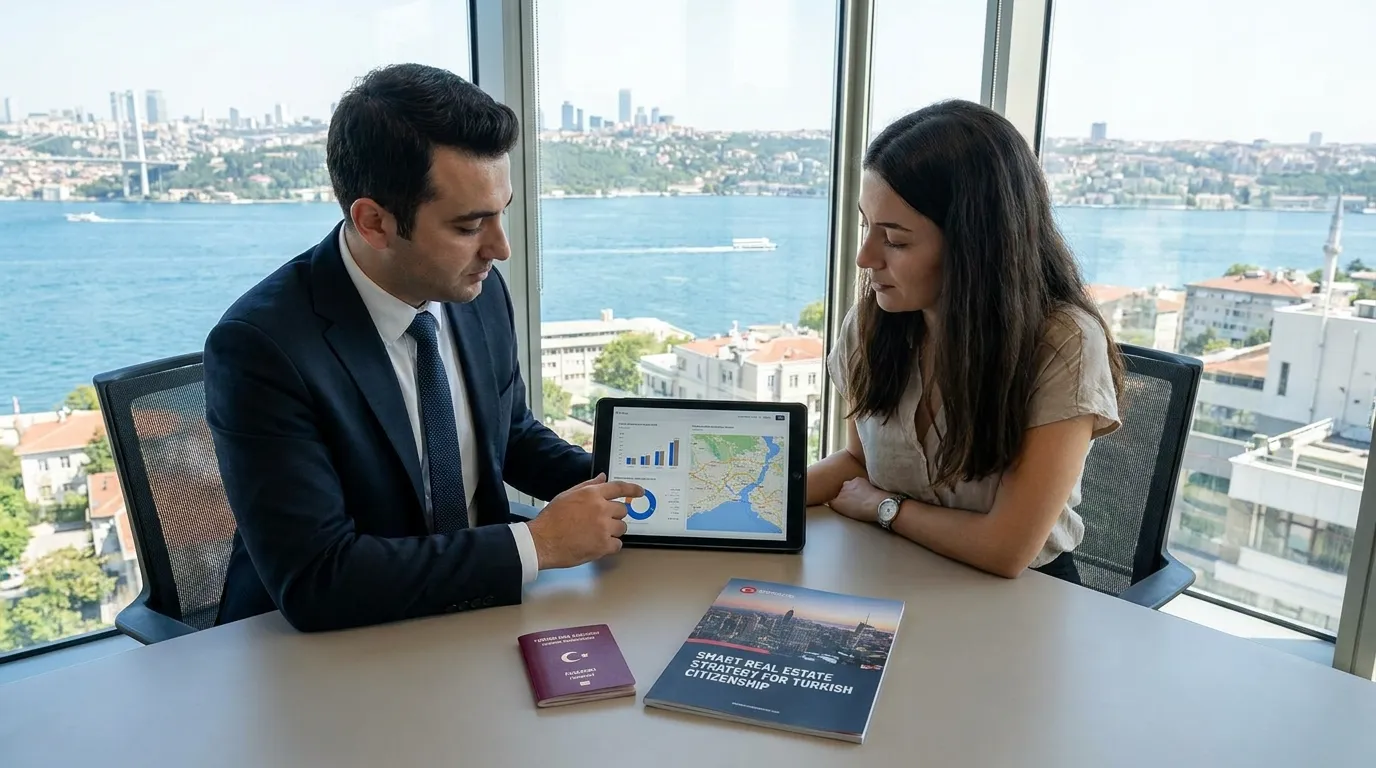
The Fast-Track Portfolio: Structuring a High-Yield Investment for Citizenship by Investment
Executive Summary: A Smarter Path to Citizenship and Wealth Creation
For many international investors, acquiring a second passport is no longer simply about expanding travel options. It has become an essential part of long-term financial planning, asset diversification, family security, and global mobility. Turkey has positioned itself as one of the most attractive destinations for citizenship by investment because it offers a combination of strategic geographic location, a large and resilient real estate market, and a relatively straightforward investment pathway. Unlike many programs that require donations or passive financial contributions, Turkey citizenship by investment real estate allows investors to purchase tangible assets that have the potential to generate income and appreciate over time.
This case study follows the journey of an international family whose objective extended well beyond obtaining a Turkish passport by investment. They wanted an investment strategy that worked for them financially before, during, and after the citizenship process. Rather than viewing the required investment as a compliance expense, they treated it as an opportunity to build a diversified property portfolio capable of producing immediate rental income while also benefiting from long-term appreciation.
After consulting with legal advisors, real estate professionals, and financial planners, the family decided against the common approach of purchasing one luxury apartment worth just over the minimum investment threshold. Instead, they divided their investment across multiple carefully selected properties, each serving a different financial purpose. One asset focused on long-term capital appreciation in an emerging district, while two additional apartments generated consistent rental income from day one. This strategy not only fulfilled the government's eligibility requirements but also created several layers of financial resilience.
Although the figures presented in this case study are illustrative and every investor's circumstances differ, the underlying principles remain highly relevant. Successful citizenship investments rarely happen by chance. They are built through careful market research, disciplined portfolio planning, legal due diligence, and clearly defined exit strategies. By aligning immigration objectives with sound investment practices, this family transformed a citizenship application into a long-term wealth-building opportunity.
The $400k Dilemma: One Luxury Asset vs. Multiple Units
One of the biggest decisions facing investors pursuing Turkey citizenship by investment real estate is how to allocate the required capital. A surprising number of buyers immediately begin searching for a single luxury apartment priced slightly above the government's investment threshold. While this approach appears simple, it is not always the most financially efficient solution.
Luxury properties certainly have their advantages. Premium developments in central Istanbul often feature exceptional architecture, concierge services, panoramic Bosphorus views, and internationally recognized developers. These projects can appeal to affluent buyers and may command strong resale values under favorable market conditions. However, concentrating an entire investment budget into one property introduces several risks that many first-time international investors overlook.
The first concern is liquidity. High-value luxury apartments naturally appeal to a smaller group of buyers than mid-market residential properties. When the mandatory holding period expires, finding a purchaser willing to pay a premium price may take considerably longer than selling a more affordable apartment. If market conditions change unexpectedly, investors with only one large asset have fewer options available to them.
Rental performance presents another challenge. Although luxury properties often generate impressive monthly rental income in absolute terms, their purchase prices are substantially higher. As a result, rental yields can sometimes be lower than those achieved by smaller apartments located in neighborhoods with strong year-round residential demand. Investors focused solely on meeting the citizenship requirement may unintentionally sacrifice ongoing cash flow.
Maintenance expenses also deserve careful consideration. Premium developments frequently include extensive amenities such as fitness centers, swimming pools, security services, landscaped gardens, and concierge teams. While these features increase the property's appeal, they also lead to higher monthly management fees, which can reduce net investment returns over time.
The family featured in this case study approached the situation differently. Rather than asking, "Which property costs at least $400,000?" they asked a far more valuable question: "How can the same investment budget create multiple income streams while still qualifying for citizenship?"
That shift in perspective completely transformed the investment strategy.
Instead of viewing the citizenship threshold as a spending target, they treated it as a portfolio allocation exercise. Diversification, risk management, rental performance, future resale flexibility, and long-term appreciation all became equally important decision-making factors. This investment philosophy mirrors the approach used by experienced property investors worldwide. Rather than depending on one asset to achieve every objective, each property performs a specific role within the broader portfolio.
The result was a balanced strategy capable of delivering several different financial outcomes simultaneously instead of relying entirely on appreciation from one luxury apartment.
The Strategic Portfolio Split
Rather than investing the entire budget into one property, the investor divided capital into three complementary assets. Each property served a different objective, creating a diversified citizenship real estate portfolio that balanced growth, income, and flexibility.
This approach reflected an important principle followed by professional investors across global property markets: different assets perform differently under changing economic conditions. Some excel during periods of rapid price appreciation, while others generate stable rental income regardless of market cycles. By combining both characteristics, the portfolio became more resilient than a single-property strategy.
Asset A: Capital Appreciation Through an Off-Plan Development
Approximately half of the available investment budget was allocated to a carefully selected off-plan residential project located in one of Istanbul's emerging districts. The choice was based on extensive research into planned transportation infrastructure, population growth, commercial expansion, and government-backed urban regeneration initiatives.
Off-plan investments often allow buyers to enter the market at prices below those of completed developments. As construction progresses and surrounding infrastructure improves, values may increase well before the project is delivered. While appreciation is never guaranteed, neighborhoods benefiting from new metro connections, business districts, universities, and healthcare facilities frequently experience sustained demand from both domestic and international buyers.
The investor's strategy for this property was straightforward. Rather than seeking immediate rental income, the objective was to maximize long-term capital growth during the mandatory holding period required for Turkish citizenship. By the time the three-year restriction expired, the expectation was that market appreciation, combined with project completion, would significantly increase the property's value.
Another advantage of selecting an off-plan development from a reputable developer was modern design, energy-efficient construction, and contemporary amenities that would appeal to future buyers. If the investor eventually chose to sell, the apartment would likely compete effectively against older resale properties in the same district.
This property became the portfolio's primary growth engine. While it generated little or no income during construction, its purpose was never short-term cash flow. Instead, it represented the portfolio's long-term appreciation component and the largest contributor to potential capital gains.
Assets B and C: Building Immediate Cash Flow
The remaining investment capital was directed toward two ready-to-move residential apartments located in established suburban districts with consistently strong rental demand. Unlike luxury developments aimed primarily at high-net-worth buyers, these apartments targeted working professionals, young families, university staff, and long-term residents seeking quality housing at accessible price points.
Selecting two separate rental properties instead of one larger apartment immediately diversified income risk. If one unit experienced a brief vacancy or required maintenance, the second property continued generating rental revenue. This simple diversification strategy reduced dependence on a single tenant and improved overall portfolio stability.
The locations were selected using several key criteria:
- Strong year-round residential demand.
- Convenient access to public transportation.
- Nearby schools, hospitals, and shopping centers.
- Established neighborhoods with proven occupancy rates.
- Competitive rental yields compared with central luxury districts.
Rental income from these apartments began shortly after acquisition, helping offset operating expenses such as maintenance fees, insurance, property management, and taxes. Instead of waiting three years to realize financial benefits, the investor started receiving monthly cash flow almost immediately.
Equally important, mid-market apartments often attract a broader range of buyers when the time comes to sell. Families purchasing their first homes, local investors, and international buyers seeking affordable opportunities all contribute to a deeper resale market. This increased liquidity provided additional flexibility when planning future portfolio adjustments.
The final structure looked like this:
| Asset | Investment Objective | Expected Benefit |
|---|---|---|
| Off-plan apartment | Long-term capital appreciation | Potential value growth during and after construction |
| Rental Apartment A | Stable monthly income | Consistent rental cash flow and lower vacancy risk |
| Rental Apartment B | Income diversification | Additional rental revenue and flexible future resale |
Rather than asking one property to accomplish every objective, each asset was given a clearly defined role. Together, they formed a portfolio designed to satisfy citizenship requirements while also generating income, spreading risk, and preserving future strategic options.
This structure demonstrates why many experienced investors increasingly favor diversified portfolios over single-asset purchases. A thoughtfully constructed Turkey citizenship by investment real estate strategy is not simply about qualifying for a passport—it is about creating a collection of assets that continue to deliver value long after citizenship has been granted.
The Legal & Valuation Process: Ensuring Compliance Without Compromising Investment Quality
A well-structured investment portfolio is only one side of the equation. To successfully qualify for Turkey citizenship by investment real estate, every transaction must also satisfy a series of legal and regulatory requirements established by the Turkish government. Many investors assume that purchasing property worth at least the required investment threshold automatically qualifies them for citizenship. In reality, the process involves several legal checks, official appraisals, documentation requirements, and government approvals that must all align correctly before an application can proceed.
For the family featured in this case study, legal planning began before any reservation agreement was signed. Working with experienced immigration lawyers and licensed real estate professionals allowed them to evaluate properties based not only on investment potential but also on eligibility under the Citizenship by Investment (CBI) program. This proactive approach reduced the risk of purchasing an asset that later failed to meet regulatory standards.
One of the most important requirements was obtaining official valuation reports prepared by government-authorized appraisal companies. These reports determine the market value of each property and serve as the official benchmark during the citizenship application. The purchase price alone is not enough; authorities rely on independent appraisals to verify that the investment genuinely meets the required threshold. Because this portfolio consisted of multiple properties rather than a single asset, each apartment required its own valuation report before the combined values were assessed.
Rather than aiming to reach the minimum investment amount exactly, the investor intentionally exceeded the threshold by a comfortable margin. This provided an additional layer of security should minor valuation differences arise during the government's review. Building this buffer into the acquisition strategy helped reduce unnecessary delays and provided greater confidence throughout the application process.
The legal team also coordinated every stage of the transaction, including due diligence on title deeds, verification that the properties were free from legal disputes or ownership restrictions, preparation of purchase contracts, registration with the Land Registry Office, and completion of the required foreign currency conversion procedures. Turkish regulations require qualifying investments to be recorded appropriately, and the title deeds must include an annotation confirming that the properties will not be sold during the mandatory holding period.
Documentation management was equally important. The legal advisors organized passport copies, tax identification numbers, proof of funds, valuation reports, title deeds, bank transfer records, purchase agreements, and official government forms into a comprehensive application package. Because the family planned each step before closing on the properties, the transition from acquisition to citizenship application was significantly smoother than it might otherwise have been.
While many buyers naturally focus on selecting attractive real estate, experienced investors recognize that legal compliance is what ultimately transforms a property purchase into a successful citizenship investment. A carefully managed legal process protects both the immigration objective and the financial investment itself, ensuring that the portfolio delivers value well beyond the issuance of a Turkish passport.
The 3-Year Exit Strategy: Planning Beyond Citizenship
One of the defining characteristics of successful investors is that they think about the exit before they make the purchase. This principle applies just as much to Turkey citizenship by investment real estate as it does to any other asset class. Although Turkish regulations require qualifying properties to be held for a minimum of three years, investors should begin planning for that milestone from the very beginning rather than waiting until the restriction expires.
For this family, the three-year holding period was viewed as an opportunity rather than an obstacle. Instead of seeing it as time during which capital was locked away, they used those years to allow the portfolio to mature. Rental income continued to accumulate from the two suburban apartments while the off-plan development progressed toward completion and potential appreciation. By the time the mandatory holding period came to an end, the investor expected to have several viable strategic options instead of being forced into a single decision.
The first scenario involved selling the appreciation-focused asset. Assuming favorable market conditions, the completed apartment could potentially command a substantially higher price than its original purchase value. The proceeds from that sale could then be reinvested into additional real estate, international assets, or another diversified investment portfolio. Importantly, because the investor would still own the rental apartments, recurring income would continue even after realizing the capital gain.
A second option involved retaining all three properties. Istanbul's population growth, expanding transportation network, and ongoing urban regeneration projects continue to support long-term housing demand in many districts. If rental yields remained attractive and market fundamentals stayed positive, maintaining ownership could provide both recurring income and continued appreciation over a longer investment horizon. In this scenario, citizenship becomes only one of several long-term benefits generated by the original investment.
The family also explored refinancing as a third alternative. If the properties appreciated significantly, refinancing could unlock accumulated equity without requiring an immediate sale. The released capital could then be deployed into additional investments while the original assets continued generating rental income. This approach illustrates how property exit strategy Istanbul planning extends beyond simple buying and selling; modern investors increasingly use refinancing as a tool for expanding wealth while preserving ownership of income-producing assets.
Diversification again played an important role in creating flexibility. Because the portfolio consisted of multiple properties with different characteristics, the investor could choose to sell one asset while keeping two, refinance selected properties, or adjust the portfolio according to future market conditions. Had the entire budget been concentrated in a single luxury apartment, these choices would have been far more limited.
This forward-looking mindset demonstrates an important lesson for prospective applicants. Obtaining dual citizenship Turkey should not represent the end of the investment journey. Instead, it should serve as one milestone within a broader wealth-building strategy designed to create lasting financial value for future generations.
Get Your Custom Portfolio Assessment
No two investors share exactly the same objectives. Some families prioritize obtaining citizenship as quickly as possible, while others focus primarily on maximizing long-term returns. Certain investors seek steady rental income to support retirement, whereas entrepreneurs may be more interested in preserving liquidity for future business ventures. Because financial goals differ, the ideal Turkey citizenship by investment real estate strategy should always be tailored rather than standardized.
A personalized portfolio assessment begins by understanding the investor rather than simply recommending properties. Factors such as available capital, desired timeline, family size, risk tolerance, preferred locations, and expected investment horizon all influence the final structure of the portfolio. An investor seeking immediate rental income will likely require a different property mix than someone whose primary objective is long-term appreciation through urban redevelopment projects.
Market analysis also plays a crucial role. Different districts across Istanbul and other Turkish cities offer varying combinations of capital growth, rental demand, infrastructure investment, and resale liquidity. Evaluating these variables helps identify opportunities that align with both citizenship requirements and broader financial objectives. Rather than selecting properties based solely on attractive marketing brochures, investors benefit from objective analysis supported by market data and professional due diligence.
A comprehensive assessment typically includes projected acquisition costs, estimated rental income, expected operating expenses, financing considerations where applicable, tax implications, legal documentation requirements, valuation expectations, and potential exit strategies after the mandatory holding period. Reviewing these elements together provides a clearer picture of the investment's overall performance rather than focusing exclusively on the purchase price.
Professional guidance is particularly valuable because citizenship regulations and real estate markets evolve over time. Working with experienced legal advisors, licensed valuation experts, and knowledgeable property consultants helps investors navigate regulatory requirements while identifying assets with strong long-term potential. This integrated approach reduces uncertainty and improves decision-making throughout every stage of the investment process.
Whether the objective is securing a Turkish passport by investment, generating passive income, preserving family wealth, or expanding an international property portfolio, a customized investment plan provides a stronger foundation than a one-size-fits-all solution. The most successful portfolios are those designed around the investor's personal financial goals while remaining fully compliant with current citizenship regulations.
Conclusion
The most effective Turkey citizenship by investment real estate strategies go far beyond meeting the minimum qualifying threshold. As this case study demonstrates, thoughtful portfolio construction can transform a citizenship application into a comprehensive investment plan capable of generating rental income, supporting long-term appreciation, and preserving future flexibility.
Rather than concentrating the entire investment into a single luxury apartment, this investor created a balanced portfolio where each property fulfilled a distinct purpose. The off-plan development served as the primary appreciation asset, while two income-producing residential units generated consistent cash flow throughout the mandatory holding period. This diversified approach reduced concentration risk, expanded future exit options, and aligned immigration objectives with sound investment principles.
Equally important was the attention given to legal compliance. Independent valuations, title deed verification, regulatory documentation, and experienced professional guidance ensured that every property satisfied the requirements of the Turkish Citizenship by Investment program. Careful preparation minimized administrative challenges and helped the family move through the application process with confidence.
Looking beyond citizenship, the portfolio remained positioned for long-term success. Whether the investor ultimately chose to sell, refinance, or continue holding the assets, each decision could be made according to market conditions rather than government restrictions. That flexibility represents one of the greatest advantages of a diversified property strategy.
For investors considering $400k property Turkey opportunities, the key takeaway is simple: treat the investment as the beginning of a broader wealth-building journey rather than merely the cost of obtaining a second passport. With careful planning, professional advice, and disciplined portfolio design, it is possible to achieve both global mobility and meaningful financial growth.
Frequently Asked Questions
Usually between 3 to 6 months for citizenship by investment.
Yes, Turkey allows dual citizenship.
Usually 5–10 business days, depending on location and document completeness.
Yes, especially the Green and Diplomatic types. Turkey ranks well in global mobility indexes, offering access to 110–160+ countries depending on the passport type.
Typically between 3 to 6 months, depending on the process.
Yes, Turkey allows dual citizenship without restrictions.
Yes, but the property must meet the legal investment threshold and documentation rules. Payments, valuation reports, notarized contracts, and bank transfer records must be properly structured.
Usually between 3 to 6 months for citizenship by investment.
Yes, Turkey allows dual citizenship.
Usually 5–10 business days, depending on location and document completeness.
Yes, especially the Green and Diplomatic types. Turkey ranks well in global mobility indexes, offering access to 110–160+ countries depending on the passport type.
Typically between 3 to 6 months, depending on the process.
Yes, Turkey allows dual citizenship without restrictions.
Yes, but the property must meet the legal investment threshold and documentation rules. Payments, valuation reports, notarized contracts, and bank transfer records must be properly structured.







Have Question Or Suggestion ?
Please Share Your Thought, To Make It Real