Religion in Turkey: History, Islam, Secularism, and Religious Diversity
Explore religion in Turkey, from Islam and secularism to Christianity, Judaism, and cultural traditions that shape modern Turkish society.
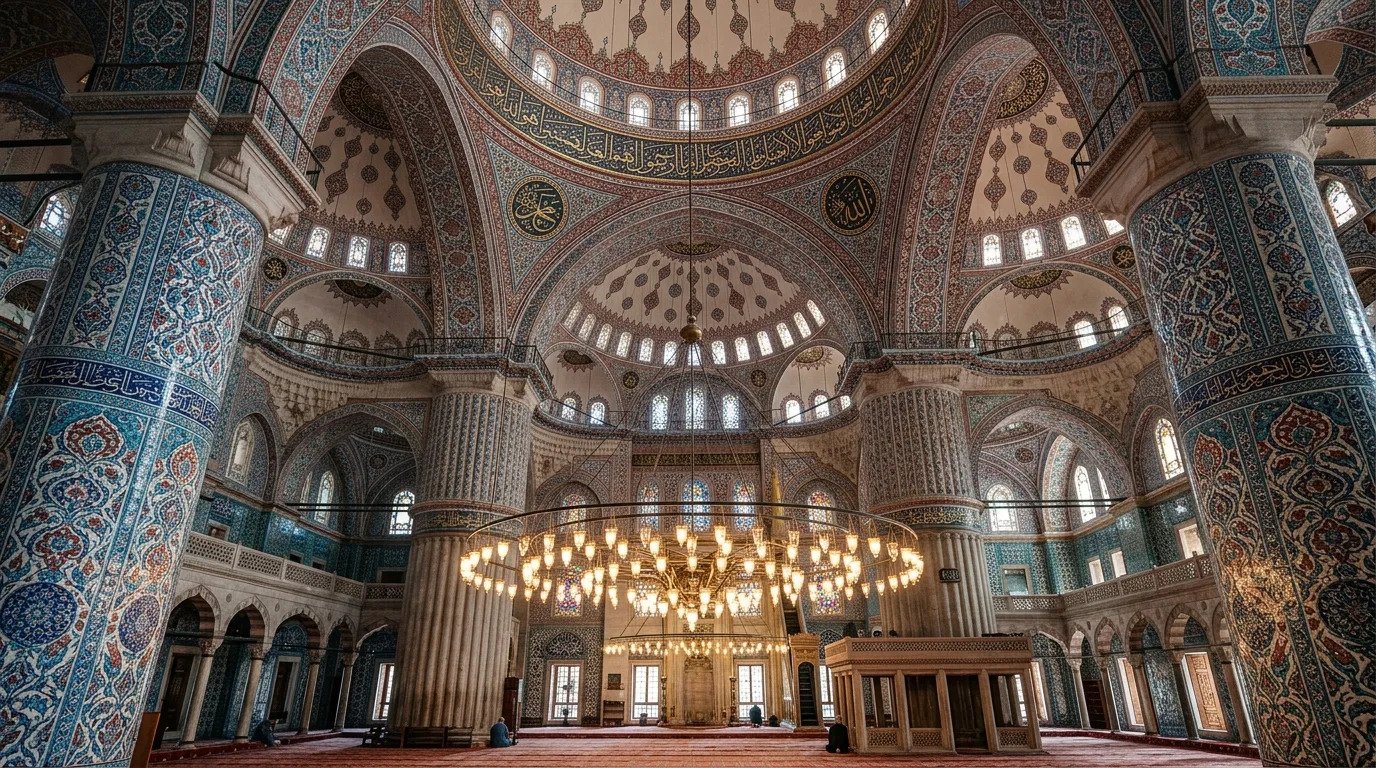
Religion in Turkey
Understanding the Religious Landscape of Turkey
Turkey occupies a unique position at the crossroads of Europe and Asia, making it one of the most fascinating countries in the world when discussing religion. The nation’s religious identity has been shaped by thousands of years of cultural exchange, migration, conquest, and political transformation. While Islam is the predominant religion practiced by the overwhelming majority of the population, Turkey's religious environment is much more complex than simple statistics might suggest.
Religion in Turkey cannot be understood without considering its dual identity as both a predominantly Muslim society and a constitutionally secular republic. This combination has produced a social and political landscape unlike that of many other Muslim-majority nations. Visitors often notice this contrast immediately: ancient mosques stand beside modern shopping centers, and religious traditions coexist with highly secular lifestyles.
The Turkish Constitution guarantees freedom of religion, allowing individuals to practice their faith freely. At the same time, the state maintains a degree of oversight over religious affairs through government institutions. This arrangement has generated ongoing discussions about the proper relationship between religion and public life.
Turkey’s religious diversity extends beyond Islam. Various Christian communities, Jewish populations, and other religious groups have maintained a presence in the region for centuries. The country’s rich spiritual heritage reflects its historical role as a bridge between civilizations. Understanding religion in Turkey requires looking beyond demographics and examining the historical, social, and political forces that continue to shape religious expression today.
Historical Roots of Religion in Anatolia
The territory that forms modern Turkey, historically known as Anatolia, has served as a center of religious activity for thousands of years. Long before the arrival of Islam, the region hosted numerous civilizations that practiced different belief systems. Ancient Anatolian religions, Greek polytheism, Roman traditions, Judaism, and Christianity all flourished at various times across the peninsula.
Anatolia holds particular significance for Christianity. Many of the earliest Christian communities were established in cities located within modern Turkish borders. Places such as Ephesus, Antioch, and Cappadocia played critical roles in the development of Christian theology and practice. Several books of the New Testament refer to communities that existed in these areas, and important church councils were held in Anatolian cities.
The arrival of Turkic peoples from Central Asia beginning in the eleventh century gradually transformed the religious character of the region. Following the Battle of Manzikert in 1071, Muslim Turkish influence expanded significantly. Over the following centuries, Islam became increasingly dominant, though Christian and Jewish communities continued to exist under various political arrangements.
Religious traditions from different eras left lasting marks on Turkish culture. Ancient temples, Byzantine churches, Ottoman mosques, and synagogues can all be found throughout the country. These structures serve as reminders of the many faiths that have shaped Anatolia over millennia. The coexistence of these historical layers contributes to Turkey’s remarkable religious and cultural richness.
The Influence of Empires on Religious Development
Empires have played a crucial role in shaping religious life in Turkey. The Byzantine Empire, centered in Constantinople (modern Istanbul), made Eastern Orthodox Christianity a dominant force in the region for centuries. During this period, magnificent churches such as Hagia Sophia were constructed, reflecting the deep connection between political authority and religious identity.
The rise of the Ottoman Empire marked another major transformation. Beginning in the fourteenth century, the Ottomans expanded across three continents and established one of history’s most influential Islamic states. Islam became the empire’s primary religion, but the Ottoman system also allowed religious minorities a significant degree of autonomy through the millet system.
Under this arrangement, Christian and Jewish communities managed many of their own religious, educational, and legal affairs. Although Muslims enjoyed certain privileges, the empire’s relative tolerance helped preserve religious diversity. This legacy remains visible today through the continued presence of minority religious communities.
The collapse of the Ottoman Empire after World War I and the creation of the Republic of Turkey in 1923 introduced a new model. The new state sought to reduce the direct influence of religion in governance while preserving religious freedom. These changes reshaped the role of faith in public life and continue to influence contemporary discussions about religion and politics.
The Dominance of Islam in Turkey
Islam is by far the largest religion in Turkey, with estimates generally indicating that more than 95% of the population identifies as Muslim. However, religious observance varies significantly among individuals. Some Turks actively participate in religious practices, while others identify culturally with Islam but lead largely secular lives.
Islam arrived in Anatolia through military expansion, trade, migration, and cultural interaction. Over centuries, it became deeply integrated into Turkish identity. Ottoman rulers promoted Islamic institutions, built mosques and religious schools, and supported scholars who contributed to Islamic thought.
Today, Islam influences many aspects of Turkish society, including family traditions, cultural customs, architecture, and national celebrations. The call to prayer echoes from mosques across cities and villages, creating a visible reminder of the religion’s enduring presence. At the same time, Turkey’s secular framework means that religious practice remains a personal choice rather than a legal requirement.
The Turkish experience demonstrates the diversity that exists within the Muslim world. Religious beliefs and practices vary according to region, education, social background, and personal preference. This complexity makes Turkey an important case study for understanding the interaction between Islam and modernity.
Sunni Islam and Its Role in Society
Sunni Islam represents the largest branch of Islam in Turkey and forms the religious identity of the majority of Turkish Muslims. Most Turkish Sunnis follow the Hanafi school of Islamic jurisprudence, one of the four major Sunni legal traditions. The influence of Sunni Islam can be observed throughout Turkish society, from family customs and community life to national celebrations and public discourse. Yet the way Sunni Islam is practiced in Turkey often reflects a distinctive blend of religious devotion, local traditions, and modern secular influences.
Mosques occupy a central place in Turkish communities. Whether in the bustling streets of Istanbul or the remote villages of eastern Anatolia, mosques function not only as places of worship but also as centers of social interaction. Friday prayers attract large congregations, and religious sermons frequently address both spiritual and social issues. The architectural beauty of Ottoman-era mosques, such as the Blue Mosque and Süleymaniye Mosque, highlights the historical importance of Islam in shaping Turkish culture and urban life.
Religious education also plays an important role. While Turkey maintains a secular education system, religious instruction is included in schools, and specialized Imam Hatip schools provide more extensive religious training. These institutions have become influential in shaping discussions about morality, identity, and citizenship. The state-supported Directorate of Religious Affairs, known as the Diyanet, oversees many aspects of religious administration and provides guidance on religious matters to millions of citizens.
Despite Islam’s prominence, levels of observance vary considerably. Some Turks regularly attend mosque services, fast during Ramadan, and follow traditional religious practices closely. Others identify as Muslim primarily through cultural heritage rather than strict observance. This diversity demonstrates that Turkish Islam is not a single uniform experience but rather a broad spectrum of beliefs and practices. Understanding Sunni Islam in Turkey requires recognizing this range of religious expression and the ways in which faith intersects with modern life.
The Alevi Community and Its Distinct Traditions
Among Turkey’s most significant religious communities are the Alevis, who represent a substantial minority within the country. Estimates vary, but scholars commonly suggest that Alevis constitute between 10% and 20% of Turkey’s population. Their beliefs and practices differ in important ways from mainstream Sunni Islam, creating a distinct religious tradition with deep historical roots.
Alevism combines elements of Islamic spirituality, Sufi mysticism, and regional cultural traditions. Unlike many Sunni Muslims, Alevis do not generally emphasize mosque attendance as the central form of worship. Instead, religious gatherings often take place in community centers known as cemevis. These gatherings include music, poetry, spiritual reflection, and communal participation. The use of the saz, a traditional stringed instrument, is particularly important in Alevi ceremonies.
One of the defining features of Alevism is its emphasis on humanistic values such as equality, tolerance, and social justice. Men and women commonly participate together in religious ceremonies, reflecting a more inclusive approach than that found in some other religious traditions. The teachings of revered figures such as Haji Bektash Veli have profoundly influenced Alevi identity and continue to inspire followers today.
The relationship between Alevis and the Turkish state has sometimes been a subject of debate. Many Alevis have advocated for greater official recognition of their places of worship and religious practices. Discussions about representation, religious rights, and equality remain important topics within Turkish society. At the same time, Alevis have contributed significantly to Turkey’s cultural, artistic, and intellectual life.
The existence of the Alevi community highlights the diversity within Turkish Islam. Their traditions demonstrate that religious identity in Turkey cannot be reduced to a single narrative. Instead, it encompasses multiple interpretations, histories, and spiritual paths that together enrich the country’s religious landscape.
Secularism and the Turkish Republic
One of the most distinctive aspects of religion in Turkey is the country's commitment to secularism, known in Turkish as laiklik. Unlike many Muslim-majority nations, Turkey was founded as a secular republic, creating a unique relationship between religion and the state. This model has shaped political debates, educational policies, and social norms for more than a century.
The concept of secularism in Turkey does not mean the absence of religion. Rather, it reflects an effort to ensure that religious institutions do not directly control government functions. This approach emerged during a period of dramatic transformation following the collapse of the Ottoman Empire. Leaders of the new republic believed that modernization required a restructuring of the relationship between faith and governance.
Turkey’s secular framework has generated both support and controversy. Some citizens view secularism as essential for protecting individual freedoms and maintaining social cohesion in a diverse society. Others argue that religious values should play a more visible role in public life. These differing perspectives continue to shape political discussions and electoral debates.
The Turkish experience demonstrates that secularism can take different forms depending on historical and cultural circumstances. Rather than separating religion and society completely, Turkey developed a system in which religion remains highly visible while being subject to state regulation. This balance has evolved over time and remains a defining feature of modern Turkish identity.
Mustafa Kemal Atatürk’s Reforms
The foundation of modern Turkey is inseparable from the reforms introduced by Mustafa Kemal Atatürk, the founder of the Republic of Turkey. Following the establishment of the republic in 1923, Atatürk launched a series of sweeping changes designed to modernize the country and reduce the direct influence of religious institutions on state affairs.
One of the most significant reforms was the abolition of the Ottoman Caliphate in 1924. For centuries, the Ottoman sultans had claimed leadership of the broader Muslim world through the institution of the caliphate. Its abolition marked a decisive break with the Ottoman past and signaled the republic’s commitment to secular governance.
Atatürk also introduced civil legal codes based on European models, replacing many aspects of Islamic law in matters such as marriage, inheritance, and family relations. Religious schools were brought under state control, and new educational reforms emphasized scientific and secular learning. The adoption of the Latin alphabet further symbolized Turkey’s orientation toward modernization and international engagement.
These reforms profoundly reshaped Turkish society. Supporters argue that they laid the foundation for economic development, gender equality, and democratic institutions. Critics contend that some changes were implemented too rapidly and created tensions between traditional religious values and state policies. Regardless of perspective, Atatürk’s reforms remain central to understanding the evolution of religion in modern Turkey.
The Principle of Laiklik in Modern Turkey
The Turkish concept of laiklik differs from secular models found in many Western countries. Rather than completely separating religion from state structures, the Turkish state maintains an active role in managing certain religious affairs. This arrangement reflects historical circumstances and continues to influence contemporary policy.
Under laiklik, the government supports and regulates many religious activities through institutions such as the Diyanet. Religious services, mosque administration, and the training of imams often receive state oversight and funding. This approach was intended to prevent religious institutions from becoming independent centers of political power while ensuring access to religious services.
Modern debates surrounding laiklik often focus on issues such as religious education, public expressions of faith, and the role of religion in politics. Questions regarding headscarves, religious symbols, and public policy have sparked significant discussion over the years. These debates illustrate the ongoing challenge of balancing individual religious freedoms with secular principles.
For many Turks, laiklik represents a cornerstone of national identity. Others view it as a framework that should adapt to changing social realities. The continued relevance of these discussions demonstrates that the relationship between religion and the state remains one of the most important and dynamic aspects of Turkish public life.
Religious Minorities in Turkey
Although Islam is the dominant faith in Turkey, the country is also home to a variety of religious minority communities that have contributed significantly to its cultural and historical heritage. These communities include Christians, Jews, Baha'is, and smaller groups with unique religious traditions. Their presence reflects Turkey's historical role as a crossroads of civilizations where different cultures and faiths interacted for centuries.
The legal status and recognition of religious minorities have evolved over time. Under the 1923 Treaty of Lausanne, certain non-Muslim groups received official recognition and protections. These provisions primarily applied to Greek Orthodox Christians, Armenian Apostolic Christians, and Jews. Today, these communities continue to maintain places of worship, educational institutions, and cultural organizations despite their relatively small numbers.
Many minority religious communities are concentrated in major cities such as Istanbul, Izmir, and Antakya, where historical trade routes and multicultural populations helped sustain diverse religious traditions. Their churches, synagogues, monasteries, and cultural centers serve not only as places of worship but also as living reminders of Turkey's rich pluralistic heritage.
The experiences of religious minorities often feature in discussions about human rights, religious freedom, and cultural preservation. While progress has been made in various areas, challenges related to property rights, representation, and recognition continue to attract attention from both domestic and international observers. The presence of these communities demonstrates that Turkey's religious identity extends far beyond its Muslim majority.
Christianity in Turkey
Christianity holds a unique place in Turkish history because many foundational events of the Christian faith occurred within the boundaries of modern Turkey. The region hosted some of the earliest Christian communities, and several important figures of early Christianity lived, traveled, and preached there. Despite this profound historical significance, Christians today represent only a small percentage of Turkey's population.
Throughout the centuries, Christian communities experienced periods of growth, decline, and transformation. The Byzantine Empire established Christianity as a dominant religious force in the region, leaving behind extraordinary architectural and cultural achievements. Churches, monasteries, and religious schools flourished across Anatolia, many of which still stand today as historical landmarks.
Modern Christian communities in Turkey include Greek Orthodox, Armenian Apostolic, Roman Catholic, Syriac Orthodox, and various Protestant denominations. Although relatively small in number, these groups continue to maintain active religious lives and contribute to Turkey's cultural diversity. Religious services are conducted in multiple languages, reflecting the distinct traditions of each community.
Tourism has also helped preserve awareness of Turkey's Christian heritage. Pilgrims and visitors travel from around the world to explore biblical sites, ancient churches, and sacred locations associated with the early development of Christianity. This ongoing interest highlights Turkey's continuing importance in global religious history.
Greek Orthodox, Armenian Apostolic, and Catholic Communities
The Greek Orthodox Church has deep historical roots in Turkey, particularly in Istanbul, which was once the center of Eastern Orthodox Christianity. The Ecumenical Patriarchate of Constantinople remains headquartered in Istanbul and continues to hold significant symbolic importance for Orthodox Christians worldwide.
The Armenian Apostolic Church is another prominent Christian institution in Turkey. Armenian communities have lived in Anatolia for centuries, contributing to commerce, architecture, literature, and the arts. Armenian churches and schools continue to operate, particularly in Istanbul, preserving religious traditions and cultural identity.
Roman Catholics and other Catholic groups maintain a smaller but historically significant presence. Catholic churches can be found in several major cities and attract both local worshippers and international visitors. These institutions often serve diverse congregations composed of Turkish citizens, expatriates, and migrants.
Together, these Christian communities form an important part of Turkey's social fabric. Their continued existence demonstrates the resilience of religious traditions that have survived dramatic political, demographic, and cultural changes throughout history.
Judaism in Turkey
The history of Judaism in Turkey stretches back more than two thousand years. Jewish communities have lived in Anatolia since ancient times, long before the establishment of the Ottoman Empire. Their experiences illustrate Turkey's long-standing role as a meeting point of different cultures and faiths.
A particularly important chapter in Jewish history began in 1492 when the Ottoman Empire welcomed thousands of Sephardic Jews expelled from Spain. The Ottoman authorities offered refuge at a time when many European countries were persecuting Jewish populations. As a result, vibrant Jewish communities developed in cities such as Istanbul, Edirne, Izmir, and Bursa.
Jewish citizens contributed significantly to commerce, medicine, education, diplomacy, and the arts. Their influence helped shape urban life in many Ottoman cities. Ladino, a language derived from medieval Spanish, became an important part of Sephardic Jewish culture in Turkey and remains a valuable cultural heritage today.
Although the Jewish population has declined over the past century due to migration and demographic changes, active Jewish communities continue to exist. Synagogues, cultural associations, and educational institutions preserve traditions while adapting to contemporary realities. Turkey's Jewish heritage remains an integral component of the country's broader religious mosaic.
The History and Presence of Turkish Jews
The story of Turkish Jews is one of adaptation, resilience, and cultural contribution. Under Ottoman rule, Jewish communities generally enjoyed a degree of autonomy that allowed them to maintain religious institutions and communal structures. This environment enabled many Jewish families to prosper economically and culturally.
Today, most Turkish Jews live in Istanbul, where several historic synagogues continue to function. Religious holidays such as Passover, Hanukkah, and Rosh Hashanah are celebrated by community members who maintain strong connections to both Jewish tradition and Turkish society. Community organizations support educational, cultural, and charitable activities.
The preservation of Jewish heritage sites has gained increasing attention in recent years. Restored synagogues, museums, and historical districts attract visitors interested in learning about the longstanding Jewish presence in Turkey. These efforts contribute to broader initiatives aimed at protecting the country's diverse cultural heritage.
The experience of Turkish Jews demonstrates how minority communities have helped shape the nation's history while preserving unique identities. Their story remains an important chapter in understanding religion and cultural diversity in Turkey.
Religion and Daily Life in Turkey
Religion continues to influence daily life in Turkey, even among individuals who consider themselves secular. Cultural practices, family traditions, social expectations, and national celebrations often reflect religious influences that have developed over centuries.
Many Turks begin and end important life events with religious customs. Births, marriages, funerals, and major family gatherings frequently include prayers or ceremonies rooted in Islamic tradition. These practices often serve social as well as spiritual functions, strengthening community bonds and reinforcing cultural identity.
Ramadan provides one of the clearest examples of religion's impact on everyday life. During this month, many Muslims fast from dawn until sunset. Restaurants, workplaces, and public spaces often adjust schedules to accommodate fasting individuals. Evening meals known as iftar bring families and communities together in a spirit of generosity and reflection.
At the same time, modern Turkey encompasses a wide range of lifestyles. In major cities, some residents actively observe religious practices, while others adopt more secular routines. This coexistence of differing approaches to religion is one of the defining characteristics of contemporary Turkish society.
Religious Practices and Cultural Traditions
Religion in Turkey extends far beyond formal worship. It is woven into daily routines, family customs, social etiquette, and cultural traditions that have been passed down through generations. Even individuals who rarely attend religious services may participate in customs that reflect centuries of Islamic influence. This blending of faith and culture creates a uniquely Turkish religious experience that is both deeply rooted in tradition and continuously evolving.
One of the most visible religious practices is the daily call to prayer, known as the adhan. Five times each day, the voices of muezzins can be heard from mosque minarets across the country. For practicing Muslims, these calls serve as reminders of spiritual obligations. For others, they have become part of the familiar rhythm of Turkish life, contributing to the cultural atmosphere of cities, towns, and villages.
Family traditions frequently incorporate religious elements. Newborn children may receive blessings, weddings often include prayers, and funeral ceremonies typically follow Islamic customs. Hospitality, which is highly valued in Turkish culture, is often associated with religious teachings that emphasize generosity and kindness toward guests. Visitors are commonly offered tea, coffee, or meals as a gesture of respect and friendship.
Charitable giving also reflects the influence of religion. Many Turks participate in acts of charity throughout the year, particularly during Ramadan and religious holidays. Donations to the poor, support for community projects, and assistance to those in need are considered important social responsibilities. These practices strengthen communal bonds and reflect values deeply embedded in both religious and cultural life.
The influence of religion can also be seen in language and everyday expressions. Phrases that invoke blessings, gratitude, or divine protection are commonly used in casual conversation regardless of an individual's level of religious observance. This linguistic heritage demonstrates how religion has shaped social interactions and cultural identity over centuries.
While modernization and globalization continue to influence Turkish society, traditional religious customs remain remarkably resilient. They provide continuity between generations and help preserve a sense of cultural belonging in an increasingly interconnected world.
Religious Holidays and Celebrations
Religious holidays occupy a special place in Turkey's social calendar, bringing together families, communities, and entire regions in shared celebrations. These occasions combine spiritual reflection with cultural traditions, creating memorable experiences that strengthen social ties and reinforce collective identity.
Among the most important religious celebrations is Ramadan Bayramı, also known as Eid al-Fitr. This holiday marks the end of Ramadan, the month of fasting observed by Muslims worldwide. Families gather for festive meals, visit relatives, exchange gifts, and offer support to those in need. Children often receive sweets and small presents, creating an atmosphere of joy and excitement throughout the country.
Another major holiday is Kurban Bayramı, or Eid al-Adha. This festival commemorates the willingness of Prophet Ibrahim (Abraham) to sacrifice his son in obedience to God. The holiday emphasizes generosity, sacrifice, and community solidarity. Families traditionally share meat with relatives, neighbors, and charitable organizations, ensuring that disadvantaged individuals can also participate in the celebration.
Religious holidays significantly impact public life. Government offices, schools, and many businesses close during these periods, allowing citizens to spend time with loved ones. Transportation networks often experience increased demand as people travel across the country to reunite with family members. These mass movements highlight the importance of family connections within Turkish culture.
Religious minority communities also celebrate their own holidays. Christmas, Easter, Passover, Hanukkah, and other observances continue to be marked by Christian and Jewish communities throughout Turkey. Although these celebrations occur on a smaller scale than Muslim holidays, they contribute to the country's religious diversity and cultural richness.
The enduring popularity of religious celebrations demonstrates how faith continues to influence social life in Turkey. These occasions serve not only as religious observances but also as opportunities to strengthen relationships, express gratitude, and reaffirm shared values.
Religion, Politics, and Contemporary Society
The relationship between religion and politics remains one of the most significant and debated topics in modern Turkey. Since the founding of the republic, political leaders, intellectuals, religious scholars, and ordinary citizens have engaged in ongoing discussions about the appropriate role of religion in public life.
Turkey's political system is built upon secular constitutional principles, yet religion continues to influence public discourse and electoral politics. Political parties often differ in their approaches to religious issues, reflecting the diversity of opinions within society. Some advocate for a stronger public role for religious values, while others emphasize the importance of maintaining strict secular boundaries.
Public debates frequently address questions related to education, religious expression, women's rights, and cultural identity. These discussions are often shaped by broader social changes, including urbanization, technological development, and globalization. As Turkey evolves, citizens continue to negotiate how traditional values and modern aspirations can coexist.
The rise of social media has added new dimensions to these conversations. Religious leaders, scholars, and commentators now reach large audiences through digital platforms, influencing public opinion and fostering debate. Young people, in particular, are exposed to a wide range of perspectives that challenge traditional assumptions and encourage critical engagement with religious issues.
Turkey's experience illustrates that religion and politics are rarely isolated from one another. Instead, they interact in complex ways that reflect historical legacies, cultural traditions, and contemporary realities. Understanding these interactions is essential for understanding modern Turkish society.
The Role of the Directorate of Religious Affairs (Diyanet)
The Directorate of Religious Affairs, commonly known as the Diyanet, is one of the most influential religious institutions in Turkey. Established in 1924, shortly after the founding of the republic, the Diyanet was created to oversee religious affairs and ensure that religious services operated within the framework of the secular state.
The organization manages tens of thousands of mosques across the country and employs a large number of imams, religious educators, and administrative staff. It prepares weekly Friday sermons, provides religious guidance, publishes educational materials, and offers services related to major life events such as marriages and funerals.
Over time, the Diyanet has expanded significantly in size and influence. It now operates not only within Turkey but also through international programs that serve Turkish communities abroad. Its budget and institutional reach have become subjects of public discussion, reflecting broader debates about the relationship between religion and government.
Supporters argue that the Diyanet helps promote religious education, social cohesion, and ethical values. Critics contend that state involvement in religious affairs raises important questions about neutrality and representation, particularly regarding minority religious groups. These differing perspectives contribute to ongoing discussions about the institution's role in a modern democratic society.
Regardless of one's viewpoint, the Diyanet remains a central feature of Turkey's religious landscape. Its activities influence millions of citizens and play a major role in shaping contemporary religious discourse.
Debates on Religious Freedom and Secular Values
Religious freedom and secularism continue to generate lively debate in Turkey. These discussions often revolve around how best to balance individual rights, public policy, and the diverse beliefs of a complex society.
One area of debate concerns religious expression in public spaces. Questions related to clothing, education, workplace practices, and public institutions have periodically sparked national conversations. Different groups sometimes hold contrasting views regarding the extent to which religious symbols and practices should be visible within public life.
Minority religious communities have also advocated for greater recognition and legal protections. Issues such as property ownership, clergy training, and official status remain important topics for some groups. Efforts to address these concerns reflect broader commitments to human rights and democratic governance.
Younger generations are introducing new perspectives into these discussions. Exposure to global ideas, increased educational opportunities, and digital communication have encouraged many young Turks to explore questions of identity, belief, and citizenship in new ways. Some embrace traditional religious values, while others adopt more secular or individualized approaches to spirituality.
The ongoing conversation about religious freedom and secular values demonstrates the dynamic nature of Turkish society. Rather than representing a settled issue, the relationship between faith and public life continues to evolve as citizens engage with changing social realities.
Religious Tourism and Sacred Sites in Turkey
Turkey is one of the world's most remarkable destinations for religious tourism, attracting millions of visitors each year who seek to explore sacred sites connected to Islam, Christianity, Judaism, and ancient civilizations. Few countries possess such a rich concentration of spiritual landmarks spanning thousands of years. From magnificent mosques and ancient churches to biblical cities and revered pilgrimage destinations, Turkey offers an extraordinary journey through religious history.
The country's geographic location has played a crucial role in its spiritual significance. Situated between Europe, Asia, and the Middle East, Turkey became a crossroads where religious ideas, cultures, and civilizations intersected. As a result, the landscape is dotted with sacred monuments that tell the story of humanity's spiritual development.
Religious tourism contributes significantly to Turkey's economy while helping preserve historical and cultural heritage. Pilgrims, historians, scholars, and curious travelers visit sites that hold deep meaning for believers around the world. These visitors not only support local communities but also foster greater appreciation for religious diversity and shared human history.
Many sacred locations have been carefully restored and protected. International organizations, local authorities, and religious communities collaborate to preserve these treasures for future generations. Their efforts ensure that visitors can continue to experience the profound historical and spiritual significance of these sites.
Turkey's religious tourism sector demonstrates how faith, history, architecture, and culture can come together to create meaningful experiences. Whether someone visits for spiritual reasons or historical interest, the country's sacred sites offer a powerful connection to centuries of religious tradition.
Famous Mosques, Churches, and Pilgrimage Destinations
Among Turkey's most famous religious landmarks is the Hagia Sophia in Istanbul. Originally constructed as a Byzantine cathedral in the sixth century, it later became a mosque under Ottoman rule and eventually served as a museum before returning to mosque status. Its massive dome and stunning architecture make it one of the world's most iconic religious buildings.
The Blue Mosque, officially known as Sultan Ahmed Mosque, is another architectural masterpiece. Famous for its six minarets and beautiful blue interior tiles, it remains an active place of worship while welcoming visitors from around the globe. Nearby, the Süleymaniye Mosque showcases the grandeur of classical Ottoman architecture and reflects the empire's religious and cultural achievements.
Christian pilgrims often visit Ephesus, where early Christian communities flourished. The House of the Virgin Mary near Ephesus is regarded by many believers as the place where Mary spent her final years. The site attracts both Christian and Muslim visitors who come to pray and reflect.
Another important destination is Cappadocia, known for its rock-cut churches and underground cities. Early Christians used these unique structures as places of worship and refuge during periods of persecution. The preserved frescoes and religious artwork offer valuable insights into early Christian history.
For Jewish visitors, historic synagogues in Istanbul and Izmir provide connections to centuries of Jewish life in Anatolia. These sites serve as reminders of the enduring presence of Jewish communities within Turkish society.
Together, these sacred landmarks illustrate Turkey's exceptional religious heritage and its importance as a destination for spiritual exploration and historical discovery.
The Future of Religion in Turkey
The future of religion in Turkey is likely to be shaped by a combination of demographic changes, technological developments, educational trends, and evolving social attitudes. As with many countries around the world, Turkey is experiencing shifts that are influencing how people understand and practice their faith.
Urbanization has transformed the social environment for millions of citizens. As people move from rural communities to large metropolitan areas, traditional forms of religious life often adapt to new circumstances. Religious institutions increasingly engage with urban populations through modern communication methods, educational programs, and community initiatives.
Technology is also changing religious engagement. Online sermons, digital religious education, and social media platforms have created new opportunities for people to access religious knowledge. Religious leaders can now communicate with audiences far beyond their local communities, influencing discussions on a national and even global scale.
At the same time, growing educational attainment and exposure to diverse viewpoints are encouraging more individualized approaches to spirituality. Some citizens maintain strong religious commitments, while others explore alternative ways of expressing faith or adopt more secular perspectives. This diversity of experiences reflects broader global trends while remaining uniquely shaped by Turkey's historical and cultural context.
The future will likely involve ongoing negotiations between tradition and change. Religious institutions, policymakers, and citizens will continue to engage with questions about identity, values, and the role of faith in public life. These discussions will help shape the next chapter in Turkey's complex religious story.
Trends Among Younger Generations
Young people represent one of the most important influences on the future of religion in Turkey. Their experiences differ significantly from those of previous generations due to globalization, digital connectivity, expanded educational opportunities, and increased exposure to diverse perspectives.
Research and public surveys have indicated that younger Turks display a wide range of attitudes toward religion. Many remain committed to traditional religious practices and view faith as a central component of their identity. Others adopt more flexible approaches, selecting aspects of religious tradition that align with their personal beliefs and lifestyles.
Social media has become a major factor in shaping these perspectives. Young people can access religious teachings, philosophical discussions, and global viewpoints with unprecedented ease. This access encourages critical thinking and often leads to more nuanced understandings of religion and spirituality.
Economic conditions and social changes also influence religious attitudes. Questions about employment, education, personal freedom, and social justice frequently intersect with discussions about faith and values. As a result, religious identity among younger generations is often shaped by a combination of spiritual, cultural, and practical considerations.
Rather than moving uniformly toward greater religiosity or secularism, Turkish youth appear to be creating a diverse landscape of beliefs and practices. Their choices will play a decisive role in determining how religion evolves in the coming decades.
Balancing Tradition and Modernity
One of the most enduring challenges facing Turkish society is the task of balancing tradition and modernity. This tension is not unique to Turkey, but the country's distinctive history and cultural position make it particularly significant.
Traditional religious values continue to provide meaning, moral guidance, and community support for millions of people. Religious institutions remain important sources of social connection and cultural continuity. Many citizens view these traditions as essential components of national identity and personal fulfillment.
At the same time, modern economic systems, technological innovation, and global cultural influences are reshaping social expectations. Issues such as gender equality, individual rights, scientific advancement, and democratic participation often generate discussions about how traditional beliefs should adapt to contemporary realities.
Turkey's experience suggests that tradition and modernity do not necessarily have to exist in opposition. Many individuals successfully integrate religious faith with modern lifestyles, professional careers, and participation in global culture. Their experiences demonstrate that religious identity can evolve while preserving core values and principles.
The ongoing effort to balance these forces will remain a defining feature of Turkish society. The ability to navigate change while respecting historical heritage may ultimately determine how religion continues to influence the country's future.
Conclusion
Religion in Turkey is a rich and multifaceted subject shaped by thousands of years of history, cultural exchange, and political transformation. While Islam remains the dominant faith, the country's religious landscape also includes significant minority communities, ancient Christian heritage, Jewish traditions, and a unique secular political framework.
Turkey's position as a bridge between continents and civilizations has given it an extraordinary spiritual legacy. From the early Christian communities of Anatolia and the grandeur of the Ottoman Empire to the secular reforms of the modern republic, religion has played a central role in shaping the nation's identity.
Today, religion continues to influence daily life, cultural traditions, public policy, and social debates. At the same time, changing demographics, technological developments, and evolving attitudes are creating new opportunities and challenges. The interaction between faith, secularism, tradition, and modernity remains one of the defining features of Turkish society.
Understanding religion in Turkey requires recognizing both continuity and change. It is a story of ancient traditions adapting to contemporary realities while preserving connections to a remarkable historical heritage. As Turkey moves forward, religion will undoubtedly remain a vital part of its cultural and social landscape.
FAQs
1. What is the main religion in Turkey?
The main religion in Turkey is Islam, with the majority of the population identifying as Muslim, primarily Sunni Muslims.
2. Is Turkey a secular country?
Yes. Turkey is constitutionally a secular republic, meaning the state is officially separate from religious institutions, although religion remains influential in society.
3. Are there Christians in Turkey?
Yes. Turkey has several Christian communities, including Greek Orthodox, Armenian Apostolic, Roman Catholic, Syriac Orthodox, and Protestant groups.
4. What is the Diyanet in Turkey?
The Diyanet (Directorate of Religious Affairs) is a government institution responsible for overseeing many aspects of religious services, mosque administration, and religious education.
5. Why is Turkey important for religious tourism?
Turkey contains numerous sacred sites connected to Islam, Christianity, Judaism, and ancient civilizations, including Hagia Sophia, Ephesus, Cappadocia, and the Blue Mosque.
Have Question Or Suggestion ?
Please Share Your Thought, To Make It Real