The Best Turkish Cities for Iranians: A Balance Between Investment and Comfort
An analytical guide helping Iranians choose the best Turkish city based on investment returns, rental demand, quality of life, and long-term risk management.
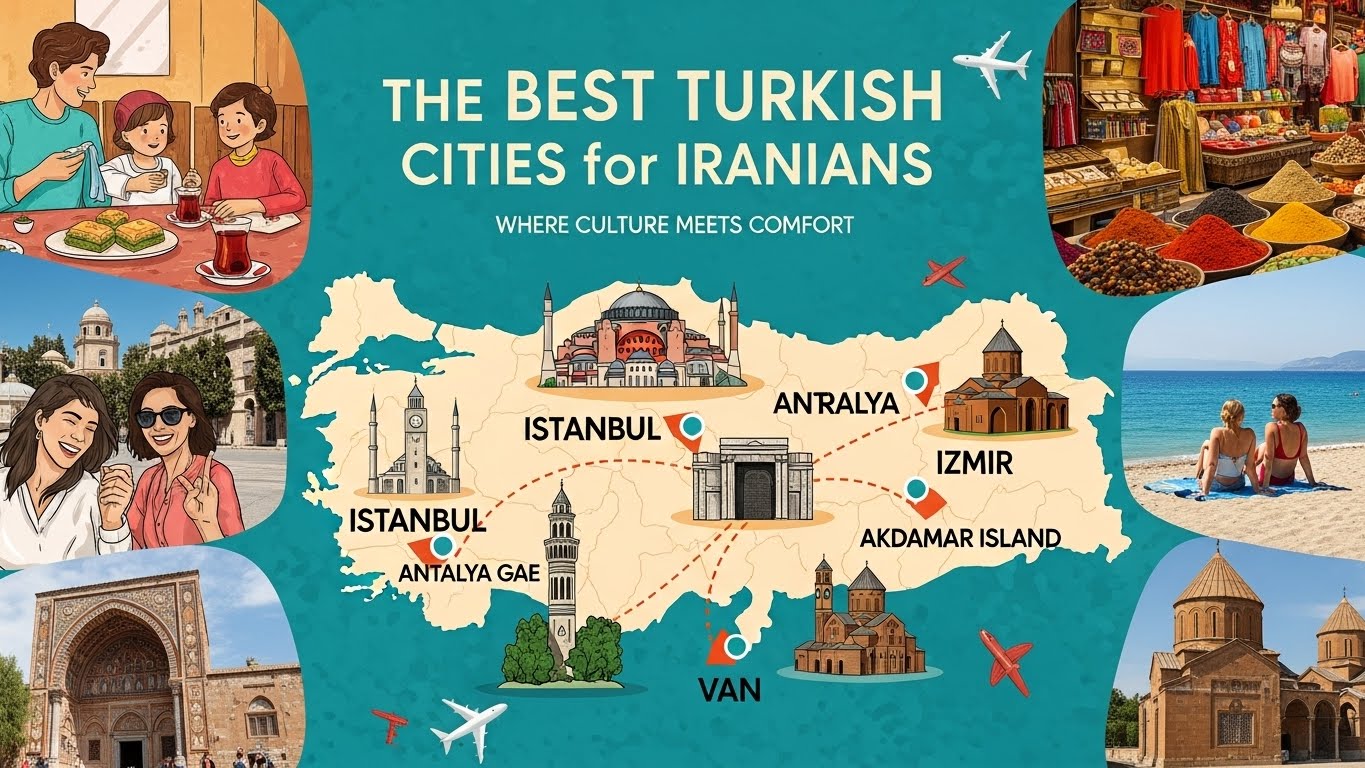
Many Iranians are looking for a Turkish city that offers a realistic balance between investment returns and everyday comfort. Türkiye is not a single market, but multiple markets where prices, rental demand, service quality, and lifestyle vary widely. Choosing the right city should not be driven by impressions or tourism popularity alone, but by a clear objective: Do you want stable rental income? Long-term capital appreciation? Or a calm living environment with strong services? This guide provides a practical framework to help you identify the best Turkish cities for Iranians based on actionable criteria, with a precise look at what each city offers and which goals it fits.
Why Türkiye Attracts Iranians for Both Investment and Comfort
Türkiye combines practical factors that make it a preferred option for Iranians compared with more expensive or more complex markets. It is geographically close, culturally diverse, and home to major cities with high real estate liquidity as well as calmer cities with more accessible pricing. The Turkish property market also supports different paths: buying for residence, buying to rent, or buying for resale when the market cycle improves. From a lifestyle perspective, many Turkish cities provide solid infrastructure, healthcare, education, and daily services, making the decision about more than numbers alone.
Proximity, Easier Integration, and a Wide Range of Options
Choosing the best Turkish city for Iranians is not just about one factor like price or a sea view. It involves integration, family needs, work, and education. Some cities offer a fast pace and broad opportunities like Istanbul, while others offer more calm and lower costs like Ankara and Bursa. Tenant profiles also vary: tourists in coastal destinations, students and employees in administrative and university cities, and industrial workforces near production hubs. This diversity enables precise selection—provided you define the objective before picking the location.
How to Choose the Best Turkish City for Iranians: Practical Criteria
A sound approach starts with one simple question: What kind of return do you want? Then you translate that into measurable indicators such as the strength of rental demand, resale liquidity, volatility risk, and operating costs. Larger cities usually offer stronger liquidity but come with higher prices and tougher competition. Mid-sized cities may provide better value for money, but resale can take longer. Neighborhood selection is equally critical; differences between districts inside the same city can dramatically affect rent levels, occupancy, and tenant quality.
Your Investment Goal Determines the City and the Neighborhood
If your goal is stable rental income, you should focus on areas with year-round demand, such as neighborhoods near universities, business centers, or strong transit lines. If your goal is capital appreciation, look for expansion zones supported by infrastructure projects and expected population shifts. If you want a mix of investment and comfort, prioritize cities that combine strong services and a suitable lifestyle with acceptable rental yields and less day-to-day stress.
- Quick indicators to assess a city and neighborhood before buying:
- Year-round rental demand versus seasonal-only demand.
- Proximity to metro lines, public transport, and main roads.
- Nearby universities, hospitals, and employment hubs.
- Daily-life services: schools, supermarkets, pharmacies, facilities.
- Resale liquidity: comparable supply and speed of selling.
- Operating costs: evaluate net yield, not gross yield.
- Construction quality and the strength of complex management and security.
Istanbul: High Liquidity and Diverse Opportunities for Iranians
Istanbul is often the first choice because it is a vast city with a deep property market, increasing the chances of renting and reselling compared to smaller cities. However, it requires greater attention to neighborhood and project specifics due to wide internal variation. A modest investment in a well-connected, job-rich district can outperform a more expensive purchase in a beautiful area with limited or seasonal demand. On the comfort side, Istanbul offers broad education, healthcare, and service options, but traffic congestion and living costs may not suit every family.
How to Reduce Risk in Istanbul’s Market
The golden rule in Istanbul is to buy “rentability” before you buy “a view.” Focus on districts with real housing demand from employees, students, and families. Avoid marketing promises that are not supported by realistic demand patterns. Also, do not overestimate rapid price jumps; market cycles rise and fall, and deal success depends on entry price and asset quality. If you want Turkish real estate investment for Iranians with less operational complexity, choose a project with strong management and clear services to minimize unexpected expenses.
Ankara: Residential Stability and a Balanced Mix of Price and Services
Ankara suits Iranians who prefer a calmer lifestyle with strong services and generally lower costs than Istanbul. Rental demand is often driven by employees and students, making it less seasonal and more stable in many areas. Some districts also offer better urban planning and wider spaces than crowded mega-cities. From an investment standpoint, Ankara may not deliver fast price surges like some coastal markets during peak seasons, but it can provide balanced returns and lower risk—ideal for those who include lifestyle comfort in their decision.
Who Is Ankara Best For?
Ankara fits investors who want simpler management and a clearer relationship between price and rent. It also suits families that value quiet routines and stability. If your objective is buying property in Türkiye to live in and later rent out after relocating, Ankara can be practical because its rental demand is tied to jobs and education more than tourism. The key is choosing a district close to services and transit while paying attention to building quality and monthly management fees, since operating costs can impact net yield more than expected.
Izmir: Quality of Life and a Growing Coastal Market
Izmir is a large coastal city that blends a Mediterranean vibe with modern urban services, making it attractive for those seeking comfort without Istanbul’s intensity. Its property market is growing steadily, with family-friendly districts and areas close to universities and commercial hubs. Rents can be strong in neighborhoods with real demand, especially where transit access and services align. Izmir also stands out for relatively high quality of life, which matters to Iranians who prioritize mental comfort and lifestyle alongside investment.
Where Izmir’s Investment Strength Shows
Izmir performs best when you choose balanced areas—close to services, but not overpriced simply because they are near the sea. Neighborhoods near universities or business activity tend to offer more consistent demand, while some coastal zones can be partly seasonal. Practically, Izmir supports a “live well with reasonable rental income” strategy, combining comfortable living standards with the potential for gradual capital growth when you choose a well-built project with a sensible entry price.
Antalya: Short-Term Rental Potential—Opportunity and Risk
Antalya is one of the leading cities for tourism-driven income and can suit some Iranians if they are ready for more hands-on management and seasonal monitoring. Short-term rentals may generate higher income during peak months, but they introduce challenges: fluctuating demand, higher operating costs, and the need for furnishing, maintenance, and marketing. In terms of comfort, Antalya is beautiful and well-served, yet investment success depends on selecting a location close to key activity areas and services, with a realistic understanding of peak versus off-peak performance.
When Is Investing in Antalya a Smart Decision?
Antalya becomes a smart choice when you have a clear seasonal-rental plan or a reliable management partner, and when you accept income volatility in exchange for potential high peak returns. If you prefer stable income and lower risk, you may favor cities with year-round residential demand. Many investors make the mistake of basing expectations on two or three peak months only, then struggle during slower periods. Treat Antalya as an investment that requires professional operation—not as a property that “rents itself.”
Bursa and Yalova: Alternatives Near Istanbul with Better Value
Bursa and Yalova can be practical choices for those who want proximity to Istanbul without paying Istanbul-level prices. Bursa is an industrial and service city, supporting housing demand linked to employment. Yalova offers a calmer character, and its geographic closeness can appeal to those who want comfortable living with easier Istanbul access. Investment here can deliver strong value for money, but resale liquidity may be lower than Istanbul’s—making neighborhood selection and project quality especially important. For Iranians looking for a mix of investment and comfort, these cities can be sensible middle-ground solutions.
How to Choose Between Bursa and Yalova
Choose Bursa if you want a market supported by work, industry, and daily services. Choose Yalova if calm living is the priority, with convenient visits to Istanbul. In both cases, do not rely on “close to Istanbul” alone. Proximity helps, but it cannot compensate for weak services or poor project management. Success depends on combining a reasonable entry price with a location that genuinely serves residents year-round.
A Step-by-Step Action Plan for Iranian Investors
Turning a general idea into a profitable decision requires an execution plan that controls risk and prevents impulsive buying. Start by defining a total budget that goes beyond the purchase price, then set a benchmark for net yield after expenses, and define your expected holding period and exit plan. Next, choose a city aligned with your goal, then a neighborhood based on rental demand and services, and finally a project with solid quality and clear management. These steps may seem obvious, but many losses come from skipping or compressing them. The more structured your process, the calmer and more resilient your decision becomes.
- A concise checklist before signing any purchase contract:
- Define the purpose: residence, annual rental, short-term rental, or resale.
- Calculate net yield after fees and potential operating costs.
- Verify build quality and real specifications beyond marketing images.
- Ensure contract terms, payment schedule, and handover details are clear.
- Evaluate complex management and monthly fees and their impact on profit.
- Compare similar units in the same neighborhood to confirm fair entry price.
- Prepare a fallback plan if leasing takes longer or conditions change.
After Purchase: How to Increase Returns and Maintain Comfort
Investment success does not end at purchase; operations begin. Prepare the property to match the target tenant, set a market-realistic rent, and choose a management approach that minimizes breakdowns and disputes. Families seek safety, services, and space; students care about transport and university proximity; tourists care about location and readiness. Maintain preventive upkeep to avoid larger losses later. Review rent periodically based on neighborhood market reality, not personal expectations. With smart management, the property becomes a productive asset that supports stability rather than a burden.
Common Mistakes That Weaken City Selection Decisions
A common mistake is choosing a city based solely on tourism fame or promised high returns without calculating net profit. Another is ignoring the difference between annual rentals and seasonal rentals, then building financial plans on overly optimistic scenarios. Many also fall into the trap of buying far from services because it is cheaper, only to discover that renting is harder and discounts will consume returns. The most serious mistake is unclear objectives; when the goal is vague, the plan changes every month, risk rises, stress increases, and the comfort you sought disappears.
How to Avoid Impulsive Decisions
Adopt a rule: do not buy until you have compared at least three options within the same city and at least three neighborhoods within your budget range. Ask for realistic indicators of rental demand, remain conservative in projections, and assume possible vacancy periods. If your goal is a mix of investment and comfort, give meaningful weight to quality of life and services. A moderately yielding property in a comfortable city can be better than a higher-yielding property with daily stress and hidden costs. The smart decision is the one that remains sound even under less optimistic conditions.
Frequently Asked Questions
Istanbul for liquidity, Ankara for stability, and Izmir for balanced comfort and gradual growth. They can pay more, but are more volatile, costlier to run, and require active management. Year-round rentability: transport access, services, and jobs matter more than a view. Often cheaper, but resale liquidity is weaker; success depends on neighborhood and asset quality. Compare similar units in the same neighborhood and calculate net yield after expenses before buying.
Conclusion
Choosing the best Turkish cities for Iranians is not an emotional decision, but a framework that combines investment objectives with lifestyle needs. Istanbul offers liquidity and broad opportunities for those who choose carefully among its diverse districts. Ankara provides stability and strong services for those who prefer calm. Izmir balances quality of life with a steadily growing market. Antalya suits investors who understand seasonal operations, while Bursa and Yalova offer smart alternatives near Istanbul when the right neighborhood is selected. With clear criteria and a realistic execution plan, you can make a decision that delivers profit while preserving comfort at the same time.
Have Question Or Suggestion ?
Please Share Your Thought, To Make It Real