Turkish Passport Visa-Free Country List 2026: Complete Travel Guide
Discover all visa-free, visa-on-arrival, and eVisa countries for Turkish passport holders in 2026 with updated entry rules and travel tips.
Turkish Passport Visa-Free Country List (2026): Complete Travel Guide
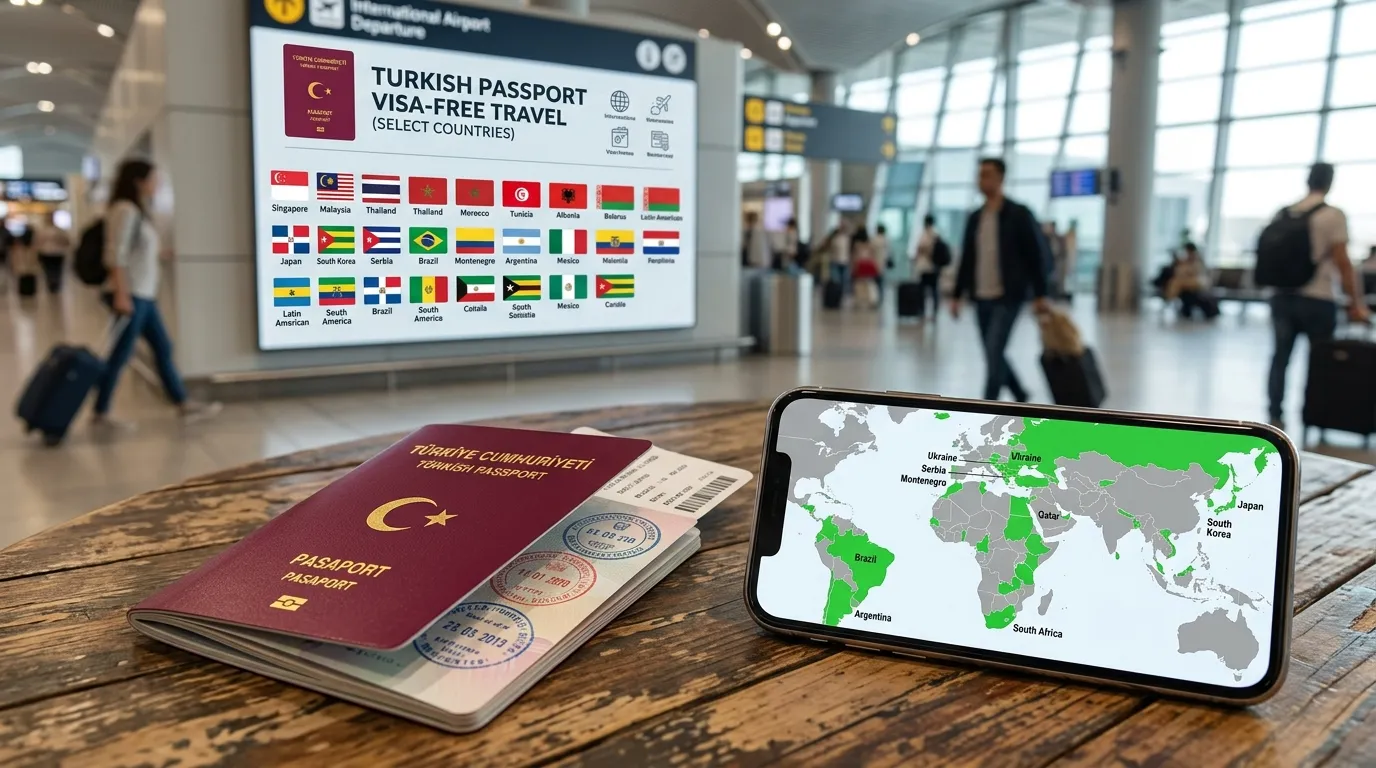
Traveling internationally has become easier for Turkish citizens thanks to the steadily improving mobility of the Turkish passport. Whether you're planning a European city break, a tropical island escape, or a business trip across Asia, knowing which destinations allow visa-free entry, visa on arrival, or electronic visas (eVisas) can save both time and money. As of 2026, Turkish passport holders enjoy access to more than 110 destinations through one of these entry arrangements, making the passport one of the stronger travel documents in its region.
The exact number of accessible destinations changes from time to time as governments revise their immigration policies and bilateral agreements. That is why travelers should always verify entry requirements with the destination country's embassy or official immigration website before booking flights. This guide provides a comprehensive overview of countries that Turkish citizens can visit without obtaining a traditional visa before departure, along with practical travel advice for a smoother journey.
Rather than focusing solely on lists, this guide also explains how visa-free travel works, the difference between visa-free access and electronic authorization systems, and what documents immigration officers may request even when no visa is required. By understanding these distinctions, travelers can avoid common surprises at border crossings and prepare confidently for international travel.
Understanding the Strength of the Turkish Passport
Current Global Passport Ranking
The Turkish passport continues to offer respectable international mobility, giving its holders access to 110+ destinations through visa-free travel, visa on arrival, or eVisa arrangements. While it does not currently rank alongside passports from countries such as Singapore, Japan, or Germany, it remains one of the stronger passports in its region and provides broad travel opportunities across Europe, Asia, Africa, the Caribbean, and South America.
Passport rankings are published by organizations such as the Henley Passport Index and Passport Index, and they are updated regularly as governments negotiate new bilateral agreements or modify existing visa policies. Because these rankings change throughout the year, the exact position of the Turkish passport may vary depending on the source and update date. What matters most for travelers is not the ranking itself but the practical access it provides.
One encouraging aspect of the Turkish passport is the diversity of destinations available. Turkish citizens can explore historic Balkan cities without obtaining a visa, relax on Caribbean beaches, visit many Southeast Asian countries with simplified entry procedures, and travel across much of South America with minimal paperwork. This flexibility benefits tourists, entrepreneurs, students, and business professionals alike.
International travel, however, involves more than simply holding a passport. Many countries require visitors to demonstrate sufficient financial means, provide proof of accommodation, present onward or return tickets, or carry valid travel insurance. Immigration officers retain the authority to refuse entry if these requirements are not met, even when a visa is unnecessary. Preparing these supporting documents in advance helps ensure a smooth arrival.
Visa-Free vs Visa-on-Arrival vs eVisa
Many travelers assume that all simplified entry systems are identical, but there are important differences between visa-free travel, visa on arrival, and electronic visas (eVisas).
Visa-free travel is the simplest option. Turkish citizens can enter the destination without applying for a visa beforehand. Upon arrival, immigration officers stamp the passport and allow entry for a specified period, commonly ranging from 30 to 90 days, depending on the country.
A visa on arrival means that no application is required before departure, but travelers must obtain a visa after landing at the destination airport or border checkpoint. This process may involve completing forms, presenting photographs, paying a visa fee, and waiting for approval before entering the country.
An eVisa requires travelers to apply online before traveling. Applicants usually complete a digital form, upload passport details, pay a fee electronically, and receive approval by email. Once approved, they can travel without visiting an embassy or consulate.
Each option offers greater convenience than applying for a traditional embassy visa, but travelers should always read the specific conditions carefully. Some countries limit entry to tourism only, while others permit business visits. Maximum stay durations also differ significantly, making it essential to understand the rules before departure.
Complete Turkish Passport Visa-Free Country List
Note: Entry policies can change. Always verify with the destination country's official immigration authority before traveling.
Europe
Turkish citizens can travel visa-free to several European destinations, particularly in the Balkans and Eastern Europe.
| Country | Maximum Stay |
|---|---|
| Albania | 90 days |
| Bosnia and Herzegovina | 90 days |
| Kosovo | 90 days |
| Montenegro | 90 days |
| North Macedonia | 90 days |
| Serbia | 90 days |
| Moldova | 90 days |
| Ukraine* | Subject to current travel conditions |
| Belarus | Limited visa-free conditions |
| Georgia | Up to 1 year |
Georgia remains one of the most popular destinations due to its generous entry policy, vibrant culture, and close proximity to Türkiye.
Asia
Asia offers a wide variety of visa-free opportunities for Turkish passport holders.
| Country | Maximum Stay |
|---|---|
| Japan | 90 days |
| South Korea | 90 days |
| Malaysia | 90 days |
| Singapore | 30 days |
| Thailand | Subject to current policy |
| Indonesia | Subject to current regulations |
| Hong Kong | 90 days |
| Philippines | 30 days |
| Qatar | 30 days |
These destinations attract millions of Turkish travelers each year thanks to their combination of modern cities, cultural attractions, beaches, and business opportunities.
Africa
Several African countries also welcome Turkish citizens without requiring a traditional visa.
| Country | Maximum Stay |
|---|---|
| Morocco | 90 days |
| Tunisia | 90 days |
| Botswana | 90 days |
| South Africa | 30 days |
| Eswatini | 30 days |
Tourism and business links between Türkiye and Africa have grown considerably over the past decade, leading to improved travel accessibility.
North America & Caribbean
Popular Caribbean destinations offering simplified entry include:
- Bahamas
- Barbados
- Dominica
- Saint Kitts and Nevis
- Saint Vincent and the Grenadines
- Trinidad and Tobago
- Antigua and Barbuda
Most permit stays between 30 and 90 days.
South America
South America is one of the easiest regions for Turkish citizens to explore.
| Country | Maximum Stay |
|---|---|
| Argentina | 90 days |
| Brazil | 90 days |
| Chile | 90 days |
| Colombia | 90 days |
| Ecuador | 90 days |
| Peru | 90 days |
| Uruguay | 90 days |
| Paraguay | 90 days |
| Venezuela | 90 days |
The region's welcoming visa policies make multi-country trips particularly convenient.
Oceania
Visa-free options in Oceania are more limited but still include destinations such as:
- Fiji
- Vanuatu
- Micronesia
- Cook Islands (special conditions)
These islands are renowned for pristine beaches, diving, and eco-tourism.
Countries Offering Visa on Arrival
Popular Tourist Destinations
For Turkish passport holders, visa on arrival (VoA) countries provide a convenient middle ground between fully visa-free travel and applying for a traditional embassy visa. Instead of completing paperwork weeks before departure, travelers receive their visa after arriving at the airport or land border. Although this process is generally straightforward, it is important to remember that a visa on arrival is not the same as visa-free entry. Immigration authorities still assess eligibility, and travelers may need to provide supporting documents before the visa is issued.
Many popular tourist destinations in Africa, the Indian Ocean, Asia, and the Pacific offer visa-on-arrival facilities for Turkish citizens. Examples include countries such as Maldives, Nepal, Jordan (subject to current regulations), Cambodia, Laos, Madagascar, Mauritius, Seychelles (travel authorization may also apply), Tanzania, and Zimbabwe. Entry policies can change, so checking the destination's official immigration website before departure remains essential.
Most visa-on-arrival procedures require the following:
- A passport valid for at least six months.
- One or more blank passport pages.
- A confirmed return or onward flight ticket.
- Proof of hotel reservations or accommodation.
- Sufficient financial resources for the stay.
- Payment of the visa fee (cash or card, depending on the country).
Processing times typically range from 10 to 45 minutes, although they may be longer during peak travel seasons. Keeping printed copies of travel documents can help speed up the process, as internet access may not always be available at immigration checkpoints.
Countries Offering eVisa
How to Apply
An eVisa is one of the most convenient travel options available today. Instead of visiting an embassy or waiting in long airport queues, Turkish citizens can complete the entire visa application process online before traveling. Many countries have adopted electronic visa systems to simplify border procedures while maintaining security.
The application process generally follows these steps:
- Visit the official government immigration website of the destination country.
- Complete the online application form with your personal and passport information.
- Upload any required documents, such as a passport scan or passport-sized photograph.
- Pay the application fee using an accepted payment method.
- Wait for approval, which may take anywhere from a few hours to several business days.
- Download or print the approved eVisa and carry it when traveling.
Popular destinations that frequently offer eVisa access to Turkish citizens include India, Australia (ETA/eVisitor depending on eligibility), Vietnam, Sri Lanka, Kenya, Azerbaijan (ASAN Visa), Bahrain, Oman, and several other countries. Requirements, fees, and processing times vary, so travelers should apply well in advance of their departure date.
Avoid using unofficial third-party websites that charge excessive service fees. Applying directly through the destination country's official immigration portal is generally the safest and most cost-effective option.
Schengen Area and Turkish Passport
Do Turkish Citizens Need a Schengen Visa?
One of the most common questions Turkish travelers ask is whether they can enter the Schengen Area without a visa. At the time of writing, ordinary Turkish passport holders generally still need a Schengen visa to visit most Schengen member states for tourism, business, or family visits. This requirement applies to countries such as Germany, France, Italy, Spain, the Netherlands, Greece, Belgium, and many others.
To obtain a Schengen visa, applicants typically need to submit:
- A completed visa application form.
- A valid passport.
- Passport photographs.
- Travel insurance meeting Schengen requirements.
- Flight reservations.
- Hotel bookings or invitation letters.
- Proof of sufficient financial means.
- Supporting employment or education documents.
A standard short-stay Schengen visa generally allows travel for up to 90 days within any 180-day period across the Schengen Area, provided the visa is issued for multiple-entry or the intended itinerary.
Future Visa Liberalization Updates
Türkiye and the European Union have held discussions over visa liberalization for several years. While progress has been made in some areas, a full visa-free travel agreement for ordinary Turkish passport holders has not yet been implemented. Any future changes would depend on the completion of agreed benchmarks and formal approval by the relevant institutions.
Travelers should rely on announcements from the European Commission, EU member states, and official Turkish government sources for accurate information rather than rumors circulating online or on social media.
Tips for Visa-Free Travel
Required Travel Documents
Even when a visa is not required, travelers should carry documentation that immigration authorities may request upon arrival. These documents commonly include:
- A passport with at least six months' validity.
- A return or onward travel ticket.
- Proof of accommodation.
- Evidence of sufficient funds.
- Travel insurance (required or recommended by some destinations).
Keeping digital and printed copies of important documents is a good practice in case of loss or technical issues.
Common Entry Requirements
Visa-free entry does not guarantee admission. Border officers can refuse entry if a traveler fails to meet immigration requirements or poses a security concern. Common reasons for refusal include:
- Insufficient passport validity.
- Lack of proof of onward travel.
- Inability to demonstrate adequate financial resources.
- Previous immigration violations.
- Providing false or inconsistent information.
Preparing thoroughly before departure significantly reduces the likelihood of complications at the border.
Conclusion
The Turkish passport offers access to a broad and growing range of international destinations through visa-free travel, visa on arrival, and eVisa arrangements. From the Balkans and South America to Southeast Asia and the Caribbean, Turkish citizens have numerous opportunities to travel for tourism, business, education, and cultural exchange with relatively few administrative barriers.
However, entry requirements can change with little notice due to diplomatic agreements, public health measures, or immigration policy updates. Before every trip, travelers should verify the latest requirements through official embassy or immigration websites, ensure that their passports remain valid for the required period, and prepare supporting documents such as return tickets, accommodation confirmations, and travel insurance where applicable.
By planning ahead and staying informed, Turkish passport holders can make the most of the extensive travel opportunities available to them while enjoying smoother and more confident international journeys.
Frequently Asked Questions
1. How many countries can Turkish passport holders access without a traditional visa?
Turkish passport holders currently have access to 110+ destinations through visa-free entry, visa on arrival, or eVisa arrangements. The exact number varies as international agreements change.
2. Can Turkish citizens travel to Europe without a visa?
Turkish citizens can enter several non-Schengen European countries visa-free, including Serbia, Albania, Montenegro, Bosnia and Herzegovina, Kosovo, North Macedonia, and Georgia. Most Schengen countries still require a Schengen visa for ordinary Turkish passport holders.
3. Is Japan visa-free for Turkish citizens?
Yes. Under current regulations, Japan allows Turkish citizens to enter visa-free for short stays, typically up to 90 days, subject to meeting entry requirements.
4. Does visa-free travel guarantee entry?
No. Immigration officers always have the authority to refuse entry if travelers fail to satisfy border requirements or cannot provide the necessary supporting documentation.
5. Where can I find the latest visa requirements?
The most reliable sources are the official immigration authority or embassy website of your destination country. Airlines may also provide guidance, but government sources should always take priority.















Have Question Or Suggestion ?
Please Share Your Thought, To Make It Real