Holiday Home Investment in Turkey: ROI, Best Cities & Legal Guide
Explore the full guide to investing in holiday homes in Turkey. Discover ROI potential, best cities for rental income, legal tips, and how to maximize profits.
Introduction
Thinking of turning your vacation dreams into an investment? You're not alone. Turkey has rapidly climbed the ladder as one of the top destinations for holiday home investors. With its stunning Mediterranean coastline, vibrant culture, and a real estate market still offering affordable options, it’s no wonder people are pouring money into Turkish properties.
But this isn’t just about owning a slice of paradise—it’s about making it work for you. Whether you're looking at a sea-view villa in Bodrum or a trendy apartment in Istanbul, holiday home investment in Turkey can yield strong ROI (Return on Investment), if done right. In fact, many investors are seeing 6% to 10% annual returns, depending on the location and property type.
In this guide, we'll dive deep into why Turkey is hot for holiday home investments, explore the most profitable regions, break down the potential returns, and help you make a smart, informed decision. Let’s unpack the opportunities, risks, and hidden gems.
Why Invest in Holiday Homes in Turkey?
If you’re scanning the global map for your next real estate venture, Turkey checks more boxes than you’d expect. From its strategic location to its booming tourism industry, the country has become a magnet for investors seeking high rental income and long-term capital appreciation.
1. Strategic Location Between Europe and Asia
Turkey sits at the crossroads of East and West, making it a hotspot not just for travelers but also for international business. This unique positioning draws in millions of tourists, digital nomads, and expats year-round. Istanbul, for example, connects to over 300 international destinations, which significantly boosts demand for short-term holiday rentals.
2. Diverse Tourism Appeal
Turkey is a buffet of experiences. Whether it's the ancient ruins of Ephesus, the hot air balloons over Cappadocia, or the luxurious beach resorts of Bodrum, there’s something for every type of traveler. This variety ensures that holiday homes in different regions remain in demand throughout the year. Plus, tourism in Turkey is not just seasonal—thanks to the country’s vast geographical diversity, there’s always a region in high season.
3. Affordable Property Prices Compared to Europe
When you compare Turkey to Spain, Italy, or France, you’ll notice one thing quickly: it’s cheaper. A two-bedroom apartment in Antalya can cost less than a one-bedroom flat in southern Spain. Yet, the rental yields can be quite similar, or even higher in Turkey. That means a better price-to-rent ratio and quicker ROI recovery. Investors can enter the market with a smaller budget and scale up over time.
4. High Rental Yields
In tourist-heavy regions like Antalya and Bodrum, holiday homes can generate rental yields of 8% to 12% annually during peak seasons. This is particularly appealing when compared to traditional long-term rental markets. You’re essentially leveraging Turkey’s tourism power to your financial advantage.
5. Residency Incentives and Citizenship Programs
Turkey offers a real estate-based citizenship program for foreign investors who spend $400,000 or more on property. Many investors use this opportunity not only to gain a second passport but also to tap into a growing market. Even if you don’t meet that threshold, investing in Turkish real estate could qualify you for a renewable residence permit.
Understanding ROI in Turkey’s Real Estate Market
So, what’s the real deal when it comes to ROI (Return on Investment) in Turkish holiday homes? Let’s unpack the numbers.
1. What is ROI in Real Estate Terms?
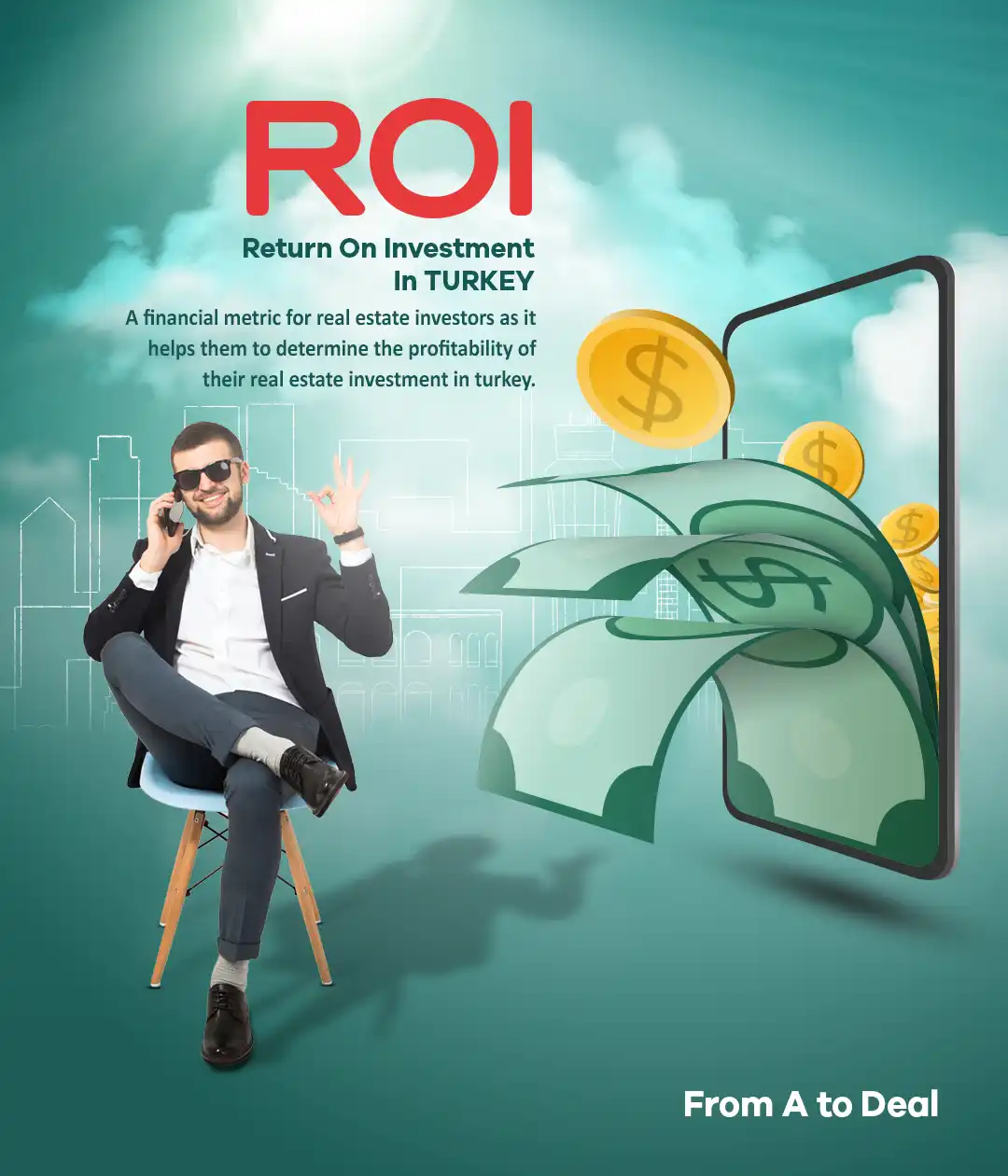
ROI, or Return on Investment, measures how much profit you make on a property relative to the cost. It’s usually expressed as a percentage and calculated annually. For holiday homes, this includes rental income minus costs like taxes, maintenance, and management.
Formula:
ROI = (Annual Rental Income - Annual Expenses) / Property Price x 100
👉 For a comprehensive breakdown of how ROI works in real estate, especially in the Turkish context, make sure to check out Deal’s detailed guide.
2. Average ROI for Holiday Homes in Turkey
Across Turkey, average ROI for holiday homes ranges from 5% to 12% annually. Here’s a rough breakdown:
| City | Average ROI |
|---|---|
| Istanbul | 6% – 9% |
| Antalya | 8% – 12% |
| Bodrum | 7% – 10% |
| Alanya | 9% – 11% |
| Fethiye | 6% – 8% |
Of course, these numbers can go higher if you manage the property yourself, invest in renovations, or catch the market at the right time.
3. ROI Variations by Region and Season
Not all Turkish cities are created equal in terms of ROI. Coastal towns see heavy seasonal traffic, while cities like Istanbul generate steady year-round income due to business travelers and expats.
Seasonality plays a huge role. For example:
In Antalya, 80% of rental income can be earned between May and September.
Istanbul, on the other hand, sees bookings throughout the year, though prices may fluctuate during off-peak months.
Understanding these patterns helps you plan your rental pricing strategy more effectively, ensuring you’re maximizing every lira.
Top Cities in Turkey for Holiday Home Investment
Choosing the right city is crucial for maximizing your returns. Not all Turkish destinations offer the same rental demand, property appreciation, or investor-friendly environments. Let’s dive into the top cities that combine rental profitability with tourism magnetism.
Istanbul: High Demand & Long-Term Gains
Istanbul is more than just the cultural heart of Turkey—it’s a real estate powerhouse. With over 15 million residents and millions of tourists visiting annually, the city offers a dynamic and robust short-term rental market.
1. Diverse Property Types and Pricing
You’ll find everything from luxury apartments in Nişantaşı to more affordable flats in Beylikdüzü. Prices can vary dramatically:
Prime central areas (e.g., Taksim, Şişli, Kadıköy) can range from $200,000 to $1 million+.
Outer districts are more budget-friendly, starting around $80,000.
2. Steady Year-Round Demand
Istanbul doesn’t rely solely on seasonal tourism. It attracts:
Business travelers
Students
Medical tourists
Expat professionals
That means occupancy rates are generally consistent throughout the year, reducing seasonal risk—a key factor for investors looking for stable ROI.
3. Short-Term Rental ROI Potential
With the popularity of platforms like Airbnb, many investors earn 6% to 9% annual ROI in Istanbul alone. Certain neighborhoods close to touristic landmarks (like Sultanahmet or Galata) perform even better, especially if the property is tastefully furnished and professionally managed.
Antalya: The Tourism Capital of Turkey
If Istanbul is the business hub, Antalya is undoubtedly the leisure capital. Sitting on the stunning turquoise coast, Antalya welcomes over 15 million international tourists annually—and it’s not slowing down.
1. Beachfront Homes and Villas
Holiday homes in Lara Beach, Konyaaltı, and Belek are especially sought-after. These properties can range from:
$120,000 for a modern apartment
To $500,000+ for a beachfront villa
High occupancy rates during the summer season make Antalya a top contender for holiday rental ROI.
2. Perfect for Short-Term Rentals
Antalya is a short-term rental goldmine, especially from May to October. If marketed correctly, a single apartment can pull in $1,500 to $3,000+ per month in peak season. That’s significantly more than what a long-term tenant would pay annually.
3. Strong ROI Performance
Thanks to consistent tourism flow, average ROI in Antalya ranges between 8% and 12%. With property values steadily climbing, there’s also long-term appreciation to factor in—especially in areas near new development zones and airports.
Bodrum: Luxury and Lifestyle Returns
Known for its white-washed homes, upscale marinas, and celebrity sightings, Bodrum is where luxury meets investment opportunity.
1. High-End Holiday Rentals
Bodrum caters to a more affluent crowd—both local and international. Villas with private pools, sea views, and hotel-like amenities dominate the market. Investors often target:
Yalıkavak
Gümüşlük
Türkbükü
Expect to invest $250,000 to $1 million+ for a well-located, high-ROI property.
2. Short and Intense Rental Season
The high season in Bodrum is shorter (typically June–September), but rental rates are much higher. A luxury villa here can fetch $4,000 to $10,000 per month, meaning you can earn a year’s worth of rent in just four months.
3. Strong Capital Gains
Aside from high rental income, Bodrum properties often appreciate 8–15% annually due to limited inventory and high-end demand. It’s perfect for investors seeking both cash flow and capital growth.
Fethiye & Alanya: Affordable and Promising
If you’re looking for great value with solid ROI potential, Fethiye and Alanya should be on your radar. These coastal towns offer an appealing mix of affordability, natural beauty, and increasing tourism, making them ideal for mid-range investors.
1. Fethiye: Nature, Adventure, and Charm
Fethiye, located along the Turquoise Coast, has become a favorite among British tourists and retirees. Known for its stunning blue lagoons, mountain backdrops, and laid-back vibe, it draws consistent demand—especially for villas and traditional Turkish-style homes.
Property Prices: You can still find well-located apartments starting from $80,000, while detached villas can range from $150,000 to $300,000+.
Target Market: Adventure travelers, retirees, and seasonal tourists.
Why It’s Good for ROI:
High occupancy during May to October
Affordable management costs
Long-term expat community supporting off-season rentals
Fethiye can deliver 6% to 8% ROI, depending on property type and how well it’s marketed.
2. Alanya: The Up-and-Coming Hotspot
Alanya is fast becoming one of Turkey’s hidden gems for real estate investors. With a warm climate year-round, an affordable lifestyle, and a rapidly developing infrastructure, it’s now on the radar for international buyers—especially Europeans and Russians.
Property Prices: Modern apartments start from $60,000, and luxury penthouses or villas can reach $250,000+.
Rental Income: Properties near Cleopatra Beach or the city center can earn $800 to $2,000 per month in high season.
Key Drivers of ROI in Alanya:
Year-round sunshine
Growing international community
Competitive property pricing
Alanya investors are seeing returns of 8% to 11% annually, and appreciation is climbing steadily due to rising demand.
3. Perfect Entry Points for New Investors
Both cities offer a low barrier to entry compared to Istanbul or Bodrum. If you're just getting started with holiday home investment in Turkey, these destinations offer:
Lower upfront costs
Less competition
High tourist appeal
Easier management with local property services
You might not get the ultra-luxury clientele here, but you will get a steady stream of tourists looking for mid-range accommodations—which can be very profitable when managed correctly.
Short-Term Rentals vs Long-Term Rentals
One of the first questions investors ask is: Should I rent short-term on platforms like Airbnb or opt for long-term tenants? The answer depends on your risk appetite, time commitment, and goals—but let’s break it down.
1. Short-Term Rentals (Airbnb/Booking.com)
These are especially popular in tourist-heavy areas like Antalya, Istanbul, and Bodrum. Here's why investors love short-term rentals:
Higher Income Potential: You can charge a premium, especially in high season.
Flexibility: You can block dates for personal use.
More Dynamic Pricing: Adjust rates daily based on demand.
Example:
A 2-bedroom apartment in Antalya might rent long-term for $500/month. On Airbnb during summer? It could earn $100/night, bringing in $3,000+ per month.
Challenges:
Requires more hands-on management
Cleaning and maintenance costs
Compliance with local regulations
2. Long-Term Rentals
More stable and hands-off, long-term rentals offer:
Predictable Income
Lower Management Costs
Fewer Tenant Turnovers
But they also come with downsides:
Lower annual returns (3%–6%)
Difficult to raise rent frequently
Property wear and tear over time
3. Which One Gives Better ROI?
Short-term wins for profit potential, but long-term wins for stability. For the best of both worlds:
Use a hybrid approach—short-term in peak season, long-term in winter
Hire a property manager if you live abroad
Focus on locations where both rental strategies are viable
Legal Aspects and Ownership for Foreigners
Before you get too excited about beach views and rental yields, let’s talk legal stuff. Yes, foreigners can buy property in Turkey, but there are important legal hoops to jump through. Don’t worry—it’s not overly complicated, but it does require attention.
1. Can Foreigners Buy Property in Turkey?
Yes, they absolutely can. In fact, foreign ownership is encouraged in Turkey, and there are very few restrictions. Citizens of most countries are eligible to purchase freehold property, including holiday homes, villas, and apartments. However, there are a few ground rules:
You cannot buy property near military zones.
Foreigners are limited to 30 hectares of property across the country.
The property must have a registered title deed (Tapu).
Turkish law does not require residency or citizenship to own property, making it a popular destination for remote investors.
2. Title Deed (Tapu) and Legal Ownership
The title deed in Turkey is known as the Tapu. It’s the only document that proves property ownership. When purchasing, you’ll need:
A tax number (easily obtained at any tax office)
A translated passport
Property evaluation report
DASK earthquake insurance
Once the sale is complete, your name is officially recorded with the Land Registry, and you’ll receive the Tapu. This entire process typically takes 3 to 6 days.
3. Taxes and Fees for Foreign Buyers
Let’s break down the costs you should expect:
| Fee Type | Estimated Cost |
|---|---|
| Property Purchase Tax | 4% of property value |
| Notary and Translation Fees | $200–$500 |
| Legal Fees (Optional but smart) | $1,000–$2,000 |
| DASK Insurance | $25–$100 annually |
| Property Valuation Report | ~$300 |
| Annual Property Tax | 0.1%–0.6% |
Tip: Always get an independent lawyer—don’t rely solely on agents. It’s worth the peace of mind.
4. Can You Get a Residence Permit Through Property Investment?
Yes. If you buy a property worth at least $75,000 in a major city or $50,000 in smaller towns, you are eligible to apply for a short-term residence permit, renewable every two years.
Even better—if you invest $400,000 or more, you can apply for Turkish citizenship under the country’s investment program. That’s a golden visa with a pretty solid passport.
5. Legal Considerations for Rental Income
You’ll need to register your rental activity with the local tax office.
All income is taxable, but deductions can be made for maintenance, repairs, and more.
Short-term rentals may require a tourism license or rental permit depending on the city.
To stay compliant:
Work with a local accountant or tax advisor.
Always declare income if renting on platforms like Airbnb.
Use a professional property manager to handle local paperwork.
Owning and renting out a holiday home in Turkey is entirely legal and often profitable—but only if you play by the rules. A little due diligence goes a long way.
Costs Associated with Holiday Home Investment
Buying property isn’t just about the purchase price. There are several ongoing and one-time costs you should factor into your ROI calculations. These are often overlooked—but they can make or break your profits if you’re not careful.
1. One-Time Purchase Costs
Besides the property price itself, expect to pay for:
Stamp Duty (Property Transfer Tax): 4% of declared property value (split between buyer and seller, though usually paid by buyer)
Title Deed Transfer Fees
Property Valuation Report
Translator and Legal Assistance
Real Estate Agent Commission (if applicable): Usually 2–4%
This usually adds up to about 6%–8% of the property’s value.
2. Ongoing Costs and Maintenance
Let’s look at what you’ll be spending annually to keep your holiday home rentable and in good shape:
| Expense | Average Annual Cost |
|---|---|
| Property Management | $600–$1,200 (or 10% of income) |
| Cleaning Services | $20–$50 per booking |
| Repairs and Renovations | $500–$1,000 |
| Utility Bills (if not passed to guest) | $50–$150/month |
| DASK Earthquake Insurance | $25–$100 |
| Annual Property Tax | 0.1%–0.6% of value |
3. Platform Fees (Airbnb, Booking.com, etc.)
If you list on Airbnb or similar platforms, they’ll take a cut:
Airbnb: 3% host fee
Booking.com: 10%–15% commission
These costs can be offset by strategic pricing, but you must include them in your ROI calculation.
4. Furnishing and Interior Design
Want to attract high-paying guests? Then don’t cheap out on the interiors. A fully furnished and well-decorated property can rent for 30% more than an unfurnished one.
Average furnishing cost:
Apartment: $5,000–$10,000
Villa: $10,000–$25,000+
It’s a one-time cost, but a high-impact one.
Financing Options for Foreign Investors
Don’t have all the cash up front? No problem. Turkey offers several flexible financing options for foreigners who want to invest in holiday homes. Whether you prefer a local mortgage or a developer-backed installment plan, you’ve got choices.
1. Can Foreigners Get a Mortgage in Turkey?
Yes, but with a few caveats.
Foreign nationals can apply for mortgages from select Turkish banks, but it’s not as straightforward as in your home country. Here’s what you need to know:
Maximum loan-to-value (LTV) ratio: 50%–70%
Maximum term: 10–15 years
Interest rates: Starting from 10% annually (subject to currency and inflation)
Required documents:
Valid passport
Turkish tax ID number
Proof of income (bank statements, salary slips)
Property appraisal report
Proof of residence (utility bill or rental contract)
Pro tip: Mortgages are often issued in Turkish Lira, which can pose exchange rate risks. Make sure you factor that into your ROI projections.
2. Developer Financing and Installment Plans
This is a popular option, especially for off-plan or under-construction properties. Many developers offer 0% to low-interest financing directly to buyers. Here’s how it typically works:
Down payment: 30%–50%
Installments: Over 12 to 60 months
No credit checks or mortgage approvals
It’s a hassle-free method, often bundled with promotions like:
Free furniture packages
Reduced transfer tax
Maintenance-free periods
If you don’t qualify for a bank mortgage, developer financing can be a fantastic alternative.
3. Payment in Foreign Currency
In most cases, developers and sellers accept payment in USD, EUR, or GBP, especially in popular tourist regions. This is a major benefit for investors looking to avoid Turkish Lira fluctuations. Just make sure the payment is clearly recorded in your Tapu transaction.
4. Alternative Options: Remortgaging or Equity Release
Some investors use real estate equity in their home country to fund a Turkish purchase. This includes:
Refinancing their main home
Taking out a HELOC (Home Equity Line of Credit)
This can provide access to lower interest rates and long repayment terms—especially for investors in countries with favorable lending policies.
5. Watch Out for Hidden Fees
No matter the route, always read the fine print. Be cautious of:
Early repayment penalties
Foreign exchange conversion fees
Uninsured financing risks
Legal and notary costs not covered in your loan
Always consult with a local financial advisor or lawyer to ensure the financing aligns with your investment goals and risk tolerance.
How to Maximize Your ROI in Turkey
Once you’ve bought your holiday home, the next step is squeezing every lira out of it. Here’s how savvy investors consistently hit double-digit returns.
1. Location is (Still) Everything
ROI is location-dependent. Always choose:
Areas with high tourist traffic
Near beaches, historical sites, or city centers
Regions with infrastructure investments (new airports, roads, malls)
Use tools like Google Trends, AirDNA, and Booking.com reviews to assess demand in real time.
2. Renovate to Differentiate
Don’t settle for the default design. Properties with unique decor and features:
Rent faster
Command higher prices
Get better reviews
Invest in:
Modern kitchens and bathrooms
High-speed internet
Smart locks and energy-efficient appliances
Renovating can increase your nightly rate by 20%–40%, dramatically boosting your bottom line.
3. Professional Property Management
If you’re not living in Turkey, a local property management company is a must. They’ll handle:
Check-ins and check-outs
Cleaning and maintenance
Guest communications
Tax compliance
Yes, they charge a fee (typically 10%–15% of rental income), but it’s well worth it. You’ll save time, avoid legal headaches, and keep guests happy.
4. Smart Pricing Strategy
Don’t guess—use data.
Dynamic pricing tools like PriceLabs or Wheelhouse adjust your rates automatically based on:
Seasonality
Local events
Booking trends
This ensures your calendar stays full, and your ROI stays high.
5. List on Multiple Platforms
To maximize visibility and bookings:
List your property on Airbnb, Booking.com, Vrbo, Expedia, and even local Turkish rental sites.
Use a channel manager to sync availability and prevent double bookings.
The wider your net, the higher your earnings.
6. Offer Extras
Upsell guests on:
Airport transfers
Local tours
Welcome baskets
Daily cleaning or chef services
Small touches = better reviews = more bookings = higher income.
The Role of Tourism in Property ROI
Tourism isn’t just a “bonus” in Turkish real estate—it’s the engine behind high rental yields. Understanding how tourism impacts ROI will help you time your investment and operations better.
1. Turkey's Rising Tourist Numbers
Turkey is one of the world’s top 10 tourist destinations. In 2024 alone, it welcomed over 56 million international tourists. And this number is still climbing due to:
Increased global interest in historical and cultural travel
Affordable luxury experiences
Improved visa and travel policies
2. Peak Travel Seasons That Drive ROI
Timing your rentals to coincide with high tourist seasons can make or break your returns. Key months include:
Summer (June–August): Peak for beach cities like Antalya, Bodrum, and Alanya
Spring and Autumn: Ideal for Istanbul, Cappadocia, and Fethiye
Winter: Ski towns and wellness resorts (Uludağ, Bursa) see a boom
The average tourist stay is 6–8 nights, with premium nightly rates during holidays and festivals.
3. Events and Cultural Festivals Boost Demand
Properties near event venues or major annual festivals (e.g., Istanbul Film Festival, Bodrum Music Festival, Antalya’s Sandland) often get fully booked months in advance at above-average nightly rates.
Investing near such hotspots can give you a competitive edge and higher occupancy rates.
Market Trends and 2025 Forecast
Understanding current trends and future forecasts can give you a serious edge in the Turkish holiday home investment game. Real estate isn’t just about location anymore—it’s about timing, strategy, and adapting to the market’s evolution.
1. Property Price Trends in Turkey
Despite global economic turbulence, Turkey’s real estate market has shown resilience. In the last few years:
Property prices have surged 20%–40% annually in top tourist cities.
Demand for new build, modern homes has increased due to lifestyle changes post-COVID.
Coastal areas like Bodrum, Antalya, and Alanya have seen the highest price appreciation due to limited land availability and high demand.
What’s Driving This?
Rising tourism numbers
Weak Turkish Lira attracting foreign buyers
Urban transformation projects across major cities
In 2025, prices are expected to continue their upward climb—but more steadily, with appreciation predicted at around 10%–15% annually, depending on region.
2. 2025 Tourism Growth Outlook
According to projections by Turkey’s Ministry of Culture and Tourism:
Visitor numbers will exceed 60 million by the end of 2025
Major infrastructure projects (new airports, cruise ports) are set to increase accessibility
Cultural and eco-tourism is expanding fast—pushing new destinations into the spotlight
This directly affects rental demand, especially in second-tier cities like:
Kas
Datça
Trabzon
Mersin
These are now emerging markets for investors who want to get in before the crowds.
3. Government Incentives and Policies
The Turkish government continues to support foreign investment with:
Real estate-based citizenship programs
Improved digital platforms for Tapu and title transactions
Tax benefits for foreign investors in tourism-zoned areas
Expect new initiatives in 2025 aimed at encouraging sustainable and luxury tourism, which will directly influence property demand in eco-resorts and boutique developments.
4. Shift Toward Digital Nomads and Remote Workers
Post-pandemic, Turkey is rising as a hub for remote workers due to its:
Low cost of living
Fast internet
Great climate and lifestyle
Many cities are now catering to digital nomads, creating long-stay opportunities that bridge the gap between holiday and residential rentals.
What this means for you:
Consider offering properties with home offices or work-friendly amenities
Target longer stays with discounted monthly rates
Appeal to expats, freelancers, and students
Risks and Challenges to Consider
Let’s be honest—every investment comes with risks. The Turkish market offers excellent opportunities, but it's not without its challenges. Knowing what to watch for will keep you from falling into common traps.
1. Currency Fluctuations
The Turkish Lira is volatile. If you’re earning in Lira but converting back to USD, EUR, or GBP, your ROI can be impacted by exchange rate changes.
How to minimize this risk:
Price your rentals in foreign currencies on booking platforms
Hold earnings in foreign currency accounts (many Turkish banks offer this)
Consider investing in USD/EUR-denominated properties
2. Legal and Bureaucratic Complexities
Although Turkey is relatively open to foreign buyers, the bureaucracy can still be frustrating:
Changing laws around short-term rentals
Zoning issues
Unclear building permits for off-plan projects
Solution: Always work with licensed professionals—lawyers, translators, and registered agents. And stay updated on local laws, especially in tourist-heavy regions like Istanbul and Bodrum.
3. Property Management Issues
If you’re not living in Turkey, managing your property remotely can be tricky. Poor communication, late maintenance, or bad guest reviews can eat into your ROI.
Tip: Hire a reputable local management company with experience handling foreign clients. Look for companies offering:
Multilingual support
Online portals
Transparent billing and maintenance
4. Market Saturation in Some Areas
In hotspots like Alanya or certain parts of Antalya, the holiday rental market is becoming saturated. Too many similar properties can lead to:
Price competition
Lower occupancy rates
Higher marketing costs
To combat this:
Offer unique experiences or designs
Invest in branding your property
Focus on quality over quantity
Conclusion
Investing in a holiday home in Turkey isn’t just about owning a piece of paradise—it’s about unlocking real financial potential. With a booming tourism industry, relatively low entry costs, and high rental yields, Turkey offers a unique blend of lifestyle and profit.
Whether you're eyeing a luxury villa in Bodrum, a rental-friendly apartment in Antalya, or a trendy city flat in Istanbul, the opportunities are vast—but only if you do your homework. Pay attention to location, understand the legal landscape, and don’t skimp on quality or management.
The Turkish market is still ripe for foreign investors—but the window is closing fast. Prices are climbing, and competition is growing. Now is the time to act smart, move strategically, and build a holiday home portfolio that not only pays for itself but fuels your financial future.
FAQs
1. What is the average ROI for holiday homes in Turkey?
The average ROI ranges from 6% to 12% annually, depending on location, property type, and how well the rental is managed. Coastal areas like Antalya and Alanya typically yield the highest returns.
2. Is buying a holiday home in Turkey safe for foreigners?
Yes, it’s safe and legal. Foreigners can fully own property in most parts of Turkey, as long as the property isn't near military zones. Working with a lawyer ensures a secure transaction.
3. Can I rent out my Turkish holiday home legally on Airbnb?
Yes, but you’ll need to register the property with local tax authorities and, in some cities, obtain a tourism rental license. Legal requirements vary by municipality.
4. How much should I budget annually for maintenance and property management?
Expect to pay $1,000–$2,000 per year for cleaning, repairs, management fees, and taxes. Costs are lower in smaller towns and higher in tourist hotspots.
5. Which Turkish city gives the highest rental yield for holiday homes?
Antalya and Alanya currently offer some of the highest rental yields, averaging 8% to 12%, especially for properties near beaches or in tourist-dense neighborhoods.
Have Question Or Suggestion ?
Please Share Your Thought, To Make It Real