The Importance of the Marmara Sea and Marmara Region for Turkey
The Marmara Sea and Region are Turkey’s economic, cultural, and strategic heart, connecting continents, driving trade, and shaping national development.
The Importance of the Marmara Sea and Region for Turkey
Introduction to the Marmara Sea and Region
The Marmara Sea and the Marmara Region occupy a uniquely important position in Turkey's geography, economy, history, and culture. Although the Marmara Sea is the smallest sea within Turkey's borders, its influence extends far beyond its physical size. Situated between the Black Sea and the Aegean Sea, it serves as a critical maritime corridor connecting Europe and Asia while supporting some of the country's most densely populated and economically productive areas.
The Marmara Region is home to major cities, including Istanbul, Bursa, Kocaeli, Tekirdağ, Balıkesir, and Sakarya, making it Turkey's most developed and industrialized region. This area contributes a substantial share of the nation's gross domestic product, industrial output, exports, and foreign investment. As a result, any discussion of Turkey's economic success inevitably involves the Marmara Region.
The sea itself acts as a vital transportation route that facilitates international trade between the Mediterranean and Black Sea basins. Every year, thousands of vessels navigate through the Turkish Straits System, which includes the Bosporus, the Marmara Sea, and the Dardanelles. This maritime network places Turkey at the center of global shipping routes and enhances its geopolitical importance.
Beyond economics and transportation, the Marmara Region has shaped Turkish civilization for thousands of years. Ancient kingdoms, Byzantine emperors, Ottoman sultans, and modern Turkish leaders have all recognized its strategic value. Today, the region continues to serve as a symbol of Turkey's connection between East and West, tradition and modernity, and regional influence and global integration.
Geographic Location and Strategic Position
The strategic importance of the Marmara Sea begins with its geography. Located in northwestern Turkey, the sea covers approximately 11,350 square kilometers and acts as a natural inland sea connecting several significant waterways. Despite its modest size, it holds enormous geopolitical significance due to its location at the crossroads of continents and international trade routes.
The surrounding Marmara Region enjoys favorable climatic conditions, fertile agricultural lands, and easy access to domestic and international markets. These geographic advantages have encouraged human settlement and economic activity for centuries. The region's transportation networks—including highways, railways, ports, and airports—further strengthen its role as Turkey's logistical center.
One of the key reasons for the region's strategic value is its proximity to Europe. Turkey's land border with Europe begins in the broader Marmara area, making it the country's primary gateway to European markets. International businesses often establish operations in the region because of its excellent connectivity and infrastructure.
Geography has also influenced political and military strategy throughout history. Control over the Marmara Sea has often meant control over trade, defense, and communication routes. This reality remains relevant today as Turkey continues to leverage its geographic position to strengthen regional and global influence.
A Bridge Between Continents
The Marmara Region is often described as the place where Europe meets Asia, and nowhere is this more evident than in Istanbul. The city spans two continents, linked by bridges, tunnels, and transportation networks crossing the Bosporus Strait. This physical connection symbolizes Turkey's broader role as a bridge between different cultures, economies, and political systems.
The strategic location allows Turkey to facilitate trade and cooperation between Europe, the Middle East, Central Asia, and the Caucasus. Goods moving from Asia to Europe frequently pass through Marmara transportation corridors, making the region a critical hub for international commerce.
The importance of this geographic bridge extends beyond economics. Cultural exchange, migration, tourism, education, and diplomacy all benefit from the region's unique position. Throughout history, merchants, travelers, scholars, and armies have crossed these lands, contributing to a rich and diverse cultural heritage.
Modern infrastructure projects such as the Marmaray Tunnel, the Yavuz Sultan Selim Bridge, and the Eurasia Tunnel have strengthened these continental connections. These developments not only improve transportation efficiency but also reinforce Turkey's role as a key link between East and West.
Connection Between Major Seas
The Marmara Sea forms the central component of a maritime corridor connecting the Black Sea to the Aegean Sea and ultimately the Mediterranean Sea. Through the Bosporus Strait in the north and the Dardanelles Strait in the south, ships can move between these important bodies of water.
This connection is crucial for countries bordering the Black Sea, including Ukraine, Romania, Bulgaria, Georgia, and Russia. Their access to global markets depends heavily on navigation through Turkish waters. Consequently, the Marmara Sea plays a significant role in regional trade and international relations.
The volume of maritime traffic passing through the straits is substantial. Tankers, cargo ships, container vessels, and passenger ferries rely on these routes daily. This traffic generates economic benefits for Turkey while enhancing its strategic importance in global shipping networks.
The maritime corridor also contributes to energy security. Oil and natural gas exports from the Black Sea region frequently transit through Turkish waterways. As global energy markets continue to evolve, the Marmara Sea remains a critical component of international supply chains.
Historical Significance of the Marmara Region
The Marmara Region has witnessed some of the most important events in world history. Its strategic location attracted civilizations long before the rise of modern states. Ancient Greeks established colonies along its shores, followed by the Romans, Byzantines, and Ottomans.
Throughout antiquity, the region served as a crossroads of commerce and culture. Merchants transported goods between Europe and Asia, while military campaigns often passed through its strategic corridors. The sea itself facilitated communication and trade among coastal settlements.
The establishment of Constantinople in the fourth century transformed the region into one of the world's most influential political and economic centers. For over a thousand years, the city dominated trade routes and served as the capital of the Byzantine Empire.
The Ottoman conquest of Constantinople in 1453 marked another turning point. Istanbul became the heart of a vast empire spanning three continents. The Marmara Region emerged as the administrative, commercial, and cultural core of Ottoman power, a role that continues in many respects today.
Ancient Civilizations and Trade Routes
Ancient civilizations recognized the value of the Marmara Region because it controlled access between major trading zones. Greek settlements developed thriving economies based on maritime commerce, fishing, and agriculture.
The Romans later integrated the area into a broader imperial network that stretched across Europe, North Africa, and the Middle East. Roads, ports, and urban centers flourished under Roman administration, creating a foundation for future prosperity.
Trade routes passing through the region transported goods such as grain, wine, textiles, metals, and luxury products. These commercial connections encouraged cultural exchange and technological innovation.
Archaeological discoveries throughout the region continue to reveal evidence of these ancient interactions. Historic sites, ruins, and artifacts demonstrate the long-standing importance of the Marmara Region as a center of human activity.
The Ottoman Legacy
The Ottoman Empire elevated the Marmara Region to unprecedented prominence. Istanbul became one of the largest and wealthiest cities in the world, serving as the empire's capital for nearly five centuries.
The Ottomans invested heavily in infrastructure, ports, shipbuilding facilities, and commercial institutions. These investments strengthened regional trade and contributed to economic growth across the empire.
Religious, cultural, and architectural achievements from the Ottoman era remain visible today. Landmarks such as mosques, palaces, markets, and bridges continue to attract visitors from around the world.
The legacy of Ottoman governance also shaped modern Turkey's administrative and economic structures. Many institutions and transportation networks that support the Marmara Region today have historical roots extending back to the Ottoman period.
Economic Importance of the Marmara Region
The Marmara Region is widely regarded as the economic engine of Turkey. While it occupies a relatively small portion of the country's total land area, it generates a disproportionately large share of national income, industrial production, exports, and foreign investment. Economists frequently point to the region as the driving force behind Turkey's modernization and integration into the global economy.
One of the primary reasons for this economic dominance is the concentration of industries and businesses throughout the region. Major industrial zones, organized manufacturing districts, logistics centers, and corporate headquarters are clustered around cities such as Istanbul, Kocaeli, Bursa, and Tekirdağ. These cities benefit from advanced transportation infrastructure, skilled labor, and direct access to international markets.
The region also attracts significant domestic and foreign investment. Multinational corporations often establish factories, distribution centers, and regional offices in the Marmara area because it provides efficient access to both European and Asian markets. This strategic positioning reduces transportation costs and improves supply chain efficiency.
Agriculture also contributes to the regional economy. Fertile lands support the production of olives, sunflower seeds, fruits, vegetables, and livestock products. Combined with industrial and service-sector activities, agriculture strengthens the region's economic diversity.
The Marmara Region's economic significance extends beyond Turkey's borders. Its ports handle vast amounts of international trade, making it a crucial link in global supply chains. As Turkey seeks to expand its role in international commerce, the Marmara Region remains central to achieving those ambitions.
Industrial Powerhouse of Turkey
The Marmara Region is often described as Turkey's industrial heartland. A substantial portion of the country's manufacturing output originates from factories located around the Marmara Sea. Industries ranging from automotive production to electronics, chemicals, textiles, machinery, and food processing thrive in this highly developed economic zone.
Several factors explain this industrial concentration. The region's transportation infrastructure enables businesses to move raw materials and finished products efficiently. Ports, highways, railways, and airports create a highly connected environment that supports large-scale manufacturing operations.
Another advantage is the availability of a skilled workforce. Universities, technical schools, and vocational training centers produce qualified professionals who support industrial innovation and productivity. Businesses benefit from access to engineers, technicians, managers, and researchers.
The presence of supplier networks further strengthens industrial competitiveness. Manufacturers can source components, materials, and specialized services from nearby companies, reducing costs and improving operational efficiency. This industrial ecosystem encourages innovation and economic growth.
As Turkey continues pursuing technological advancement and industrial modernization, the Marmara Region remains at the forefront of these efforts. Investments in automation, digital transformation, and advanced manufacturing technologies are helping the region maintain its competitive position in international markets.
Manufacturing and Production Centers
Cities within the Marmara Region play specialized roles in Turkey's industrial economy. Kocaeli is known for petrochemicals, automotive production, and heavy industry. Bursa serves as a major center for automobile manufacturing, textiles, and machinery production. Tekirdağ has emerged as an important industrial and logistics hub due to its strategic location near European markets.
Industrial zones throughout the region support thousands of businesses and employ millions of workers. These facilities contribute significantly to national exports and economic growth. Automotive products, machinery, chemicals, and consumer goods produced in the Marmara Region reach markets around the world.
Turkey's automotive industry provides a notable example of the region's manufacturing strength. International brands and domestic producers operate large factories in Bursa and Kocaeli, making Turkey one of Europe's significant vehicle manufacturing centers.
Industrial production also stimulates related sectors such as transportation, finance, construction, and technology. This interconnected economic activity amplifies the region's contribution to national prosperity.
The continued expansion of manufacturing capacity demonstrates the Marmara Region's enduring importance. Government initiatives and private-sector investments are focused on enhancing productivity, sustainability, and technological innovation to support long-term growth.
Trade and Maritime Transportation
Trade has always been central to the Marmara Region's identity. The sea's location between major waterways makes it one of the most strategically important maritime corridors in the world. International shipping routes passing through the Bosporus, Marmara Sea, and Dardanelles facilitate commerce between numerous countries and regions.
Thousands of vessels transit these waters annually, carrying goods ranging from energy resources and agricultural products to manufactured goods and consumer items. This constant flow of maritime traffic supports Turkey's economy and strengthens its geopolitical significance.
The region's transportation infrastructure extends beyond shipping. Modern highways, railways, airports, and logistics centers connect maritime routes with inland markets. These integrated transportation networks enhance efficiency and attract international businesses seeking reliable supply chain solutions.
Trade activity also generates employment opportunities across various sectors. Port operations, logistics services, customs administration, warehousing, and transportation companies all benefit from the region's role in global commerce.
As international trade patterns evolve, the Marmara Region continues adapting through infrastructure modernization and technological innovation. Smart ports, digital logistics systems, and transportation investments help maintain its position as a major commercial gateway.
Major Ports and Shipping Activities
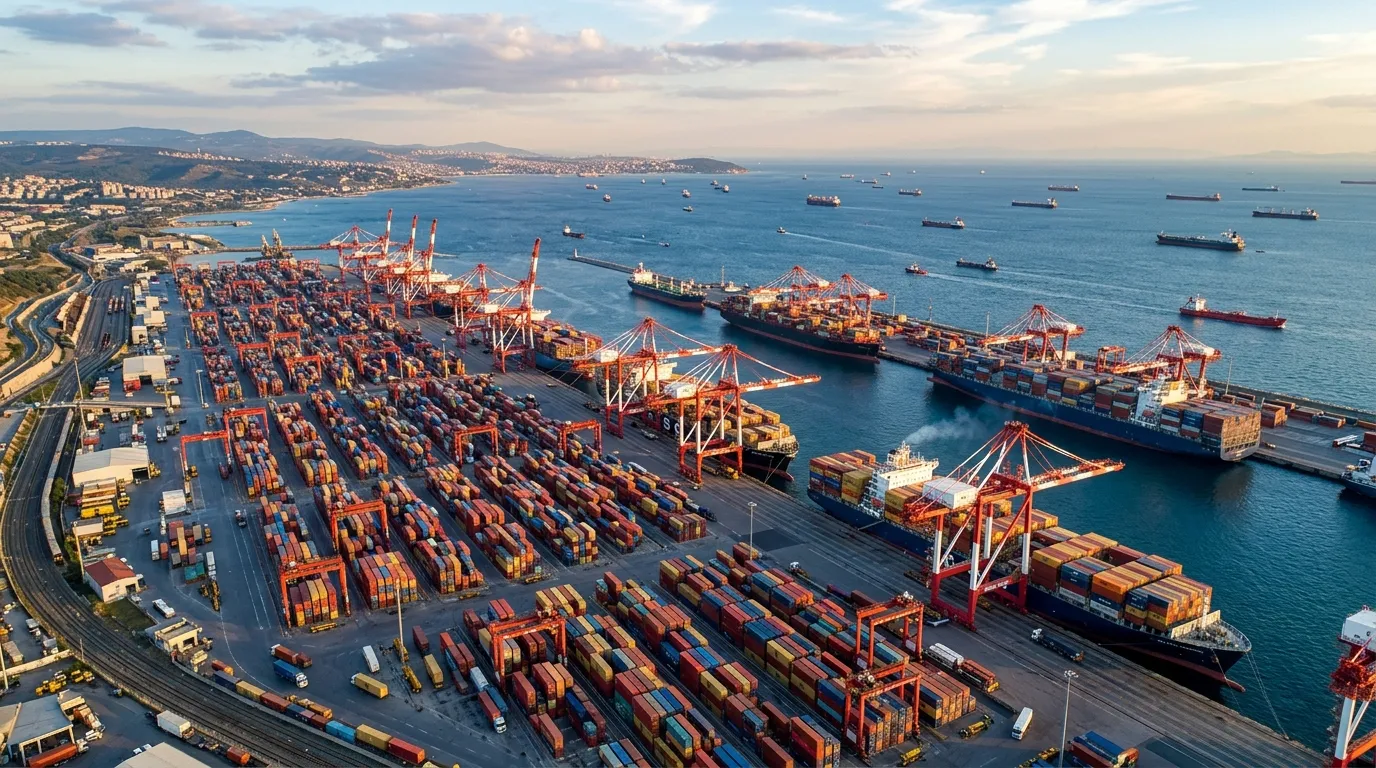
The Marmara Region hosts some of Turkey's busiest and most important ports. Facilities in Ambarlı, Haydarpaşa, Gemlik, Yalova, Bandırma, and Derince handle millions of tons of cargo each year. These ports support domestic commerce while connecting Turkey to global shipping networks.
Container shipping represents a significant portion of port activity. Imported goods arrive through Marmara ports before being distributed throughout Turkey, while exported products are shipped to markets across Europe, Asia, Africa, and the Americas.
Energy transportation is another critical function. Oil tankers and other vessels frequently transit through the region, highlighting its importance in international energy supply chains. This role contributes to Turkey's strategic relevance in global energy security discussions.
The shipping industry also stimulates investment in port expansion, logistics facilities, and transportation infrastructure. Modernization projects are designed to improve efficiency, reduce congestion, and accommodate growing trade volumes.
Because maritime transportation remains one of the most cost-effective methods of moving goods internationally, the Marmara Region is expected to retain its importance in global commerce for decades to come.
The Role of Istanbul in the Marmara Region
No discussion of the Marmara Region would be complete without examining the role of Istanbul, Turkey's largest city and one of the world's most historically significant urban centers. Located along the Bosporus Strait, Istanbul serves as the economic, cultural, financial, and transportation heart of the region.
The city's influence extends far beyond its population size. Istanbul generates a substantial share of Turkey's economic output and serves as the headquarters for major corporations, financial institutions, media organizations, and educational establishments. It is often considered the country's global face.
Istanbul's unique location on two continents gives it exceptional strategic value. Businesses operating in the city can engage with European, Asian, Middle Eastern, and African markets from a single location. This geographic advantage contributes to its status as an international business hub.
The city's cultural significance is equally remarkable. Historic landmarks, museums, religious sites, and vibrant neighborhoods attract millions of visitors annually. Tourism contributes significantly to the local economy while reinforcing Istanbul's reputation as a global cultural destination.
As Turkey continues to expand its international influence, Istanbul remains the centerpiece of the Marmara Region and one of the nation's most valuable assets.
Cultural and Economic Capital
Istanbul functions as Turkey's cultural and economic capital. The city hosts major financial institutions, stock exchanges, universities, media companies, and multinational corporations. Economic decisions made in Istanbul often influence national and regional markets.
The city's cultural richness reflects centuries of interaction among different civilizations. Byzantine churches, Ottoman mosques, modern art galleries, traditional bazaars, and contemporary cultural centers coexist within the urban landscape.
Tourism is another major economic contributor. Millions of visitors come to experience iconic attractions such as Hagia Sophia, Topkapı Palace, the Blue Mosque, and the Grand Bazaar. These visitors support hotels, restaurants, transportation services, and local businesses.
Educational institutions in Istanbul attract students from across Turkey and abroad. Universities contribute to research, innovation, and workforce development, strengthening the region's long-term economic competitiveness.
The combination of economic dynamism and cultural heritage makes Istanbul one of the most influential cities in the broader Eurasian region.
The Bosporus and Global Commerce
The Bosporus Strait is among the world's most strategically important waterways. Connecting the Black Sea with the Marmara Sea, it serves as a vital passage for international shipping and energy transportation.
Every year, thousands of commercial vessels navigate the Bosporus. These ships transport commodities, manufactured goods, agricultural products, and energy resources between global markets. The waterway's importance gives Turkey considerable influence in regional trade dynamics.
The Bosporus also serves as a symbol of Istanbul's unique identity. Ferries crossing between Europe and Asia demonstrate the city's role as a connector of continents, cultures, and economies.
Major infrastructure projects have improved transportation across the strait while supporting economic growth. Bridges, tunnels, and rail systems enhance mobility and strengthen integration within the Marmara Region.
Because of its economic, strategic, and symbolic importance, the Bosporus remains one of Turkey's most valuable geographical assets.
Environmental Importance of the Marmara Sea
The Marmara Sea is not only an economic and strategic asset but also an environmentally significant ecosystem. Situated between two major seas and influenced by unique oceanographic conditions, it supports a wide variety of marine life and ecological processes. Scientists often describe the Marmara Sea as a biological transition zone because it connects different marine environments and species populations.
One of the sea's most distinctive features is its two-layer water structure. Surface waters generally flow from the Black Sea toward the Aegean Sea, while deeper, saltier Mediterranean waters move in the opposite direction. This unusual circulation pattern creates diverse habitats that support numerous fish species, marine mammals, and invertebrates.
The Marmara Sea also plays a vital role in supporting fisheries. Coastal communities have long depended on fishing for food, employment, and economic activity. Species such as anchovies, sardines, bluefish, and mackerel have historically been important components of local livelihoods and culinary traditions.
Environmental health in the Marmara Sea directly affects millions of people living in the surrounding region. Clean water, healthy ecosystems, and sustainable resource management contribute to public well-being and economic stability. Coastal tourism, recreational activities, and seafood industries all depend on maintaining environmental quality.
The ecological significance of the Marmara Sea has become increasingly apparent in recent years. As urbanization, industrialization, and population growth place greater pressure on natural systems, protecting this valuable marine environment has become a national priority.
Marine Biodiversity
The Marmara Sea supports a remarkable variety of marine organisms despite its relatively small size. Its location between the Black Sea and the Mediterranean creates conditions that allow species from different ecosystems to coexist. This biological diversity contributes to ecological resilience and environmental balance.
Fish populations have historically been among the sea's most valuable natural resources. Commercial fishing supports local economies while providing an important source of protein for consumers throughout Turkey. Coastal communities have developed traditions and cultural practices closely linked to maritime life and fishing activities.
Marine biodiversity extends beyond fish species. The sea contains numerous forms of plankton, shellfish, crustaceans, sea grasses, and other organisms that contribute to complex food webs. These ecosystems help maintain water quality and support broader environmental functions.
Researchers continue to study the Marmara Sea to better understand its ecological dynamics. Scientific investigations provide valuable insights into species populations, migration patterns, and environmental changes. Such knowledge is essential for developing effective conservation strategies.
Protecting biodiversity is not merely an environmental goal; it also has economic and social implications. Healthy ecosystems support fisheries, tourism, recreation, and coastal livelihoods, making biodiversity conservation a critical component of sustainable development.
Ecological Challenges and Conservation Efforts
Despite its importance, the Marmara Sea faces significant environmental challenges. Rapid urbanization, industrial development, population growth, and maritime traffic have increased pressure on marine ecosystems. Pollution from various sources has become one of the most pressing concerns.
One of the most widely publicized environmental issues in recent years was the marine mucilage event, commonly known as "sea snot," which affected large portions of the Marmara Sea. Scientists linked the phenomenon to pollution, climate-related factors, and ecosystem imbalances. The event highlighted the urgent need for improved environmental management.
Overfishing has also placed pressure on marine resources. Sustainable fishing practices are essential to maintaining healthy fish populations and ensuring long-term economic benefits for coastal communities. Regulations, monitoring programs, and enforcement measures play important roles in resource conservation.
Government agencies, universities, environmental organizations, and local communities have launched various initiatives aimed at protecting the Marmara Sea. These efforts include wastewater treatment improvements, pollution reduction programs, habitat restoration projects, and public awareness campaigns.
As environmental challenges become increasingly complex, cooperation among stakeholders remains essential. Protecting the Marmara Sea requires long-term commitment, scientific research, effective policy implementation, and public participation.
Tourism and Cultural Attractions
The Marmara Region is one of Turkey's most popular tourism destinations. Its combination of natural beauty, historical landmarks, cultural diversity, and modern infrastructure attracts millions of domestic and international visitors every year. Tourism contributes significantly to the regional economy while promoting cultural exchange and international understanding.
Visitors are drawn to the region for many reasons. Some come to explore Istanbul's world-famous monuments, while others seek coastal resorts, islands, historical towns, and natural landscapes. The diversity of attractions ensures that the Marmara Region appeals to a wide range of interests and travel preferences.
Tourism also supports numerous sectors of the economy. Hotels, restaurants, transportation services, tour operators, cultural institutions, and retail businesses all benefit from visitor spending. Employment opportunities generated by tourism contribute to regional prosperity and economic diversification.
The region's accessibility is another major advantage. International airports, highways, ferry services, and rail networks make travel convenient for both domestic and foreign tourists. This connectivity strengthens the Marmara Region's position as one of Turkey's leading tourism hubs.
As global tourism trends continue evolving, the Marmara Region remains well positioned to attract visitors seeking authentic cultural experiences, historical exploration, and modern urban amenities.
Coastal Destinations
The coastline surrounding the Marmara Sea offers numerous recreational opportunities and scenic attractions. Popular destinations include seaside towns, beaches, islands, and waterfront promenades that attract visitors throughout the year.
The Princes' Islands, located near Istanbul, are among the region's most beloved tourist destinations. Known for their tranquil atmosphere, historic architecture, and natural beauty, the islands provide a peaceful escape from urban life. Visitors enjoy cycling, walking, and exploring charming neighborhoods free from heavy automobile traffic.
Coastal cities such as Yalova, Erdek, Mudanya, and Tekirdağ also attract tourists seeking relaxation and cultural experiences. These destinations offer beautiful waterfront views, local cuisine, and opportunities for water-based recreation.
The sea itself supports activities such as boating, sailing, fishing, and ferry excursions. These experiences allow visitors to appreciate the region's maritime heritage while enjoying its natural landscapes.
Tourism development along the Marmara coastline contributes to local economies while encouraging investment in infrastructure and public services. Sustainable planning remains important to preserving environmental quality and cultural authenticity.
Historical and Cultural Heritage
The Marmara Region contains some of the most significant historical and cultural sites in Turkey. Thousands of years of human civilization have left a rich legacy visible in monuments, archaeological sites, museums, and historic urban districts.
Istanbul alone houses numerous UNESCO World Heritage Sites, including architectural masterpieces from Byzantine and Ottoman periods. Landmarks such as Hagia Sophia, Topkapı Palace, and the Blue Mosque attract millions of visitors annually.
Beyond Istanbul, cities like Bursa and Edirne preserve important elements of Ottoman history. Historic mosques, markets, baths, and civic buildings offer valuable insights into Turkey's cultural development.
Museums throughout the region showcase artifacts spanning ancient, medieval, and modern periods. These institutions play a crucial role in preserving cultural heritage and educating future generations.
The region's cultural richness extends beyond physical landmarks. Traditional crafts, culinary traditions, music, festivals, and local customs contribute to a vibrant cultural landscape that continues to evolve while maintaining strong historical roots.
Energy and Infrastructure Development
The Marmara Region occupies a central position in Turkey's energy and infrastructure systems. Its strategic location, industrial concentration, and transportation networks make it a focal point for national development projects. Investments in infrastructure have played a major role in supporting economic growth and improving regional connectivity.
Major transportation projects have transformed mobility throughout the region. Highways, bridges, tunnels, railways, ports, and airports facilitate the movement of people and goods on an unprecedented scale. These investments strengthen Turkey's competitiveness in international trade and logistics.
The Marmaray rail tunnel, which connects the European and Asian sides of Istanbul beneath the Bosporus, represents one of the most ambitious transportation projects in the country's history. Similarly, large bridge projects and modern highways have reduced travel times and enhanced economic integration.
The region is also important for energy distribution and industrial consumption. Energy infrastructure supports manufacturing activities, urban development, and commercial operations throughout the Marmara basin. Reliable energy supplies are essential for maintaining economic productivity.
Future infrastructure projects are expected to focus on sustainability, technological innovation, and resilience. Smart transportation systems, renewable energy initiatives, and environmentally responsible development strategies will likely play increasingly important roles in regional planning.
Challenges Facing the Marmara Region
Despite its many advantages, the Marmara Region faces several significant challenges. Rapid urbanization, population growth, environmental pressures, and infrastructure demands require careful management and long-term planning.
One major challenge is population density. The region contains some of Turkey's largest metropolitan areas, creating pressure on housing, transportation systems, public services, and natural resources. Urban planning must balance growth with quality of life considerations.
Environmental sustainability represents another critical concern. Pollution, habitat degradation, climate change impacts, and resource consumption all pose risks to ecological health. Addressing these issues requires coordinated action across multiple sectors.
Earthquake risk is particularly important in the Marmara Region. The area lies near major fault lines, making seismic preparedness a national priority. Investments in resilient infrastructure, building safety, and emergency response capabilities are essential for reducing potential risks.
Economic inequality and regional disparities can also present challenges. Ensuring that growth benefits diverse communities remains important for social stability and long-term development.
Successfully addressing these challenges will require effective governance, scientific expertise, public engagement, and sustained investment in sustainable development strategies.
Future Prospects and Strategic Vision
Looking ahead, the Marmara Region is expected to remain central to Turkey's national development strategy. Its geographic location, economic strength, cultural significance, and transportation networks provide strong foundations for future growth.
Technological innovation is likely to shape the region's future. Advances in digital infrastructure, smart manufacturing, logistics systems, and sustainable energy technologies could enhance competitiveness and productivity. The region's universities and research institutions will play important roles in supporting innovation.
International trade opportunities are also expected to expand. As global supply chains evolve and new economic partnerships emerge, the Marmara Region's strategic position between continents will continue to provide valuable advantages.
Sustainability will become increasingly important. Future development efforts will likely emphasize environmental protection, renewable energy, efficient transportation, and climate resilience. Balancing economic growth with ecological responsibility will be essential for long-term success.
The Marmara Region's future vision extends beyond economics. Cultural preservation, social inclusion, education, and quality of life will remain important priorities. By leveraging its unique strengths while addressing emerging challenges, the region can continue serving as Turkey's most dynamic and influential area.
Conclusion
The Marmara Sea and the Marmara Region are indispensable to Turkey's prosperity, security, and identity. Their strategic location between Europe and Asia has shaped centuries of trade, cultural exchange, and political development. From ancient civilizations to the modern Turkish Republic, the region has consistently served as a center of economic activity and national significance.
Today, the Marmara Region functions as Turkey's industrial powerhouse, transportation hub, financial center, and cultural heart. Its ports connect global markets, its industries drive economic growth, and its cities attract millions of visitors and investors. At the same time, the Marmara Sea supports valuable ecosystems that require careful protection and sustainable management.
The challenges facing the region are substantial, but so are the opportunities. Through innovation, infrastructure development, environmental stewardship, and strategic planning, the Marmara Region can continue strengthening Turkey's position in an increasingly interconnected world.
Its importance extends far beyond geography. The Marmara Sea and Region represent the meeting point of continents, civilizations, economies, and cultures—making them one of Turkey's greatest national assets.
FAQs
1. Why is the Marmara Sea important to Turkey?
The Marmara Sea is important because it connects the Black Sea and the Mediterranean through the Bosporus and Dardanelles, supports international trade, and plays a key role in Turkey's economy and geopolitics.
2. Which major city is located in the Marmara Region?
Istanbul, Turkey's largest city and economic center, is located in the Marmara Region and spans both Europe and Asia.
3. What industries are prominent in the Marmara Region?
Major industries include automotive manufacturing, petrochemicals, textiles, machinery production, logistics, finance, and international trade.
4. What environmental challenges does the Marmara Sea face?
The sea faces challenges such as pollution, overfishing, urbanization pressures, and marine mucilage outbreaks that threaten ecosystem health.
5. How does the Marmara Region contribute to Turkey's economy?
The region contributes a significant share of Turkey's GDP, industrial production, exports, foreign investment, and transportation activities, making it the country's economic engine.
Have Question Or Suggestion ?
Please Share Your Thought, To Make It Real