Turkey vs Caribbean Citizenship: The Brutal Truth Investors Must Know
Thinking Caribbean is cheaper? Discover the hidden costs, risks, and why Turkey may be the smarter long-term citizenship investment.
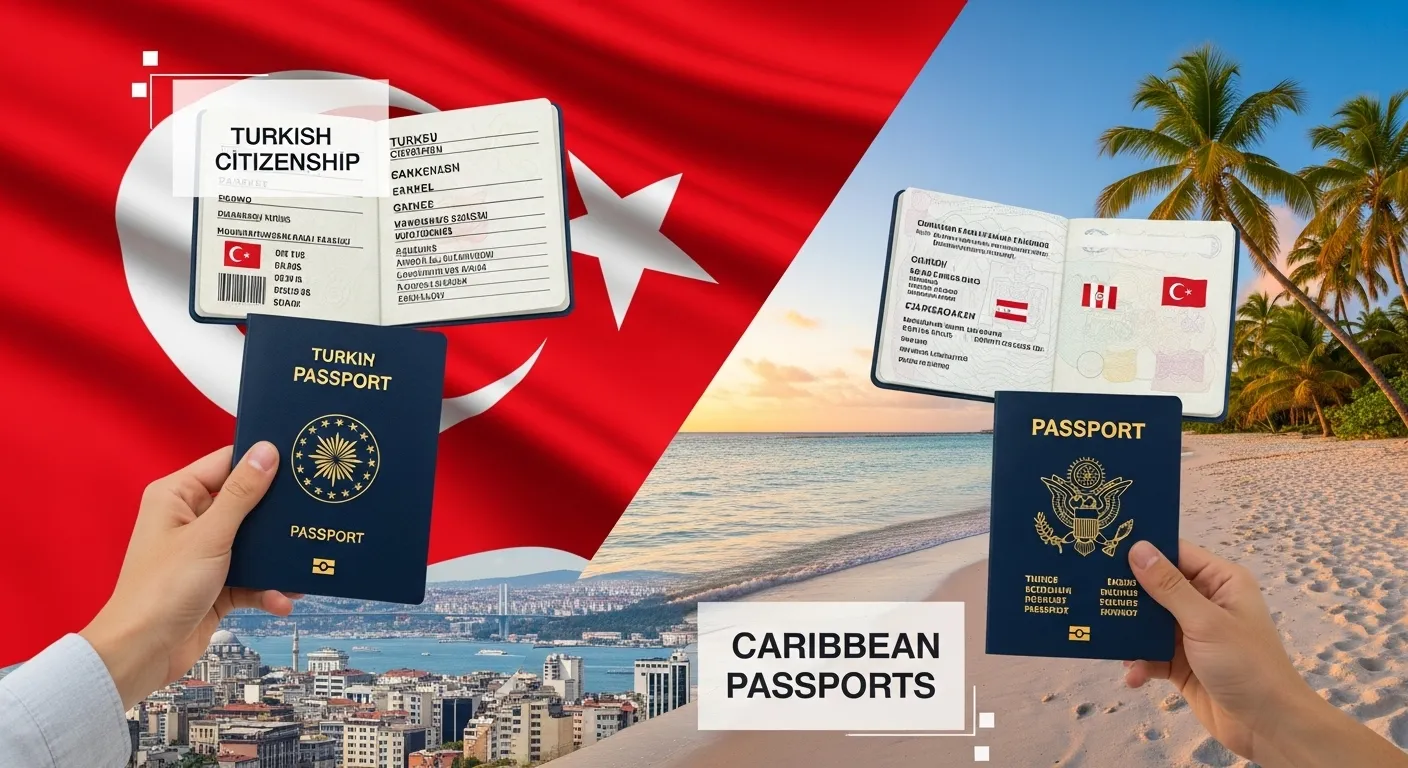
Turkish Citizenship vs Caribbean Passports: Which Second Passport Is the Better Investment in 2026?
Understanding Citizenship by Investment (CBI)
What Is Citizenship by Investment?
Citizenship by Investment (CBI) has evolved from a niche offering into a mainstream global strategy used by investors, entrepreneurs, and families who want more control over their future. At its core, CBI allows individuals to obtain a second citizenship legally by making a financial investment into a country’s economy. This investment can take several forms, including real estate purchases, government donations, or business contributions.
What makes CBI particularly powerful is that it compresses what would normally take years—naturalization—into a matter of months. Instead of relocating, learning a new language, and integrating over time, applicants can gain full citizenship rights through a structured and government-approved process.
However, not all CBI programs are built the same way. Some are purely transactional—you pay, you receive a passport. Others, like Turkey’s program, are investment-driven, meaning your capital is tied to an asset that can generate returns.
This distinction becomes crucial when comparing Turkish citizenship vs Caribbean passports. One focuses on long-term value and economic integration, while the other prioritizes speed and mobility.
Why Investors Pursue Second Passports
Let’s be direct—second citizenship is not about luxury; it’s about leverage. In a world shaped by geopolitical uncertainty, currency fluctuations, and travel restrictions, having a second passport gives you options.
For many investors, the biggest driver is global mobility. Being able to travel freely without visa barriers is not just convenient—it’s a competitive advantage in business. Caribbean passports excel here, especially with visa-free access to the Schengen Area and the UK.
But mobility is only part of the story. Others seek asset protection and diversification. A second citizenship allows you to spread your investments across multiple jurisdictions, reducing exposure to any single country’s risks.
Then there’s family security. Investors are increasingly thinking generationally—where will their children study, work, and live? A second passport can unlock opportunities that would otherwise remain out of reach.
For those exploring Turkey, this detailed guide on Turkish citizenship by investment provides a clear roadmap of the process and its long-term benefits.
Turkish Citizenship by Investment Explained
Updated Requirements (2024–2026 Changes)
Turkey has refined its Citizenship by Investment program over the past few years to increase transparency and ensure long-term economic value. As of 2026, the primary route remains a $400,000 real estate investment, but with stricter conditions than before.
Investors must now purchase residential property with a registered title deed (Tapu). In many cases, speculative land purchases—especially agricultural plots—are no longer eligible. This shift ensures that investments contribute directly to the housing market and urban development.
Additionally, investors can purchase one or multiple properties, as long as the total meets the required threshold. The property must be held for at least three years, after which it can be sold.
The process itself remains efficient, typically taking 3–6 months, as outlined in this timeline breakdown:
👉 Real Turkish citizenship timeline
Key Benefits of the Turkish Passport
The Turkish passport offers a multi-layered advantage that goes beyond simple travel access. Yes, it provides entry to over 110 countries, but its real strength lies in strategic positioning.
First, Turkey is part of the G20, meaning it has significant economic and political influence. This translates into stability and global relevance—factors often overlooked when comparing passports.
Second, Turkish citizens are eligible for the U.S. E-2 Investor Visa, which is a game-changer. This is not a tourist benefit—it allows you to live, work, and operate a business in the United States, provided you meet investment criteria.
Third, Turkey offers a high quality of life with relatively low living costs. For a deeper look, this guide on living in Türkiye explains why many investors choose to relocate.
Caribbean Citizenship Programs Overview
Leading Caribbean Countries
Caribbean programs remain the fastest route to a second passport. Countries like St. Kitts & Nevis, Dominica, Grenada, and Antigua & Barbuda dominate this space.
Their appeal lies in simplicity: minimal paperwork, no residency requirements, and fast approvals. Within months, applicants can secure citizenship without ever visiting the country.
St. Kitts vs Dominica vs Grenada vs Antigua
Each country offers slight variations, but the core structure is similar. Grenada stands out for U.S. access, while Dominica is known for affordability.
Updated Investment Rules (2024–2026)
This is where things have changed significantly.
Due to pressure from the European Union, most Caribbean countries have raised their minimum investment thresholds to around $200,000 or more, especially for real estate routes. The old $100,000 entry point is largely outdated or limited.
Additionally, governments have tightened due diligence processes, increasing both scrutiny and costs.
Visual Comparison Table (Turkey vs Caribbean)
| Feature | Turkey | Caribbean |
|---|---|---|
| Minimum Investment | $400,000 (real estate) | $200,000+ (donation/real estate) |
| Investment Return | Yes (resale possible) | No (donation) / Limited (real estate) |
| Processing Time | 3–6 months | 2–4 months |
| Visa-Free Countries | 110+ | 140+ |
| Schengen & UK Access | No | Yes |
| US Access | E-2 Visa (live & work) | Only Grenada (E-2) |
| Citizenship Inheritance | Yes (automatic) | Yes, but varies by country |
| Family Costs | Moderate | High (fees add up) |
| Exit Strategy | Strong (real market) | Weak (limited resale) |
Cost Breakdown and Hidden Government Fees
Real Total Cost for Families
Here’s where reality hits.
In Caribbean programs, a family of four can easily pay $30,000–$50,000 in additional government and due diligence fees on top of the base investment. These costs are often not highlighted upfront.
In Turkey, costs are more predictable—mainly property taxes, legal fees, and title registration, which are typically a small percentage of the property value. You can explore details here:
👉 Property taxes in Turkey
Investment Recovery vs Donation
This is the defining difference.
- Turkey: You invest and can recover your capital after 3 years.
- Caribbean: You donate and the money is gone.
Processing Time Comparison
Turkey Timeline
3–6 months with structured steps and asset acquisition.
Caribbean Timeline
2–4 months, faster but purely transactional.
Passport Power Beyond Numbers
Schengen & UK Access (Caribbean Advantage)
Caribbean passports offer visa-free access to Europe and the UK, which is their strongest selling point.
US E-2 Visa & Global Strategy (Turkey Advantage)
Turkey provides access to the E-2 visa, allowing residence and business operations in the U.S.—a far more strategic advantage than short-term travel.
Citizenship Inheritance (Critical for Families)
This is often overlooked but extremely important.
In Turkey, citizenship is fully transferable to future generations, just like native citizens. Your children automatically inherit it.
In Caribbean countries, inheritance is generally allowed, but rules can vary, and administrative processes may differ depending on where children are born.
Exit Strategy and Liquidity
Turkey offers a real exit.
After 3 years, you can sell your property in a dynamic market like Istanbul, potentially making a profit.
In the Caribbean, resale is difficult because the buyer pool is limited to other CBI investors. This creates a restricted and illiquid market.
Political Stability and Future Risks
Caribbean programs are currently under EU pressure, which could affect visa-free access in the future. This introduces a level of uncertainty.
Turkey, as a G20 nation, has independent geopolitical influence, offering a different level of long-term stability.
Final Verdict: Which Citizenship Is Better?
If your goal is travel convenience, Caribbean passports win.
If your goal is investment, long-term value, and strategic positioning, Turkey is the stronger choice.
Conclusion
Choosing between Turkey and the Caribbean is not about picking the “best passport”—it’s about aligning with your long-term strategy.
FAQs
It depends on your priorities. Turkey offers investment-backed citizenship, while Caribbean programs focus on speed and mobility. Typically between 3 to 6 months, depending on the process. Dominica and Antigua & Barbuda are among the most affordable options. You can travel visa-free, but living requires additional permits. Yes, Turkey allows dual citizenship without restrictions.
Invest smart — and unlock Turkish citizenship
Discover high-value properties eligible for citizenship with strong ROI potential in Turkey.



Have Question Or Suggestion ?
Please Share Your Thought, To Make It Real