Is It Safe to Buy Off-Plan Property in Turkey?
Discover the risks, legal checks, developer red flags, and safest steps for buying off-plan property in Turkey as a foreign investor.
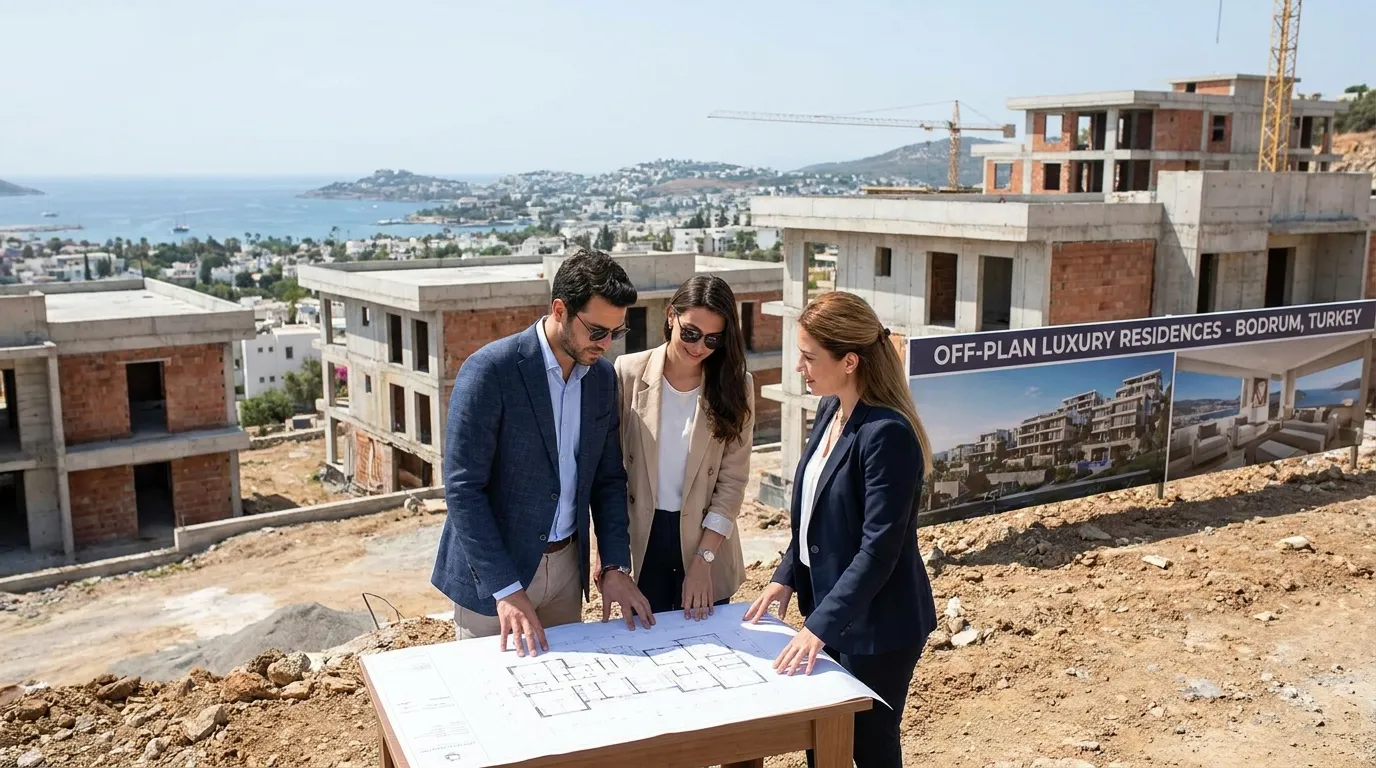
Is It Safe to Buy Off-Plan Property in Turkey?
Buying an off-plan property in Turkey can be safe, profitable, and strategically sensible, but only when the purchase is supported by strong legal checks, reliable documentation, and careful developer research. Off-plan real estate refers to property purchased before construction has been completed, and sometimes before building work has even started. Buyers are usually attracted by lower launch prices, staged payment plans, modern facilities, and the possibility of capital appreciation before handover. Yet the same early-stage structure that creates opportunity also creates risk because you are paying for a future property rather than a finished home you can inspect.
The real question is not simply whether off-plan property in Turkey is safe. A better question is: what makes a particular Turkish off-plan project safe or unsafe? A reputable development with clear title records, approved building permits, a legally reviewed contract, transparent payment terms, and a proven construction company may represent a reasonable investment. A project marketed through pressure tactics, vague paperwork, unusually high guaranteed returns, or unclear ownership records may expose the buyer to serious financial and legal problems.
Turkey remains a popular destination for overseas property buyers because of its large cities, coastal resorts, comparatively accessible property prices, rental demand, and lifestyle appeal. Locations such as Istanbul, Antalya, Alanya, Bodrum, Fethiye, Mersin, Izmir, and Bursa regularly attract international investors. However, property rules, tax rates, residency policies, citizenship requirements, and administrative procedures can change. Every buyer should therefore obtain current advice from an independent Turkish lawyer, licensed valuer, and qualified tax adviser before signing or transferring money.
This guide explains how to assess an off-plan property investment in Turkey, which documents to examine, what legal safeguards matter, how to evaluate a developer, and which warning signs should make you walk away.
Is Buying Off-Plan Property in Turkey Safe?
Yes, buying off-plan property in Turkey can be safe when the transaction is handled through independent legal representation and the project has been properly verified. It is not automatically safe merely because a development has an attractive showroom, a professional website, or an international sales team. A polished marketing campaign may tell you how the finished residence is supposed to look, but it does not prove that the land is legally owned, the construction is licensed, the developer is financially stable, or the promised facilities will be delivered.
Safety depends on several layers of protection working together. The buyer should confirm who owns the land, whether there are mortgages or legal restrictions registered against it, whether the municipality has approved the project, whether the developer has the authority to sell the unit, and whether the contract protects the buyer if construction is delayed or cancelled. The payment schedule should also reflect construction progress rather than requiring an excessive percentage of the purchase price before meaningful work has been completed.
A safe off-plan purchase should leave a clear documentary trail. The property description, unit number, floor, gross and net area, balcony size, parking rights, storage rights, completion date, materials, communal facilities, cancellation terms, and penalties for delay should be written into the agreement. Verbal promises are not enough. If a salesperson says that the sea view is guaranteed, the swimming pool will be private, or the unit can always be resold at a profit, that promise should either appear in an enforceable contract or be treated as marketing talk.
It is also important to separate legal safety from investment performance. A transaction may be legally valid but still produce disappointing returns because the buyer paid too much, selected a weak rental location, underestimated maintenance fees, or bought into an oversupplied district. The safest approach combines legal due diligence, financial analysis, location research, developer verification, and realistic expectations. Off-plan property should never be treated like a guaranteed shortcut to profit.
What Does Off-Plan Property Mean in Turkey?
An off-plan property is a home, apartment, villa, commercial unit, or mixed-use property sold before construction has been fully completed. In Turkey, buyers may encounter projects at several different stages. Some developments are sold before ground has been broken, while others are marketed when the structural frame is already visible. A nearly completed unit generally presents less construction uncertainty than a project that exists only in architectural drawings, although it may also be priced higher.
The buyer usually signs a preliminary sales agreement or property sale promise agreement and pays according to an agreed schedule. Payment structures vary widely. One project may request a reservation fee followed by monthly instalments, while another may require a significant down payment and several milestone-based payments. Some developers offer interest-free instalment plans, and others provide discounts for full cash payment. Buyers should not assume that the cheapest headline price is the best deal because payment timing, currency exposure, legal protection, and completion risk can matter more than the initial discount.
Off-plan property is often marketed using computer-generated images, sample apartments, floor plans, brochures, and lifestyle videos. These materials help buyers imagine the finished development, but they should not replace technical specifications. A sample apartment may contain premium finishes that are not included in the standard unit. Furniture packages, appliances, air-conditioning systems, landscaping, spa facilities, concierge services, and private parking may cost extra or may be subject to later changes.
In the Turkish market, buyers may also hear legal and property terms such as TAPU, kat irtifakı, kat mülkiyeti, and iskan. These terms relate to ownership, construction status, and occupancy approval. Understanding them is essential because two properties that look similar in a brochure may have very different legal positions. An experienced independent lawyer should explain exactly what legal interest the buyer receives at each stage and when the final ownership registration is expected to occur.
Why Buyers Choose Off-Plan Properties in Turkey
The main attraction of buying off-plan property in Turkey is the opportunity to enter a development at an early price. Developers often offer lower prices during the launch phase to generate initial sales and construction funding. If demand grows and the project progresses successfully, later units may be released at higher prices. This creates the possibility of capital appreciation between reservation and completion, although no increase is guaranteed. The final market value will still depend on location, supply, build quality, economic conditions, currency movements, and buyer demand.
Flexible payment plans are another major advantage. A completed property may require full payment soon after signing, whereas an off-plan development may allow the buyer to spread payments over twelve, twenty-four, or even more months. This can make new-build Turkish property accessible to buyers who prefer not to commit the entire purchase amount immediately. However, the convenience of instalments should never distract from the total price. Some payment plans include higher pricing, currency-linked adjustments, administrative fees, or penalties for missed instalments.
New developments also tend to offer modern layouts and shared facilities. Buyers may find swimming pools, gyms, landscaped gardens, security systems, children’s areas, underground parking, coworking spaces, saunas, restaurants, and reception services. Energy efficiency, insulation, earthquake-related building standards, and contemporary construction systems may be better in a professionally delivered new project than in an older resale apartment. Still, every promised facility increases future maintenance obligations. A luxurious complex can become expensive to operate, particularly when many units remain unsold or unoccupied.
Another reason buyers prefer off-plan property is choice. Early purchasers can often select the floor, orientation, view, layout, kitchen finish, or payment package. In some projects, buyers may request interior modifications before construction reaches a certain stage. That flexibility can be valuable for lifestyle buyers and investors targeting specific tenant groups. Yet choice should be based on market logic. A dramatic high-floor view may support resale value, while an oversized luxury unit in an area dominated by budget renters may struggle to achieve an attractive rental yield.
What Are the Biggest Risks of Buying Off-Plan in Turkey?
The most obvious risk is that the property does not exist in finished form when you agree to buy it. You are relying on the developer to transform plans, permits, land, financing, labour, and materials into a completed home. If any part of that chain breaks, the buyer may face delays, legal disputes, unexpected costs, or financial loss. This does not mean off-plan property should be avoided, but it does mean the buyer must evaluate risks that do not arise in the same way with a completed resale property.
Financial risk can come from the developer, the wider economy, or the buyer’s own circumstances. Construction costs may rise, credit conditions may tighten, and currency values may move sharply. A buyer who earns income in pounds, euros, dollars, or another currency may discover that later instalments have become more expensive if the contract is denominated differently. At the same time, developers under financial pressure may slow construction, alter materials, request additional payments, or attempt to renegotiate terms.
Legal risk is equally important. A contract can look impressive while providing weak protection. The unit may not be clearly identified, the completion date may be described as an estimate, or the developer may reserve broad rights to modify the design. Some agreements contain strong penalties for a late buyer but almost no meaningful penalty for a late developer. Others specify dispute resolution procedures that are expensive or inconvenient for an overseas purchaser.
There is also market risk. A completed project may be delivered exactly as promised and still underperform as an investment. Perhaps too many similar units were built nearby, service charges are higher than expected, short-term rentals are restricted, or the neighborhood lacks the transport links described in the sales presentation. For that reason, buyers should assess the development both as a legal purchase and as a real estate asset. Safety is not only about receiving the keys; it is about receiving a property that is usable, marketable, and reasonably aligned with the original investment purpose.
Developer Reliability and Construction Risk
Developer reliability is one of the most important factors in any Turkish off-plan purchase. A company with a long record of completed projects, recognizable financing partners, stable management, and transparent documentation is generally easier to evaluate than a newly created company with no visible history. However, size alone does not guarantee safety. Even established developers can face financial stress, disputes, delays, or quality complaints. Buyers should investigate the specific legal entity responsible for the project rather than relying only on the brand name used in advertising.
Ask for a list of completed developments and visit them where possible. Speak to existing owners, building managers, local agents, and residents. Do the communal facilities still look well maintained? Were the projects delivered near the promised date? Did buyers receive the legal documents they expected? Are there recurring complaints about water leaks, insulation, elevators, cracking, heating systems, or management fees? A glossy new sales office cannot provide the same insight as an occupied building completed several years earlier.
The buyer’s lawyer should verify the company’s registration details, authority to sign, land relationship, and relevant legal records. In some developments, the landowner and construction company are separate parties operating under a revenue-sharing or construction arrangement. That structure is not necessarily problematic, but the lawyer must confirm that the developer is legally permitted to sell the designated unit and that the buyer’s rights will survive any dispute between the developer and landowner.
Construction risk also includes funding. Some projects depend heavily on buyer instalments to continue building. If sales slow, work may stall. Buyers should look for visible progress, realistic timelines, credible contractors, and evidence that the project is not dependent on constant presales. A trustworthy developer should answer direct questions about the construction schedule, contractor, project financing, building permit, and completion process without hiding behind marketing language.
Title Deed, Zoning, and Planning Permission Problems
Title and planning checks sit at the heart of Turkish property due diligence. The title deed record, commonly called the TAPU, should be examined through the relevant Land Registry system by an independent lawyer. The lawyer should confirm the registered owner, land classification, property type, shares, legal annotations, mortgages, liens, restrictions, court orders, and other encumbrances. A buyer should never rely solely on a photocopy or translated summary supplied by the seller.
The project must also be compatible with local zoning and approved construction plans. A building may be physically impressive but still contain unauthorized changes, extra floors, enclosed balconies, converted storage areas, or facilities that do not match approved drawings. Such discrepancies can complicate occupancy approval, utilities, insurance, resale, financing, and future registration. The buyer should confirm that the planned unit appears correctly in the licensed project and that its intended use matches the buyer’s expectations.
Land ownership arrangements deserve particular attention. Some developments are constructed on land owned by another person or company. In other cases, a developer may hold only a contractual construction right. These arrangements require detailed legal analysis because the buyer’s position can depend on the terms between the landowner and builder. It should be clear who will transfer the ownership interest, when that transfer will occur, and what happens if the underlying parties dispute their agreement.
Planning permission should never be assumed merely because construction machinery is present. Buyers should ask their lawyer to review the relevant building license, approved plans, and municipal status. A project brochure is not a permit. Likewise, a reservation form is not proof of ownership. The legal review should connect the exact unit being purchased to the approved development, the land record, and the seller’s authority. Any mismatch should be resolved before the buyer pays a substantial deposit.
Construction Delays, Design Changes, and Quality Issues
Construction delays are common in off-plan markets around the world, and Turkey is no exception. Weather, permit issues, supply shortages, financing problems, contractor disputes, design revisions, infrastructure connections, and administrative procedures can all affect delivery. A realistic buyer should build some flexibility into personal and financial plans. Yet “delays happen” should not become an excuse for an open-ended contract. The agreement should contain a clear target completion date, a limited grace period, and specific remedies if the developer fails to deliver.
Design changes are another source of conflict. Developers may reserve the right to substitute materials or modify communal areas when technically necessary. Some flexibility can be reasonable because construction conditions evolve. The danger appears when the contract gives the developer unlimited discretion to reduce unit size, change views, remove amenities, alter layouts, or replace promised materials with lower-grade alternatives. The agreement should distinguish between minor technical changes and material changes that require buyer approval or compensation.
Quality is difficult to judge before completion, which is why the technical specification matters. The contract or attached schedule should describe flooring, windows, bathroom fittings, kitchen units, heating and cooling systems, doors, insulation, electrical points, appliances, and relevant common areas. Phrases such as “luxury finish” or “premium quality” are too vague. A proper specification identifies products, brands, grades, or acceptable equivalents.
Before final payment and handover, the buyer should arrange a professional snagging inspection. A qualified surveyor or engineer can identify visible defects, incomplete work, moisture problems, damaged surfaces, missing fixtures, incorrect installations, and deviations from the agreed plan. Defects should be recorded in writing with photographs and deadlines for correction. Paying the entire remaining balance before inspection can weaken the buyer’s practical leverage. The contract should therefore connect final payment to documented completion and a clear handover procedure.
What Legal Protections Do Off-Plan Buyers Have in Turkey?
The strongest protection for an off-plan buyer is not a verbal assurance but a legally enforceable structure. Turkish property transactions involve formal rules, and the exact protection available depends on the type of agreement, project stage, title status, parties, and registration steps. An overseas buyer should use an independent Turkish lawyer who represents only the buyer. The lawyer should not be selected, controlled, or paid solely by the developer or sales agent.
A reservation document generally offers limited protection. It may hold a unit for a brief period, but it should not be confused with a complete property sale contract. Before paying a non-refundable amount, the buyer should understand the refund conditions and verify that the person receiving the payment is authorized to do so. Receipts should identify the buyer, project, unit, amount, currency, payment purpose, and receiving entity.
A more formal agreement should accurately identify the parties and property. Depending on the transaction, notarization, official execution, annotation, registration, or other formal steps may be required to strengthen enforceability. The correct structure should be determined by a Turkish lawyer based on current law and the specific project. Buyers should be cautious of simple bilingual private contracts presented as complete protection without explanation of their registration status or enforceability.
Legal protection also depends on practical remedies. A contract should answer difficult questions before they become real problems. What happens if the project is delayed for six months? Can the buyer cancel? Is interest payable on refunded money? Who pays legal costs? What if the delivered unit is materially smaller? What happens if the promised title cannot be transferred? How are disputes handled? Strong contracts do not merely describe the happy path. They prepare for failure, disagreement, delay, and non-performance.
Understanding the TAPU, Kat İrtifakı, and İskan
The TAPU is the official title deed document associated with property ownership records in Turkey. It is one of the most important documents in the transaction, but buyers must understand what kind of title status is being transferred. Not every TAPU represents the same stage of development or the same legal characteristics. The Land Registry record should be checked directly rather than interpreted only through a translated sales brochure.
Kat irtifakı generally refers to a construction servitude or condominium easement structure established for units in a building project before full condominium ownership is completed. It connects future independent units to shares in the underlying land and approved project. This status is common in properties that are under construction or awaiting final administrative completion. It can be a normal stage, but the buyer’s lawyer should confirm that the recorded unit details match the apartment being sold.
Kat mülkiyeti generally refers to completed condominium ownership for an independent unit in a completed building. Buyers often view this as a more mature legal status because the building and units have progressed beyond the construction-stage structure. However, the title alone should still be checked for mortgages, restrictions, incorrect use classifications, and other issues.
The iskan, commonly understood as an occupancy or habitation approval, is another critical concept. It indicates that the building has completed relevant approval procedures for lawful occupation, subject to the applicable administrative framework. Problems obtaining an iskan may affect utilities, legal use, title conversion, financing, and resale. Buyers should ask who is responsible for obtaining it, when it is expected, and what contractual remedy applies if it is delayed. These terms are technical, and their legal implications can vary by project, so they should always be interpreted by an independent professional using current records.
Essential Due Diligence Before Buying Turkish Off-Plan Property
Due diligence is the process of proving that the deal is what the seller claims it is. It should be completed before the buyer becomes financially committed, not after a large deposit has been transferred. The first step is to appoint an independent Turkish property lawyer. Independence matters because a lawyer introduced by the developer may face a conflict of interest, particularly if the same professional handles multiple sales within the project.
The lawyer should review the title record, seller identity, company documents, authority to sell, project licenses, approved plans, land status, encumbrances, and relevant contracts. The exact unit should be matched across every document. Floor numbers, unit numbers, block names, gross size, net usable size, balconies, storage spaces, parking spaces, and ownership shares should be consistent. Turkish developments sometimes use internal marketing numbers that differ from official plan references, so the contract must remove any ambiguity.
Commercial due diligence is just as important. Compare the price per square meter with completed properties and competing new developments in the same micro-location. Ask whether the quoted area is gross, net, sellable, or inclusive of common-area shares. A large difference between advertised size and usable interior space can distort apparent value. Examine expected service charges, rental management fees, furnishing costs, taxes, insurance, utility setup, and resale commission.
Location research should go beyond a weekend viewing tour. Visit at different times of day. Check traffic, noise, public transport, schools, hospitals, shops, beaches, business districts, flood exposure, surrounding construction, and actual walking distances. A brochure may describe a project as “ten minutes from the city center” without explaining whether that means ten minutes by car at midnight. For investment property, research tenant demand, seasonal occupancy, local supply, and realistic rental regulations. Never base a purchase solely on projected rent shown by the sales team.
How to Structure the Contract and Payment Plan Safely
A safe contract should describe the property with precision and allocate risk fairly. It should include the legal names and identification details of the parties, the project and unit description, purchase price, currency, payment schedule, construction milestones, completion date, handover requirements, title-transfer process, technical specifications, delay remedies, cancellation rights, defect correction obligations, taxes, fees, and dispute procedures. Attachments such as floor plans, finish schedules, and payment tables should be signed or formally incorporated.
The payment plan should be tied to verifiable progress whenever possible. For example, instalments may correspond to excavation, structural completion, exterior completion, interior installation, title transfer, and final handover. A developer may prefer calendar-based payments, but milestone-based payments give the buyer more protection if work slows. Independent confirmation of progress is valuable, especially for overseas buyers who cannot visit regularly.
Be careful with large upfront payments. A steep cash discount can be tempting, but transferring most of the purchase price before construction has materially advanced shifts risk toward the buyer. Ask where the money will be held, whether any escrow or bank-backed mechanism is available, and what security exists if the project fails. The availability of protective mechanisms varies, and not every development offers them, but the question should still be asked.
The contract should address currency clearly. If the purchase price is linked to Turkish lira, euros, US dollars, or another currency, the agreement should identify the exchange-rate source and calculation date. Buyers should also understand bank fees, transfer costs, withholding issues, and payment verification. Never send funds to an unrelated personal account without written legal confirmation. Every transfer reference should include the project and unit details, and every payment should produce a formal receipt.
What Foreign Buyers Should Know About Taxes, Currency, and Citizenship
Foreign nationals can generally purchase property in Turkey subject to nationality rules, location restrictions, security-zone limitations, and other legal conditions. The buyer’s lawyer should confirm eligibility before any binding payment. A passport translation, Turkish tax number, bank account, official valuation, foreign-currency documentation, and other administrative steps may be required depending on the transaction and current regulations.
Property costs extend beyond the advertised purchase price. Buyers may face title deed charges, notary costs, translation fees, legal fees, valuation fees, earthquake insurance, annual property tax, utility connection costs, maintenance charges, and potential tax on rental income or future capital gains. The allocation of title transfer taxes between buyer and seller should be stated clearly because market practice and legal liability may not always be presented in the same way by sales teams.
Currency risk can materially change the investment outcome. A foreign buyer may pay in euros or dollars while rental income and operating expenses are primarily in Turkish lira. This creates a mismatch. Currency depreciation might make local expenses cheaper in foreign-currency terms, but it may also weaken rental income, resale proceeds, or local purchasing power. Buyers using instalments should calculate how adverse exchange-rate movements would affect affordability.
Some buyers consider property as part of a Turkish citizenship by investment strategy. Citizenship rules, minimum investment thresholds, valuation procedures, holding periods, eligibility conditions, and documentation standards can change. A property marketed as “citizenship approved” should never be accepted on the salesperson’s word alone. The buyer needs independent legal confirmation that the project, valuation, payment method, title annotation, and investor profile satisfy the current rules. The investment decision should also make sense as a property purchase, rather than being justified only by an immigration objective.
Warning Signs That an Off-Plan Property Deal May Be Unsafe
One major warning sign is pressure to pay immediately. Statements such as “the last unit is being held for one hour,” “the discount ends tonight,” or “another buyer is transferring money now” are designed to shorten your decision process. Genuine opportunities can exist, but a legitimate developer should still allow reasonable legal review. If the seller resists independent due diligence, the risk is already too high.
Unrealistic guaranteed returns are another concern. Property values and rental income can never be predicted with complete certainty. A guaranteed yield may depend on hidden conditions, inflated purchase pricing, short guarantee periods, limited occupancy assumptions, or payment by an associated company with weak financial strength. The contract should identify who provides the guarantee, how rent is calculated, which expenses are deducted, and what happens if the guarantor fails.
Vague documentation should also trigger caution. The project name, block, floor, apartment number, size, payment amount, and completion date must be consistent. If the salesperson keeps changing the documents, avoids providing copies, or says legal details will be “fixed later,” stop the transaction. The same applies when land ownership is unclear, permits are unavailable, or the seller cannot prove authority to sell.
Other warning signs include requests for payment to personal accounts, refusal to provide official receipts, dramatic discounts unrelated to market value, unexplained contract amendments, one-sided penalty clauses, poor communication from the construction company, and a lack of completed reference projects. A trustworthy purchase should become clearer as due diligence progresses. An unsafe purchase often becomes more confusing, more urgent, and more dependent on trust. When documents and explanations do not align, walking away is usually cheaper than attempting to solve the problem after payment.
Conclusion
Buying off-plan property in Turkey can be safe, but safety is created through verification rather than optimism. The opportunity is easy to understand: lower early-stage pricing, flexible instalments, modern developments, and the potential for value growth before completion. The risks are equally real: delayed construction, weak contracts, unclear title status, developer financial problems, changing specifications, currency exposure, and disappointing rental performance.
A careful buyer should start with the legal foundation. Confirm the title record, land ownership, planning status, building license, seller authority, unit identity, and route to final title registration. Understand the meaning of TAPU, kat irtifakı, kat mülkiyeti, and iskan in relation to the specific property. Do not accept a generic explanation when the project’s actual records can be examined.
The commercial side deserves the same discipline. Compare prices with completed properties, calculate usable area rather than relying only on advertised gross size, assess maintenance fees, test rental assumptions, and study the neighborhood. A property can be legally sound but financially unattractive. Likewise, a high-potential location does not compensate for defective ownership documents.
Your contract should be detailed, balanced, and reviewed by an independent Turkish lawyer. Payment should be traceable and proportionate to construction progress. Final funds should not be released casually before inspection, handover documentation, and the agreed legal steps have been completed. No marketing discount is valuable enough to justify skipping due diligence.
The safest off-plan property in Turkey is not always the cheapest or most luxurious option. It is the project where the land, permits, developer, contract, payment structure, timeline, and exit strategy all withstand serious scrutiny. When those pieces fit together, off-plan buying can be a practical route into the Turkish real estate market. When they do not, the smartest investment decision may be to keep your money and choose another project.
FAQ 1: Can Foreigners Legally Buy Off-Plan Property in Turkey?
Foreigners can generally buy off-plan property in Turkey, subject to nationality-based eligibility, military or security-zone restrictions, local ownership limits, and applicable property regulations. The fact that a person can legally buy in Turkey does not automatically mean that every development or parcel is available to that buyer. Eligibility should be checked against the exact property before a reservation becomes non-refundable.
Foreign buyers may need a Turkish tax number, translated and notarized passport documents, an official valuation, banking records, and other transaction paperwork. A power of attorney may be used when the buyer cannot attend procedures in person, but its scope should be carefully drafted and limited. Never sign a broad power of attorney without independent legal advice.
The buyer should also confirm that the property’s intended use matches personal goals. A unit suitable for ownership may still face restrictions affecting residence registration, short-term rentals, commercial use, or citizenship applications. These are separate legal questions. Current rules should be checked by a qualified Turkish lawyer because administrative requirements can change.
FAQ 2: Is It Better to Buy Off-Plan or Completed Property in Turkey?
Neither option is universally better. Off-plan property may offer a lower entry price, newer facilities, flexible payments, and a wider choice of units. It may suit buyers who can tolerate delays and are comfortable waiting for completion. The main disadvantages are construction uncertainty, inability to inspect the finished home, and dependence on the developer’s performance.
A completed property offers greater certainty. Buyers can inspect the apartment, test the building, review actual service charges, speak with residents, and assess the surrounding area as it exists. Rental income may begin sooner, and the legal status may be easier to understand. However, completed units can cost more, require immediate payment, or offer less scope for customization.
The better option depends on risk tolerance, payment capacity, investment period, and purpose. Lifestyle buyers with a fixed move-in date may prefer completed property. Investors seeking early-stage pricing may consider off-plan property, provided the developer and documentation are strong. The decision should be based on total risk-adjusted value rather than headline price alone.
FAQ 3: What Happens If a Turkish Developer Does Not Complete the Project?
The buyer’s options depend on the contract, payment structure, title status, registered rights, reason for non-completion, and financial condition of the developer. Potential remedies may include demanding completion, cancelling the agreement, claiming a refund, seeking damages, enforcing security, or starting legal proceedings. The practical success of any remedy depends heavily on whether the contract was properly drafted and whether the developer still has recoverable assets.
A buyer who paid most of the price under a weak private agreement may face a more difficult position than a buyer whose rights were formally structured, documented, and secured. This is why legal protection must be arranged before payment. Once a project has failed, the discussion shifts from prevention to recovery, which is usually slower, more expensive, and less predictable.
Buyers should request regular construction updates and react early to unexplained stoppages. Missed milestones, unpaid contractors, empty construction sites, and repeated promises without evidence may indicate financial trouble. An independent lawyer can review the situation and advise whether formal notice or other action should be taken before the developer’s position deteriorates further.
FAQ 4: Can an Off-Plan Property Qualify for Turkish Citizenship?
An off-plan property may potentially form part of a Turkish citizenship by investment application when the transaction satisfies the applicable legal requirements. Eligibility may depend on the investment amount, official valuation, payment method, seller status, title or contractual structure, registration or annotation procedures, and mandatory holding period. Not every new-build development will qualify.
Buyers should be cautious when a project is advertised as “guaranteed for citizenship.” The final outcome is determined by legal and administrative compliance, not by marketing language. The buyer’s nationality, previous ownership history, related-party issues, payment evidence, and valuation can all matter.
Citizenship rules and thresholds can be amended. Before paying, obtain written advice from an independent lawyer who regularly handles Turkish citizenship and real estate transactions. The lawyer should evaluate the exact unit and payment structure rather than offering only a general explanation. Property quality, location, resale prospects, and price should also be assessed independently of citizenship eligibility.
FAQ 5: How Much Deposit Is Safe for an Off-Plan Property in Turkey?
There is no single deposit percentage that is safe for every Turkish off-plan project. The appropriate amount depends on construction progress, developer strength, contract protection, title status, payment security, and the buyer’s ability to recover funds if the transaction fails. A small reservation payment may be reasonable to hold a unit temporarily, but the refund terms should be written clearly.
Large upfront payments increase buyer exposure. A developer may offer a substantial discount for full payment, but the discount should be weighed against the risk of transferring funds before the property is complete. Where possible, payments should follow independently verified construction milestones. Final payment should be linked to agreed completion, inspection, handover, and title procedures.
Every payment should be made to the legally verified recipient through a traceable banking channel. The transfer description should identify the buyer, development, and unit. Cash payments, personal accounts, undocumented commissions, and unclear currency conversions should be avoided. The safest deposit is one supported by a strong contract, verified project documents, and a realistic recovery mechanism.


Have Question Or Suggestion ?
Please Share Your Thought, To Make It Real