Asian vs European Istanbul Real Estate 2026: The Shocking Truth Investors Miss
European side dominates—but is the Asian side the smarter bet? Discover where smart investors are making money in Istanbul 2026.
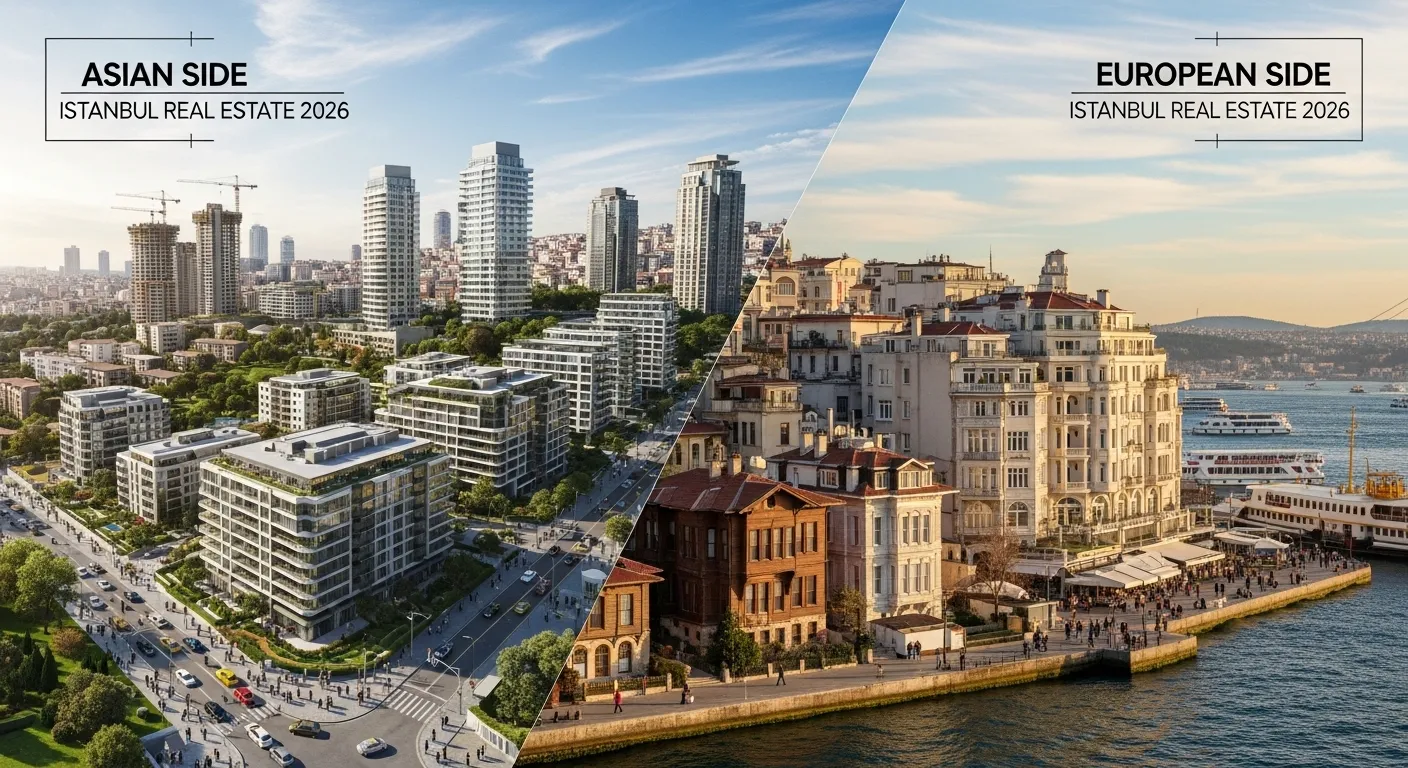
Asian Side vs. European Side: Where Should You Invest in Istanbul Real Estate in 2026?
The 2026 Market Outlook: A City Reimagined
Overview of Istanbul’s Real Estate Performance in 2026
Istanbul’s real estate market in 2026 feels less like a volatile emerging market and more like a seasoned global investment arena that has finally found its rhythm. Over the past few years, the city has undergone a transformation driven by regulatory stabilization, infrastructure development, and a noticeable shift toward international investor confidence. Property prices, once heavily influenced by currency fluctuations, are now increasingly benchmarked against USD and Euro values, which has added a layer of predictability that global investors crave.
What makes 2026 particularly interesting is how supply and demand have reached a more balanced state. Developers are no longer flooding the market with speculative projects. Instead, there’s a clear focus on quality, earthquake resilience, and lifestyle-driven developments. This shift has naturally filtered out weaker projects and elevated the overall standard of housing across both the Asian and European sides.
Another defining trend is the rise of institutional investment. Large funds from the Gulf, Europe, and Asia are entering the Istanbul market—not just for residential properties but also for mixed-use developments and commercial assets. This institutional presence acts like a stabilizing anchor, reducing market volatility and increasing liquidity across prime districts.
Rental yields in 2026 remain attractive compared to European capitals. While cities like Paris or London struggle to offer 3–4% yields, Istanbul comfortably delivers 5–8% on the European side and slightly lower—but rapidly rising—returns on the Asian side. This yield advantage continues to attract buy-to-let investors, especially those seeking a combination of income and long-term appreciation.
At its core, Istanbul in 2026 is no longer a “high-risk, high-reward” play. It has matured into a strategic, diversified investment destination, where the real question is no longer whether to invest—but where.
The Impact of Mega-Infrastructure (Metro Expansions & Canal Istanbul Updates)
If real estate is all about location, then infrastructure is what redefines that location over time—and Istanbul in 2026 is a perfect case study of this principle in action. The city’s aggressive investment in transportation and mega-projects has effectively reshaped its real estate map, turning previously overlooked districts into investment hotspots.
The expansion of the metro network has been one of the most transformative developments. Istanbul now boasts one of the fastest-growing metro systems in Europe, connecting both sides of the city with unprecedented efficiency. Areas that once felt distant—like Sancaktepe on the Asian side or Başakşehir on the European side—are now seamlessly integrated into the urban core. This connectivity has a direct and measurable impact on property values, often increasing prices by 20–30% within a few years of a new line opening.
Then there’s the ongoing discussion around Canal Istanbul, a project that continues to influence investor sentiment even as its timeline evolves. While not fully realized yet, the surrounding areas have already seen speculative growth, particularly on the European side. Investors are betting on the long-term transformation of these regions into logistics, trade, and residential hubs.
The Marmaray line, which connects the Asian and European sides beneath the Bosphorus, deserves special mention. It has effectively blurred the psychological divide between the two continents. Living on the Asian side and working on the European side is no longer a logistical challenge—it’s a daily reality for thousands of residents.
This infrastructure boom has done more than just improve mobility; it has democratized investment opportunities. No longer confined to traditional prime areas, investors can now identify high-growth corridors based on upcoming transport links and urban development plans.
In many ways, infrastructure in Istanbul acts like a rising tide—it lifts all boats. But the smartest investors in 2026 aren’t just watching the tide; they’re predicting where the next wave will hit.
Why 2026 is the "Year of Mature Investment" in Turkey
Calling 2026 the “Year of Mature Investment” isn’t just marketing hype—it reflects a deeper structural evolution in Turkey’s real estate landscape. For years, the market was characterized by rapid growth, currency-driven bargains, and opportunistic buying. Today, those dynamics have shifted toward something far more sustainable and strategic.
One of the biggest changes is the increased transparency and regulation in property transactions. Government policies have tightened around valuation reports, title deed processes, and foreign ownership, making the market more secure for international buyers. This has significantly reduced the risks that once deterred cautious investors.
Another critical factor is the alignment of pricing with global standards. Developers are increasingly pricing properties in foreign currencies or pegging them to international benchmarks. This move has reduced the unpredictability associated with the Turkish Lira and made long-term financial planning much easier for investors.
At the same time, there’s a growing emphasis on quality over quantity. New developments in 2026 are designed with earthquake resistance, smart home technology, and sustainability in mind. Buyers are no longer just purchasing square meters—they’re investing in lifestyle ecosystems that include green spaces, co-working areas, and wellness facilities.
The investor profile has also evolved. Instead of short-term speculators, the market is now attracting long-term wealth builders—individuals and institutions looking to diversify their portfolios with stable, income-generating assets. This shift has brought a sense of maturity and resilience to the market.
So why does all this matter when choosing between the Asian and European sides? Because the decision is no longer about chasing the cheapest deal. It’s about aligning your investment with your financial goals, risk tolerance, and lifestyle preferences.
In 2026, Istanbul isn’t just offering opportunities—it’s offering choices with clarity.
The European Side: The Economic Engine
The Commercial Hub: Why Maslak and Levent remain the gold standard for office investments
When you think of Istanbul’s financial heartbeat, Maslak and Levent immediately come to mind. These districts aren’t just business centers—they’re the equivalent of Manhattan’s Midtown or London’s Canary Wharf, but with a unique Istanbul twist. In 2026, they continue to dominate as the most sought-after locations for office investments, and there’s a good reason for that.
Maslak, in particular, has evolved into a dense cluster of Grade A office towers, housing multinational corporations, tech firms, and financial institutions. Walking through Maslak feels like stepping into a vertical city, where glass skyscrapers reflect ambition and economic momentum. The demand for office space here remains consistently high, driven by both local conglomerates and international companies establishing regional headquarters in Turkey.
Levent, on the other hand, blends commercial intensity with lifestyle appeal. It’s not just about office buildings—there are luxury residences, high-end shopping malls, and world-class restaurants integrated into the district. This mixed-use environment creates a 24/7 economic ecosystem, which is incredibly attractive for investors seeking both rental income and long-term appreciation.
What makes these areas particularly compelling in 2026 is their resilience. Even during periods of economic fluctuation, Maslak and Levent maintain strong occupancy rates. Rental yields for commercial properties here often outperform residential investments, especially when leased to corporate tenants on long-term contracts.
However, this prestige comes at a price. Entry costs are among the highest in Istanbul, with premium office spaces commanding significant capital. But for investors who prioritize stability, liquidity, and international appeal, Maslak and Levent remain unmatched.
In a city full of opportunities, these districts represent the safe, blue-chip investments—the kind that seasoned investors rely on to anchor their portfolios.
Urban Transformation: Spotlight on Kağıthane and Topkapı’s 2026 regeneration success
If Maslak and Levent represent Istanbul’s established powerhouses, then Kağıthane and Topkapı are the city’s comeback stories—districts that have undergone dramatic transformations and are now reaping the rewards in 2026. These areas were once overlooked, often associated with industrial zones or outdated infrastructure. Today, they stand as prime examples of how urban regeneration can unlock massive investment value.
Kağıthane, in particular, has experienced a remarkable evolution. Thanks to government-backed urban renewal projects and its strategic proximity to central business districts, it has become a magnet for young professionals and investors alike. New residential complexes, modern office spaces, and lifestyle amenities have replaced older structures, creating a vibrant, contemporary environment. Property prices here have surged over the past few years, yet they still offer more accessible entry points compared to neighboring Maslak.
Topkapı tells a slightly different but equally compelling story. Located near historical landmarks and major transportation routes, it has benefited from both cultural significance and infrastructural upgrades. The area now features a mix of residential developments, boutique hotels, and commercial spaces, making it attractive for diversified investment strategies.
What makes these districts stand out in 2026 is their growth trajectory. Unlike fully matured areas, Kağıthane and Topkapı still have room to expand, both in terms of price appreciation and rental demand. Investors who entered early have already seen significant returns, and those entering now are positioning themselves for the next phase of growth.
There’s also a psychological shift at play. These areas are no longer seen as “secondary options.” Instead, they’re recognized as strategic investments that balance affordability with high upside potential.
For anyone looking to capture the energy of Istanbul’s transformation, Kağıthane and Topkapı offer a front-row seat—and a promising financial outlook.
Modern Expansion: The rise of Başakşehir as the "New Center" near Istanbul Airport
Başakşehir is one of those places that perfectly captures Istanbul’s forward-looking vision. Once considered peripheral, it has rapidly emerged as a modern urban hub, largely due to its proximity to the new Istanbul Airport and its meticulously planned infrastructure. In 2026, calling Başakşehir the “New Center” doesn’t feel like an exaggeration—it feels like an inevitability.
The district is designed with a level of organization rarely seen in older parts of Istanbul. Wide roads, green spaces, healthcare facilities, and educational institutions make it particularly attractive for families. At the same time, its connection to major highways and metro lines ensures that residents remain well-integrated with the rest of the city.
One of the biggest drivers of growth here is the airport effect. Being close to one of the world’s busiest airports creates a ripple effect across multiple sectors—hospitality, logistics, retail, and residential real estate. Investors are increasingly drawn to Başakşehir for its potential to become a logistics and business corridor, similar to airport cities in global capitals.
Property prices in Başakşehir have been steadily climbing, yet they still offer relatively good value compared to central districts. This combination of affordability and future potential makes it a hotspot for both local and international buyers.
Another key factor is the district’s appeal to citizenship-by-investment seekers. Many large-scale residential projects here are designed to meet the $400,000 threshold, offering modern amenities and family-friendly environments that align with investor expectations.
Başakşehir represents a different kind of investment—less about immediate prestige and more about long-term vision. It’s where you invest not just in property, but in the future shape of Istanbul itself.
Pros & Cons: High liquidity and rental demand vs. higher entry prices
The European side of Istanbul is often seen as the default choice for investors, and in many ways, that reputation is well-earned. But like any investment decision, it comes with its own set of trade-offs that are worth examining closely.
On the positive side, the European side offers unmatched liquidity. Properties here tend to sell faster, largely because of the high demand from both local buyers and international investors. This liquidity provides a level of flexibility that can be crucial, especially if you’re planning an exit strategy.
Rental demand is another major advantage. With business districts, tourist attractions, and educational institutions concentrated on this side, there’s a constant flow of tenants. This translates into consistent rental income and relatively low vacancy rates, particularly in central areas like Şişli, Beşiktaş, and Levent.
However, these benefits come at a cost—literally. Entry prices on the European side are significantly higher, especially in prime locations. This means that the initial investment required can be substantial, which may limit accessibility for some investors.
There’s also the issue of market saturation in certain districts. While demand remains strong, the sheer number of developments in popular areas can create competition, potentially affecting rental yields.
In essence, investing in the European side is like buying into a well-established brand. You’re paying a premium for security, visibility, and performance. For many investors, that trade-off is more than worth it—but it’s important to go in with a clear understanding of both the opportunities and the limitations.
The Asian Side: The Rising Star of 2026
The IIFC Effect: How the Istanbul Financial Center in Ataşehir transformed Asian-side ROI
If there’s one development that has completely rewritten the narrative of Istanbul’s Asian side, it’s the Istanbul International Financial Center (IIFC) in Ataşehir. What was once considered a quieter, residential-oriented part of the city has now evolved into a serious contender for financial dominance. In 2026, Ataşehir isn’t just “up-and-coming”—it has already arrived, and investors are seeing the results reflected directly in ROI and capital appreciation.
The IIFC has attracted major banks, financial institutions, and global firms, effectively shifting a portion of Istanbul’s economic gravity toward the Asian side. This influx of corporate activity has created a ripple effect across the real estate market. Demand for high-quality residential units, serviced apartments, and office spaces has surged, pushing both rental yields and property values upward.
What’s particularly interesting is how this transformation has changed investor psychology. Previously, the Asian side was often viewed as a “secondary option” compared to the European side. Now, Ataşehir is being discussed in the same breath as Maslak and Levent, especially when it comes to future growth potential.
The numbers tell a compelling story. Rental demand in Ataşehir has increased significantly, driven by professionals working within the financial center who prefer to live nearby. This has led to shorter vacancy periods and more stable income streams for landlords. At the same time, property prices, while rising, still offer better entry points compared to prime European districts, making the risk-reward ratio particularly attractive.
Ataşehir’s rise also highlights a broader trend: the decentralization of Istanbul’s economic hubs. No longer confined to one side of the city, opportunities are now distributed more evenly, giving investors a wider range of options.
For those looking at the Asian side in 2026, the IIFC isn’t just a project—it’s a game-changer that has permanently elevated the region’s investment profile.
Lifestyle & Luxury: The enduring prestige of Kadıköy (Bağdat Avenue) and Üsküdar
While Ataşehir represents the future, Kadıköy and Üsküdar embody the timeless charm and prestige of Istanbul’s Asian side. These districts have long been associated with lifestyle, culture, and luxury, and in 2026, they continue to hold their ground as some of the most desirable residential areas in the city.
Kadıköy, particularly around Bağdat Avenue, is often compared to high-end shopping streets in global capitals. Think of it as Istanbul’s answer to Paris’s Champs-Élysées—but with a more relaxed, coastal vibe. The avenue is lined with luxury boutiques, cafes, and upscale residences, making it a magnet for affluent buyers. Properties here are not just homes; they’re status symbols that retain value even during market fluctuations.
Üsküdar, on the other hand, offers a different kind of luxury—one rooted in history, tranquility, and breathtaking Bosphorus views. It’s a place where modern living coexists with centuries-old architecture, creating a unique atmosphere that’s hard to replicate. For investors, this translates into strong demand from both local elites and international buyers seeking a more authentic Istanbul experience.
What sets these districts apart is their emotional appeal. Unlike purely commercial areas, Kadıköy and Üsküdar attract buyers who are not just investing for profit but also for lifestyle. This creates a more stable market dynamic, where properties are held for longer periods, reducing volatility.
At the same time, limited supply—especially for new developments—helps maintain high price levels. Urban transformation projects are carefully managed to preserve the character of these areas, which further enhances their exclusivity.
In a market increasingly driven by numbers and data, Kadıköy and Üsküdar remind investors that real estate is also about experience and identity. And in 2026, that combination remains incredibly valuable.
The Tech & Green Belt: Sancaktepe and Çekmeköy’s appeal to the "Remote Work" generation
A quiet revolution is happening in districts like Sancaktepe and Çekmeköy, and it’s being fueled by a global shift toward remote work and lifestyle-driven living. In 2026, these areas are emerging as Istanbul’s “Tech & Green Belt,” offering a compelling alternative to the dense, fast-paced environment of central districts.
What makes these areas attractive is their balance between nature and connectivity. Surrounded by forests and green spaces, they provide a level of tranquility that’s increasingly rare in a мегacity like Istanbul. At the same time, improved metro links and road infrastructure ensure that residents are not cut off from the rest of the city.
For the growing population of remote workers, freelancers, and digital entrepreneurs, this combination is ideal. Why settle for a cramped apartment in a crowded district when you can have a spacious home surrounded by greenery—without sacrificing accessibility? This shift in preferences is driving demand for larger жилые units, виллы, and low-density developments in these areas.
From an investment perspective, Sancaktepe and Çekmeköy offer something particularly exciting: early-stage growth potential. Property prices are still relatively affordable compared to more established districts, but the trajectory is clearly upward. As more people discover these areas, demand is expected to increase, leading to significant capital appreciation.
There’s also a growing interest from developers in creating smart, sustainable communities here. Projects often include features like energy-efficient buildings, co-working spaces, and recreational facilities, catering directly to the needs of the modern buyer.
In many ways, these districts represent the future of urban living—not just in Istanbul, but globally. They show that real estate isn’t just about proximity to the city center anymore; it’s about quality of life.
Pros & Cons: Higher capital appreciation potential and tranquility vs. lower (but growing) international recognition
The Asian side’s rise in 2026 is undeniable, but it’s not without its nuances. Understanding the advantages and limitations can make the difference between a good investment and a great one.
One of the biggest advantages is the potential for capital appreciation. Compared to the European side, many districts on the Asian side are still in a growth phase. This means that investors have the opportunity to enter at relatively lower price points and benefit from future increases in value. Areas like Ataşehir, Kartal, and Sancaktepe exemplify this trend, offering a compelling mix of affordability and upside potential.
Another key benefit is the quality of life. The Asian side is generally quieter, greener, and less congested, making it highly attractive for families and long-term residents. This lifestyle appeal translates into stable demand, particularly in well-planned residential مناطق.
However, there are also challenges to consider. One of the main drawbacks is the lower level of international recognition compared to the European side. While this is changing rapidly, many foreign investors still gravitate toward familiar districts on the European side, which can impact liquidity in certain areas.
Rental yields, while competitive, are slightly lower on average. This is partly due to the residential focus of the Asian side, as opposed to the mixed-use, high-density nature of European districts. That said, the gap is closing quickly as demand continues to grow.
In essence, investing in the Asian side is like getting in early on a rising star. It may not yet have the global spotlight of its European counterpart, but it offers something equally valuable—room to grow.
Side-by-Side Comparison (2026 Data Points)
Price per Square Meter ($): European Luxury ($5,500+) vs. Asian Prestige ($3,500–$4,500)
When investors compare Istanbul’s two sides, the first number they usually ask about is simple: how much does a square meter actually cost? In 2026, that question reveals a lot about how the market is positioning each side. On the European side, prime luxury districts are now commonly trading at $5,500 per square meter and above, especially in neighborhoods tied to business, tourism, Bosphorus prestige, or top-tier mixed-use developments. In places like Beşiktaş, Şişli, Maslak, and selected regenerated zones, prices can climb much higher depending on view, brand, and building age. The European side, in other words, carries the premium tag of an established market. It is the suit-and-tie side of Istanbul real estate—visible, liquid, and expensive.
On the Asian side, prime prestige districts are generally landing in the $3,500 to $4,500 per square meter range, although standout luxury pockets like parts of Bağdat Avenue, waterfront Üsküdar, and elite compounds in Ataşehir can push above that. This pricing gap is exactly why so many investors are rethinking old assumptions. The Asian side is no longer “cheap,” but it still offers better value per square meter when compared with similarly positioned properties on the European side. It is like buying into a high-quality market before the rest of the crowd fully prices in its next chapter.
That difference matters for leverage, risk distribution, and portfolio construction. An investor with the same budget can often secure a larger, newer, or better-located unit on the Asian side than on the European side. For families, that might mean more practical living space. For investors, it can mean better layout efficiency and stronger future upside. This is especially relevant in a city where buyer preferences are shifting toward earthquake-resistant new builds, lifestyle compounds, and transport-connected developments.
Here is a simplified 2026 snapshot:
| Category | European Side | Asian Side |
|---|---|---|
| Prime Luxury Price / m² | $5,500+ | $3,500–$4,500 |
| Mid-Upper Segment Price / m² | Higher average | More accessible average |
| Value Growth Potential | Strong but mature | Strong with more upside room |
| Entry Barrier | High | Moderate to high |
The price gap does not automatically mean one side is better. It means each side serves a different strategy. The European side suits investors who want immediate prestige and faster market acceptance. The Asian side suits investors who want quality exposure with more breathing room for appreciation. In 2026, that distinction is sharper than ever—and much more important than simply asking which side is “cheaper.”
Average Rental Yields: 5–8% (Europe) vs. 4.5–7% (Asia—rapidly closing the gap)
Rental yield is where the conversation becomes more interesting, because headline prices alone never tell the full story. A property that looks expensive may still perform beautifully if tenant demand is strong and vacancy stays low. A lower-priced property may seem attractive, but if rental growth is slow, the overall return can disappoint. In Istanbul’s 2026 market, the European side typically offers average rental yields of 5–8%, while the Asian side is delivering around 4.5–7%, with the gap narrowing fast. That “closing gap” is one of the biggest clues about where the market is heading.
The European side maintains its rental edge because it benefits from a concentrated mix of business activity, tourism, education, and transportation density. Areas like Şişli, Kağıthane, Levent, and central business-adjacent zones have a constant tenant pipeline. Corporate tenants, students, urban professionals, and short-to-medium-term renters all feed the same machine. This is why serviced residences and compact, well-located apartments often perform strongly there. It is a side built for motion, and rental markets tend to love motion.
The Asian side, though, is catching up because its demand profile has changed. In the past, it leaned more heavily toward owner-occupiers and long-term family tenants. That still exists, but districts such as Ataşehir, Kartal, Pendik, and even green-belt areas with good metro access are now attracting professionals, remote workers, finance employees, and affluent renters who prioritize modern living. That shift is lifting rents, especially in high-quality new developments. Investors who used to dismiss the Asian side for income generation are now taking a second look because the story is no longer just “lifestyle”; it is increasingly lifestyle plus performance.
Another reason the gap is closing is that the Asian side still offers some relative price advantages. If acquisition costs are lower while rental demand is improving, yield compression can work in the investor’s favor. This does not mean every Asian-side property is a hidden gem. Poorly located units, old stock, or projects without transport links can still underperform. But in the right micro-market, the math is getting harder to ignore.
A practical comparison looks like this:
| Metric | European Side | Asian Side |
|---|---|---|
| Average Rental Yield | 5–8% | 4.5–7% |
| Best Performing Segment | Serviced apartments, central units | New builds, financial-center-adjacent, family compounds |
| Vacancy Risk | Lower in prime business areas | Low and improving in premium residential hubs |
| Rent Growth Momentum | Strong | Very strong in select districts |
For 2026 investors, the lesson is clear: if pure rental income is the top priority, the European side still leads on average. But if the goal is a more balanced mix of current income and future upside, the Asian side is no longer trailing by much. It is moving with purpose, and the market is starting to price that in.
Resale Liquidity: Who buys faster on which side?
Resale liquidity is one of those topics investors often ignore on the way in and obsess over on the way out. Buying is exciting. Selling tests the real strength of your asset. In Istanbul’s 2026 market, liquidity varies not just by side, but by district, unit type, buyer profile, and even building age. Still, a broad pattern is visible: the European side generally offers faster resale liquidity, while the Asian side often rewards patience with better appreciation potential in the right areas. The difference is not dramatic in prime locations, but it matters.
Why does the European side sell faster? The answer is familiarity and volume. It has broader recognition among foreign investors, domestic professionals, corporate tenants, and tourism-linked buyers. Even someone with limited knowledge of Istanbul is more likely to recognize neighborhoods on the European side because that is where many business centers, landmarks, and international brokerage campaigns have traditionally focused. That recognition acts like a spotlight. Assets exposed to more buyers tend to move faster, especially if they are priced correctly and located near metro, metrobus, or major employment zones.
On the Asian side, liquidity is improving fast, but it behaves differently. Buyers there are often more selective and more lifestyle-oriented. They may take longer to decide because they are purchasing for family use, long-term residence, wealth preservation, or future positioning, not just immediate cash flow. In practical terms, this can mean a slightly longer selling cycle in some districts—unless the asset is in a top-performing pocket like Ataşehir, Kadıköy, or certain luxury and transport-linked zones. Prime Asian-side properties absolutely sell, and sometimes very fast. The key is that the market is more micro-location sensitive.
Unit type also changes the picture. Smaller, modern apartments near employment centers usually move quickly on both sides. Oversized, outdated, or poorly renovated units can sit longer, even in strong districts. New-build, earthquake-conscious developments with parking, amenities, and clean title documentation are consistently more liquid than older stock. In 2026, buyers are no longer just comparing neighborhoods—they are comparing risk profile, structural quality, and operational ease.
A useful way to frame it is this:
| Liquidity Factor | European Side | Asian Side |
|---|---|---|
| Foreign Buyer Familiarity | Higher | Growing |
| Average Time to Resell in Prime Areas | Faster | Moderate to fast |
| Lifestyle Buyer Demand | Strong | Very strong |
| Sensitivity to Building Age | High | High |
| Best Liquidity Zones | Şişli, Beşiktaş, Levent, Kağıthane | Ataşehir, Kadıköy, Üsküdar |
So who buys faster on which side? The answer is simple. The European side tends to attract faster transactional buyers. The Asian side tends to attract conviction buyers—people who buy with a longer horizon and stronger attachment to the asset. Neither pattern is bad. One favors speed, the other often favors stickier value. In 2026, smart investors should care about both.
Top Investment Picks for 2026
Best for High ROI (Short-term): Serviced apartments in Şişli and Kağıthane
For investors chasing high short-term ROI in Istanbul real estate, serviced apartments in Şişli and Kağıthane sit near the top of the list in 2026. These areas work because they sit at the intersection of everything that keeps rental demand alive: business traffic, central transport links, medical tourism spillover, young professionals, urban regeneration, and a constant stream of people who need flexible, furnished accommodation. In other words, this is not speculative demand. It is functional demand. And functional demand is usually the kind that pays rent on time.
Şişli remains one of Istanbul’s most commercially active districts, with strong access to business zones, shopping centers, private hospitals, and metro connections. A well-run serviced apartment here can attract business travelers, short-stay residents, medical visitors, and professionals relocating temporarily. These tenants are often willing to pay a premium for convenience, amenities, and ready-to-live units. That premium is the heartbeat of the serviced apartment model. The property is not just being rented as space; it is being rented as a solution.
Kağıthane is slightly different, and that is exactly why it is exciting. It offers a more accessible entry point than Şişli while still benefiting from major urban transformation and strong links to central employment hubs. Over the last few years, Kağıthane has gone from overlooked to highly investable. The district now attracts tenants who want modern stock near Maslak, Levent, and central Istanbul without paying prime-core rent. That creates strong demand for compact, efficient apartments in professionally managed projects.
The key word here is managed. Serviced apartment ROI depends heavily on operation quality. A good building with poor management can underperform. A well-located building with professional furnishing, smart pricing, high occupancy strategy, and smooth maintenance can generate excellent returns. Investors drawn to this segment should think like hotel operators wearing investor shoes. The asset matters, but the operating model matters just as much.
A quick comparison:
| Area | Why It Works | Best Product | Investor Appeal |
|---|---|---|---|
| Şişli | Central demand, transport, hospitals, business traffic | Furnished serviced units | Strong short-stay and mid-stay returns |
| Kağıthane | Regeneration, access to business hubs, better entry price | Modern compact apartments | Higher ROI potential with lower entry barrier |
For 2026, investors who want fast cash-flow performance rather than waiting years for appreciation should look hard at this category. It is one of the few segments where location, product type, and tenant behavior align almost perfectly. When that happens, the market usually rewards speed and discipline.
Best for Capital Appreciation (Long-term): Emerging districts in Kartal and Pendik
Some investments are built for immediate income. Others are built for patience. If the goal in 2026 is long-term capital appreciation, then Kartal and Pendik deserve serious attention. These districts on the Asian side have been steadily moving from practical transport zones into full-scale residential and mixed-use growth corridors. They may not always dominate the marketing headlines, but that is often where the best long-term stories begin—quietly, then suddenly.
Kartal has a particularly strong profile because of its coastal identity, improving skyline, urban transformation momentum, and strategic transport connections. It benefits from Marmaray access, metro connectivity, and proximity to business growth along the Asian corridor. It also offers something investors increasingly value: room for re-rating. In mature prime districts, a lot of future value is already baked into the price. In Kartal, the city is still writing part of the story. As more quality developments replace old stock and as lifestyle infrastructure improves, pricing can climb in layers rather than all at once.
Pendik adds another dimension: scale and regional importance. With proximity to Sabiha Gökçen Airport, industrial and logistics zones, universities, healthcare facilities, and expanding residential communities, it functions like a gateway district with multiple demand drivers. That matters because long-term appreciation is stronger when it is supported by more than one economic engine. Pendik is not dependent on one single narrative. It has transport, population growth, business relevance, and family-oriented housing demand working together.
For long-term investors, these districts offer a valuable combination of entry affordability and upside potential. They are particularly appealing for buyers who believe the Asian side will keep narrowing the perception gap with the European side over the next decade. And there is logic behind that belief. As Istanbul becomes more polycentric, districts that sit within strong transport and development arcs tend to gain significance over time.
The best assets here are usually new-build, earthquake-conscious projects, well-connected to Marmaray or metro, and designed for family living or upscale mid-market demand. Investors should avoid thinking too narrowly. Appreciation often comes from the district improving around the building, not just from the building itself. A property in the path of infrastructure, urban renewal, and demographic upgrade can become far more valuable than its original purchase price suggests.
For those with a five-to-ten-year horizon, Kartal and Pendik feel less like a gamble and more like planting trees in fertile soil. The results may not be instant, but the conditions are there for meaningful growth.
Best for Citizenship ($400k+): Luxury family compounds in Beylikdüzü or Ataşehir
The Turkish citizenship-by-investment route continues to shape buyer behavior, and in 2026 one of the most practical sweet spots for this strategy lies in luxury family compounds in Beylikdüzü or Ataşehir. Both districts offer very different flavors of Istanbul, but each can fit the needs of investors targeting the $400,000+ threshold while also wanting a property that feels livable, defensible, and resale-friendly. That combination is important, because the smartest citizenship buyers are no longer looking only at the passport angle. They also want a real asset with real staying power.
Beylikdüzü appeals because it offers relatively spacious, compound-style living with family amenities, gated security, parking, green areas, and more generous layouts than many central districts. For buyers who want a comfortable residential environment without paying the intense premiums of the city core, Beylikdüzü makes sense. It has long been popular with foreign families, especially those prioritizing community living, school access, and practical apartment sizes. In citizenship-focused transactions, these factors matter because they help the property remain appealing to a broad secondary market.
Ataşehir, by contrast, brings a more premium and strategic feel. Thanks to the financial center effect, it now offers a stronger blend of prestige, modernity, and long-term investment logic. A qualifying luxury compound in Ataşehir is not just a citizenship asset—it can also function as a high-quality residence or rental property for professionals and families. This gives it an edge for buyers who want more than a legal box ticked. They want something that stands on its own as a smart holding.
The difference between the two comes down to buyer profile. Beylikdüzü often fits those who want space and value within a structured family environment. Ataşehir fits those who want modern prestige and stronger exposure to professional demand. Both can work, but neither should be approached casually. Investors should pay close attention to title structure, valuation alignment, developer reputation, and exit potential. A citizenship purchase should never feel like buying a decorative certificate with walls around it. It should feel like buying a legitimate asset that simply happens to meet the legal threshold.
In 2026, the strongest citizenship properties are the ones that can survive beyond the citizenship story. If the unit is still desirable five years later, you bought well. If it only made sense because of the threshold, the investment may have been too narrow from the start.
Critical Considerations for 2026 Investors
Earthquake Resistance: The 2026 building standards and "New Build" premiums
In Istanbul real estate, few topics are more important in 2026 than earthquake resistance. This is no longer a niche concern reserved for engineers or highly cautious buyers. It has become one of the central filters shaping pricing, buyer confidence, mortgage behavior, insurance interest, and even resale liquidity. In practical terms, this means one thing: new-build properties and structurally trusted projects command real premiums, and that premium is not likely to disappear.
Why are buyers paying more? Because in modern Istanbul, structural confidence has become a form of value just as real as location or view. A new apartment in a code-compliant, well-documented, professionally developed building does not just offer comfort. It offers a different risk profile. Buyers today ask questions that were once ignored. When was the building constructed? Was it part of an urban transformation project? What foundation system was used? Is there formal documentation? Is the developer reputable? These are no longer technical side notes. They are frontline investment questions.
That shift has changed the market in a deep way. Older buildings in prime districts may still attract attention because of location, but buyers increasingly discount them unless they have been fully renewed or are part of a clear redevelopment story. This is why some brand-new projects are selling at noticeably higher rates per square meter than nearby older stock. The premium is not just about a gym, a lobby, or a smart-home panel. It is about peace of mind, and peace of mind is proving highly monetizable.
For investors, this matters on multiple levels. Structurally trusted properties often enjoy stronger tenant demand, easier financing pathways, better insurance positioning, and faster resale activity. Families prioritize them. Foreign buyers prioritize them. Professional tenants prioritize them. The market is rewarding quality and punishing ambiguity.
A sensible 2026 checklist includes these questions:
- Was the property built under modern earthquake-focused standards?
- Is the building part of a recognized new urban transformation zone?
- Does the developer have a credible track record?
- Are the construction documents and title records clear?
In a city as dynamic as Istanbul, it is easy to get seduced by location alone. But in 2026, structural integrity is not the fine print. It is part of the headline. Investors who understand that are not just buying better properties. They are buying assets that fit the direction of the market.
Transportation Links: The importance of proximity to the Marmaray and Metrobus
Transportation has always mattered in real estate, but in Istanbul it behaves like a multiplier. A good property can become a great investment when it sits near the right transport line. A beautiful apartment in the wrong place can feel isolated, inconvenient, and harder to monetize. In 2026, two transport systems stand out as especially important for investors: the Marmaray and the Metrobus. If earthquake resilience is about safety, transport access is about daily economic gravity. It pulls demand toward your property every single day.
The Marmaray is especially powerful because it links the Asian and European sides in a way that reshaped commuting behavior. For buyers and tenants, that means geography now feels smaller. A district that once seemed “too far” can suddenly become practical if it sits near a Marmaray station. This is one reason why parts of Kartal, Pendik, Üsküdar, and central crossover zones have grown in appeal. Marmaray does not just move people. It changes how they think about distance.
The Metrobus plays a different but equally important role, especially on the European side and along densely used corridors. It is fast, high-volume, and deeply embedded in urban life. Properties near Metrobus lines often benefit from stronger liquidity because buyers understand the utility immediately. They know how it supports commuting, access to business districts, and flexible city movement without total dependence on cars.
For investors, proximity to these links usually improves three things: tenant demand, resale visibility, and long-term defensibility. In a city where traffic can shape entire lifestyles, convenient transport becomes part of the value proposition. Tenants pay for time saved. Families pay for easier school and work access. Professionals pay for daily efficiency. Investors benefit from all of that.
There is a sweet spot, though. Being accessible is good. Being too close to noise-heavy or overly congested transit zones can sometimes reduce residential appeal. The best assets are usually within a practical walking distance while still preserving neighborhood livability. That balance matters, especially in family and luxury segments.
A simple rule works well in 2026: if a property is new-build, structurally trusted, and well-connected to Marmaray or Metrobus, it already checks three of the market’s strongest demand boxes. In Istanbul, that combination is not accidental. It is exactly where a large share of smart money is headed.
Legal & Tax Updates for Foreign Buyers
Foreign buyers entering Istanbul in 2026 are stepping into a market that feels more organized than in past cycles, but legal and tax awareness is still essential. Real estate is not just about choosing the right district or calculating yield. It is also about understanding the rules of the road. A strong deal on paper can turn clumsy in practice if legal structure, valuation procedure, or tax planning is ignored. That is why experienced investors treat legal review as part of asset selection, not a boring formality at the end.
One of the most important realities for foreign buyers is that official documentation and valuation discipline matter more than ever. Title deed records, independent valuation reports, developer compliance, and payment traceability all play a critical role in ensuring the transaction is recognized properly. This becomes even more important for those pursuing citizenship-linked investments or planning future resale to another international buyer. Clean files sell faster. Messy files create friction.
Tax planning also deserves real attention. Buyers should look at more than just the purchase price. There may be title deed fees, annual property taxes, service charges in large compounds, income tax considerations for rental earnings, and possible capital gains implications depending on holding structure and timing. None of this should scare investors away. It simply means the real cost of ownership needs to be understood clearly. Istanbul can still be highly attractive compared with many major world cities, but smart investing means seeing the entire picture.
Another point that matters in 2026 is the growing importance of USD/Euro-linked pricing logic in premium and foreign-buyer-oriented transactions. Even when legal payment mechanics operate within local rules, market pricing behavior increasingly reflects international currency thinking. This is part of the broader currency strategy sophisticated investors are using. Real estate in strong Istanbul districts is often treated as a natural hedge because many sellers and market participants think in hard-currency equivalents, especially in the upper tier of the market.
The best approach for foreign investors is simple: buy in a project or resale asset where the title is clean, the valuation is realistic, the tax exposure is understood, and the exit pathway is visible. Legal caution is not a brake on opportunity. It is what allows the opportunity to become durable. In 2026, that mindset separates emotional buyers from strategic ones.
Conclusion: Which Side Wins in 2026?
Final Verdict: Summarizing the "Investor Persona" for each side (The Business Mogul vs. The Wealth Guardian)
So, which side wins in Istanbul real estate in 2026—the Asian side or the European side? The honest answer is that Istanbul is no longer a city where one side simply defeats the other. The better question is: which side fits the kind of investor you are trying to be? That is where the real decision lives.
The European side is still the city’s economic engine. It offers stronger global recognition, faster resale liquidity, deeper rental demand in central districts, and a sense of immediate market legitimacy. If you want to be where the action is—close to offices, tourism, commercial energy, high transaction volume, and fast-moving rental markets—the European side remains incredibly hard to beat. It suits the investor who thinks like a dealmaker, someone who values visibility, turnover, and commercial intensity. This is the side for the Business Mogul: practical, fast, and willing to pay more for position and speed.
The Asian side, on the other hand, increasingly looks like the smarter strategic play for investors focused on balance, appreciation, and long-term quality. Ataşehir’s financial rise, Kadıköy and Üsküdar’s prestige, and the growing appeal of Kartal, Pendik, Sancaktepe, and Çekmeköy show that the Asian side is no longer playing catch-up in the old sense. It is building a different kind of strength—less noisy, more selective, and often more livable. This is the side for the Wealth Guardian: the investor who values long-term capital preservation, better lifestyle fundamentals, and the patience to let strong districts mature into even stronger ones.
There is also an important middle ground. One of the smartest 2026 strategies is not blindly choosing a continent, but identifying the “in-between” boutique luxury zones where demand is intensifying. Areas like Üsküdar and Beşiktaş are especially important here. These districts are seeing a surge in boutique luxury redevelopment, where older buildings are being replaced by ultra-modern, tech-forward residences with limited supply and high desirability. These micro-markets can blur the old Asian-vs-European debate because they operate on prestige, scarcity, and replacement value more than broad geography.
And then there is the currency strategy. In a city where the Lira can fluctuate, international-facing real estate in 2026 is increasingly evaluated in USD and Euro logic. That acts as a natural hedge for many investors. In premium segments, value is not just local. It is part of a broader hard-currency mindset that can protect purchasing power over time.
So which side wins?
The European side wins for momentum, liquidity, and rental intensity.
The Asian side wins for lifestyle strength, appreciation runway, and strategic value.
The smarter answer is this: the winner is the investor who matches the right side to the right objective. In Istanbul 2026, that is where the real profit begins.



Have Question Or Suggestion ?
Please Share Your Thought, To Make It Real