Is Turkey in Europe or Asia? The Truth About Turkey’s Continental Identity
Turkey is located in both Europe and Asia. Discover its unique geography, history, culture, and why it is considered a bridge between two continents.
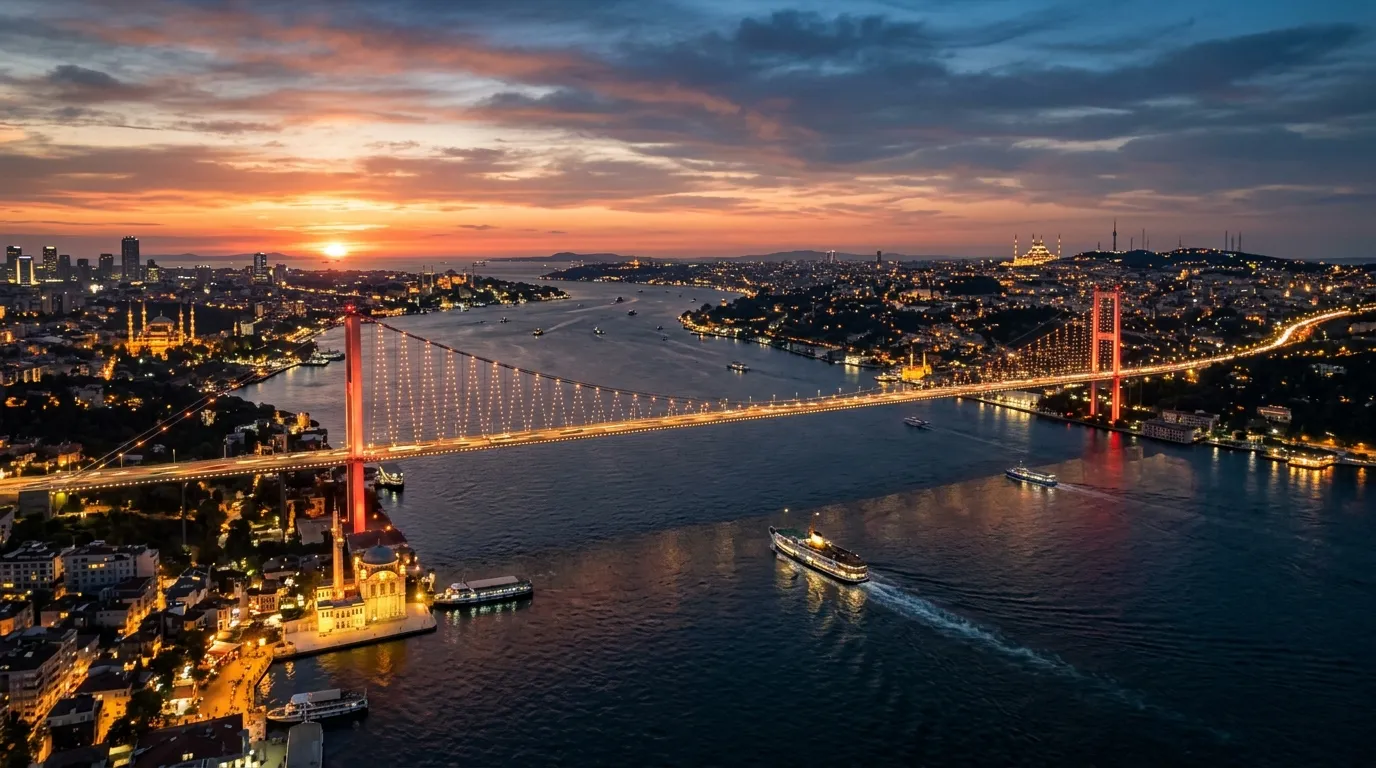
Is Turkey in Europe or Asia? Understanding Turkey’s Unique Transcontinental Identity
Introduction: Why the Question Matters
When people ask, “Is Turkey in Europe or Asia?”, they are often looking for a simple one-word answer. Surprisingly, the reality is much more fascinating. Turkey occupies a rare position on the world map, sitting at the crossroads of two continents and serving as a bridge between civilizations that have shaped human history for thousands of years. Few countries can claim such a unique geographical and cultural role. This is why the question continues to appear in classrooms, travel discussions, political debates, and geography quizzes around the world.
The confusion is understandable. Many travelers associate Turkey with Europe because of its close connections with European countries, its role in international organizations, and the fact that part of its territory lies on the European continent. Others see Turkey as an Asian country because the vast majority of its landmass is located in Asia. Both viewpoints contain elements of truth, which is exactly what makes Turkey so intriguing.
Geography is only one piece of the puzzle. Turkey's identity has also been shaped by centuries of cultural exchange, trade, migration, religion, and political transformation. Ancient Greek settlements, Roman rule, Byzantine traditions, Ottoman influence, and modern Turkish reforms have all left their mark on the country. As a result, Turkey often feels like a place where different worlds meet rather than a nation that fits neatly into a single category.
Understanding Turkey's location helps explain its historical importance and modern-day influence. Its strategic position has made it a gateway for trade routes, military campaigns, and cultural interactions between Europe, Asia, and even the Middle East. Looking beyond a simple geographic label reveals a much richer story about one of the world's most distinctive countries.
The Simple Answer: Turkey Is in Both Europe and Asia
The shortest and most accurate answer is that Turkey is located in both Europe and Asia. Geographers classify Turkey as a transcontinental country, meaning its territory spans more than one continent. This places Turkey in a relatively small group of nations that physically occupy land on multiple continents. While many people try to categorize Turkey as either European or Asian, the reality is that it is simultaneously both.
Approximately 97% of Turkey's land area is situated in Asia, in a region known as Anatolia or Asia Minor. This vast area contains most of Turkey's population, natural resources, agricultural land, and major cities. The remaining 3% of Turkish territory lies in Europe, specifically in the region called East Thrace. Although this European section is much smaller, it carries enormous historical, economic, and strategic significance.
The division between Europe and Asia within Turkey is created by a series of waterways: the Bosporus Strait, the Sea of Marmara, and the Dardanelles Strait. These natural boundaries have long been accepted as part of the traditional continental divide. Because of this, Turkey literally stretches across two continents, making it geographically unique.
What makes Turkey especially interesting is that its continental identity extends beyond physical geography. The country participates in institutions and relationships connected to both Europe and Asia. Its economy links markets across regions, its transportation networks connect continents, and its cultural traditions reflect influences from both sides. Rather than belonging exclusively to one continent, Turkey functions as a meeting point where multiple regions interact.
This dual position has shaped everything from architecture and cuisine to diplomacy and commerce. Instead of asking whether Turkey is European or Asian, a more accurate question might be how Turkey successfully combines elements of both worlds into a distinctive national identity.
What Makes a Country Transcontinental?
A transcontinental country is a nation whose territory extends across the accepted boundaries of two or more continents. Turkey is one of the best-known examples, but it is not alone. Countries such as Russia, Kazakhstan, Egypt, and Azerbaijan also possess territory on more than one continent. What distinguishes Turkey is how clearly visible and culturally significant its continental division is.
In most cases, continental boundaries are not determined by dramatic natural walls such as mountain ranges. They are often based on historical agreements, geographical conventions, and long-standing academic definitions. In Turkey's case, the Bosporus Strait serves as one of the most famous dividing lines on Earth. Standing on one side of the strait places you in Europe, while standing on the opposite shore places you in Asia.
Being transcontinental creates opportunities and challenges. Countries spanning multiple continents often become important trade hubs because they connect different regions. Turkey's location has allowed it to become a vital corridor for transportation, energy pipelines, shipping routes, and international commerce. Goods moving between Europe and Asia frequently pass through Turkish territory, reinforcing the country's strategic importance.
Transcontinental nations also tend to develop diverse cultural identities. Influences from neighboring regions blend together, producing unique traditions, languages, foods, and social customs. Turkey provides a remarkable example of this process. Walking through its cities, visitors can observe architectural styles, culinary traditions, and cultural practices that reflect both European and Asian heritage.
The concept of a transcontinental country demonstrates that geography is rarely as simple as drawing lines on a map. Turkey's position reminds us that continents are connected through human interaction, trade, and shared history. Its location has transformed it into a crossroads where different civilizations have met, exchanged ideas, and left lasting legacies over thousands of years.
Turkey’s Geographic Location
Turkey covers approximately 783,562 square kilometers (302,535 square miles), making it one of the largest countries in its region. Its geographical position places it between southeastern Europe and western Asia, giving it strategic importance that few nations can match. Looking at a world map, Turkey appears almost like a natural bridge connecting two continents. This location has influenced everything from trade and migration to warfare and diplomacy throughout history.
The country is surrounded by several important bodies of water. To the north lies the Black Sea, while the Aegean Sea borders the west and the Mediterranean Sea stretches along the south. These coastlines have helped Turkey become a major maritime nation and an important center for commerce. The country's terrain is equally diverse, featuring mountains, plateaus, valleys, and fertile plains that support a variety of economic activities.
Turkey shares borders with eight countries: Greece, Bulgaria, Georgia, Armenia, Azerbaijan, Iran, Iraq, and Syria. This positioning places Turkey at the intersection of Europe, the Middle East, the Caucasus, and Central Asia. Few countries have such extensive connections to multiple regions of the world. As a result, Turkey often plays a critical role in international politics and regional stability.
The geographical division between Europe and Asia is not merely symbolic. It is marked by real waterways that have influenced human civilization for centuries. These waterways have served as trade routes, military chokepoints, and cultural gateways. Their existence helps explain why Turkey has remained strategically important from ancient times to the present day.
Understanding Turkey's geography provides insight into its national identity. The country's physical location has encouraged the blending of different cultures, traditions, and influences. Rather than being isolated within a single region, Turkey has evolved as a nation that connects multiple worlds, making it one of the most fascinating countries on Earth.
The Asian Portion: Anatolia
The Asian part of Turkey, commonly known as Anatolia or Asia Minor, accounts for roughly 97% of the country's total land area. This vast region forms the heart of modern Turkey and contains most of its population, natural resources, agricultural production, and industrial development. When people think of Turkey's landscapes, historical sites, and major economic centers, they are often referring to locations within Anatolia.
Anatolia has been inhabited for thousands of years and is considered one of the cradles of human civilization. Archaeological discoveries reveal that some of the world's earliest settlements existed here. Ancient civilizations such as the Hittites, Phrygians, Lydians, Greeks, Romans, and Byzantines all left significant marks on the region. Walking through Anatolia today feels like traveling through layers of history, with ancient ruins appearing alongside modern cities.
The region's geography is remarkably varied. Central Anatolia features vast plateaus and open landscapes, while eastern Anatolia is characterized by rugged mountains and dramatic terrain. Coastal areas along the Mediterranean and Aegean Seas enjoy milder climates and fertile agricultural land. This diversity supports the cultivation of crops ranging from wheat and olives to fruits and vegetables, making agriculture an important sector of the Turkish economy.
Many of Turkey's most famous destinations are located in Anatolia. Cappadocia attracts visitors with its extraordinary rock formations and underground cities. Antalya draws tourists to its Mediterranean beaches. Ankara, the nation's capital, serves as the political center of the country. These examples illustrate how Anatolia functions as the geographic and economic foundation of modern Turkey.
Although the European section often receives attention because of Istanbul and its strategic importance, Anatolia remains the largest and most influential part of Turkey. Its history, resources, and population continue to shape the country's development and global significance.
The European Portion: East Thrace
While much smaller in size, East Thrace plays an outsized role in Turkey's identity and international importance. Located in southeastern Europe, this region represents approximately 3% of Turkey's land area. Despite its limited size, East Thrace serves as Turkey's direct connection to the European continent and contains some of the country's most strategically valuable territory.
East Thrace borders Greece and Bulgaria, making it Turkey's gateway to Europe. Roads, railways, pipelines, and trade routes pass through the region, connecting Turkish markets with European economies. This connectivity has made East Thrace an important center for transportation and commerce. Businesses operating in the area benefit from easy access to both European and Asian markets.
Historically, East Thrace has witnessed countless migrations, military campaigns, and cultural exchanges. For centuries, armies moved through the region as empires competed for control of trade routes and strategic territory. These historical interactions contributed to the area's diverse cultural character and lasting significance.
Agriculture remains important in East Thrace, with farmers producing grains, sunflower crops, and livestock products. Industrial development has also expanded, particularly in areas close to Istanbul. The region's proximity to major transportation networks has encouraged investment and economic growth.
East Thrace demonstrates why Turkey cannot be accurately described as purely Asian. Although the region occupies a relatively small portion of the country, its historical importance, economic value, and symbolic role firmly establish Turkey's presence within Europe. This European territory contributes significantly to Turkey's identity as a transcontinental nation.
Key Cities and Regions in Each Continent
Turkey's continental division becomes especially clear when examining its major cities and regions. Some of the country's most influential urban centers are located in Asia, while others straddle the boundary between continents.
On the Asian side, cities such as Ankara, Konya, Kayseri, Gaziantep, and Antalya serve as major economic, cultural, and administrative hubs. Ankara, as the capital, houses government institutions and plays a central role in national decision-making. Antalya attracts millions of tourists annually thanks to its beautiful Mediterranean coastline and thriving hospitality industry.
The European side includes important cities such as Edirne, which once served as the capital of the Ottoman Empire before Constantinople. Edirne remains known for its stunning architecture and historical significance. The region also contains key transportation corridors linking Turkey with neighboring European countries.
No discussion of Turkish cities would be complete without mentioning Istanbul, the country's largest and most famous metropolis. Istanbul occupies territory on both continents, making it one of the few major cities in the world that physically spans Europe and Asia. Bridges, tunnels, and ferries connect the two sides, allowing millions of residents to move between continents daily.
These urban centers highlight the practical reality of Turkey's transcontinental status. The country is not divided into isolated regions but rather interconnected spaces that contribute collectively to its economic strength, cultural richness, and global influence. Geography may separate Europe and Asia, but Turkey demonstrates how these continents can also be linked together through human activity and shared history.
The Waterways That Divide the Continents
One of the most fascinating aspects of Turkey's geography is the network of waterways that separates Europe from Asia. These waterways are not merely geographical features; they are among the most strategically important passages in the world. For thousands of years, they have influenced trade, military strategy, migration, and cultural exchange between continents.
The continental boundary within Turkey is commonly defined by three connected waterways: the Bosporus Strait, the Sea of Marmara, and the Dardanelles Strait. Together, they form a maritime corridor that links the Black Sea to the Mediterranean Sea. Ships carrying goods, energy resources, and passengers regularly pass through this route, making it one of the busiest maritime passages on the planet.
Control of these waterways has historically been a source of power and influence. Ancient kingdoms, Byzantine emperors, Ottoman sultans, and modern governments have all recognized their strategic value. Whoever controlled these passages often controlled vital trade routes connecting Europe, Asia, and beyond.
Beyond their economic and political importance, these waterways also symbolize Turkey's unique identity. They create a physical division between continents while simultaneously serving as connections that bring people together. Bridges span the Bosporus, ferries cross its waters daily, and underwater tunnels allow travelers to move between Europe and Asia in minutes.
The existence of these waterways explains why the question "Is Turkey in Europe or Asia?" cannot be answered with a simple choice. The country occupies both sides of a continental divide that has shaped world history for centuries. Understanding these natural boundaries helps reveal why Turkey remains one of the most strategically significant nations in the modern world.
The Bosporus Strait
The Bosporus Strait is arguably the most famous waterway in Turkey and one of the most important maritime passages in the world. Stretching approximately 31 kilometers (19 miles), it separates the European and Asian sides of Istanbul while connecting the Black Sea to the Sea of Marmara. Standing on its shores offers a remarkable experience: one can literally look across the water and see another continent.
The Bosporus has played a central role in human history for thousands of years. Ancient Greek traders sailed through its waters, Roman and Byzantine rulers defended it, and Ottoman sultans recognized its immense strategic value. The strait has often been compared to a gateway because it controls access between the Black Sea region and the Mediterranean world. Nations throughout history have sought influence over this crucial route due to its commercial and military significance.
Today, the Bosporus remains one of the busiest waterways on Earth. Thousands of vessels pass through it annually, including cargo ships, oil tankers, fishing boats, and passenger ferries. The strait supports international trade on a massive scale, linking countries around the Black Sea with global markets. This constant movement reinforces Turkey's role as a bridge between regions and economies.
Modern engineering has transformed how people cross the Bosporus. Three major suspension bridges and an underwater rail tunnel connect the European and Asian sides of Istanbul. Millions of residents commute across the strait every day, sometimes traveling between continents as part of their daily routine. Few places in the world offer such a unique experience.
The Bosporus symbolizes more than a geographical boundary. It represents connection, interaction, and cultural exchange. Rather than dividing Europe and Asia completely, it serves as a reminder that continents can be linked through commerce, communication, and shared history.
The Sea of Marmara
Nestled between the Bosporus and the Dardanelles lies the Sea of Marmara, an inland sea that plays a crucial role in Turkey's transcontinental geography. Though smaller than many of the world's seas, its significance far exceeds its size. The Sea of Marmara serves as the central link in the chain of waterways that separates and connects Europe and Asia.
The sea covers approximately 11,350 square kilometers (4,382 square miles) and is entirely within Turkish territory. This unique characteristic gives Turkey complete sovereignty over one of the most strategically important maritime corridors in the world. The Sea of Marmara effectively acts as a bridge between the Black Sea and the Mediterranean, facilitating international shipping and trade.
Historically, settlements along the Sea of Marmara have flourished due to their access to maritime commerce. Cities developed around ports, creating economic opportunities and encouraging cultural exchange. Merchants from Europe, Asia, and the Middle East interacted through these routes, contributing to the diverse character that still defines Turkey today.
The sea is also known for its natural beauty and ecological importance. Coastal communities rely on fishing, tourism, and maritime industries for their livelihoods. During the summer months, many residents and visitors enjoy recreational activities along its shores, including boating, swimming, and sightseeing.
From a geographical perspective, the Sea of Marmara is essential because it forms part of the accepted boundary between Europe and Asia. Yet it also demonstrates how natural features can connect rather than simply separate regions. Ships passing through its waters are often engaged in trade that links continents, highlighting Turkey's enduring role as a crossroads of global activity.
The Dardanelles Strait
The Dardanelles Strait, also known in ancient times as the Hellespont, is another key component of Turkey's transcontinental geography. This narrow waterway connects the Sea of Marmara to the Aegean Sea and ultimately the Mediterranean. Together with the Bosporus, it forms a vital maritime route linking the Black Sea to the wider world.
The Dardanelles stretches approximately 61 kilometers (38 miles) and has been strategically important since antiquity. Ancient myths, including stories from Greek mythology, mention the strait. Historical events such as the Persian invasions of Greece and the campaigns of Alexander the Great were influenced by control of this passage. Throughout history, armies and empires recognized its value as a gateway between continents.
One of the most significant events associated with the Dardanelles was the Gallipoli Campaign during World War I. The campaign highlighted the military importance of the strait and demonstrated how control of this waterway could affect broader geopolitical outcomes. Today, memorials and historical sites in the region attract visitors from around the world.
Economically, the Dardanelles continues to facilitate international trade. Commercial vessels carrying goods between Europe, Asia, and the Black Sea region rely on this route. The strait contributes to Turkey's position as a critical transportation hub and reinforces its strategic influence.
Like the Bosporus and the Sea of Marmara, the Dardanelles serves as both a divider and a connector. It marks part of the boundary between continents while simultaneously enabling the movement of people, goods, and ideas. This dual role captures the essence of Turkey itself—a nation shaped by its ability to unite different worlds.
Istanbul: The City on Two Continents
Few cities capture the imagination quite like Istanbul. As Turkey's largest city and one of the world's most historically significant urban centers, Istanbul occupies a truly unique position: it spans both Europe and Asia. This characteristic alone makes it a global icon, but the city's importance extends far beyond geography.
Istanbul's European side contains many of its most famous landmarks, including the Hagia Sophia, the Blue Mosque, and the Grand Bazaar. These sites reflect centuries of history and attract millions of visitors each year. The European districts also serve as major centers of business, finance, tourism, and culture.
Across the Bosporus, the Asian side of Istanbul offers a different atmosphere. Residential neighborhoods, vibrant markets, waterfront promenades, and cultural venues provide a distinctive experience that complements the European side. Residents often move between continents for work, education, or leisure, making transcontinental travel a normal part of daily life.
The city's strategic location has made it one of the most important urban centers in history. Known as Byzantium in ancient times and Constantinople during the Byzantine and Ottoman periods, Istanbul served as the capital of multiple empires. Its position at the intersection of continents allowed it to become a center of trade, politics, religion, and culture.
Today, Istanbul remains a symbol of Turkey's dual identity. It demonstrates how Europe and Asia can coexist within a single metropolitan area, creating a dynamic environment where traditions, ideas, and influences merge. Few cities embody the concept of a bridge between continents as effectively as Istanbul.
Cultural Significance of Istanbul’s Location
Istanbul's location has profoundly shaped its culture. Over centuries, people from diverse backgrounds have settled in the city, bringing with them languages, customs, religions, and artistic traditions. The result is a cultural mosaic unlike almost any other in the world.
Walking through Istanbul reveals layers of history and influence. Byzantine churches stand near Ottoman mosques. Traditional Turkish tea houses coexist with modern cafés. European architectural styles blend with Middle Eastern and Asian elements. This mixture creates a sense of continuity between different eras and civilizations.
The city's culinary scene reflects its transcontinental character as well. Dishes incorporate ingredients and techniques from multiple regions, producing a rich and varied food culture. Visitors can enjoy flavors influenced by the Balkans, Central Asia, the Mediterranean, and the Middle East, often within the same neighborhood.
Istanbul also serves as a center for arts, literature, music, and fashion. Its creative industries benefit from exposure to diverse cultural influences, allowing new ideas to emerge from the interaction of different traditions. This openness has helped the city maintain its relevance and vitality throughout changing historical periods.
The cultural significance of Istanbul's location extends beyond Turkey. The city stands as a global example of how geographical boundaries need not create division. Instead, they can encourage exchange, innovation, and mutual understanding. Istanbul's enduring appeal lies in its ability to unite continents, cultures, and histories within a single urban landscape.
Historical Perspective on Turkey’s Continental Identity
Turkey's position between Europe and Asia has influenced its history more profoundly than perhaps any other factor. For thousands of years, the lands that make up modern Turkey have served as a meeting place for civilizations, religions, empires, and cultures. Understanding Turkey's continental identity requires looking beyond modern borders and exploring the historical forces that shaped the region.
The territory of present-day Turkey has never existed in isolation. Its strategic location made it a crossroads where trade routes converged and where armies frequently marched. Merchants traveling between East and West exchanged goods, technologies, and ideas. These interactions transformed the region into one of the world's most important centers of cultural development.
Unlike countries that evolved within a single cultural sphere, Turkey inherited influences from multiple civilizations. Ancient Anatolian kingdoms, Greek colonies, Roman administration, Byzantine Christianity, and Ottoman governance all contributed to the country's complex identity. Each era added new layers while preserving elements of earlier traditions.
This historical blending explains why debates about whether Turkey belongs to Europe or Asia often miss the larger picture. The country has long existed as a bridge between regions rather than a member of only one. Its history demonstrates that civilizations thrive when they interact rather than remain isolated.
Turkey's unique position continues to influence its modern identity. Historical experiences have taught the nation how to balance relationships with neighboring regions while maintaining its own distinct character. This ability to connect different worlds remains one of Turkey's defining strengths in the twenty-first century.
Ancient Civilizations
Long before the rise of modern states, Anatolia was home to some of humanity's earliest civilizations. Archaeological sites such as Göbekli Tepe, which dates back more than 11,000 years, suggest that organized human societies flourished in the region long before many other parts of the world. These discoveries have reshaped our understanding of early human history and highlight Anatolia's importance as a center of civilization.
The Hittites, one of the ancient world's most powerful empires, established their kingdom in central Anatolia around the second millennium BCE. Their political influence extended across large portions of the Near East, demonstrating the strategic value of the region even in ancient times. Other civilizations, including the Phrygians, Lydians, and Urartians, also contributed to the cultural development of Anatolia.
Greek settlers established colonies along the western coast, bringing Hellenic culture and creating vibrant centers of commerce and learning. These coastal cities connected Anatolia to the broader Mediterranean world, facilitating cultural exchange between Europe and Asia. The influence of Greek philosophy, art, and architecture remains visible in archaeological sites throughout Turkey today.
As civilizations interacted, Anatolia became a melting pot of ideas and innovations. Trade routes crossing the region enabled the movement of goods and knowledge between continents. This role as a connector helped shape Turkey's long-standing identity as a bridge between different worlds.
The legacy of these ancient civilizations continues to attract historians, archaeologists, and travelers. Their achievements remind us that Turkey's transcontinental character is not a modern phenomenon but a defining feature of its history stretching back thousands of years.
The Byzantine Empire
Following the decline of the Roman Empire, the eastern provinces evolved into what historians call the Byzantine Empire. Centered in Constantinople, modern-day Istanbul, this empire became one of the most influential political and cultural powers in world history.
The Byzantine Empire occupied a unique position between Europe and Asia. It inherited Roman administrative traditions while interacting extensively with neighboring civilizations in the Middle East and Central Asia. Constantinople's location along critical trade routes helped the empire accumulate wealth and maintain strategic importance for centuries.
One of the empire's greatest achievements was preserving classical knowledge during periods of instability elsewhere. Byzantine scholars safeguarded ancient Greek and Roman texts that later contributed to the European Renaissance. This intellectual legacy demonstrates how the region served as a conduit for ideas between civilizations.
Religion also played a central role in Byzantine identity. Constantinople became a major center of Christianity, influencing religious developments across Europe and beyond. Magnificent structures such as the Hagia Sophia symbolized the empire's cultural and spiritual significance.
The Byzantine period reinforced Turkey's role as a bridge between continents. The empire connected Europe and Asia through diplomacy, trade, and cultural exchange, setting patterns that would continue under later governments. Its influence remains visible in architecture, art, and historical memory throughout modern Turkey.
The Ottoman Empire
The rise of the Ottoman Empire marked another transformative chapter in Turkey's continental story. Beginning as a small principality in northwestern Anatolia during the late thirteenth century, the Ottomans expanded into one of history's largest and most enduring empires.
By the sixteenth century, Ottoman territory stretched across southeastern Europe, western Asia, and North Africa. This vast empire united diverse populations under a single political system, creating connections between regions that had previously been separated by political boundaries. Istanbul, the Ottoman capital, became one of the world's greatest cities and a center of global commerce.
The empire's location enabled it to control key trade routes linking Europe and Asia. Merchants traveling between continents often passed through Ottoman territory, contributing to economic prosperity and cultural exchange. The empire's cosmopolitan cities welcomed people from different ethnic, linguistic, and religious backgrounds.
Ottoman architecture, cuisine, music, and administrative traditions reflected influences from multiple regions. This blending of cultures helped create the diverse heritage that characterizes Turkey today. The empire demonstrated how a state positioned between continents could benefit from connections to both.
The Ottoman legacy remains deeply embedded in Turkish society. Historic mosques, palaces, markets, and cultural practices continue to reflect the empire's influence. Understanding the Ottoman period helps explain why Turkey is often viewed as a nation that connects East and West rather than belonging exclusively to one side.
Turkey’s Cultural Blend of East and West
Turkey's geography has produced one of the world's most fascinating cultural landscapes. Rather than developing in isolation, Turkish culture evolved through centuries of interaction between Europe, Asia, and the Middle East. This blend of influences gives Turkey a distinctive identity that cannot be reduced to a single regional category.
Visitors often notice this cultural diversity immediately. Architectural styles vary from Byzantine churches and Ottoman mosques to modern European-inspired buildings. Traditional markets operate alongside contemporary shopping centers. Ancient customs coexist with modern lifestyles, creating an atmosphere that feels both historic and dynamic.
Turkish cuisine provides another example of cultural blending. Popular dishes incorporate influences from Central Asia, the Balkans, the Mediterranean, and the Middle East. Ingredients and cooking techniques from different regions have combined to create a culinary tradition recognized worldwide. Foods such as kebabs, baklava, and meze reflect centuries of cultural exchange.
Music, literature, and visual arts also demonstrate Turkey's hybrid character. Artists draw inspiration from multiple traditions, producing works that resonate across cultural boundaries. This creative diversity enriches the country's cultural life and enhances its global appeal.
The cultural blend of East and West is not merely a historical curiosity; it remains a living reality. Contemporary Turkey continues to balance tradition and modernity while engaging with neighboring regions. This ability to integrate diverse influences is one of the country's greatest strengths and a key reason why it occupies such a unique place in the world.
Language, Traditions, and Lifestyle
Language, traditions, and daily life offer valuable insights into Turkey's transcontinental identity. The Turkish language belongs to the Turkic language family, reflecting historical connections with Central Asia. At the same time, centuries of interaction with neighboring cultures have introduced vocabulary and influences from Arabic, Persian, French, Greek, and other languages.
Family traditions remain an important aspect of Turkish society. Hospitality is highly valued, and guests are often treated with exceptional generosity. This cultural emphasis on welcoming others reflects traditions shared across many regions connected to Turkey throughout history.
Daily life in Turkey often combines modern conveniences with long-standing customs. It is common to see people using advanced technology while maintaining practices that have been passed down through generations. Tea culture, local markets, religious celebrations, and family gatherings continue to play significant roles in many communities.
Urban areas such as Istanbul, Ankara, and Izmir showcase Turkey's modern and international side, while smaller towns preserve regional traditions and historical lifestyles. This balance between innovation and heritage contributes to the country's cultural richness.
Turkey's language, traditions, and lifestyle illustrate how identities can evolve through interaction rather than separation. The country's experience demonstrates that cultural diversity can be a source of strength, creativity, and resilience.
Conclusion
So, is Turkey in Europe or Asia? The most accurate answer is that Turkey is in both Europe and Asia. As a transcontinental nation, it occupies territory on two continents and has spent centuries serving as a bridge between them. While approximately 97% of its land lies in Asia and about 3% lies in Europe, geography alone does not capture the full story.
Turkey's waterways, especially the Bosporus, Sea of Marmara, and Dardanelles, define the physical boundary between continents. Its history reveals centuries of interaction among civilizations from East and West. Cities such as Istanbul embody this dual identity by physically spanning Europe and Asia while blending cultural influences from both.
The country's strategic location has shaped its economy, politics, culture, and historical development. Rather than belonging exclusively to one continent, Turkey thrives because of its ability to connect different regions and traditions. Its unique position continues to make it one of the most important and fascinating nations in the world.
For anyone wondering whether Turkey is European or Asian, the answer is ultimately both—and that combination is precisely what makes Turkey so remarkable.
FAQs
1. Is Turkey officially part of Europe or Asia?
Turkey is officially considered a transcontinental country because it has territory in both Europe and Asia.
2. What percentage of Turkey is in Asia?
Approximately 97% of Turkey's land area is located in Asia, primarily in the region known as Anatolia.
3. What percentage of Turkey is in Europe?
Roughly 3% of Turkey's territory lies in Europe, specifically in the region called East Thrace.
4. Is Istanbul in Europe or Asia?
Istanbul is located in both Europe and Asia. The city is divided by the Bosporus Strait, with districts on each continent.
5. Why is Turkey considered a bridge between continents?
Turkey is considered a bridge between continents because its territory spans Europe and Asia, and its history, culture, trade routes, and strategic location connect multiple regions of the world.
Have Question Or Suggestion ?
Please Share Your Thought, To Make It Real