Types of Turkish Passports in 2026: Complete Guide to Eligibility, Benefits, and Application
Explore the 4 types of Turkish passports in 2026—Ordinary, Green, Service, and Diplomatic. Learn eligibility, visa-free access, application steps, and latest updates.
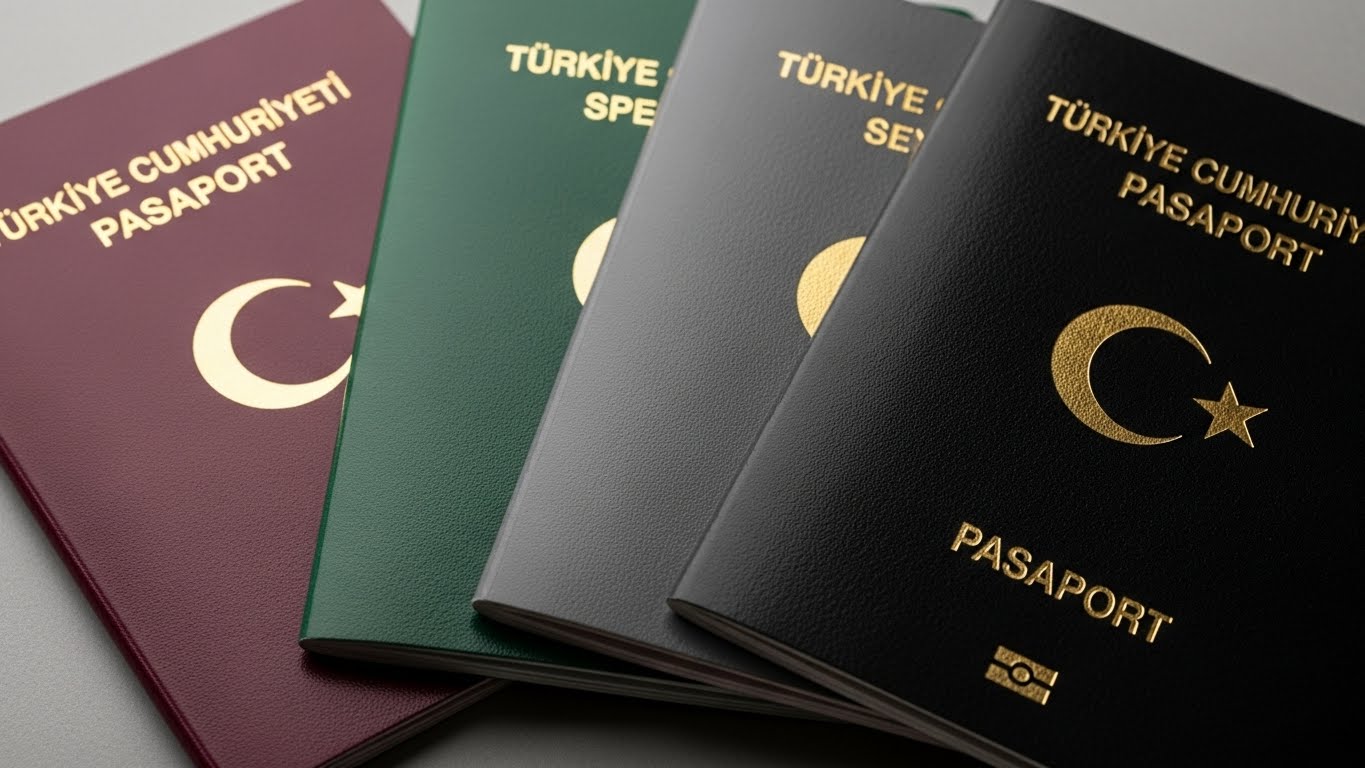
Types of Turkish Passport 2026: Everything You Need to Know
Introduction
When most people think of a passport, they probably picture a simple travel document that lets them hop on a plane and cross borders. But if you’re a Turkish citizen or planning to become one, it’s a bit more nuanced than that. In 2026, Turkey continues to offer four different types of passports, each serving a specific group of people with distinct benefits, privileges, and responsibilities.
So, why should you care? Whether you’re a government official, a frequent traveler, a civil servant, or a dual citizen, knowing exactly what kind of Turkish passport you’re eligible for (or should aim for) can open doors—literally. Visa-free travel, diplomatic immunity, extended stay durations—these are just some of the perks that come with the right kind of passport.
With updates in 2026 including enhanced biometric features, revised visa agreements, and changes in eligibility for some passports, it’s more important than ever to stay informed. In this guide, we’ll break down each type of Turkish passport in detail, walk through how to apply, what’s new, and how to make the most of it in 2026.

Let’s get started with the basics before diving into each passport type.
Understanding Turkish Passports
Turkish passports are official travel and identification documents issued by the Republic of Turkey to its citizens. These documents allow Turkish nationals to travel internationally, prove their identity, and return to Turkey when abroad. But more than that, depending on the type of passport, holders may receive visa exemptions, diplomatic protections, or special entry rights to certain countries.
Here’s the thing—not all Turkish passports are created equal. There are four main types, each designed for different purposes:
Ordinary (Bordo) Passport
Special (Green) Passport
Service (Grey) Passport
Diplomatic (Black) Passport
Each has its own application process, eligibility criteria, and level of international access.
So, before we get into the details of each one, remember this: your role in society—whether you're a civilian, civil servant, or diplomat—determines your passport type. And that determines your travel power.
The Four Main Types of Turkish Passports
Let’s break down the four types of Turkish passports you’ll come across in 2026. This overview sets the stage for a deeper look at each one in the next sections.
| Passport Type | Color | Primary Eligibility | Key Benefits |
|---|---|---|---|
| Ordinary | Burgundy (Bordo) | General public | Standard travel document |
| Special | Green (Yeşil) | Government employees & families | Visa-free access to Schengen & more |
| Service | Grey (Gri) | Official state duties | Functional for temporary government missions |
| Diplomatic | Black (Siyah) | Diplomats, top officials | Maximum diplomatic privileges |
Let’s now dig into each one.

Ordinary (Bordo) Passport
This is the most common passport in Turkey and is what most Turkish citizens carry when traveling abroad. If you’re not in a government position or high-level public role, chances are you’ll be issued a Bordo (Maroon/Burgundy) Passport.
So, who gets it? Basically:
Regular Turkish citizens
Students studying abroad
Business travelers
Tourists
Expat Turks returning for visits
Key Features:
Valid for up to 10 years
Accepted globally
Visa requirements depend on international agreements
Includes biometric data since 2010, upgraded further in 2026
Travel Power:
While it doesn’t come with automatic visa-free entry to the Schengen Area like the Green Passport does, it still offers visa-free or visa-on-arrival access to over 110 countries, including:
Japan
South Korea
Brazil
Indonesia
Malaysia
Serbia
Limitations:
Requires a visa for the Schengen Zone, UK, USA, and Canada
No special diplomatic or governmental access
In 2026, the Ordinary Passport is being upgraded with new biometric chips, better anti-fraud features, and streamlined integration with international border systems. Applying for this passport is relatively simple and accessible to all citizens.

Special (Green) Passport
Ah, the Green Passport, also known as the Special Passport—this one is a true game-changer for eligible Turkish citizens. Often referred to as the "civil servant’s passport," the green cover unlocks travel opportunities that even the ordinary passport can’t match. If you’re in the right job or family circle, you’ll want to pay close attention.
Who Can Get a Green Passport?
This passport isn’t for just anyone. It's primarily granted to:
High-ranking civil servants (government employees at a certain pay grade or above)
Retired government officials who held qualifying positions
Members of professional organizations (e.g., engineers, lawyers) registered with chambers that meet criteria
Spouses and dependent children of eligible individuals
As of 2026, the government is also considering extending eligibility to certain tech professionals and entrepreneurs, as part of a broader push to support international innovation and mobility.
Top Benefits of the Green Passport
Here’s where things get exciting:
Visa-free or visa-on-arrival access to 140+ countries
Schengen countries visa-free for up to 90 days in any 180-day period
Easier entry to countries that normally have strict visa policies
Quicker customs clearance in many places
You essentially get VIP travel status without the burden of long visa processes. Imagine planning a trip to Europe without stressing about appointments, document collections, or embassy lines. With a Green Passport in hand, you can pack your bags and go—simple as that.
Restrictions and Considerations
But wait, there are a few catches:
You must be actively employed or officially retired from an eligible position.
You lose the passport if you change jobs to the private sector (unless you're retired and eligible).
The passport is valid for up to 5 years, and must be returned if eligibility is lost.
In 2026, digital integration with Turkey's e-Government portal (e-Devlet) has made it easier to verify eligibility, track passport status, and schedule renewals online—cutting down wait times significantly.
So, if you're eyeing easy access to Europe, holding a Green Passport is almost like holding a golden travel ticket.

Service (Grey) Passport
Next up: the Grey Passport, officially called the Service Passport. This one doesn’t get as much spotlight, but it plays a vital role in how Turkey sends people abroad on official business. It’s not for everyday tourism—it’s for those traveling on behalf of the state.
Who Qualifies for a Grey Passport?
This passport is issued to:
Public officials (non-diplomatic) on temporary government missions abroad
Employees of public institutions (teachers, police, etc.) sent for training or assignments
Sports teams and cultural representatives representing Turkey
Members of NGOs working on government-sanctioned projects
For example, if you're a schoolteacher heading to a conference in Brussels funded by the Ministry of Education, you’d be traveling under a Grey Passport.
Key Advantages
Grants visa-free access to many countries—though usually for mission-specific travel
Recognized as an official travel document for government business
Typically processed faster than regular passports for urgent missions
Valid for the duration of the mission, often with limited-term validity
Limitations and Misuse Concerns
This passport is not for personal use or tourism. And here's where things have gotten tricky in the past: in 2021, Turkey faced a scandal where some municipalities abused the Grey Passport system to illegally send people abroad under fake missions. Since then, the government has tightened eligibility rules and implemented more digital tracking and documentation.
As of 2026:
Applicants must submit a detailed mission letter
Verification from the relevant ministry is required
Travel is restricted to mission dates and destinations only
So, if you’re heading overseas on behalf of a Turkish institution, the Grey Passport ensures your trip is smooth, secure, and in line with international norms.

Diplomatic (Black) Passport
Now we’re stepping into elite territory. The Black Passport, or Diplomatic Passport, is the top-tier Turkish passport reserved for the country’s most important representatives. Think ambassadors, ministers, and members of parliament.
Who Gets a Diplomatic Passport?
Issued to:
Members of the Turkish Grand National Assembly (TBMM)
Cabinet ministers and top-level government officials
Ambassadors and consuls
Presidential aides and senior bureaucrats
Their spouses and dependent children, under certain conditions
It’s all about representing Turkey at the highest level, whether it’s at the United Nations, a G20 summit, or bilateral diplomatic meetings.
Powerful Benefits
Visa-free travel to over 160 countries
Diplomatic immunity in certain situations
Priority treatment at airports and consulates
Faster entry lanes, customs clearance, and access to diplomatic lounges
If the Green Passport is a golden ticket, the Black Passport is more like a master key. Holders can move through borders with minimal friction.
Important Limitations
Can only be used for official state-related travel
Must be returned upon completion of duty
Requires clearance from the Ministry of Foreign Affairs
In 2026, diplomatic passports include enhanced chip encryption, tracking metadata, and real-time diplomatic alert integration with Turkish embassies worldwide. That means, if something happens abroad, the nearest Turkish mission knows instantly and can take action.
Diplomatic passport holders are also expected to uphold the highest standards of behavior, since they are seen as living symbols of the Turkish state.
How to Apply for a Turkish Passport in 2026
Now that we’ve covered all the types, let’s talk logistics. Getting a Turkish passport in 2026 is easier than ever—but only if you know the process.
Application Steps (All Passport Types):
Gather Required Documents:
National ID card
Biometric photos
Proof of eligibility (e.g., employment certificate for Green Passport)
Book an Appointment:
Use Turkey’s e-Devlet system to schedule a passport appointment at your nearest Nüfus Müdürlüğü (Population Office).
Pay the Passport Fee:
Payments can be made online or at tax offices.
Keep the receipt as proof.
Visit the Population Office:
Submit documents, fingerprints, and biometric data.
Verify personal details and passport type.
Wait for Delivery:
Passports are delivered via PTT (national courier) within 5–10 business days.
Application Tips:
Always double-check your identity details—errors can delay issuance.
Use the mobile ID app for easier appointment management.
Renewal and lost passport procedures differ—don’t assume it’s the same form.
Changes to Turkish Passport Laws in 2026
2026 has been a big year for passport holders in Turkey. Several new regulations and enhancements have come into effect, reshaping how passports are issued, used, and renewed. These changes affect both existing passport holders and new applicants. If you’re planning international travel or considering applying for a different passport type, you need to be aware of what’s new.
Key Legal Updates in 2026:
Stricter Verification for Green and Grey Passports:
Due to past misuse—especially of the Grey Passport—the Turkish government has introduced multi-tiered verification steps for applicants. Now, institutional approvals must be cross-verified by ministries and registered in the e-Government system.
Civil servants applying for Green Passports must provide updated employment verification every 12 months.
Digital Passport System Integration:
All passport applications are now fully integrated with Turkey’s e-Devlet portal.
Applicants can track application status, check biometric readiness, and receive push notifications for renewals or expiry alerts.
Automatic Revocation for Misuse:
Any passport—especially Green, Grey, or Diplomatic—found to be misused for personal travel, political asylum, or overstay in a foreign country will be automatically cancelled, and the holder may face travel bans or prosecution.
New Eligibility for Green Passport:
A significant expansion: Tech entrepreneurs, academic researchers, and international startup founders may now qualify for Green Passports, provided they meet certain tax and employment criteria. This is part of Turkey’s push to become a tech and innovation hub in Europe and Asia.
Biometric Requirements Upgraded:
Fingerprints, iris scans, and facial recognition tech are now standard during passport issuance.
Turkey is now fully compliant with ICAO’s e-passport regulations, enabling smoother immigration control across more than 150 countries.
These changes are designed to tighten security, reduce fraud, and align Turkey’s passport system with global standards. If you’re applying in 2026, be ready to face more scrutiny but also enjoy smoother international access thanks to better tech and diplomatic improvements.
Biometric Turkish Passports: What’s New in 2026?
Biometric passports aren’t new, but in 2026, they’ve been taken to the next level in Turkey. As global travel becomes increasingly digital, Turkey has responded with passports that are smarter, safer, and more integrated than ever.
What Exactly Is a Biometric Passport?
In short, it’s a passport with an embedded chip that stores your biometric data—things like:
Facial image
Digital fingerprints
Iris scans (optional)
Digital signature
This data is used at border control gates to confirm that you’re really you. It makes identity theft nearly impossible and drastically reduces forgery.
New Features in 2026 Turkish Biometric Passports:
Enhanced Security Chips:
New cryptographic algorithms protect your data from tampering or cloning.
Real-Time Syncing with e-Devlet:
Lost your passport? Deactivate it instantly via your mobile ID app.
International Data Compatibility:
Fully compliant with ICAO and EU standards—meaning faster customs clearance across Europe, Asia, and North America.
Smart Border Fast-Track:
Turkish citizens using the new biometric passports now have access to fast-track eGates in over 25 countries, including:
Germany
Netherlands
UAE
Qatar
South Korea
Digital Passport Backup (e-Passport):
You can now store a secure digital version of your passport on your phone (via NFC-enabled apps). Great for emergencies or ID verification abroad.
Why This Matters
If you’re someone who travels frequently—or wants to—these upgrades are a game changer. Not only do they make travel more secure and seamless, but they also show how Turkey is stepping up its international presence with forward-thinking tech.
Turkish Passport Validity and Renewal Process
Whether you're holding a Green Passport for work or a standard Bordo for leisure, every passport has an expiration date. In 2026, understanding how long your passport lasts and how to renew it is essential to keeping your travel plans running smoothly.
How Long Is a Turkish Passport Valid?
Here’s the breakdown based on the type:
| Passport Type | Validity Period |
|---|---|
| Ordinary (Bordo) | Up to 10 years |
| Special (Green) | 5 years |
| Service (Grey) | Duration of official mission |
| Diplomatic (Black) | Duration of official duty |
When Should You Renew?
Ideally, at least 6 months before it expires. Many countries require a passport to be valid for at least 6 months beyond the travel date.
If your passport has expired or is about to expire, here’s what to do.
Renewal Process (2026 Update):
Log into the e-Devlet portal and select "Passport Renewal."
Schedule an appointment at the nearest population directorate.
Gather documents:
Existing passport
National ID
Biometric photos
Proof of continued eligibility (for Green/Grey/Black passports)
Pay the renewal fee via online banking or PTT.
Visit the office, provide fingerprints and confirm identity.
Receive your new passport within 5–7 business days via registered mail.
Common Renewal Mistakes:
Not checking your passport's blank pages (many countries require at least 2 empty pages)
Assuming old passport photos can be reused
Not renewing early enough before international travel
Letting your eligibility for Green or Grey lapse without notifying authorities
Avoiding these small issues can save you a ton of headaches and delays.
Fees and Costs for Turkish Passports in 2026
Money talk! Whether you're applying for the first time or renewing, knowing the fees in advance helps you budget. Passport fees have been adjusted in 2026 to align with inflation and tech upgrades.
Current Passport Fees (2026)
| Duration | Fee (TRY) | Approx. USD |
|---|---|---|
| 6 months | 1,639 TL | ~$60 |
| 1 year | 2,396 TL | ~$88 |
| 2 years | 3,912 TL | ~$145 |
| 3 years | 5,558 TL | ~$205 |
| 4-10 years | 7,833 TL | ~$290 |
Note: Fees are subject to slight changes based on government revisions.
Special Considerations:
Green and Diplomatic Passports are usually free of charge (for eligible individuals).
Students under 25 can get fee exemptions for the Ordinary Passport if applying for education-related travel.
Lost passport reissuance comes with an extra fee, usually around 1,200 TL.
Always check the latest fee schedule on Turkey’s official passport website or the e-Devlet system to avoid surprises.
Visa-Free Travel with Turkish Passport (Updated 2026 List)
One of the most important factors people consider when evaluating a passport’s strength is visa-free access—and Turkey’s passports, especially the Green and Diplomatic ones, offer some strong advantages in 2026.
Let’s take a deep dive into where Turkish passport holders can go without the hassle of a visa, and how each passport type stacks up.
Visa-Free Access Based on Passport Type
| Passport Type | Visa-Free Countries (Approx.) |
|---|---|
| Ordinary (Bordo) | 110+ countries |
| Special (Green) | 140+ countries |
| Service (Grey) | Mission-dependent |
| Diplomatic (Black) | 160+ countries |
Note: Visa-free access can vary slightly depending on diplomatic relations and bilateral agreements.
Top Countries Turkish Citizens Can Visit Visa-Free (2026)
For All Passport Holders (Bordo included)
Japan
South Korea
Serbia
Brazil
Indonesia
Thailand (30-day waiver)
Malaysia
South Africa
Morocco
Ukraine (90 days)
For Green Passport Holders (without needing a visa)
Germany
France
Italy
Spain
Belgium
Austria
Netherlands
Norway
Switzerland
Denmark
This means if you hold a Green Passport, you can travel across almost all of Europe visa-free, making it highly valuable for government employees, retirees, or qualified professionals.
For Diplomatic Passport Holders
Add to the list:
United States
United Kingdom
Canada
Russia
China
Saudi Arabia
Diplomatic passport holders enjoy special treatment, often bypassing the standard tourist visa process altogether. They also get faster immigration processing and may enter countries even during restricted periods (e.g., pandemic-related closures).
Recent Updates (2026)
China and Turkey signed a new agreement to allow 30-day visa-free access for Green and Diplomatic passport holders.
Gulf countries, including UAE and Qatar, have expanded visa-on-arrival facilities for Turkish travelers.
Negotiations are ongoing with Australia and the UK for increased access for Green Passport holders.
So, if you’ve ever dreamed of traveling the world without lining up at embassies, the right Turkish passport could be your ticket.
Lost or Stolen Turkish Passports: What to Do in 2026
Losing your passport can feel like a travel nightmare. But in 2026, thanks to Turkey’s enhanced digital services and international cooperation, getting help is quicker and easier than ever.
Immediate Actions:
Report it Immediately via:
The e-Devlet portal
The nearest Turkish consulate/embassy
Local police (if abroad)
Deactivate the Passport:
Use the mobile e-ID app to deactivate it instantly, preventing misuse.
Apply for a Replacement:
If in Turkey: Visit your Nüfus Müdürlüğü
If abroad: Contact the nearest Turkish consulate
Documents Needed for Replacement:
National ID or temporary identity document
Biometric photos
Police report (for stolen passports abroad)
Proof of travel (e.g., flight ticket) if urgent
Emergency Travel Document:
If you're abroad and need to return urgently, Turkish consulates issue a "temporary travel document" valid only for returning to Turkey.
Fees:
Lost passport replacement: Around 1,200 TL extra
Emergency document: May be free or minimal charge depending on case
Tips to Avoid Issues:
Scan and store a digital copy of your passport in a secure cloud drive
Use a travel wallet with RFID protection
Enable passport alerts in the e-Devlet app for real-time activity
Losing your passport isn’t ideal, but with the right steps, it doesn’t have to derail your entire journey.
Turkish Passport for Dual Citizens
Dual citizenship can make life incredibly convenient—but when it comes to Turkish passports, things can get a bit complex. If you’re a Turkish citizen who also holds citizenship from another country, you’ll want to know how that impacts your passport type and travel rights.
Can Dual Citizens Hold a Turkish Passport?
Yes, Turkish law permits dual citizenship, and dual nationals can hold a Turkish passport alongside another (e.g., German, Dutch, US).
However:
You must declare dual citizenship during passport application
You may not be eligible for Green or Diplomatic passports unless your Turkish citizenship status is active and employment criteria are met
How It Affects Travel:
You can choose which passport to use based on travel destination
For travel to Turkey, you must use your Turkish passport
When entering countries with better visa policies for your second nationality, use that passport
For example:
If you hold both Turkish and German citizenship, you might use the German passport to enter the EU, then the Turkish passport for Middle Eastern countries.
Special Considerations in 2026:
New laws require dual citizens to update status in the e-Devlet system
Certain countries (e.g., Germany, Japan) have stricter rules about dual nationals using foreign passports
Green Passport eligibility may be scrutinized more closely for dual citizens, especially if they don’t reside in Turkey full-time
If you’re a dual citizen, take time to understand the laws of both countries and manage your travel plans accordingly.
Acquiring Turkish Citizenship and Passport as a Foreigner
Thinking of getting Turkish citizenship? Whether it’s through investment, marriage, or residency, once you’re a citizen, you’re eligible for a Turkish passport—and in 2026, the process is clearer and more accessible than ever.
Popular Ways to Get Turkish Citizenship:
1. Citizenship by Investment
Invest at least $400,000 USD in real estate
Or deposit $500,000 USD in a Turkish bank
Hold investment for a minimum of 3 years
Process time: 6–12 months
2. Citizenship by Marriage
Marry a Turkish citizen
Remain married and reside together for at least 3 years
Must prove genuine relationship
3. Citizenship by Long-Term Residency
Live in Turkey for 5 years with continuous residence
Demonstrate language proficiency, cultural integration, and financial stability
Once You’re a Citizen:
You can apply for an Ordinary (Bordo) Passport
Green or Diplomatic passports are not available unless you later meet public service criteria
You’ll have full rights to live, work, and travel as a Turkish national
In 2026, the government has improved the application infrastructure to allow foreigners to track citizenship and passport applications online and access support in multiple languages.
How to Obtain Turkish Citizenship in 2026
Dreaming of becoming a Turkish citizen? Whether you're looking to enjoy visa-free travel, invest in a thriving market, or simply relocate to a country with a rich culture and strategic location, Turkish citizenship offers incredible advantages—especially when paired with the power of the Turkish passport.
In 2026, there are multiple legal pathways to acquiring Turkish citizenship, but the most popular and efficient method continues to be real estate investment.
Turkish Citizenship by Real Estate Investment
One of the fastest and most secure ways to obtain Turkish citizenship is by purchasing property worth at least $400,000 USD. Once the investment is complete and meets government criteria, you can apply for citizenship for yourself, your spouse, and children under 18.
Here’s why more investors are choosing this route in 2026:
Fast-track process: Get your passport within 6–12 months
No residency requirement: You don’t need to live in Turkey to qualify
Dual citizenship allowed
Access to a booming real estate market
Become eligible for visa-free travel to 110+ countries
For a step-by-step walkthrough, check out:
👉 Turkish Citizenship by Real Estate Investment – 2025 Complete Guide
Am I Eligible for Turkish Citizenship?
Eligibility requirements are straightforward and investor-friendly. In addition to the investment threshold, you must:
Have no criminal record
Prove legal source of funds
Hold the property for at least 3 years
Discover all the qualifications here:
👉 Turkish Citizenship Eligibility Criteria – Complete Guide 2025
Why Choose Deal Real Estate to Get Turkish Citizenship?
If you're serious about obtaining Turkish citizenship through property investment, you need a trusted partner. That’s where Deal Real Estate comes in.
With years of experience, a multilingual team, and deep knowledge of the legal process, Deal Real Estate provides:
Pre-approved investment properties eligible for citizenship
Full legal support during the citizenship application
Transparent process with zero hidden fees
Guidance in multiple languages—English, Arabic, Russian, and Turkish
A portfolio of properties in Istanbul, Antalya, and other prime locations
Want to learn more about the benefits of the Turkish passport and how it can change your life?
👉 The Power of the Turkish Passport – Why It’s a Game Changer in 2026
Ready to Start Your Journey? Let’s Talk!
If you're interested in buying property in Turkey and gaining full Turkish citizenship, don't wait.
📩 Contact Deal Real Estate today for a free consultation and start your journey toward a new passport, new opportunities, and a new life in Turkey.
👉 Visit: www.deal-tr.com
📞 Or call our multilingual team now!
Conclusion
So, there you have it—a full breakdown of the types of Turkish passports in 2026. Whether you’re a citizen, government worker, diplomat, or foreign investor, knowing the right passport for your situation can literally change the way you travel.
From the powerful Green Passport that opens Europe’s doors, to the elite Black Diplomatic Passport, Turkey has designed its passport system to support different roles in society and boost international mobility.
The updates in 2026—biometric upgrades, new eligibility rules, and visa-free expansions—have made the Turkish passport stronger, safer, and more convenient than ever before.
Choose the passport that fits your life, and go explore the world.
FAQs About Turkish Passports in 2026
1. Can I upgrade from an Ordinary Passport to a Green Passport?
Only if you meet the eligibility criteria, such as being a government employee of a certain rank or a retired official.
2. How long does it take to get a Turkish passport in 2026?
Usually 5–10 business days, depending on location and document completeness.
3. Can Turkish passport holders travel to the USA without a visa?
No. As of 2026, Turkish citizens still require a visa to enter the USA, unless they hold a diplomatic passport.
4. Is the Turkish passport considered strong internationally?
Yes, especially the Green and Diplomatic types. Turkey ranks well in global mobility indexes, offering access to 110–160+ countries depending on the passport type.
5. What happens if I misuse a Special or Diplomatic passport?
Misuse can lead to passport revocation, travel bans, or legal action, especially with new security protocols in place as of 2026.
Have Question Or Suggestion ?
Please Share Your Thought, To Make It Real