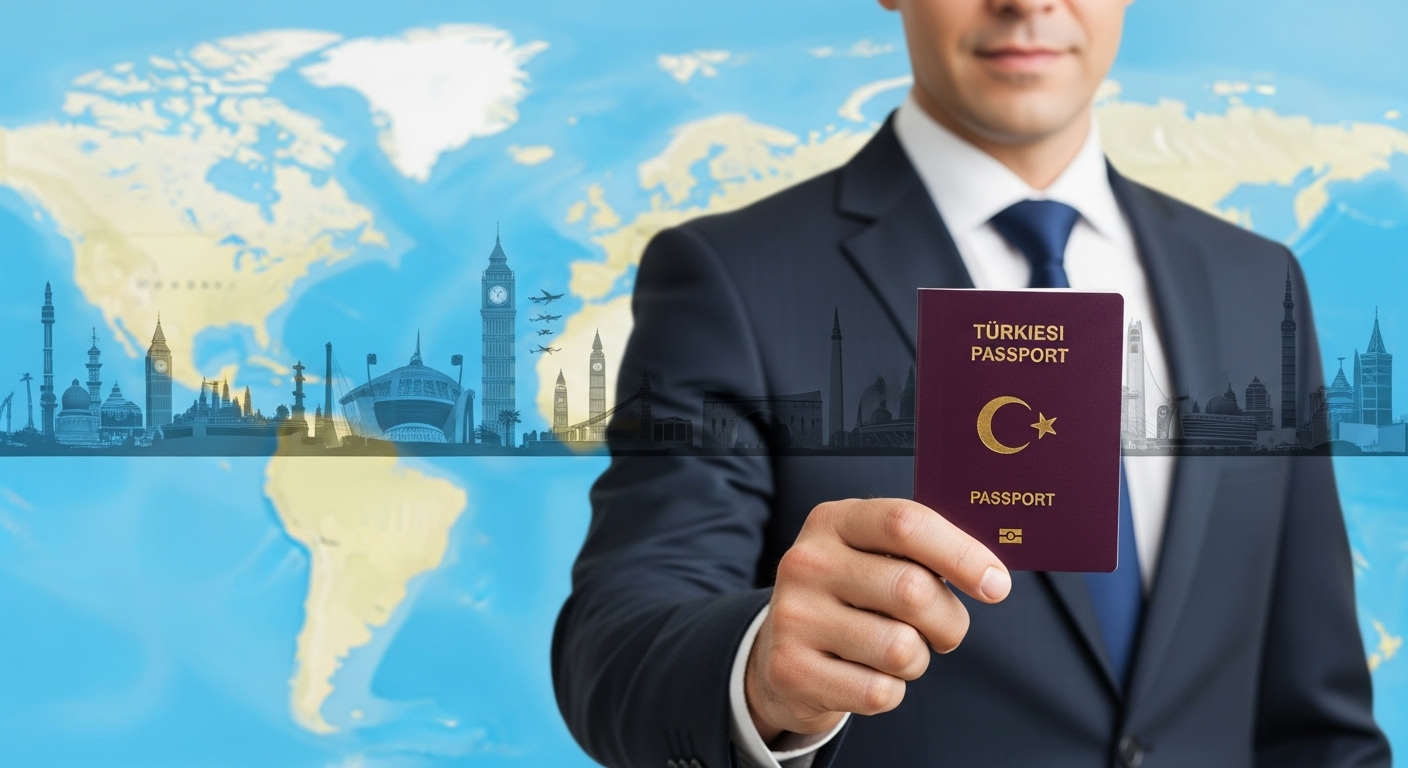
Power of Turkish Passport
Discover the benefits, global access, and investment opportunities tied to the Turkish passport in this in-depth guide.
What Makes a Passport Powerful?
When we talk about the power of a passport, we're really discussing the doors it can open. Think about it—your passport is essentially your personal key to the world. The more places it lets you go without jumping through hoops like visa applications, the more powerful it's considered. Factors that determine a passport's strength include the number of countries you can enter visa-free, the ease of getting visas when required, and the international standing of your country. The Henley Passport Index and Arton Capital’s Passport Index are two major sources that rank passport power globally, and they base their evaluations on these criteria.
A powerful passport doesn’t just mean vacationing in exotic destinations. It can affect where you work, where your kids study, how easily you invest abroad, or how fast you can relocate in a crisis. And in today's fast-paced, ever-changing global landscape, flexibility and mobility are more valuable than ever. For many global citizens, dual nationality and strategic citizenship have become life hacks—and the Turkish passport is emerging as a smart player in this space.
Overview of Turkish Passport Tiers
The Turkish passport isn’t one-size-fits-all. In fact, there are four different types of Turkish passports, each designed for a specific purpose:
Ordinary Passport (Bordo Pasaport) – This is the standard passport issued to Turkish citizens.
Special Passport (Yeşil Pasaport) – Available to certain public servants and their families, it offers expanded travel privileges.
Service Passport (Gri Pasaport) – For those traveling on behalf of the government for official duties.
Diplomatic Passport (Siyah Pasaport) – Reserved for high-ranking officials and diplomats.
The ordinary Turkish passport, while not as elite as the diplomatic one, still holds considerable power—especially when combined with Turkey’s global alliances and citizenship-by-investment programs. With Turkey positioned at the crossroads of Europe and Asia, its passport gives citizens more than just travel access—it provides a gateway to opportunity.
Global Mobility with the Turkish Passport
Visa-Free and Visa-on-Arrival Access
As of now, Turkish citizens can travel to over 110 countries without a pre-arranged visa. This includes a mixture of visa-free, visa-on-arrival, and electronic visa (e-Visa) access. While this number may not put it in the same tier as Japan or Singapore, it’s still a highly respectable figure, especially when compared with many non-EU and non-Western nations.
Here’s the deal: getting a Turkish passport gives you access to countries in Asia, Latin America, parts of Africa, and even some territories in Europe without the visa nightmares many people face. Countries like Japan, South Korea, Indonesia, Qatar, Brazil, and Ukraine welcome Turkish citizens with open arms—or at least with a simple stamp at the airport.
It’s also important to remember that visa-on-arrival or e-visa options simplify international travel. You no longer need to schedule embassy appointments, submit piles of paperwork, or wait weeks for approval. You just book your flight, grab your passport, and go.
Countries Turkish Citizens Can Visit Without a Visa
Let’s break this down with a few highlights. Turkish passport holders can travel visa-free to:
Japan (90 days)
South Korea (90 days)
Indonesia (30 days)
Serbia (90 days)
Brazil (90 days)
Mexico (180 days with e-Visa)
Thailand (30 days with visa on arrival)
Ukraine and Moldova (ID card entry)
Qatar and Kuwait (visa-free or visa-on-arrival access)
These destinations span multiple continents, offering everything from beaches and adventure to business and academic opportunities. This is a huge plus for Turkish citizens who value flexibility and global experience.
Key Travel Agreements Boosting Turkish Passport Access
Turkey's increasing passport power is not by accident—it’s the result of strategic diplomacy. One of the country’s goals has been to establish bilateral agreements that ease travel restrictions for its citizens.
Some of these agreements include:
Visa liberalization talks with the European Union
Bilateral visa waiver agreements with Latin American and Asian countries
E-passport technology adoption to enhance security and trustworthiness
Moreover, Turkey's customs union agreement with the EU enhances its profile on the global stage, even though full Schengen access still remains under negotiation. Still, the Turkish government continues to build alliances, which makes it likely that the passport’s power will grow even more in the coming years.

The Turkish Passport Rankings
Global Passport Index Rankings
In 2025, the Turkish passport ranks around the mid-40s on the Henley Passport Index and in a similar range on Arton Capital’s Global Passport Power Rank. While it doesn’t top the charts, it’s consistently ranked higher than many countries in the Middle East, South Asia, and parts of Africa.
This ranking translates into a respectable level of global mobility. What's exciting is that Turkey’s passport ranking has shown a consistent upward trend, reflecting the country's growing international presence and efforts in diplomatic and economic relations.
When you consider that over 110 countries are accessible without a traditional visa, the Turkish passport offers a robust travel profile for global entrepreneurs, remote workers, and international families alike.
Regional Comparison with Other Passports
So how does the Turkish passport stack up against others in the region? Let’s look at a quick comparison:
| Country | Visa-Free Access | Passport Rank (Henley Index) |
|---|---|---|
| Turkey | 110+ | ~46th |
| Russia | 120+ | ~41st |
| UAE | 180+ | ~15th |
| Iran | 40+ | ~92nd |
| Saudi Arabia | 90+ | ~60th |
From this table, it’s clear that Turkey sits in a strong middle-ground position. It doesn’t yet have the luxury access of UAE, but it's significantly stronger than Iran or Iraq and continues to close the gap with Russia.
Improvements in Turkish Passport Strength Over the Years
Let’s be real—passport rankings can be volatile. They shift based on diplomatic changes, security concerns, and international perception. The Turkish passport has climbed the ladder steadily over the past decade, thanks to:
Economic reforms
Global investment in Turkey
Proactive diplomatic missions
A streamlined citizenship-by-investment program
This means if you’re betting on a passport with upward momentum, Turkey’s is a good one to watch. It’s becoming a modern-day passport powerhouse.
Citizenship by Investment in Turkey
What is Turkey’s Citizenship by Investment Program?
Turkey’s Citizenship by Investment (CBI) program, launched in 2017, is one of the most attractive and straightforward options for global investors looking to secure a second passport. With a relatively low investment threshold compared to European and Caribbean programs, Turkey has positioned itself as a magnet for high-net-worth individuals, businesspeople, and families seeking greater mobility, economic stability, and lifestyle upgrades.
Here’s how it works: by investing a minimum of $400,000 in real estate, applicants can obtain Turkish citizenship—along with their spouses and children under 18—in as little as 3 to 6 months. There’s no requirement to live in Turkey or even know the Turkish language, which makes it particularly appealing to remote investors and digital nomads.
Beyond real estate, there are alternative paths such as:
$500,000 bank deposit in a Turkish bank
$500,000 government bonds
$500,000 investment in a Turkish company
Job creation for at least 50 Turkish citizens
This program has driven a surge in foreign interest, particularly from the Middle East, South Asia, and even parts of Europe. With Turkey's passport providing access to over 110 countries and a gateway to potential EU integration, the value proposition is clear.
How to Apply for Turkish Citizenship through Investment
The application process is designed to be fast and efficient. Here’s a step-by-step breakdown:
Choose Investment Option: Most applicants opt for real estate.
Due Diligence: Legal advisors conduct background checks.
Make the Investment: Purchase the property or complete the financial transaction.
Obtain a Certificate of Eligibility: Issued by the Turkish authorities.
Apply for Residency: Submit a residency permit application.
Submit Citizenship Application: This includes biometric data and supporting documentation.
Receive Passport: Within 3–6 months, you get your Turkish citizenship and passport.
Many firms offer end-to-end services, streamlining the paperwork and government interactions. Turkey also allows the entire process to be completed remotely through power of attorney, which has helped the program flourish globally.
Benefits of Becoming a Turkish Citizen
Becoming a Turkish citizen through investment is more than just a passport—it’s an upgrade in life options. Some key benefits include:
Visa-free travel to 110+ countries
Eligibility for an E-2 Investor Visa to the United States
Access to free or low-cost healthcare and education in Turkey
No requirement to renounce your current citizenship
Access to Turkey’s robust economy and property market
Additionally, citizens can pass Turkish nationality to future generations, creating long-term benefits for children and grandchildren. Whether you’re looking for travel flexibility, business opportunities, or a safe and culturally rich place to call home, Turkish citizenship delivers.
Turkish Dual Citizenship and Its Advantages
Countries Allowing Dual Citizenship with Turkey
Turkey recognizes dual citizenship, meaning you can retain your current nationality while acquiring Turkish citizenship. This flexibility is a major advantage for those who want the best of both worlds—expanded travel and lifestyle options without sacrificing the rights they enjoy in their home country.
Countries that typically allow dual citizenship with Turkey include:
Canada
United Kingdom
Australia
United States
Brazil
France
Italy
However, it’s essential to note that not all countries permit dual citizenship. For example, India, China, and Saudi Arabia typically do not allow dual nationality. If you’re a citizen of one of these countries, acquiring Turkish citizenship may require giving up your original nationality—so always check with local legal advisors.
Legal and Practical Aspects of Holding Dual Citizenship
Holding dual citizenship can be a game-changer, but it also comes with legal obligations and responsibilities in both countries. For Turkish citizens, dual nationality offers the ability to:
Live and work freely in both countries
Own property in Turkey and abroad
Access social services like healthcare and pensions
Provide more options for children’s education
On the legal front, Turkish law allows dual nationals to use their Turkish passport when entering or leaving Turkey. That means smoother immigration and access to services reserved for Turkish citizens. However, in countries where you hold another passport, you may be required to use that nation’s passport when entering or exiting.
Dual citizens should also be aware of military service requirements in Turkey. Turkish law mandates military service for male citizens, but there are exemptions and payment options for those living abroad.
In short, Turkish dual citizenship provides the ultimate flexibility—allowing individuals to benefit from the rights and privileges of two nations without being tied down by a single identity or limited by one set of regulations.
Economic and Political Influence on Passport Strength
How Turkey’s Economy Impacts Passport Strength
Turkey’s economy is one of the largest in the region and continues to play a critical role in shaping the strength of its passport. A stable, growing economy often correlates with increased global mobility, as stronger economies usually imply more trustworthy citizens in the eyes of other nations.
Turkey boasts a GDP exceeding $900 billion, ranking it among the top 20 economies globally. Sectors like tourism, construction, agriculture, and automotive manufacturing drive economic growth. As the government continues to promote foreign investment, including in its CBI program, Turkey is seen as a more reliable and desirable partner on the global stage.
Economic resilience also improves bilateral relations. Countries that trade and invest in Turkey are more likely to ease visa restrictions for Turkish passport holders, reinforcing the passport’s strength over time.
Geopolitical Influence on Turkish International Relations
Turkey’s geopolitical positioning—straddling both Europe and Asia—makes it a crucial player in global diplomacy. The country is a member of NATO, has a customs union agreement with the EU, and maintains strategic partnerships with the Middle East, Russia, and the US.
These relationships often influence passport agreements. For example:
Negotiations with the EU may lead to eventual Schengen visa liberalization.
Alliances with Gulf countries have already led to visa waivers.
Engagement with Central Asian nations helps Turkish citizens access Turkic-speaking regions more freely.
While political tensions can occasionally affect travel policies, Turkey’s overall diplomatic strategy has focused on expanding soft power and building bridges globally. This, in turn, continues to elevate the global mobility Turkish citizens enjoy.
Residency vs. Citizenship in Turkey
Long-Term Residency Options
Not everyone wants or needs full citizenship. Turkey offers several long-term residency options for those who want to live, study, or work in the country without becoming a citizen. The most common types include:
Short-term residence permits (for tourism, property ownership, or family reunification)
Student residence permits
Work residence permits
Long-term residence permits (for those who’ve lived in Turkey for at least 8 years)
These permits allow foreign nationals to enjoy many of the benefits Turkish citizens have, such as access to healthcare and the right to lease property. However, long-term residents do not have voting rights or access to certain government jobs.
A key advantage of residency is that it offers a lower barrier to entry than citizenship. There are fewer legal requirements, and in many cases, you can convert a residency permit into full citizenship after a set number of years—usually 5 years of continuous residence.
Differences Between Permanent Residency and Citizenship
Let’s break it down clearly:
| Feature | Residency | Citizenship |
|---|---|---|
| Voting Rights | ❌ No | ✅ Yes |
| Visa-Free Travel | ❌ Limited | ✅ 110+ countries |
| Military Obligations | ❌ None | ✅ For male citizens |
| Real Estate Investment | ✅ Yes | ✅ Yes |
| Government Employment | ❌ Limited | ✅ Full Access |
| Time to Obtain | ✅ Faster (3–12 months) | ❌ Longer (5 years or via CBI) |
So if you’re looking for a test drive before committing to the full ride, residency might be the better option. But for full access and long-term benefits, citizenship remains the ultimate goal.
Real Estate Investment and Turkish Passport
Real Estate as a Path to Citizenship
Real estate has become the most popular route for acquiring Turkish citizenship. With a minimum investment of $400,000, investors can secure a property in one of Turkey’s booming cities or coastal resorts and apply for citizenship shortly after. Compared to other nations where similar programs demand $1–2 million, Turkey’s offer is hard to ignore.
This program appeals not just because of the citizenship benefits, but also because of Turkey’s real estate potential. Cities like Istanbul, Antalya, and Izmir have seen significant growth, with modern developments, international schools, healthcare facilities, and transport infrastructure drawing global investors.
Key features include:
Property can be residential, commercial, or land.
You can lease it for income generation.
You must hold the property for at least 3 years.
You can buy multiple properties as long as the total value is $400,000+.
One major advantage is that Turkey doesn’t require you to live in the country after purchasing property. You can own a beachfront apartment in Bodrum or a luxury flat in Istanbul and live elsewhere while your passport processes.
Property Requirements and Investment Thresholds
Not every property qualifies. Here are the main requirements:
Must be government-approved for citizenship applications.
Must be free of debt or encumbrance.
The purchase must be documented via bank transfer.
The valuation must be done by a licensed Turkish appraiser.
Once approved, the process is fast and efficient, especially with assistance from experienced legal advisors or real estate brokers. For those aiming for both investment and mobility, Turkish real estate provides a two-in-one deal—tangible assets and global access.
Turkish Passport for Business Travelers
Business Opportunities for Turkish Citizens Abroad
The Turkish passport opens up exciting global business avenues. As a citizen, you can tap into international markets with greater ease, thanks to Turkey’s customs union with the European Union, FTA agreements with over 20 countries, and strong economic ties across Asia and the Middle East.
Many Turkish citizens run successful businesses in:
Germany
Qatar
United Kingdom
Azerbaijan
Kazakhstan
The ability to travel freely to these markets makes establishing and maintaining business ventures far easier. This is particularly useful for sectors like import/export, construction, real estate, and tourism, where presence in multiple countries offers a major advantage.
Benefits for Entrepreneurs and Investors
The Turkish passport doesn’t just unlock foreign markets—it also provides domestic support for entrepreneurs:
Access to Turkish development loans
Tax incentives for new businesses
Entry into startup ecosystems in Istanbul and Ankara
Access to skilled labor and a large domestic consumer base
Moreover, Turkish citizens can apply for a U.S. E-2 investor visa, which allows business owners to establish operations in the United States. This visa is not available to all nationalities, so having Turkish citizenship gives you an edge.
If you're an investor, entrepreneur, or aspiring global business leader, the Turkish passport is a powerful asset in your toolkit.
Educational Benefits with Turkish Citizenship
Access to Turkish Universities and Scholarships
Turkey’s education system is globally recognized, with a rising number of universities climbing international rankings. As a Turkish citizen, you get priority access to:
Over 200 public and private universities
Tuition-free or low-cost education
Competitive national scholarships
Easier admission to medical, engineering, and law schools
Institutions like Bogazici University, Middle East Technical University (METU), and Istanbul University are well-regarded not just in Turkey but across Europe and Asia.
Citizenship also grants access to YÖK (Turkish Higher Education Council) opportunities, including government-funded scholarships for studies abroad. Turkish students regularly benefit from exchange programs like Erasmus+, further enhancing their global academic credentials.
Opportunities for International Education and Exchange
With a Turkish passport, students find it easier to apply to international schools and universities. Turkey’s growing diplomatic ties mean more exchange agreements, making it simpler for students to attend institutions in:
Germany
France
South Korea
China
Malaysia
Additionally, Turkish citizens often enjoy reduced tuition or special scholarship slots in partner countries. These perks, combined with the strength of Turkey’s own universities, make the passport particularly attractive to families focused on education.
Whether you're a student eyeing a top-notch university or a parent planning your child’s future, Turkish citizenship delivers powerful educational returns.

Living Benefits of Holding a Turkish Passport
Healthcare Access and Social Services
As a Turkish citizen, you gain full access to one of the most affordable and efficient healthcare systems in the region. Turkey’s public health sector is subsidized and provides:
Universal healthcare coverage
Modern hospitals and clinics
Emergency services free of charge
Pharmaceutical subsidies
The government invests heavily in its "Health Transformation Program", and cities like Istanbul and Ankara boast world-class medical facilities that attract international medical tourists.
Beyond healthcare, Turkish citizens benefit from social security, retirement pensions, family allowances, and subsidies for housing and education. The government also supports low-income families with monthly cash transfers and social support.
This safety net enhances quality of life and makes citizenship more than just a travel document—it’s a foundation for stability and well-being.
Safety and Quality of Life in Turkey
Despite regional complexities, Turkey remains one of the safest and most dynamic countries in the region. Expats and citizens alike enjoy:
Modern infrastructure
High-speed rail and transport
Vibrant cities and quiet coastal towns
Cultural richness and historical sites
Low cost of living compared to Europe
Cities like Antalya, Fethiye, and Izmir attract retirees and remote workers from around the world. The Turkish passport grants you access to this lifestyle—whether you want the bustle of Istanbul or the calm of Mediterranean shores.
With increasing foreign investments, improved safety measures, and a warm hospitality culture, life in Turkey is as vibrant as it is secure.
Living Benefits of Holding a Turkish Passport
As a Turkish citizen, you gain full access to one of the most affordable and efficient healthcare systems in the region. Turkey’s public health sector is subsidized and provides:
Universal healthcare coverage
Modern hospitals and clinics
Emergency services free of charge
Pharmaceutical subsidies
Beyond healthcare, Turkish citizens benefit from social security, retirement pensions, family allowances, and subsidies for housing and education.
To explore more lifestyle and financial advantages, visit The Advantages of Turkish Citizenship.
Passport Application and Renewal Process
How to Apply for a Turkish Passport
Applying for a Turkish passport is a straightforward process once you’ve secured citizenship. The application is handled by the General Directorate of Population and Citizenship Affairs (Nüfus Müdürlüğü), and appointments can be scheduled online or via their mobile app.
Here’s what you’ll need:
Turkish national ID (Kimlik)
Recent biometric photo
Proof of fee payment
Completed passport application form
Applicants can choose between different passport validity periods—from 6 months up to 10 years. Most citizens opt for the 10-year validity to avoid frequent renewals.
After your appointment, your passport is usually processed and mailed within 5–10 business days. The process is incredibly efficient, especially for a country with over 80 million citizens.
Validity, Renewal, and Fees
The Turkish passport is valid for up to 10 years, and renewals are handled through the same office. You don’t need to retake biometric photos if your facial features haven’t significantly changed, and the application process is even simpler than the initial one.
As of 2025, fees for the Turkish passport are:
| Duration | Approx. Fee (USD) |
|---|---|
| 6 Months | $50 |
| 1 Year | $70 |
| 2 Years | $90 |
| 3 Years | $120 |
| 10 Years | $160 |
Renewal fees are similar, and expedited processing is available in some cases, especially for urgent travel needs.
Common Myths about the Turkish Passport
Misconceptions About Travel Access
One of the most common myths is that the Turkish passport is “weak” or “limited” in global access. This couldn’t be further from the truth. With over 110 visa-free or visa-on-arrival destinations, Turkish citizens enjoy access that surpasses much of Asia, the Middle East, and even Eastern Europe.
Another myth is that you can't travel to the EU. While Schengen access is not visa-free, Turkish citizens can still apply for Schengen visas and often receive them more easily due to Turkey’s strong ties with the EU. In fact, EU visa issuance rates for Turks are among the highest in the region.
Myths Around Investment Citizenship
Some people think that Turkish citizenship by investment is “buying a passport.” But this isn’t some shady deal—it’s a legal, transparent program backed by Turkish law. The government conducts thorough background checks and requires documented investment through formal banking channels.
Another myth is that you lose your original citizenship. Not true—Turkey allows dual citizenship, and you’re not forced to give up your primary nationality unless your home country requires it.
Don’t let misinformation hold you back from making a smart, life-changing move.
Future Outlook of the Turkish Passport
Diplomatic Trends and Strategic Partnerships
Turkey continues to expand its diplomatic footprint through economic alliances, energy partnerships, and military cooperation. These relationships contribute to a stronger, more respected passport.
Key developments include:
Ongoing negotiations with the European Union for visa liberalization.
New bilateral agreements with African and Asian nations.
Increased investment in digital passport systems for enhanced security.
As Turkey builds bridges with countries around the world, especially in Africa, South America, and Central Asia, expect more doors to open for Turkish passport holders.
Predictions for Global Ranking Changes
If Turkey continues its diplomatic push and reforms, the passport is likely to move up in global rankings. We could see:
Visa-free access to Schengen area (or at least faster visa processing)
Expansion of free travel across Africa and Latin America
More global recognition through international forums and summits
In essence, Turkey’s passport is evolving—both in power and prestige. For global citizens, investors, students, and entrepreneurs, this evolution offers tremendous value.
Residency vs. Citizenship in Turkey (Includes: Real Estate Residency vs Turkish Citizenship)
Citizenship by Investment in Turkey (Includes: Turkish Citizenship by Investment)
Living Benefits of Holding a Turkish Passport (Includes: The Advantages of Turkish Citizenship)
Conclusion and Final Thoughts
The Turkish passport is far more than a travel document. It’s a passport to opportunity, flexibility, and security. With visa-free access to over 110 countries, a powerful real estate investment program, world-class education, and a strong healthcare system, Turkish citizenship offers a unique blend of mobility, lifestyle, and economic growth.
Whether you're seeking a second passport for global business, a safe place to raise your family, or simply want to explore the world without visa headaches, Turkey offers a practical, affordable, and strategic solution.
As Turkey’s global influence grows, so does the value of its passport. Now is the ideal time to explore how this powerful little book can unlock a world of possibilities.
Residency vs. Citizenship in Turkey (Includes: Real Estate Residency vs Turkish Citizenship)
Citizenship by Investment in Turkey (Includes: Turkish Citizenship by Investment)
Living Benefits of Holding a Turkish Passport (Includes: The Advantages of Turkish Citizenship)
FAQs
1. Is it easy to get a Turkish passport?
Yes, especially through the Citizenship by Investment program. With a qualifying investment—most commonly $400,000 in real estate—you can get a Turkish passport within 3–6 months.
2. Can I travel to Europe with a Turkish passport?
Yes, Turkish citizens can apply for Schengen visas and frequently get approved. Some European countries also allow short-term visits visa-free or offer e-visas.
3. How much do I need to invest to get a Turkish passport?
The most common route requires a $400,000 real estate investment. Other options include $500,000 in Turkish bank deposits, bonds, or company shares.
4. How long does it take to get citizenship through investment?
Typically, the entire process—from investment to receiving the passport—takes 3 to 6 months, depending on documentation and legal processing.
5. Does Turkey allow triple citizenship?
Turkey allows dual and, in some cases, multiple citizenships. However, whether you can hold triple citizenship depends on the laws of your other nationalities.







Have Question Or Suggestion ?
Please Share Your Thought, To Make It Real