Turkey Real Estate Prices 2026–2029: The Explosive Boom Nobody Is Talking About
Turkey’s property market is silent now—but experts warn the next price surge could happen fast. Discover where smart investors are buying.

Future of Real Estate Prices in Turkey (2026–2029): The Calm Before the Next Price Explosion?
For years, the Turkish real estate market has moved through powerful economic cycles that created enormous wealth for investors who understood the timing correctly.
Between 2021 and 2022, Turkey experienced one of the strongest property booms in its modern history. Apartment prices surged dramatically across major cities, foreign investors flooded the market, and local buyers rushed into real estate as inflation accelerated and the Turkish Lira weakened.
But by 2025 and early 2026, the market atmosphere changed completely.
Interest rates climbed aggressively.
Mortgage activity collapsed.
Local demand slowed sharply.
USD-based prices stabilized.
Suddenly, many investors began asking the same question:
Is Turkey preparing for another massive real estate boom, or has the market permanently cooled down?
The answer lies in understanding one critical economic relationship:
the connection between Turkish interest rates, bank liquidity, inflation psychology, and real estate capital flows.
While high interest rates have temporarily frozen local demand and stabilized property prices in USD terms, the deeper fundamentals of the Turkish housing market remain extremely strong. In reality, the current market may simply represent the quiet phase before another major expansion cycle begins.
For strategic investors, the period between 2026 and 2029 could become one of the most important buying opportunities in the Turkish property market.
Understanding the Turkish Real Estate Cycle
The Turkish real estate market cannot be analyzed like a traditional Western housing market.
In Turkey, property ownership is not viewed only as housing.
Real estate represents:
- Wealth protection
- Inflation resistance
- Long-term family security
- A store of value
- A retirement strategy
- A traditional investment culture
Historically, whenever confidence in cash savings weakens, Turkish capital rapidly flows into property.
This pattern has repeated itself for decades.
Understanding this behavioral cycle is the key to understanding where Turkish real estate prices may head next.
The Shift From the 2021–2022 Property Boom to the 2026 Stabilization Phase
The property boom of 2021–2022 was fueled by several explosive factors happening simultaneously:
- Extremely low interest rates
- Rapid inflation
- Currency depreciation
- Rising construction costs
- Strong foreign demand
- Cheap access to financing
This created panic buying across Turkey.
In cities such as Istanbul, investors purchased apartments immediately after project launches, fearing that prices would rise dramatically within months.
Developers raised prices multiple times during construction phases.
Rental prices surged aggressively.
Inventory shortages became severe.
But eventually, monetary policy shifted.
Turkey entered a high-interest-rate environment aimed at controlling inflation and stabilizing the economy.
This completely changed market behavior.
The Interest Rate–Real Estate Equation in Turkey: The Calm Before the Price Storm
Turkey’s real estate market is currently experiencing a classic economic phenomenon known as the “bank yield versus real estate yield tradeoff.”
To understand where property prices are heading next, investors must first understand where Turkish liquidity is currently sitting.
https://www.deal-tr.com/en/blog/best-turkish-banks-for-high-interest-savings-2025-review
High Interest Rates Became a Magnet for Liquidity
Turkey’s aggressive monetary tightening policy pushed bank deposit interest rates to extremely attractive levels.
Today, many Turkish bank deposits offer returns between:
- 35%
- 40%
- Sometimes even higher for large investors
This created a powerful liquidity magnet inside the banking sector.
Instead of purchasing apartments, many local investors temporarily preferred:
- High-yield TRY deposits
- Short-term savings products
- Currency-protected financial instruments
This caused a temporary freeze in local real estate demand.
The Freezing of the Domestic Property Market
The current interest rate environment created two major effects on Turkish real estate.
1. Local Investors Froze Their Capital
A large segment of Turkish investors chose to park their liquidity inside banks to benefit from:
- Fast guaranteed returns
- Lower short-term risk
- High deposit yields
Instead of locking capital into real estate assets.
This dramatically slowed speculative property buying.
2. Mortgage Financing Nearly Collapsed
Housing loans became extremely expensive for ordinary Turkish buyers.
As mortgage costs surged:
- Monthly payments became unaffordable
- Mortgage-backed sales sharply declined
- Middle-class domestic demand weakened significantly
This forced the market to depend primarily on:
- Cash buyers
- Foreign investors
- Wealthy local investors
The sharp decline in mortgage activity is one of the biggest reasons why property prices stabilized in USD terms during 2025–2026.
Why Developers Are Offering Flexible Payment Plans
The current slowdown in local demand forced developers to become more aggressive with incentives.
Instead of sharply lowering official prices, developers began offering:
- Long installment plans
- Down-payment discounts
- Flexible financing structures
- Furnishing packages
- Rental guarantees
This created a rare buyer’s market — especially for investors holding:
- USD
- EUR
- Gulf currencies
- Cash liquidity
The Current Market Is Not Weakness — It Is Temporary Compression
Many investors mistakenly interpret today’s market stabilization as a sign of long-term weakness.
But the reality is more complex.
The current slowdown is largely artificial.
The Turkish housing market still benefits from powerful structural fundamentals:
- Population growth
- Urban migration
- Inflation psychology
- Housing demand
- Limited supply of modern inventory
- Rising construction costs
The real reason prices stabilized is because liquidity is temporarily trapped inside banks due to unusually high deposit yields.
This is why many analysts describe the current phase as:
“The calm before the next price storm.”
The Coming Turning Point: What Happens When Interest Rates Fall?
Most economic forecasts expect Turkey’s central bank to gradually reduce interest rates once inflation becomes more controlled.
This is where the next major transformation may begin.
Historically, Turkish capital behaves very predictably during rate-cut cycles.
As soon as bank deposit returns begin losing attractiveness:
- Liquidity exits banks
- Investors seek inflation-resistant assets
- Real estate becomes the primary destination for capital again
And this transition can happen very quickly.
The Billion-Dollar Capital Migration Toward Real Estate
Turkey currently holds enormous liquidity inside the banking system.
Once interest rates decline, billions of Turkish Lira and foreign currency savings may begin flowing back into:
- Residential apartments
- Land investments
- Commercial properties
- Rental-focused developments
Turkey’s economic history repeatedly shows that real estate remains the preferred safe-haven asset for protecting purchasing power.
This applies to both:
- Local Turkish investors
- International investors
The Return of Pent-Up Demand
One of the most important hidden forces inside the Turkish property market today is “pent-up demand.”
Millions of Turkish buyers still want to purchase homes but are currently blocked by:
- Expensive mortgages
- High borrowing costs
- Tight financial conditions
Once financing becomes cheaper again, this demand may return aggressively.
This could trigger:
- A rapid increase in transaction volume
- A strong recovery in domestic purchasing
- Intense competition for modern projects
Why the Next Price Surge Could Be Aggressive
The next real estate cycle may become even stronger because supply growth has slowed significantly.
Many developers reduced or postponed new projects due to:
- Financing costs
- Economic uncertainty
- Construction inflation
- Weak short-term demand
This means fewer new apartments may enter the market precisely when liquidity returns.
Economically, this creates a dangerous imbalance:
- Exploding demand
- Limited modern inventory
- Returning liquidity
- Revived mortgage activity
Historically, this combination produces sharp and rapid price appreciation.
The Quality Premium After the 2023 Earthquake
Another major structural force supporting Turkish real estate prices is the shift in buyer behavior after the 2023 earthquakes.
Today’s buyers strongly prefer:
- Earthquake-resistant buildings
- Newly constructed projects
- Branded residential compounds
- Government-approved developments
Older buildings increasingly face pricing pressure.
Meanwhile, premium modern projects continue commanding strong prices.
This “quality premium” is especially visible in districts such as:
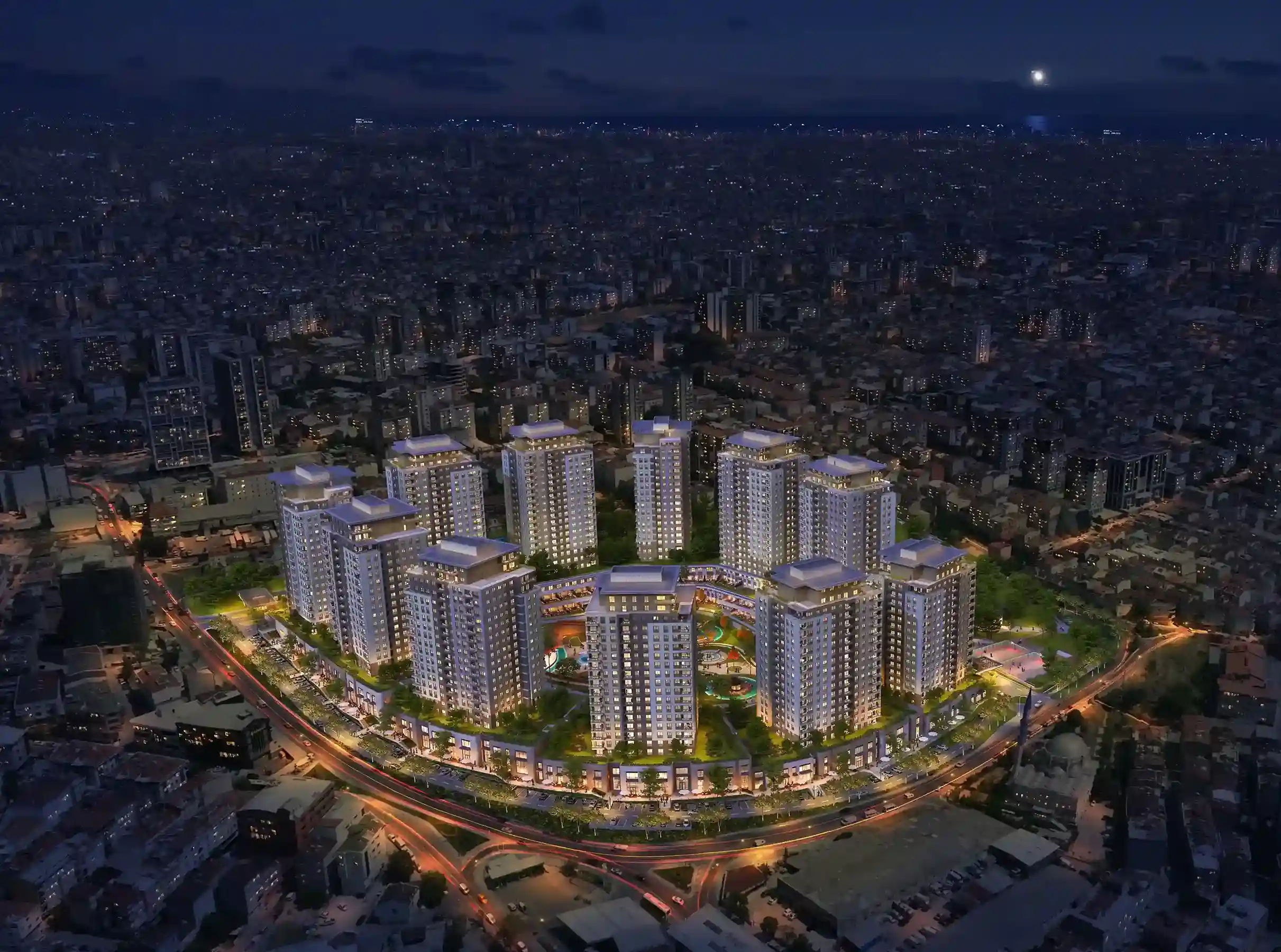
Inside Istanbul.
Construction Costs Continue Supporting Prices
One of the strongest long-term price support mechanisms in Turkey is construction inflation.
Developers continue facing:
- Higher labor costs
- Expensive raw materials
- Rising land prices
- Financing pressure
- Currency volatility
As a result, developers cannot easily reduce prices without damaging profitability.
This creates a natural floor underneath Turkish real estate prices.
The Difference Between TRY Prices and USD Prices
One of the biggest misconceptions in the Turkish market involves price analysis.
Property prices in Turkish Lira continue rising nominally.
However, inflation must always be considered.
A property may rise from:
- 10 million TRY
to: - 12 million TRY
…without experiencing significant real USD appreciation.
This is why professional investors analyze:
- USD-adjusted pricing
- Inflation-adjusted value
- Real purchasing power
Rather than relying only on nominal TRY figures.
Current Property Price Benchmarks in Turkey (2026)
| City | Average Mid-Tier Price per m² | Main Investment Drivers |
|---|---|---|
| Istanbul | $1,750 – $1,800 | International demand, mega projects |
| Ankara | $950 – $1,000 | Government economy, domestic growth |
| Antalya | $1,150 – $1,200 | Tourism demand, luxury coastal living |
| Izmir | $1,150 – $1,250 | Lifestyle migration, premium housing demand |
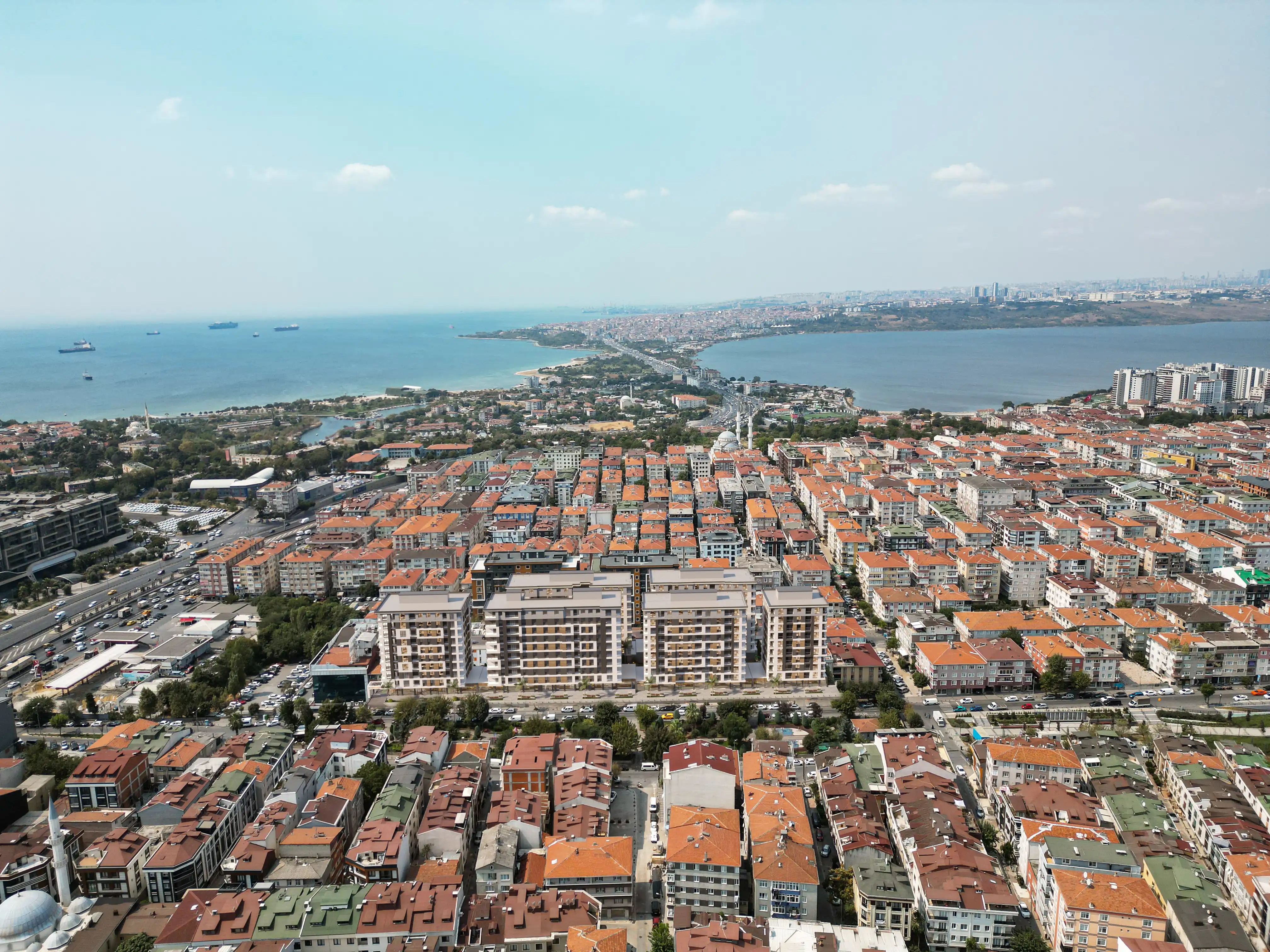
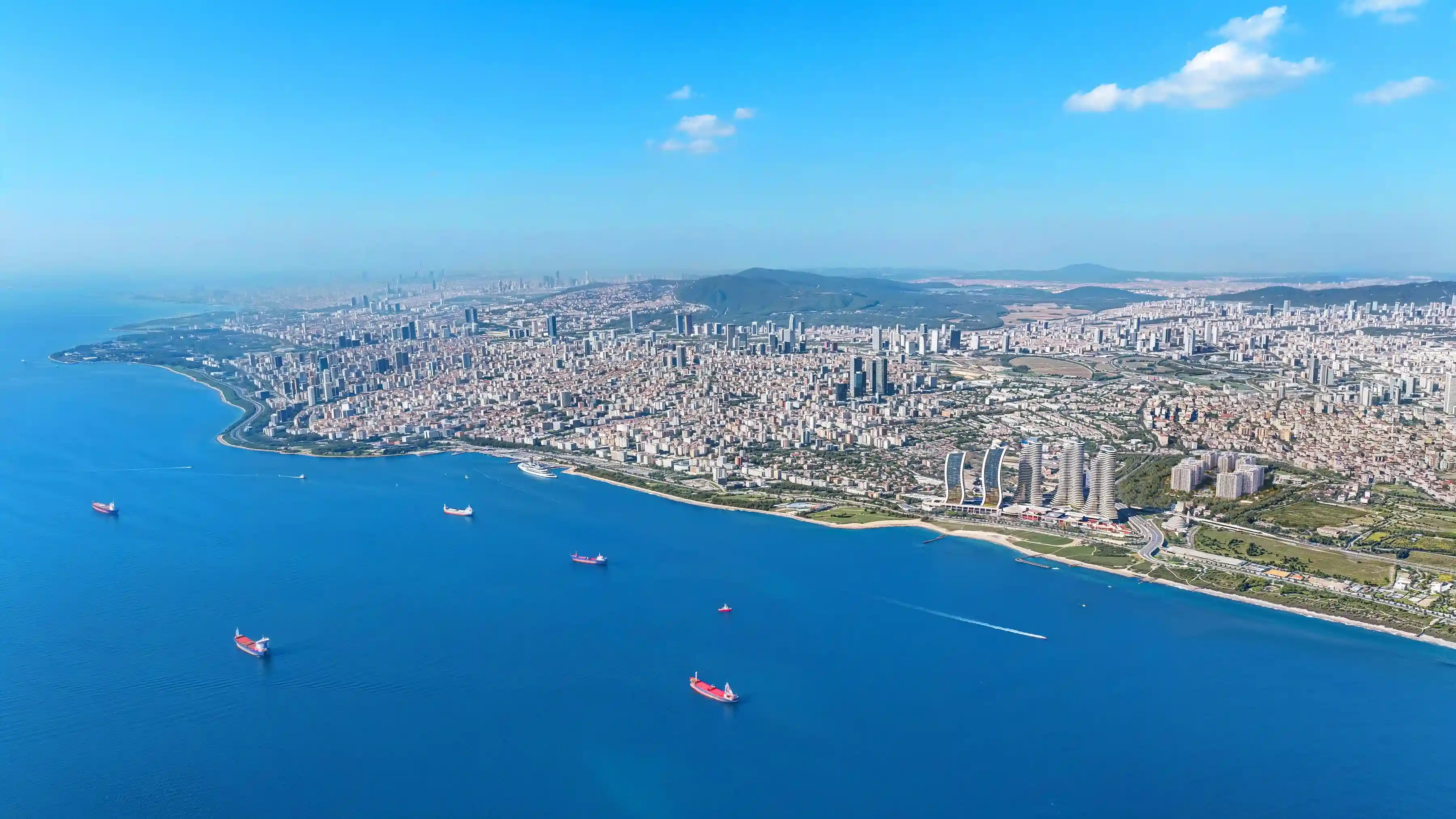
Istanbul Remains the Center of Turkish Real Estate
Despite market slowdowns, Istanbul continues dominating the Turkish property market.
The city benefits from:
- Continuous infrastructure expansion
- Metro investments
- Urban transformation
- Population growth
- Global investor demand
Key long-term growth districts include:
- Başakşehir
- Kağıthane
- Zeytinburnu
- Bahçeşehir
- Beylikdüzü
These areas continue attracting:
- Gulf investors
- Russian buyers
- International families
- Long-term rental investors
Antalya and Izmir Continue Benefiting From Lifestyle Demand
Antalya
Antalya remains one of Turkey’s strongest tourism-driven investment markets.
The city benefits from:
- Short-term rental demand
- Retirement migration
- Luxury tourism
- International buyers
Areas such as:
- Konyaaltı
- Lara
- Altıntaş
…continue attracting strong investor interest.
Izmir
Izmir is rapidly evolving into one of Turkey’s most desirable lifestyle cities.
The city attracts:
- Domestic migration
- Upper-middle-class buyers
- Seaside lifestyle investors
- Long-term residents seeking quality living
Strategic Investor Conclusion: Why the Current Window Matters
The current market environment may represent a rare strategic opportunity.
Today’s conditions offer:
- Stabilized USD pricing
- Flexible negotiations
- Reduced domestic competition
- Strong developer incentives
- Access to premium inventory
But this situation may not last long.
Once interest rates begin falling:
- Liquidity may rapidly exit banks
- Mortgage demand may return
- Pent-up demand may explode
- Property prices could rise sharply again
The smartest investors rarely buy during moments of market euphoria.
They buy during temporary quiet periods — before liquidity floods back into the market.
For investors researching:
- Real estate prices in Turkey
- Property investment in Turkey
- Turkey interest rates impact
- Istanbul property market trends
- Buying property in Turkey 2026
…the current stabilization phase may ultimately be remembered as one of the best entry opportunities before the next major real estate expansion cycle begins.




.jpeg)






Have Question Or Suggestion ?
Please Share Your Thought, To Make It Real