The importance of the Basin Express area
Basın Ekspres is transforming into Istanbul’s financial Wall Street. Discover why 2026 is the smartest time to invest in high-return hotel properties.
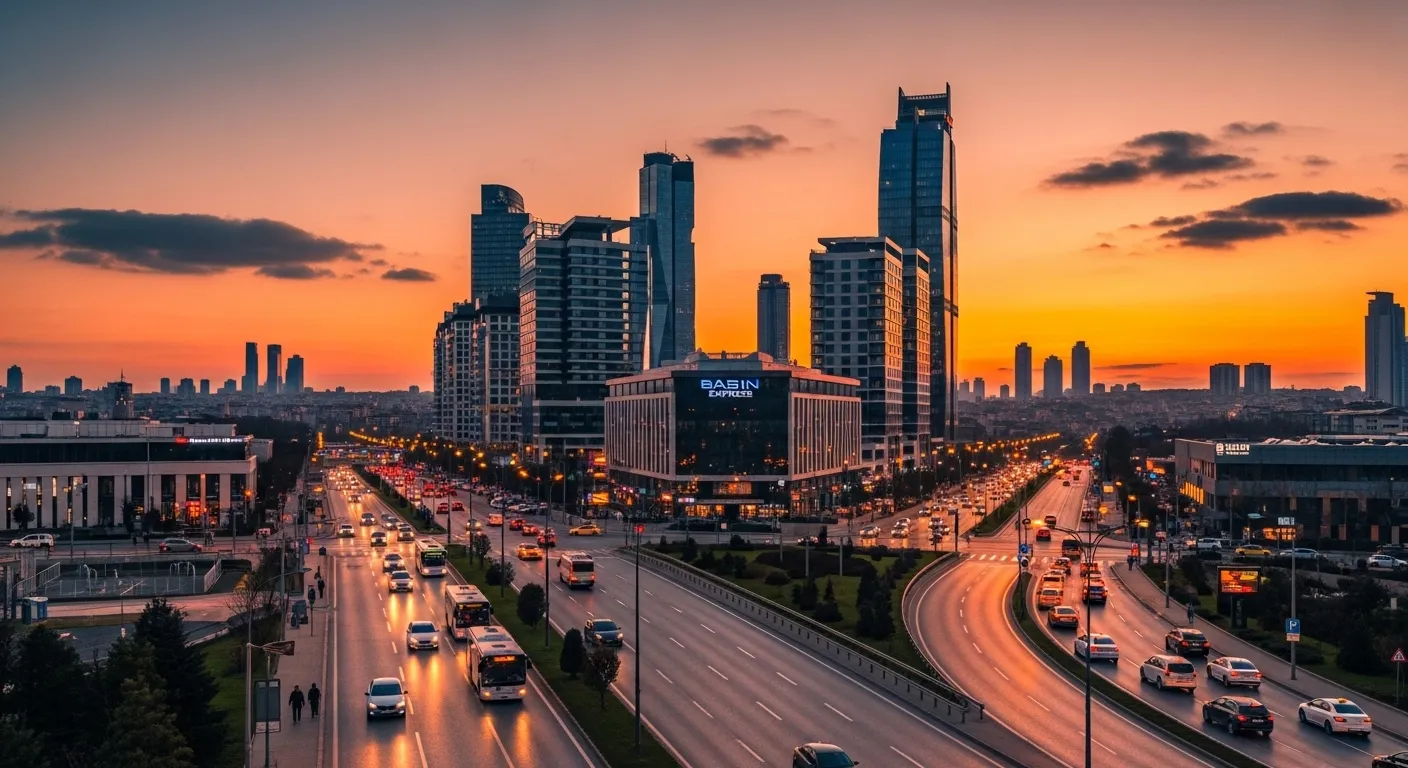
Basın Ekspres 2026: The Rising Wall Street of Istanbul and the Strongest Opportunity for Hotel Investment
Introduction: Why Basın Ekspres Is the Talk of 2026
If you’ve been watching Istanbul’s real estate market closely, you’ve probably heard one name over and over again: Basın Ekspres. It’s not just another developing district. It’s not just another construction story. By 2026, Basın Ekspres has transformed into something far more powerful — a financial corridor that investors now compare to Wall Street.
But what makes this area so special?
Let’s be honest. Istanbul has always been a magnet for investment. From historic Fatih to luxury Nişantaşı and booming Başakşehir, the city constantly reinvents itself. Yet Basın Ekspres stands out because of one simple truth: it sits at the intersection of business, transportation, and international mobility. That combination is rare. And when it appears, it usually signals opportunity.
In the past, Basın Ekspres was seen as an industrial transition zone. Warehouses, small factories, logistics centers — practical, but not glamorous. Fast forward to 2026, and the skyline tells a completely different story. Modern office towers. International hotel brands. Residential complexes with smart technology. Financial firms relocating their headquarters. The shift is dramatic.
So why are investors calling it the “strongest hotel investment opportunity” right now?
Because where business flows, hotels follow. And where global access improves, occupancy rates climb.
Basın Ekspres is no longer just a road connecting two highways. It’s a financial artery pumping capital into Istanbul’s European side. And smart investors? They’re paying attention before prices peak.
Let’s break down exactly why this district is becoming Istanbul’s rising Wall Street — and why 2026 might be your golden entry point.

The Strategic Location That Changed Everything
In real estate, you’ve heard it a thousand times: location is everything. But in Basın Ekspres, location isn’t just important — it’s transformational.
Picture this. You’re 25 minutes from Istanbul Airport, one of the busiest airports in the world. You’re directly connected to the TEM and E5 highways. You’re minutes away from business-heavy districts like Başakşehir, Küçükçekmece, and Bahçelievler. And you’re sitting between residential density and commercial expansion.
That’s not coincidence. That’s strategic positioning.
Basın Ekspres acts as a bridge. On one side, you have residential communities expanding rapidly. On the other, you have corporate zones demanding office space. Add Istanbul Airport into the mix, and suddenly this corridor becomes a magnet for international business travelers.
Think about how global investors think. They don’t just look for beauty. They look for movement — people, flights, conferences, trade, and commerce. Basın Ekspres delivers all of that.
For hotel investors, this means something crucial: consistent demand.
Unlike purely touristic areas that depend on seasonal travel, Basın Ekspres benefits from year-round business activity. Meetings don’t stop in winter. Corporate travel doesn’t disappear in low season. Trade fairs, medical tourism visits, and international business trips create a steady occupancy flow.
And here’s the kicker: land prices in 2026 are still significantly lower than central financial districts like Levent or Maslak. That gap creates opportunity. When infrastructure matures, price convergence usually follows.
So the question becomes simple: invest before the full maturity phase, or chase the market once it’s saturated?
Basın Ekspres offers something rare — central connectivity without central pricing.
That’s the formula smart investors look for.
From Industrial Zone to Financial Powerhouse
Not long ago, Basın Ekspres was not glamorous. Trucks moved goods. Warehouses dominated the landscape. It was practical, functional, and largely overlooked by premium developers.
But cities evolve. And Istanbul evolves fast.
Urban transformation projects reshaped the corridor step by step. Old industrial plots were re-zoned. Large land parcels allowed for high-rise developments. Mixed-use projects began replacing factories. Slowly, but steadily, the skyline changed.
Developers saw potential where others saw old infrastructure.
Why? Because large-scale transformation is easier when land is consolidated. Unlike historic districts with fragmented ownership, Basın Ekspres had the advantage of scale. That allowed developers to think big — business centers, five-star hotels, smart residences, shopping areas — all integrated into master-planned complexes.
By 2026, global hotel brands entered the scene. International chains recognized the proximity to Istanbul Airport. Financial companies began relocating back-office operations. Conference centers started attracting regional events.
Momentum builds in waves. First come the developers. Then the corporations. Then the service industries. Finally, the capital appreciation.
Basın Ekspres is currently riding the third wave — and that’s exactly where hotel investors thrive.
Why hotels specifically?
Because hotels are leverage points. They benefit from every economic activity in the area — offices, medical centers, exhibitions, airport traffic, and even residential visitors.
The transformation from industrial zone to financial corridor wasn’t accidental. It was strategic, supported by zoning changes, infrastructure expansion, and investor confidence.
And history teaches us something important: when an area successfully transitions from industry to finance, property values rarely go backward.
Basın Ekspres is no longer a support district.
It’s becoming a destination.
Why It’s Called “The Wall Street of Istanbul”
The nickname didn’t appear randomly. Calling Basın Ekspres the “Wall Street of Istanbul” reflects a deeper economic shift happening in the city’s European corridor.
Traditionally, Istanbul’s financial power centered around Levent and Maslak. High-rise towers. Banking headquarters. Corporate prestige. But congestion, rising land costs, and limited expansion space created pressure.
Businesses began searching for alternatives.
Basın Ekspres offered exactly that: expansion capacity, modern planning, and proximity to the airport. For multinational companies, being closer to international access points makes operational sense. Time is money. And cutting travel time between airport and headquarters is a competitive advantage.
Gradually, financial firms, insurance companies, and tech startups began relocating offices here. Co-working spaces multiplied. Conference facilities expanded. Corporate branding followed.
This is how financial districts are born.
They don’t happen overnight. They grow when infrastructure, accessibility, and corporate migration intersect.
By 2026, Basın Ekspres has reached critical mass. When multiple corporate towers operate within walking distance of international hotels, you create a self-sustaining ecosystem. Employees need accommodation for visiting executives. Events require nearby hotel capacity. Business dinners fuel local commerce.
It becomes a cycle.
And where financial ecosystems develop, hotel investments gain stability.
Wall Street isn’t powerful because of buildings. It’s powerful because of concentration — concentrated capital, concentrated companies, concentrated activity.
Basın Ekspres is building that concentration.
For investors, that signals long-term durability rather than short-term hype.
And in real estate, durability is everything.

Infrastructure Projects Fueling the 2026 Boom
If real estate growth were a fire, infrastructure would be the fuel — and in Basın Ekspres, the fuel is being poured generously. The transformation we’re witnessing in 2026 didn’t happen by accident. It’s the result of deliberate infrastructure planning that turned a simple connecting road into a strategic economic corridor.
Let’s start with the basics. Major road expansions have improved traffic flow along the Basın Ekspres axis, connecting it seamlessly to the TEM and E5 highways. That alone dramatically increased accessibility. But it didn’t stop there. The government and private sector pushed forward with mixed-use mega projects that combine office spaces, residences, retail centers, and hotels under one roof. These integrated developments create self-sustaining ecosystems — live, work, stay, and shop all within walking distance.
And here’s the interesting part: infrastructure attracts infrastructure. Once the first wave of corporate projects was completed, more followed. Banks need branches. Tech firms need office clusters. Restaurants follow employees. Retail follows foot traffic. It’s a domino effect.
Large-scale conference centers and exhibition areas in nearby districts also play a massive role. International events now spill over into Basın Ekspres hotels due to capacity and convenience. When occupancy in central Istanbul peaks, this corridor absorbs the overflow — and increasingly becomes the first choice rather than the backup.
Utility upgrades have also modernized the district. Smart grids, fiber-optic networks, and energy-efficient building standards make the area future-ready. Investors aren’t just buying square meters; they’re buying into a long-term urban vision.
Think of it this way: infrastructure reduces risk. The more connected and supported an area is, the less likely it is to stagnate. Basın Ekspres in 2026 is no longer speculative growth — it’s structured expansion backed by concrete projects.
For hotel investors, that stability translates into predictable demand and sustained capital appreciation.
The Role of Istanbul Airport in Driving Demand
Now let’s talk about the game-changer: Istanbul Airport.
Airports don’t just move passengers — they move economies. And Istanbul Airport, being one of the largest and busiest in the world, acts like a global magnet pulling business activity toward its orbit. Basın Ekspres sits perfectly within that orbit.
Imagine you’re a business traveler landing after a long international flight. Would you rather stay 60 minutes away in the old city traffic, or 20–25 minutes from the airport in a modern business district? The answer is obvious.
Proximity to the airport gives Basın Ekspres a massive competitive advantage in the hotel sector. Transit passengers, airline crews, business delegations, and corporate executives all seek convenience. Time saved on travel translates into productivity.
Air cargo operations also drive corporate presence in nearby zones. Logistics firms, exporters, and international trade companies establish offices near airport corridors. Their partners, consultants, and executives need accommodation — consistently.
Unlike tourism-driven areas that depend heavily on seasons, airport-driven districts maintain year-round activity. Flights operate daily. Business contracts continue regardless of summer or winter. That means stable hotel occupancy.
Here’s a simple breakdown of airport-driven hotel advantages:
| Factor | Impact on Hotels |
|---|---|
| Proximity to airport | Higher occupancy from transit guests |
| Airline crew contracts | Long-term stable bookings |
| International business travel | Premium room demand |
| Trade & logistics companies | Corporate stay agreements |
Basın Ekspres benefits from all of these.
Airports create gravitational pull. Basın Ekspres sits right within that field. And as long as Istanbul Airport continues expanding its global routes, hotel demand in nearby business corridors will only strengthen.
Metro Lines and Transportation Advantages
Road access is powerful — but rail connectivity changes the game entirely.
By 2026, metro expansions connecting Basın Ekspres to other major Istanbul districts significantly boosted its attractiveness. Easy metro access means employees can commute efficiently. Visitors can navigate without relying solely on cars. And corporate tenants value districts where transportation is simple and predictable.
Transportation isn’t just convenience; it’s economic leverage.
When a district becomes reachable from multiple directions — airport, highways, metro — it multiplies its investment appeal. Basın Ekspres now acts as a node in Istanbul’s transport web rather than a side corridor.
Let’s think practically. A business executive can:
- Land at Istanbul Airport
- Reach Basın Ekspres hotel quickly
- Attend meetings in nearby business towers
- Take the metro to central districts if needed
- Return without fighting extreme congestion
- That efficiency matters.
Transportation diversity also future-proofs investments. If traffic increases over time, metro systems maintain accessibility. That protects long-term property values.
For hotels, metro access expands the customer base. It’s not just airport travelers anymore. It’s conference attendees, corporate staff from other districts, even domestic travelers who prioritize convenience.
Connectivity equals resilience.
And in real estate, resilient districts outperform trendy ones over time.
Government Incentives and Urban Transformation
Behind every successful investment zone, there’s usually strategic policy support. Basın Ekspres is no exception.
Urban transformation initiatives encouraged redevelopment of outdated industrial properties into modern mixed-use complexes. Zoning flexibility allowed higher building ratios, enabling developers to maximize land efficiency. That attracted serious capital players rather than small-scale speculative builders.
Government-backed investment incentives further supported commercial and hospitality development. These included tax advantages in certain cases, simplified licensing processes, and infrastructure prioritization.
Urban transformation also improves perception. When an area transitions from aging industrial visuals to sleek glass towers and organized urban planning, investor psychology shifts. Confidence grows.
And confidence drives capital.
Another important aspect is regulatory clarity. Investors prefer environments where legal processes are transparent. Basın Ekspres, being a newly structured business corridor, benefits from modern planning frameworks compared to older districts with complex ownership histories.
Urban transformation is not just physical — it’s psychological. It signals momentum, modernization, and forward planning.
For hotel investors, that means:
- Newer building standards
- Energy-efficient construction
- Modern amenities demanded by international brands
- Higher room pricing potential
Transformation zones often deliver the strongest capital appreciation during their growth cycle. Basın Ekspres is currently in that expansion window.
And historically, entering during transformation — not after completion — generates the highest returns.
The Growing Demand for Hotel Investments
So why are hotel investments specifically dominating conversations in Basın Ekspres?
Simple: demand diversification.
Unlike purely touristic areas, Basın Ekspres serves multiple visitor profiles:
- Business travelers
- Airline crews
- Medical tourists
- Conference participants
- Corporate consultants
- Transit passengers
When demand comes from multiple streams, risk decreases. If tourism slows temporarily, corporate stays continue. If business travel dips, medical tourism often remains stable. Diversification strengthens occupancy.
Another major factor is limited high-quality supply relative to projected demand. As more corporate offices open, accommodation capacity must expand proportionally. Early hotel investors secure prime positioning before saturation.
Hotel investments here often operate under international brands, enhancing credibility and attracting global booking networks. Brand affiliation increases average daily rates and occupancy reliability.
Let’s compare general investment types in Basın Ekspres:
| Investment Type | Risk Level | Return Potential | Liquidity |
|---|---|---|---|
| Residential | Moderate | Medium | High |
| Office | Moderate-High | Medium-High | Moderate |
| Hotel | Moderate | High | High (with brand backing) |
Hotels combine operational income with property appreciation — a double advantage.
In 2026, Basın Ekspres sits at the intersection of growth, accessibility, and business density. That combination naturally favors hospitality investments.
The opportunity isn’t just about buying property.
It’s about positioning within a rising financial ecosystem before full price maturity arrives.
Business Tourism: The Hidden Goldmine
When people think about Istanbul tourism, they usually imagine the Hagia Sophia, the Bosphorus, or the Grand Bazaar. But here’s the truth most investors overlook: business tourism quietly generates more consistent revenue than leisure tourism. And Basın Ekspres is positioned right at the center of this hidden goldmine.
Let’s break it down. Leisure tourism is seasonal. It peaks in summer, slows in winter, fluctuates with global travel trends. Business tourism, on the other hand, operates year-round. Meetings don’t wait for sunny weather. Conferences don’t cancel because it’s February. Corporate travel runs on schedules, contracts, and performance targets.
Basın Ekspres has become a natural base for business travelers because of its proximity to:
- Major corporate headquarters
- Exhibition and trade centers
- Istanbul Airport
- Financial and tech offices
Now imagine a multinational company hosting a three-day conference. They need meeting rooms, accommodation, catering, and transport convenience. Hotels in Basın Ekspres offer exactly that — often within walking distance of office towers.
Here’s what makes business tourism particularly attractive for hotel investors:
| Advantage | Why It Matters |
|---|---|
| Longer average stays | Higher revenue per guest |
| Corporate contracts | Predictable occupancy |
| Higher daily rates | Business travelers pay premium prices |
| Repeat visits | Long-term loyalty |
Corporate agreements can lock in room allocations for months or even years. That stability protects hotel investors from volatility.
And there’s another detail: business travelers typically spend more. They book executive rooms. They use meeting facilities. They order room service. They host dinners. Revenue per guest rises beyond just the room rate.
Basın Ekspres, being labeled the “Wall Street of Istanbul,” naturally attracts this segment. As more financial and tech companies relocate here, business travel demand compounds.
It’s like planting a tree that keeps bearing fruit every season — not just summer.
Medical Tourism and International Visitors
Now let’s talk about another powerful driver: medical tourism.
Turkey has become one of the world’s leading destinations for medical procedures — from cosmetic surgery to dental treatments, hair transplants, and complex surgeries. International patients arrive daily, often accompanied by family members. And guess what they need? Comfortable, convenient accommodation.
Basın Ekspres benefits from its proximity to major private hospitals and medical centers in the European side of Istanbul. Patients prefer staying close to both the airport and healthcare facilities. Recovery requires comfort, quiet, and accessibility — exactly what modern hotels in this district provide.
Medical tourists often stay longer than leisure tourists. Some remain for 7 to 14 days depending on the procedure. That extended stay translates directly into higher occupancy rates.
Additionally, many medical travel agencies partner with hotels, creating bundled packages. These agreements bring consistent bookings — another layer of stability for investors.
Consider the psychology of medical travelers:
- They prioritize cleanliness and comfort.
- They value proximity to hospitals.
- They often book mid-to-high-range hotels.
- They travel year-round.
Unlike traditional tourism markets that fluctuate with global events, medical tourism tends to remain resilient. Health needs don’t pause.
Basın Ekspres offers the logistical sweet spot: near the airport for international patients, near hospitals for treatment, and away from heavy tourist congestion.
That combination strengthens the hotel sector’s performance in ways many investors underestimate.
When you combine business tourism with medical tourism, you get a powerful hybrid demand model — diversified, stable, and growing.
Comparing Basın Ekspres to Other Istanbul Investment Zones
Let’s be honest. Istanbul has multiple attractive investment districts. So why not Levent? Why not Maslak? Why not Taksim or Şişli?
The answer comes down to entry price versus growth potential.
Levent and Maslak are already mature financial centers. Prices are high. Growth is steady but slower. Entry barriers are significant. It’s like buying property in Manhattan — prestigious, yes, but limited upside compared to emerging districts.
Taksim and historical zones rely heavily on leisure tourism. While iconic, they face congestion, preservation restrictions, and seasonal performance fluctuations.
Basın Ekspres, on the other hand, is still in expansion mode.
Let’s compare key factors:
| District | Price Level | Growth Potential | Airport Proximity | Business Density |
|---|---|---|---|---|
| Levent | Very High | Moderate | Moderate | High |
| Maslak | High | Moderate | Moderate | High |
| Taksim | High | Low-Moderate | Low | Moderate |
| Basın Ekspres | Medium | High | High | Rapidly Increasing |
This table reveals something important. Basın Ekspres combines mid-level entry pricing with high growth potential — a rare mix.
Investors who enter mature markets often aim for stability. Investors who enter rising corridors aim for appreciation.
Basın Ekspres offers both — early-stage appreciation with growing stability.
Think of it like buying into a tech startup that has already proven its model but hasn’t fully scaled yet.
That’s the sweet spot.
ROI Expectations for 2026 and Beyond
Let’s talk numbers — because at the end of the day, investment decisions revolve around returns.
Hotel investments in emerging business corridors typically generate returns from two channels:
- Operational income (room revenue)
- Capital appreciation (property value growth)
- In Basın Ekspres, both channels are active.
With rising corporate presence and airport traffic, occupancy rates remain competitive. Branded hotels often achieve strong average daily rates compared to residential rental yields.
Meanwhile, property values continue appreciating as infrastructure completes and corporate density increases.
Historically, areas undergoing transformation experience accelerated price growth during their expansion phase. Basın Ekspres is currently in that upward trajectory.
Investors entering in 2026 position themselves before full market saturation. Once the corridor reaches maturity — similar to Levent — price acceleration slows.
Timing matters.
Another advantage? Currency dynamics. International investors often find Istanbul’s real estate comparatively affordable when measured against global financial centers. That affordability enhances ROI potential.
Of course, returns vary depending on:
- Brand affiliation
- Hotel management quality
- Unit size
- Purchase price timing
But the underlying fundamentals — airport proximity, financial district growth, diversified tourism demand — create a favorable ROI environment.
In simple terms: you’re investing in momentum, not speculation.
And momentum, when supported by infrastructure and corporate migration, tends to compound.
Risks, Challenges, and How to Navigate Them
No investment is risk-free. Let’s address reality.
Rapid development can lead to oversupply if not managed carefully. Investors must evaluate project quality rather than blindly follow hype.
Another consideration is macroeconomic fluctuation. Currency movements, global travel patterns, and economic cycles affect hospitality markets worldwide.
However, diversification in Basın Ekspres reduces exposure. Business, medical, and transit tourism provide balance.
Smart navigation strategies include:
- Choosing internationally recognized hotel brands
- Evaluating management agreements carefully
- Prioritizing projects near metro access
- Analyzing long-term corporate tenancy growth
- Due diligence matters more than excitement.
But here’s the difference between risky and strategic growth: infrastructure-backed expansion reduces long-term uncertainty.
Basın Ekspres isn’t growing randomly. It’s growing structurally.
Investors who conduct proper analysis and enter quality projects mitigate most risks associated with emerging districts.
And remember — the biggest risk in real estate is often waiting too long.
Luxury Hotels vs. Business Hotels: Which Wins in Basın Ekspres?
Here’s a question smart investors always ask: should you invest in a luxury five-star hotel, or is a business-focused hotel the smarter move in Basın Ekspres?
At first glance, luxury sounds attractive. Marble lobbies, rooftop lounges, spa facilities — it feels prestigious. But let’s pause for a second. What does the district actually demand?
Basın Ekspres is primarily a business-driven corridor. Yes, it attracts international visitors and medical tourists, but its core energy revolves around corporate offices, conferences, airport transit, and financial institutions. That naturally favors business hotels.
Business hotels focus on:
- Functional, comfortable rooms
- Fast Wi-Fi and workspaces
- Meeting rooms and conference halls
- Quick airport access
- Efficient check-in and check-out
They operate like precision machines — designed for productivity rather than vacation indulgence.
Luxury hotels, on the other hand, depend more heavily on leisure tourism and high-spending guests. While they can perform well, they may face stronger seasonality compared to business-focused properties in this district.
Let’s compare both models:
| Criteria | Luxury Hotel | Business Hotel |
|---|---|---|
| Target Audience | Leisure + VIP guests | Corporate + Transit |
| Seasonality | Moderate-High | Low |
| Average Stay | Short leisure trips | 2–4 days (business trips) |
| Occupancy Stability | Variable | More Consistent |
| Operational Cost | Higher | Moderate |
In Basın Ekspres, stability wins.
That doesn’t mean luxury won’t succeed — especially if positioned strategically near high-end corporate towers. But historically, airport-adjacent financial districts perform strongest with upper mid-scale and business-class hotel models.
Think of it this way: Basın Ekspres is more Manhattan Midtown than Miami Beach.
Investors seeking predictable cash flow often lean toward business-oriented brands with strong corporate booking networks. They benefit from long-term agreements with airlines, multinational companies, and event organizers.
The winner? In 2026, business hotels hold the edge — but smart positioning always matters more than labels.
Short-Term vs. Long-Term Investment Strategies
Another critical decision: are you entering Basın Ekspres for short-term gains or long-term wealth building?
Short-term investors often aim to purchase during construction and resell after project completion. In a fast-growing corridor like Basın Ekspres, this can generate capital appreciation if timed correctly. As infrastructure develops and demand rises, early buyers may benefit from price increases before full maturity.
However, short-term strategies depend heavily on market timing and liquidity conditions.
Long-term investors, on the other hand, focus on operational income and sustained appreciation. In hotel investments, this means benefiting from:
- Annual rental yields
- Revenue-sharing agreements
- Gradual property value growth
- Inflation-adjusted room pricing
Given Basın Ekspres’s ongoing corporate expansion and airport-driven activity, long-term strategies often provide stronger risk-adjusted returns.
Let’s break it down clearly:
| Strategy | Advantage | Risk Level |
|---|---|---|
| Short-Term Flip | Quick capital gain | Higher (market timing sensitive) |
| Long-Term Hold | Stable income + appreciation | Moderate |
| Hybrid Approach | Partial resale + income | Balanced |
In a developing financial district, long-term positioning aligns with structural growth. As more companies relocate and transportation networks mature, the district strengthens gradually.
It’s like planting an orchard instead of trading fruit at the market.
Yes, short-term profit is possible. But long-term ownership in a rising financial corridor often builds deeper wealth.
Timing your entry in 2026 means you’re stepping in before full saturation — a strong foundation for either strategy, but especially for long-term income-focused investors.
Real Case Studies of Successful Investors
Let’s move from theory to reality.
Over the past few years, early investors who entered Basın Ekspres during its transformation phase have already experienced notable appreciation. Developers who secured large land parcels when the area was still transitioning from industrial use witnessed significant valuation growth as zoning improved and corporate tenants moved in.
Hotel investors who partnered with international brands benefited from:
- Pre-agreed occupancy contracts
- Airline crew accommodation deals
- Corporate booking partnerships
One mid-scale international hotel chain reported consistently strong occupancy due to its airport proximity and corporate agreements. Even during slower tourism months, business travel maintained revenue flow.
Another example includes mixed-use developments combining office towers and hotel units within the same complex. This vertical integration creates built-in demand — office visitors stay in the adjacent hotel, conferences use in-house facilities, restaurants serve both residents and travelers.
The pattern is clear: early movers benefited most.
Common traits among successful investors include:
- Entering during construction phase
- Selecting projects near metro access
- Choosing reputable developers
- Aligning with established hotel brands
They didn’t speculate blindly. They analyzed infrastructure trends, airport growth data, and corporate relocation patterns.
The takeaway? Basın Ekspres rewards informed decisions, not impulsive enthusiasm.
And as 2026 progresses, new opportunities still exist — but entry prices gradually reflect rising confidence.
The window isn’t closed.
But it’s narrowing.
Future Projections: What Will 2030 Look Like?
Fast forward to 2030. What does Basın Ekspres look like?
If current growth trajectories continue, the corridor will likely solidify its reputation as Istanbul’s secondary financial hub alongside Levent and Maslak — but with stronger airport integration.
By 2030, we can reasonably expect:
- Higher corporate density
- Expanded metro connectivity
- Increased international brand presence
- Mature mixed-use communities
- Stabilized but higher property valuations
As more global firms establish regional offices in Istanbul, proximity to the airport will remain strategically valuable. That alone supports long-term hospitality demand.
Urban transformation projects will likely be completed by then, reducing speculative volatility. Property prices may rise steadily but at a slower pace once maturity is reached.
That’s why 2026 matters.
Investing before full maturity allows participation in the steepest part of the appreciation curve. Waiting until 2030 may offer stability — but at a higher entry cost.
Imagine looking back and realizing prices doubled while you hesitated. Real estate history in Istanbul shows that major infrastructure corridors rarely remain undervalued once fully developed.
Basın Ekspres is currently in transition — not infancy, not saturation.
That in-between stage is where opportunity lives.
Why 2026 Is the Critical Entry Point
Timing in real estate isn’t about guessing — it’s about recognizing cycles.
Basın Ekspres in 2026 stands at a powerful intersection:
- Infrastructure largely operational
- Corporate migration accelerating
- Hotel demand diversified
- Prices not yet at peak maturity
This is what investors call a growth equilibrium phase — when risk decreases but appreciation potential remains strong.
Enter too early, and uncertainty dominates. Enter too late, and profit margins shrink.
2026 sits comfortably in the middle.
Airport expansion continues. Financial institutions expand their footprint. Metro connectivity improves accessibility. International interest increases.
The ingredients are aligned.
It’s similar to investing in Canary Wharf before it fully matured in London — when cranes still dotted the skyline but the financial shift was already evident.
Basın Ekspres is no longer speculative land. It’s structured growth backed by infrastructure and corporate presence.
And structured growth creates durable investment narratives.
Conclusion: Is Basın Ekspres the Smartest Move Today?
So, is Basın Ekspres truly the rising Wall Street of Istanbul?
All indicators suggest it’s moving decisively in that direction.
It combines airport proximity, corporate density, urban transformation, diversified tourism demand, and competitive entry pricing. Few districts offer that mix simultaneously.
Hotel investment stands out because it leverages every growth engine operating in the corridor — business travel, medical tourism, conferences, airline transit, and financial sector expansion.
No investment is without risk. But Basın Ekspres in 2026 reflects strategic urban planning rather than speculative hype.
It’s not just a road anymore.
It’s a financial artery connecting global movement with local opportunity.
For investors seeking a blend of stability, appreciation, and operational income, this corridor presents one of Istanbul’s strongest emerging cases.
The question isn’t whether Basın Ekspres is growing.
The question is whether you enter before or after it fully arrives.
FAQs
1. Why is Basın Ekspres called the Wall Street of Istanbul?
Because of its growing concentration of financial institutions, corporate headquarters, and business towers, combined with strategic airport proximity and infrastructure development.
2. Is hotel investment safer than residential investment in this area?
Hotel investments benefit from diversified demand (business, medical, transit travelers), which can provide more stable income compared to purely residential rentals.
3. How does Istanbul Airport impact property values in Basın Ekspres?
Proximity to a major international airport increases business activity, corporate presence, and year-round hotel demand, supporting both occupancy and capital appreciation.
4. Are there risks of oversupply in the hotel market?
Like any growing district, oversupply is possible, but strong corporate and airport-driven demand helps absorb capacity when projects are strategically positioned.
5. What makes 2026 an ideal entry point?
Infrastructure is largely complete, corporate migration is accelerating, and prices have not yet reached full maturity levels expected in the coming years.
Have Question Or Suggestion ?
Please Share Your Thought, To Make It Real