Learn about the most famous historical places in Istanbul
Explore Istanbul’s most famous historical landmarks, from Hagia Sophia and Topkapi Palace to the Blue Mosque and Grand Bazaar.
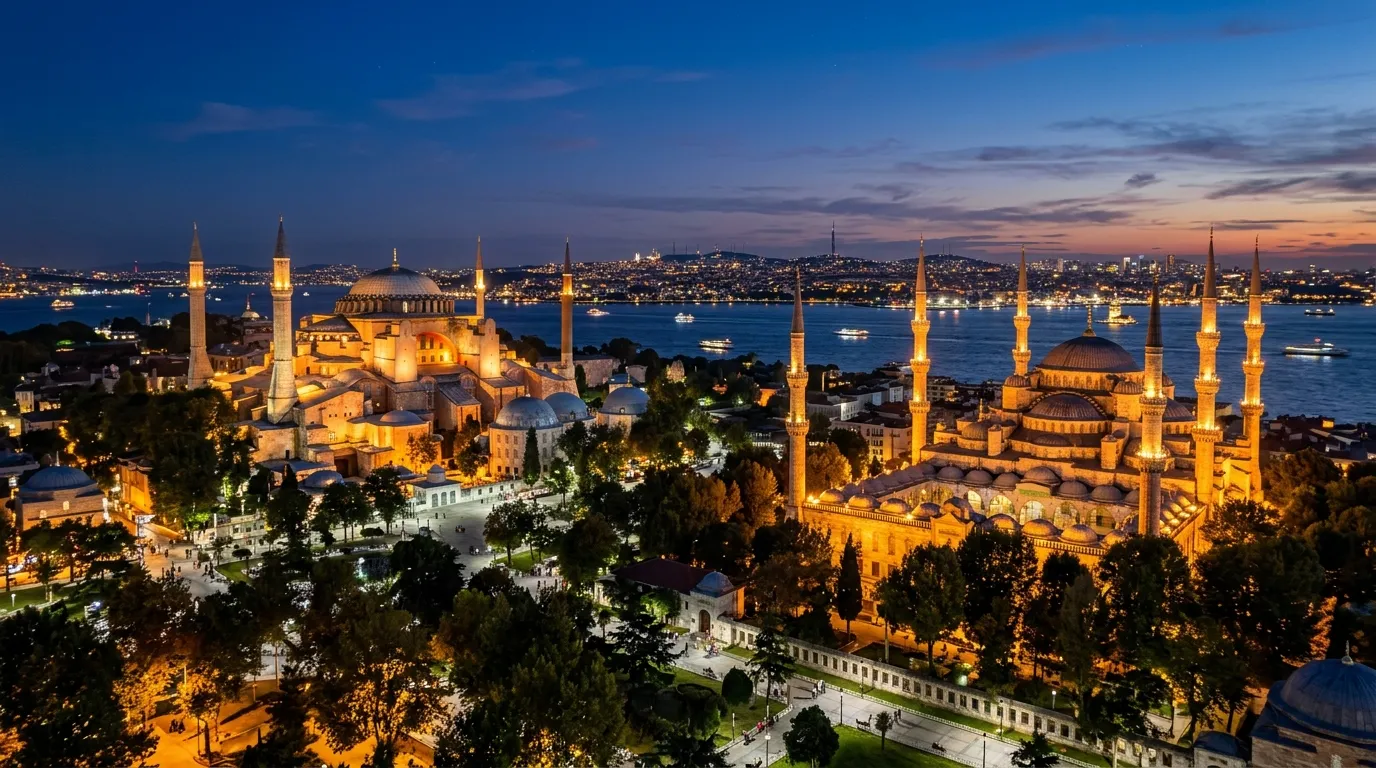
Learn About the Most Famous Historical Places in Istanbul
Istanbul is one of the most fascinating cities in the world, a place where history is not confined to museums but lives in the streets, buildings, and daily traditions of its people. For more than two thousand years, this remarkable city has stood at the crossroads of civilizations, connecting Europe and Asia through its strategic position on the Bosporus Strait. Once known as Byzantium and later Constantinople, Istanbul served as the capital of the Roman, Byzantine, and Ottoman Empires, making it one of the most historically significant cities ever created. Today, millions of visitors travel to Istanbul each year to explore its magnificent monuments, ancient palaces, grand mosques, and bustling markets.
What makes Istanbul unique is the way different eras coexist within the same urban landscape. Byzantine churches stand alongside Ottoman mosques, Roman engineering marvels remain visible beneath modern streets, and centuries-old marketplaces continue to thrive in the heart of the city. Every landmark tells a story of conquest, faith, culture, and innovation. Whether you are a history enthusiast, a cultural traveler, or simply someone who appreciates beautiful architecture, Istanbul offers an unforgettable journey through time.
Why Istanbul Is a Historical Treasure
Few cities in the world possess a historical legacy as rich and diverse as Istanbul. Its strategic location made it one of the most coveted cities in history, attracting rulers, merchants, scholars, and explorers from across continents. Because of its position between Europe and Asia, Istanbul became a center of commerce, diplomacy, and cultural exchange. Goods from the Silk Road passed through its ports, while ideas from different civilizations influenced its art, architecture, and traditions.
The city's historical significance grew even further when Emperor Constantine the Great established Constantinople as the capital of the Eastern Roman Empire in 330 CE. For centuries, it became one of the most powerful cities in the Christian world. Following the Ottoman conquest in 1453, Istanbul entered a new era of prosperity and transformation. Magnificent mosques, palaces, schools, and public works reshaped the city, many of which remain standing today.
UNESCO has recognized several parts of Istanbul as World Heritage Sites due to their exceptional cultural value. The city's monuments represent some of humanity's greatest architectural achievements and continue to inspire visitors from around the globe. Exploring Istanbul is like walking through a living history book where every corner reveals another chapter of the past.
Hagia Sophia: The Crown Jewel of Istanbul
Among all of Istanbul's historical landmarks, Hagia Sophia stands as the most iconic. Completed in 537 CE during the reign of Byzantine Emperor Justinian I, it was originally built as a Christian cathedral and remained the largest cathedral in the world for nearly a thousand years. At the time of its construction, its massive dome represented a revolutionary engineering achievement that astonished visitors and influenced architectural design for centuries.
The interior of Hagia Sophia is breathtaking. Massive marble columns support soaring arches, while golden mosaics depict religious figures and scenes from Byzantine Christianity. Following the Ottoman conquest of Constantinople, the building was converted into a mosque. Islamic calligraphy, mihrabs, and minarets were added while many of the original Byzantine features were preserved.
This blend of Christian and Islamic artistic traditions makes Hagia Sophia unique among the world's great monuments. In 1935 it became a museum, and in 2020 it was reconverted into a mosque while remaining open to visitors. Today, it serves as a symbol of Istanbul's complex history and cultural diversity.
Standing beneath its enormous dome, visitors often experience a sense of awe that transcends religious and cultural boundaries. Hagia Sophia is not merely a building; it is a testament to human creativity, faith, and resilience across nearly fifteen centuries of history.
The Blue Mosque: A Masterpiece of Ottoman Architecture
Directly facing Hagia Sophia stands the magnificent Blue Mosque, officially known as the Sultan Ahmed Mosque. Constructed between 1609 and 1616 during the reign of Sultan Ahmed I, it represents one of the finest achievements of Ottoman architecture. Its elegant silhouette, featuring cascading domes and six towering minarets, dominates Istanbul's skyline and has become one of the city's most recognizable symbols.
The mosque is famous for the more than 20,000 handmade blue İznik tiles that decorate its interior. These tiles feature intricate floral patterns and vibrant colors that create a stunning visual effect when illuminated by natural sunlight streaming through hundreds of windows. The result is a serene and majestic atmosphere that leaves a lasting impression on visitors.
Beyond its beauty, the Blue Mosque remains an active place of worship. Every day, worshippers gather beneath its grand dome while tourists from around the world come to admire its architectural splendor. This dual role as both a functioning mosque and a historical landmark highlights Istanbul's ability to preserve its heritage while remaining a living city.
The mosque's six minarets also have an interesting history. According to popular tradition, their number sparked controversy because the Grand Mosque in Mecca had the same number at the time. Whether legend or fact, the story adds another layer of fascination to this extraordinary monument.
Topkapi Palace: The Center of Ottoman Power
For nearly four centuries, Topkapi Palace served as the residence of Ottoman sultans and the administrative center of one of the world's most powerful empires. Built shortly after the Ottoman conquest of Constantinople, the palace complex overlooks the Bosporus and offers spectacular views of the surrounding waterways.
Unlike European royal palaces, Topkapi consists of multiple courtyards, gardens, pavilions, and administrative buildings connected through a carefully planned layout. Each section served a specific purpose, from conducting government affairs to housing the imperial family. The palace reflects the sophistication and complexity of Ottoman governance.
One of the highlights of Topkapi Palace is the Imperial Treasury, which contains priceless jewels, ceremonial weapons, and luxurious artifacts. Visitors are often captivated by the famous Topkapi Dagger and the dazzling Spoonmaker's Diamond, one of the largest diamonds in the world.
Another important attraction is the Sacred Relics Chamber, where items associated with Islamic history are preserved. These relics make the palace an important destination for both historians and religious visitors. Exploring Topkapi provides a fascinating glimpse into the daily lives, political power, and cultural achievements of the Ottoman Empire.
Basilica Cistern: The Underground Wonder
Hidden beneath the streets of Istanbul lies one of the city's most mysterious attractions: the Basilica Cistern. Built during the reign of Emperor Justinian I in the sixth century, this enormous underground reservoir was designed to supply water to the Great Palace and other important buildings in Constantinople.
The cistern covers approximately 9,800 square meters and is supported by 336 marble columns arranged in neat rows. Walking through its dimly lit interior creates an almost dreamlike experience. Reflections shimmer across the water while ancient columns disappear into the darkness, creating an atmosphere unlike anywhere else in Istanbul.
One of the most famous features of the cistern is the pair of Medusa head sculptures used as column bases. Historians continue to debate their origin and significance, adding an element of mystery to the site. Some believe the stones were recycled from earlier Roman structures, while others see symbolic meaning in their unusual placement.
The Basilica Cistern demonstrates the advanced engineering skills of the Byzantine Empire. Its ability to function effectively for centuries highlights the sophistication of ancient infrastructure and the importance of water management in a growing imperial capital.
Grand Bazaar: A Marketplace Through the Ages
The Grand Bazaar is one of the oldest and largest covered markets in the world. Established shortly after the Ottoman conquest, it evolved into a bustling commercial center that attracted merchants from across Europe, Asia, and the Middle East. Today, it remains one of Istanbul's most popular attractions.
With more than 4,000 shops spread across dozens of streets, the Grand Bazaar offers an incredible variety of goods. Visitors can browse handmade carpets, ceramics, jewelry, textiles, spices, antiques, and countless other products. The market's colorful atmosphere reflects centuries of commercial tradition.
Shopping in the Grand Bazaar is about more than purchasing souvenirs. It provides an opportunity to experience a cultural tradition that has remained largely unchanged for generations. Negotiation, conversation, and hospitality remain important aspects of the marketplace experience.
The bazaar's architecture is equally impressive. Vaulted ceilings, decorated passageways, and historic courtyards create a unique environment that transports visitors back to the height of Ottoman commercial power. Every corridor contains stories of merchants, travelers, and craftsmen who contributed to Istanbul's prosperity.
Galata Tower: A Historic Symbol of the City
Rising above the surrounding neighborhoods, Galata Tower has watched over Istanbul for centuries. Originally built by the Genoese in 1348, the tower served various functions throughout its history, including observation post, prison, and fire watchtower.
Standing approximately 67 meters tall, Galata Tower offers some of the most spectacular panoramic views in the city. Visitors can see the Bosporus, Golden Horn, Hagia Sophia, Blue Mosque, and countless other landmarks from its observation deck. These breathtaking vistas help illustrate the strategic importance of Istanbul's geography.
The tower is also associated with one of Turkey's most famous legends. According to historical accounts, the Ottoman aviator Hezarfen Ahmed Çelebi used artificial wings to glide from Galata Tower across the Bosporus in the seventeenth century. While historians debate the details, the story remains an enduring part of local folklore.
Today, Galata Tower stands as a symbol of Istanbul's resilience and continuity. Its presence connects the city's medieval past with its vibrant modern identity.
Suleymaniye Mosque: The Masterpiece of Mimar Sinan
The Suleymaniye Mosque is widely regarded as the greatest work of Mimar Sinan, the most celebrated architect of the Ottoman Empire. Commissioned by Sultan Suleiman the Magnificent and completed in 1557, the mosque represents the pinnacle of Ottoman architectural achievement.
Perched on one of Istanbul's seven hills, the mosque commands stunning views of the Golden Horn and Bosporus. Its elegant proportions, balanced design, and harmonious integration with the surrounding landscape demonstrate Sinan's extraordinary talent.
Inside, visitors encounter a spacious prayer hall illuminated by natural light. The interior emphasizes simplicity, symmetry, and spiritual tranquility rather than excessive ornamentation. This refined aesthetic contributes to the mosque's enduring appeal.
The Suleymaniye complex originally included schools, hospitals, kitchens, baths, and charitable institutions. This broader vision reflected the Ottoman understanding of architecture as a means of serving society. Today, the mosque remains both a place of worship and a monument to one of history's greatest architects.
Conclusion
Istanbul is a city where history comes alive through magnificent monuments, ancient engineering achievements, and enduring cultural traditions. From the awe-inspiring dome of Hagia Sophia and the elegant beauty of the Blue Mosque to the imperial grandeur of Topkapi Palace and the mysterious depths of the Basilica Cistern, each landmark reveals a different chapter of the city's extraordinary story.
What makes Istanbul truly special is the coexistence of multiple civilizations within a single urban landscape. Roman, Byzantine, and Ottoman influences remain visible throughout the city, creating a historical richness found in few places on Earth. Every street, marketplace, and monument contributes to a narrative that spans more than two millennia.
For travelers seeking to understand the rise and fall of empires, appreciate world-class architecture, and experience living history, Istanbul remains one of the most rewarding destinations in the world. Its historical treasures continue to inspire wonder, curiosity, and admiration among visitors from every corner of the globe.
Have Question Or Suggestion ?
Please Share Your Thought, To Make It Real