Turkey Real Estate Prices After Tax Changes (2026): What Investors Must Know Now
Discover how tax updates will impact Turkey real estate prices in 2026. Smart investors are already adjusting—are you?
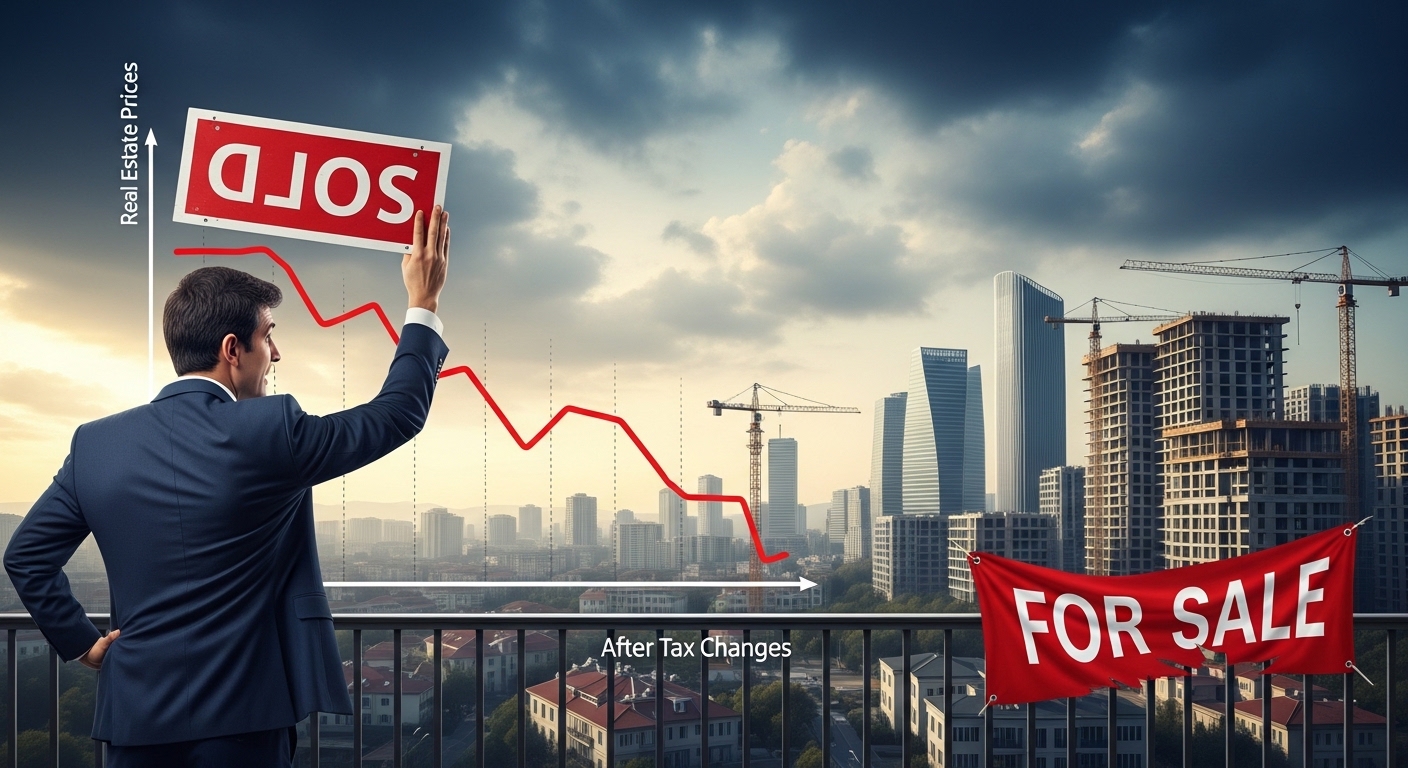
How Do Property Taxes in Turkey Affect Real Estate Prices?
If you had asked this question a few years ago, most investors would have shrugged it off. Taxes were there, yes—but they weren’t the deciding factor. Fast forward to today, and property taxes in Turkey have become one of the most powerful forces shaping real estate prices.
Why? Because the market itself has evolved.
Turkey’s real estate ecosystem is no longer driven by simple supply and demand. It’s now a complex mix of:
- Local buyers trying to secure housing amid inflation
- Investors protecting capital
- Foreign buyers seeking ROI, residency, or diversification
When taxes change, they hit all three groups—but not equally.
Here’s where it gets interesting: taxes don’t automatically push prices up or down. Instead, they create tension between buyers and sellers. Developers may try to pass the cost forward. Buyers may push back. Investors may pause or shift strategy. This dynamic reshapes pricing behavior across the board.
Think of taxes as friction in a machine. The machine doesn’t stop—but it moves differently. Slower in some areas, more efficiently in others, and sometimes unpredictably.
And this is exactly why understanding taxes is no longer optional—it’s strategic.
Impact of Tax Laws on the Turkish Real Estate Market
Tax laws don’t just affect numbers—they affect behavior.
The moment a tax update is announced (or even rumored), the market reacts. Some investors rush to close deals before implementation. Others freeze, waiting for clarity. This creates short-term distortions—spikes in demand, sudden slowdowns, or unusual negotiation patterns.
But the deeper impact lies in long-term positioning.
When taxes reduce net profitability, investors start asking tougher questions:
- Is this property still worth it?
- Can I achieve my expected ROI?
- Are there better alternatives?
This is where the market matures. Speculative buyers begin to exit. Strategic investors remain.
If you want a deeper breakdown of this transformation, this guide on how tax laws affect real estate investment explains how policies reshape real-world investment decisions step by step.
Over time, this filtering effect actually strengthens the market. It removes noise and highlights assets with real value.
Why Foreign Investors Focus More on Taxes Than Ever
Foreign investors used to be attracted by one simple idea: Turkey is cheaper than Europe.
That’s no longer enough.
Today’s investor asks:
- What’s my net return after tax?
- How predictable is the system?
- How easy is it to exit the investment?
And here’s the key insight: foreign investors don’t evaluate Turkey in isolation. They compare it with Dubai, Greece, Spain, and emerging markets.
So even a small tax increase can shift perception.
Also, foreign buyers often face layered costs—legal fees, currency conversion, property management. When taxes are added on top, the margin for error shrinks.
That’s why many are now focusing on entry-level opportunities with strong upside, such as those highlighted in cheap apartments in Istanbul under $100K. These properties offer flexibility and lower risk exposure, especially in uncertain tax environments.
In short, foreign investors aren’t leaving—but they’re becoming far more selective.
What Are the Latest Property Tax Updates in Turkey?
Let’s clear something up: when people say “tax updates,” they often think of a single change.
In reality, Turkey’s real estate taxation involves a multi-layered system, including:
- Title deed transfer tax
- Rental income tax
- Capital gains tax
- Property valuation regulations (Rayiç Bedel)
- Municipal fees and compliance costs
Each of these can shift independently—and together, they redefine the total cost of ownership.
What has changed recently is not just tax rates, but enforcement and transparency.
Authorities are tightening valuation practices, reducing underreporting, and aligning official values closer to market realities. This increases trust—but also increases real costs.
And here’s the catch: the market doesn’t react uniformly.
Some sellers absorb the cost. Others increase prices. Some buyers walk away. Others negotiate harder.
This creates a fragmented market where pricing becomes highly localized and situational.
Property Purchase and Sale Taxes in Turkey
These are the most visible costs—and often the most underestimated.
When transaction taxes rise or are enforced more strictly, buyers suddenly need more liquidity. This can:
- Push buyers into lower price brackets
- Increase demand for smaller units
- Delay purchase decisions
On the seller side, capital gains considerations can discourage quick resales. Investors may hold properties longer, reducing supply in certain segments.
The result? Not an immediate price drop—but a slowdown in transaction velocity.
And in real estate, speed matters just as much as price.
Rental Income Taxes and ROI in Turkey
This is where things get real for investors.
Gross rental income looks attractive—but what matters is net yield.
When rental income taxes increase, investors face a dilemma:
- Raise rents (if market allows)
- Accept lower returns
- Exit the segment
In high-demand areas, rent increases may be possible. But in saturated or price-sensitive zones, this strategy fails.
To understand where rental growth is sustainable, reviewing average rent in Istanbul by district and ROI is critical. Not all districts behave the same—and that difference can define success or failure.
Hidden Costs: Property Valuation and Rayiç Bedel
One of the most overlooked yet impactful elements is Rayiç Bedel, the official property valuation benchmark.
When these values increase:
- Declared property prices rise
- Taxes tied to valuation increase
- Total acquisition cost goes up
Even if market prices stay stable, your taxable base increases.
This is why understanding valuation trends is essential. The 2026 Istanbul property tax values guide breaks down how these changes influence real investment scenarios.
How Tax Updates Impact Residential Property Prices in Turkey
Not all properties react the same way to tax changes. In fact, the residential market splits into distinct behavioral segments.
Mid-range housing is the most sensitive. Buyers here operate on tight financial margins. Any increase in cost—tax or otherwise—forces adjustment.
This leads to:
- Smaller units
- Peripheral locations
- Delayed decisions
But demand doesn’t disappear—it shifts.
Meanwhile, prime properties maintain stronger resilience due to location advantage and consistent demand.
Affordable and Mid-Range Housing After Tax Updates
This segment doesn’t crash—it adjusts.
Instead of visible price drops, you’ll see:
- Flexible payment plans
- Hidden discounts
- Increased negotiation
Developers become more creative. Buyers become more cautious.
The market becomes a negotiation game rather than a fixed-price environment.
Luxury Real Estate Market in Turkey
Luxury real estate plays by different rules.
Buyers here are less sensitive to price—but more sensitive to global comparison.
If taxes reduce competitiveness, demand may shift internationally.
However, truly premium assets—waterfront, branded, or rare-location properties—remain strong due to limited supply.
Commercial Real Estate in Turkey After Tax Changes
Commercial real estate is brutally honest. It doesn’t hide behind emotions.
If the numbers don’t work, the investment doesn’t work.
Tax updates directly affect:
- Net yield
- Tenant affordability
- Occupancy rates
Weak assets feel pressure first. Strong assets survive.
How to Buy Property in Turkey After Tax Updates (Step-by-Step Investment Guide)
Istanbul is not one market—it’s a layered ecosystem of micro-markets, each behaving differently under pressure. When people say “Istanbul prices are rising” or “the market is slowing,” they’re often oversimplifying a city that contains dozens of sub-markets with completely different dynamics.
Some districts—like central, well-connected, and infrastructure-rich areas—are driven by real, consistent demand. These are places where people actually live, work, and rent long-term. Others, however, have been fueled more by speculation, marketing hype, or short-term investor activity.
Tax updates act like a spotlight. They don’t create differences—they reveal them.
After tax changes, areas that were already strong tend to remain resilient because demand is organic. But areas that were inflated by investor optimism or aggressive pricing strategies begin to show cracks. Transactions slow down, negotiations increase, and price expectations adjust.
This is where Istanbul becomes interesting—not as a single market trend, but as a map of opportunities and risks.
Will Istanbul Real Estate Prices Increase After Tax Changes in 2026?
The short answer is yes—but the real answer is it depends on where and what you buy.
Prime locations—those with metro access, proximity to business hubs, universities, or waterfronts—are still supported by strong demand. These areas are less sensitive to tax pressure because buyers here are not purely speculative. They are end-users, long-term investors, or tenants driving rental demand.
In these zones, prices may continue to rise, but at a more controlled and realistic pace compared to previous years. The era of rapid, unchecked appreciation is fading, replaced by steady, demand-backed growth.
On the other hand, overvalued areas tell a different story. These are locations where prices surged quickly without strong fundamentals—often driven by off-plan sales, aggressive marketing, or investor hype.
After tax updates:
- Buyers become more cautious
- Sales cycles become longer
- Negotiation margins increase
In such areas, prices may not crash—but they may stagnate or undergo silent corrections through discounts, incentives, or flexible payment plans.
So the real shift is not “up or down”—it’s from generalized growth to selective performance.
stanbul vs Other Cities in Turkey: Where to Invest in Real Estate in 2026?
While Istanbul dominates headlines, it’s not always the most efficient market for every investor.
Cities like Ankara, Izmir, and Antalya offer a different type of opportunity—one that is often quieter but more stable.
- Ankara benefits from a strong domestic demand base tied to government institutions and a relatively stable population structure. It’s less volatile because it’s less driven by speculative foreign investment.
- Izmir offers a balance between lifestyle and economic growth. Coastal appeal combined with urban expansion makes it attractive for both living and long-term investment.
- Antalya thrives on tourism and foreign demand, particularly in short-term rentals and holiday homes. While it has its own cycles, certain areas maintain strong occupancy rates.
Compared to Istanbul, these cities often provide:
- Lower entry prices
- More predictable rental demand in specific segments
- Reduced exposure to speculative bubbles
This doesn’t mean Istanbul is worse—it means it’s more complex. In some cases, the best investment is not in the most talked-about location, but in the one with the most balanced fundamentals.
Sometimes, the smartest move is stepping away from the noise.
If you’re serious about investing in Istanbul or any Turkish city, intuition is not enough anymore. You need data, comparisons, and context.
Start by connecting these key insights:
👉 Cheap Apartments in Istanbul Under $100K – Discover where entry-level opportunities still exist
👉 Rental Prices & ROI by District – Understand which areas actually generate income
👉 Tax Law Impact Explained – See how policy changes affect your returns
👉 Official Property Values (Rayiç Bedel) – Learn how valuation impacts your total cost
The difference between a good investment and a bad one is often just information. Smart investors connect these dots—others guess and hope.
Real Estate Market Forecast in Turkey (2026–2028)
Trying to predict the market with a single outcome is unrealistic. Instead, it’s more accurate to look at multiple scenarios, each shaped by economic conditions, investor sentiment, and policy stability.
Optimistic Scenario for Real Estate Prices in Turkey
In this scenario, the market adapts smoothly to tax updates.
Demand remains strong, especially in major cities like Istanbul. Inflation continues to push people toward real estate as a store of value, and foreign interest remains steady due to competitive pricing.
Prices don’t skyrocket—but they grow consistently.
Key characteristics:
- Stable transaction volumes
- Gradual price increases
- Strong performance in prime areas
This is a controlled growth environment, where the market becomes healthier rather than overheated.
Balanced Scenario for Turkey Property Market
This is the most realistic scenario.
The market doesn’t collapse, but it doesn’t surge either. Instead, it becomes highly selective.
- Strong properties in good locations continue to perform
- Average or overpriced properties struggle
- Buyers negotiate more aggressively
In this environment, knowledge becomes your biggest advantage. Two investors can enter the same market and achieve completely different results depending on their decisions.
This is where the market rewards strategy over timing.
Worst-Case Scenario for Property Prices in Turkey
In a more challenging scenario, tax updates combine with other economic pressures—such as high financing costs or reduced purchasing power.
Here’s what happens:
- Transaction volumes drop
- Sellers become more flexible
- Buyers gain negotiation power
Prices may not collapse dramatically, but real transaction prices (not listing prices) can decrease.
Interestingly, this scenario often creates the best opportunities for experienced investors with liquidity. When others hesitate, informed buyers step in.
How to Buy Property in Turkey After Tax Updates
The rules of the game have changed. Buying property is no longer about finding something cheap—it’s about finding something sustainable.
Smart buyers today focus on three key pillars:
1. Total Cost, Not Just Purchase Price
Many buyers still make the mistake of focusing only on the listing price. But taxes, fees, and valuation differences can significantly increase the real cost.
Always calculate:
- Purchase price
- Taxes and fees
- Maintenance and operational costs
The real investment starts after the purchase—not before it.
2. Real Demand, Not Marketing Hype
A beautiful project with strong advertising doesn’t guarantee demand.
Ask yourself:
- Who will live here?
- Who will rent this property?
- Is there long-term demand in this area?
If the answer is unclear, the investment is risky.
3. Exit Strategy
Many investors focus on buying—but forget about selling.
A smart investment always answers:
- Who will buy this property from me later?
- Will the price be attractive to the next buyer?
Liquidity matters just as much as profitability.
Buying cheap is easy. Buying right is rare.
Future of Real Estate in Turkey After Tax Updates (2026 Outlook)
The Turkish real estate market is not collapsing—it’s evolving.
Taxes are not destroying opportunities. They are filtering them.
The days of easy profits, driven by rapid appreciation and minimal analysis, are fading. In their place, a more mature market is emerging—one where decisions are based on data, strategy, and long-term thinking.
This is not bad news. It’s a shift toward sustainability.
Opportunities still exist—plenty of them. But they are no longer obvious. They are hidden behind layers of data, location analysis, and financial understanding.
And that’s the real takeaway:
The future of real estate in Turkey doesn’t belong to those who move fast.
It belongs to those who think deeply, analyze carefully, and act strategically.
FAQs
Capital gains tax is imposed upon selling the property, while annual property tax is paid yearly on ownership and affects the property’s operating budget. Yes, such as using deferred exchange transactions, benefiting from tax deductions, or restructuring the investment portfolio. Property prices are expected to grow selectively rather than uniformly. Prime areas may continue rising, while weaker markets may stagnate. No, taxes are not reducing opportunities—they are filtering out weaker investments and highlighting stronger ones. Taxes reduce net returns unless balanced by rental income growth or property appreciation.
Invest Smarter by Understanding the Real Cost of Property
Don’t focus only on the purchase price. Calculate total costs, net ROI, and tax impact before making your next real estate investment in Turkey.










Have Question Or Suggestion ?
Please Share Your Thought, To Make It Real